

♥ Wishlist
Compare 35 Makita Corded Planer products in Canada. Reviews, ratings, pros, cons and buying advice updated for October 2026.


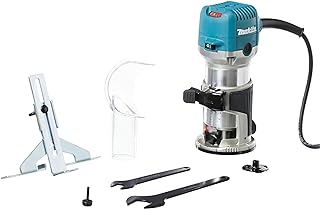


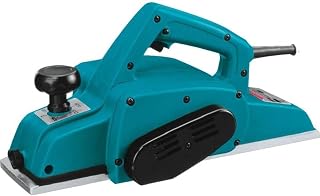


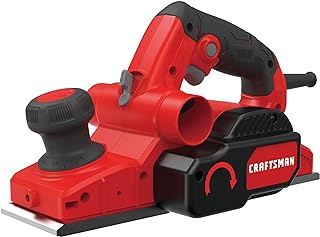


Choosing a precision Makita corded planer is less about selecting the tool with the highest advertised power and more about matching the planer’s cutting capacity, adjustment system, blade design, ergonomics and intended workload to the type of woodworking you actually do. For Canadian buyers, the decision also involves checking the exact model designation, electrical requirements, included accessories, replacement-blade availability and current retailer specifications before ordering.
Makita’s corded planer range has included compact handheld models such as the KP0800 and KP0810, as well as larger stationary machines such as the 2012NB. These tools serve substantially different purposes. A compact 3-1/4-inch handheld planer is designed for controlled stock removal, edge work, fitting doors and general site woodworking, while a benchtop thickness planer is intended to process boards through a machine with a substantially different feed and support arrangement.
This distinction is particularly important when comparing products described broadly as a “Makita planer.” The word planer can refer to several different tool formats, and the best choice for precision work depends heavily on whether you need to flatten or reduce an individual surface, adjust an installed component, or dimension boards repeatedly to a consistent thickness.
One of the most important buying decisions is determining whether you actually need a handheld electric planer or a benchtop thickness planer. Both remove wood, but they approach the task differently.
A handheld planer is guided across the workpiece by the operator. This makes it useful when the board cannot conveniently be placed through a stationary machine or when only a limited amount of material needs to be removed.
A compact Makita model such as the KP0800 is designed around a 3-1/4-inch planing width and has a maximum planing depth of up to 2.5 mm according to Makita Canada’s published specifications. Its design includes a depth-adjustment knob, chamfering groove, lock-on control and ergonomic grip. These characteristics make this type of planer particularly relevant to fitting, trimming and controlled surface work.
The handheld format is also useful for jobs such as trimming doors, reducing proud edges, adjusting timber joints and correcting localized high spots. However, achieving a perfectly uniform thickness across a long board requires technique. A handheld planer is not automatically a substitute for a thickness planer.
A benchtop thickness planer is designed around a feed-through process. The board is supported on a table and passed through the cutting head, allowing the machine to remove material more consistently across the board.
The Makita 2012NB is an example of a substantially different planer category. It is a 12-inch benchtop planer with a four-post design, automated head-clamp feed mechanism, large support table and a stated maximum cutting depth of 1/8 inch. Its published specifications also identify a maximum stock thickness of 6-3/32 inches and a feed rate of 27.9 feet per minute.
For furniture makers and woodworkers who routinely dimension boards, this format can be much more appropriate than a handheld planer. It is also considerably heavier and requires a suitable work surface or stand, so portability and storage should be considered before purchasing.
Planing accuracy depends on more than motor power. A tool can remove material quickly while still producing inconsistent results if the operator cannot control the depth, maintain the correct angle or keep the base stable against the workpiece.
For precision work, several characteristics deserve particular attention:
For this reason, a buyer looking for “precision” should not automatically select the model with the largest motor or deepest advertised cut. The better choice is often the planer that provides the right balance of control, capacity and handling for the material being worked.
The Makita KP0800 is a useful reference point for shoppers seeking a relatively compact corded handheld planer. Makita Canada lists a 3-1/4-inch, or 82 mm, planing width and a maximum planing depth of 0 to 3/32 inch, or 0 to 2.5 mm.
The published design includes a machined base arrangement, depth-adjustment knob with click stops, a single chamfering groove, lock-on operation and a rubberised ergonomic grip. The listed net weight is 5.7 pounds, making it considerably more manageable than a stationary thickness planer.
Its compact format makes it worth considering for:
The important buying lesson is that compact size is an advantage when manoeuvrability matters, but it does not provide the same workflow as a thickness planer. Buyers should therefore compare the KP0800 with tools in the same handheld category rather than treating every Makita planer as a direct alternative.
Model suffixes deserve attention when comparing listings. A tool may appear to be the same basic planer while being sold in a different package containing additional blades, a carrying case or other accessories.
The KP0800K, for example, has been listed by Makita Canada with a plastic carrying case and a two-set configuration of 3-1/4-inch double-edged mini planer blades, along with the blade gauge assembly, socket wrench and guide rule.
When comparing prices between a bare tool and a kit, compare the complete contents rather than looking only at the headline price. A seemingly cheaper configuration may not include the same accessories, while a kit may offer useful items that would otherwise need to be purchased separately.
The Makita KP0810 occupies a heavier-duty position within the handheld planer category. Makita Canada describes it as a 3-1/4-inch planer and lists features including soft start, three chamfering grooves, a depth-adjustment knob with click stops, lock-on operation, left- or right-side chip ejection and an ergonomic soft-rubber grip.
Those features can be meaningful for users who expect more demanding handheld work. Soft start can make the initial start-up feel more controlled, while selectable chip-ejection direction can help adapt the tool to the working position.
However, buyers should not assume that a heavier-duty handheld planer is automatically better for every precision application. Additional capability can come with increased size, weight or cost. If most jobs involve light trimming and occasional edge work, a lighter planer may be easier to handle for extended periods.
Planing width indicates how much material the cutter can address across a single pass. A wider capacity can be beneficial when working with broader stock, but it should not be considered the sole indicator of quality.
A 3-1/4-inch handheld planer is well suited to many conventional timber edges and surfaces. If the work regularly involves boards wider than the cutter, multiple passes may be necessary. Maintaining a consistent reference position between passes becomes important when attempting to create an even surface.
When comparing planing width, ask:
A planer’s maximum cutting depth is a capacity figure, not necessarily the setting you should use for every job. Large cuts increase the amount of material being removed in a single pass and can make the machine more demanding to control.
For precision work, shallow passes are often easier to manage. Removing a smaller amount allows the operator to evaluate the surface after each pass and reduce the risk of taking away more material than intended.
Use deeper settings only when appropriate for the material, tool capacity and task. Hard or abrasive wood can require a more conservative approach than softwood, and heavily loaded cuts can affect handling and surface quality.
Blades are one of the most important consumable components on a planer. A planer that is mechanically sound can still produce poor results if its blades are dull, incorrectly installed or unsuitable for the intended application.
Makita offers planer blades in different constructions and configurations, including high-speed-steel and carbide options for compatible models. Buyers should always verify compatibility with the exact planer model before purchasing replacement blades.
High-speed-steel blades are widely associated with traditional woodworking applications and can be maintained or replaced according to the design of the particular planer. Their suitability depends on the material, cutting conditions and maintenance approach.
Carbide construction can offer different wear characteristics and may be attractive for users who value extended cutting performance under suitable conditions. Compatibility is critical because blade dimensions, mounting systems and edge configurations vary.
Double-edged blades can provide a practical advantage because the unused edge can potentially be used when the design permits. This can make blade management more convenient, but the blades must still be installed and handled according to the manufacturer’s instructions.
The base is one of the most overlooked components when buyers compare planers. On a handheld machine, the base is effectively the reference surface that guides the cutter over the wood.
A rigid, accurately machined base helps the tool remain predictable. The front section supports the tool before the cutter reaches the workpiece, while the rear section supports the planer after the cut. Uneven pressure during these stages can contribute to inconsistent results even when the blades are correctly installed.
For precision work, develop the habit of keeping the base flat against the workpiece and avoiding excessive downward pressure immediately before or after the cutter crosses the timber.
A good depth-adjustment system should make it easy to make controlled changes rather than forcing the user to guess how much material will be removed.
Click-stop depth adjustment, such as that specified on several Makita handheld planer models, can make repeat settings easier to reproduce. This is particularly useful when several components need similar treatment.
Even with a calibrated adjustment mechanism, always confirm the actual cut on scrap material or an inconspicuous section when dimensional accuracy matters. Wood species, grain direction, moisture content, blade condition and operator technique can all affect the final result.
Planers generate chips rather than the fine dust associated with some sanding operations, but the volume of waste can still be substantial. Poor chip management can obscure the work area, interfere with footing and create unnecessary cleanup.
Chip-ejection direction is especially relevant when working close to walls or in confined spaces. A model that permits left- or right-side discharge can provide greater flexibility depending on the work position.
Where compatible extraction equipment is available, using appropriate dust and chip collection can improve visibility and reduce airborne debris. Never obstruct the ejection path simply to control chips manually.
Planing is a hands-on operation. The tool must be controlled throughout the entire cut, so ergonomics can have a direct impact on consistency.
Look for:
Do not judge ergonomics solely from photographs. Two planers with similar specifications can feel very different when held at working height or used on the edge of a large board.
Soft-start technology is particularly relevant to users who want more controlled tool engagement. The Makita KP0810, for example, is listed with a soft-start feature intended to reduce start-up shock.
This does not replace proper handling technique. The planer should still be held securely before activation, and the cutting base should be positioned appropriately for the task. Soft start is best viewed as a control and usability feature rather than a substitute for operator discipline.
Chamfering grooves allow a handheld planer to perform more than straightforward surface removal. By positioning the groove correctly over the corner of a board, the user can create a controlled bevel.
The number and design of chamfering grooves vary by model. The KP0800 is listed with a single chamfering groove, while the KP0810 is listed with three.
When comparing these features, consider whether chamfering is actually part of your workflow. If you frequently soften exposed timber edges, build furniture components or perform finish carpentry, additional chamfering options can be useful. If your work rarely involves bevels, this feature should carry less weight in the buying decision.
Instead of ranking planers solely by brand or advertised power, compare them across the following categories:
A handheld planer can remove material from a board, but repeatedly producing consistent thickness across many boards is a different task. If dimensional repeatability is the main requirement, compare a benchtop thickness planer instead.
A deeper maximum cut does not automatically mean better precision. Controlled shallow cuts may be more useful for finishing, fitting and dimensional correction.
Before purchasing, investigate the exact blade format and replacement process. Consumable availability is part of the long-term ownership equation.
Model suffixes can identify different packages. Compare the actual contents of the Canadian listing, including blades, guides, cases and other accessories.
Canadian buyers should verify that the tool is intended for the electrical supply and configuration applicable to their workshop. Do not assume that a visually identical model from another market has identical electrical specifications.
Long boards can move or sag during handheld planing. Proper support on both sides of the working area can make it significantly easier to maintain a consistent cut.
Dull blades can require more effort and can compromise the quality of the cut. Regularly inspect blades and replace or maintain them as appropriate for the specific blade design.
A compact handheld planer is generally the more logical category because doors often need localized material removal rather than complete-board thicknessing. Prioritise manageable weight, depth control, edge visibility and comfortable handling.
The correct choice depends on the stage of construction. A handheld planer can be useful for fitting and adjustment, while a thickness planer is better suited to repeatedly dimensioning rough boards.
A compact corded planer can be valuable for trimming timber, adjusting joints, correcting uneven edges and performing occasional site work. Portability and ergonomics should receive significant attention.
Higher-capacity handheld models may be more appropriate where larger cuts and demanding work are common. However, the material and application should determine the selection rather than the assumption that more capacity is always better.
A benchtop thickness planer should normally be considered before a handheld planer. The feed-through design is better aligned with repeatable thicknessing operations.
Wood is not a uniform material. Grain direction can change dramatically within a single board, especially around knots, reversing grain and irregular growth.
Planing against difficult grain can increase the likelihood of tear-out. When the finish matters, pay attention to grain direction and take conservative cuts. Sharp blades, appropriate feed technique and sensible cutting depth can all contribute to better results.
Softwoods can also present their own challenges. Resin, knots and variable density may affect blade cleanliness and cutting behaviour. Hardwoods may require more deliberate passes and closer attention to blade condition.
Tear-out occurs when the cutter lifts and breaks wood fibres rather than cleanly slicing them. It can be particularly visible on figured or reversing grain.
Good technique can make a significant difference even when using a high-quality planer.
Handheld planers and benchtop planers can produce different end-of-cut issues, so the solution depends on the tool type.
With a handheld planer, excessive pressure at the beginning or end of a pass can cause the cutting angle to change. Keeping the base properly supported and transferring pressure smoothly between the front and rear portions of the tool can help maintain consistency.
For benchtop thickness planers, snipe can be influenced by the machine's feed mechanism, workpiece support and setup. The Makita 2012NB incorporates an automated head-clamp feed mechanism specifically described by Makita as helping provide smooth finishes with minimal snipe, but actual results still depend on setup, stock condition and operating technique.
There is no single universal replacement interval because blade life depends on wood species, cutting depth, contamination, frequency of use and operating conditions.
Instead of relying on a calendar schedule, monitor performance. Increasing resistance, deteriorating surface quality, visible blade damage or unusual cutting behaviour can indicate that the blades require attention.
Never continue using a damaged blade simply because it still cuts. Follow the manufacturer's instructions for inspection, replacement and safe handling.
Product pages can contain different levels of detail, and retailer listings may occasionally use shortened model names. Before purchasing, compare the exact model number across the product listing, manufacturer information and retailer description.
Important details to verify include:
This last point is particularly important when researching older Makita corded planers. A model can remain well known among woodworkers while individual Canadian listings, packages or manufacturer catalogues change over time.
Retailer titles can use phrases such as “professional planer,” “precision planer,” “heavy-duty planer” or “woodworking planer.” These descriptions are useful for discovering products, but the model number is a much better starting point for specification comparison.
For example, KP0800, KP0800K, KP0800KX and KP0810 should not be treated as interchangeable search terms without checking the specific configuration. Similarly, the 2012NB belongs to a different planer category and should be evaluated according to benchtop thickness-planer requirements.
Value should be evaluated over the expected ownership period rather than by purchase price alone. A planer can represent better value when it provides the capacity you need, uses readily identifiable blades, includes useful accessories and fits your workflow without requiring unnecessary upgrades.
Consider the complete ownership picture:
Makita is not the only established manufacturer in the planer market. Depending on the application, Canadian shoppers may also encounter products from Bosch, DEWALT, Triton, RIDGID, WEN, Delta and other woodworking-tool manufacturers.
The best comparison is not simply brand against brand. Compare equivalent tool categories and specifications.
Brand recognition can help narrow a shortlist, but the final choice should be based on the actual job, specifications, replacement components and total ownership requirements.
A planer is a high-speed cutting machine and should be treated accordingly. Read the instructions for the exact model before operation and follow the manufacturer's safety procedures.
If a buying guide presents ten Makita-related planer choices, compare them using a consistent scoring framework rather than relying on the order in which products appear.
This approach helps prevent an inexpensive but unsuitable planer from appearing attractive simply because of its price, while also preventing an expensive machine from being recommended when its extra capacity will never be used.
Customer reviews can be useful, but they should be interpreted alongside specifications rather than treated as a substitute for technical information.
Look for repeated comments about the same practical characteristics, such as adjustment ease, balance, blade changes, chip discharge, packaging condition or suitability for a particular woodworking task. A single review describing an unusual experience should generally carry less weight than a consistent pattern across many independent reviews.
Also distinguish reviews of the tool from reviews of the retailer, shipping experience or packaging. Those factors can be important to a purchase decision, but they do not necessarily tell you how accurately the planer performs.
Prices can change frequently, and different configurations may include different accessories. For that reason, the most useful price comparison is based on equivalent packages.
Do not assume that the lowest listed price is the best deal if the package excludes accessories you would otherwise need to purchase.
First-time buyers often benefit from choosing a planer that is easy to control rather than one with the most aggressive specifications.
A compact model can be a sensible starting point if your projects involve door fitting, trimming timber, correcting uneven edges and small-scale woodworking. Learn how the depth adjustment translates into actual material removal and practice maintaining a consistent base position before attempting precision work on expensive timber.
Beginners should also avoid treating a planer as a sanding tool. A planer removes material comparatively quickly. Once too much wood has been removed, it cannot be put back. Make measurements before cutting and use conservative settings until you understand how the machine behaves with your material.
Frequent users should place greater emphasis on workflow efficiency, blade management, ergonomics and maintenance access. A small improvement in adjustment convenience or handling can become significant when the tool is used repeatedly throughout the week.
Professional users should also consider whether a corded planer fits the work environment. Corded operation eliminates battery charging and provides continuous electrical operation, but the cord introduces a physical constraint that must be managed safely on busy job sites.
Cordless woodworking tools have become increasingly common, but corded planers remain relevant for users who prioritise continuous operation and do not want to manage battery capacity during extended work.
A corded planer can make sense in a workshop where an appropriate electrical supply is readily available. It can also be attractive for repetitive tasks where uninterrupted operation matters more than complete portability.
On the other hand, users who frequently move between unfinished structures, outdoor locations or areas without convenient power may prefer a cordless alternative. The right choice depends on the working environment rather than on the age of the technology.
A planer should be stored so that its base and blades are protected from damage. Avoid placing the tool directly on abrasive debris or in a position where the cutting assembly can contact hard surfaces.
For benchtop machines, provide enough clearance for feeding and receiving boards. A machine may have a compact footprint but still require substantial working space because long timber extends well beyond the table.
For handheld models, keep the tool, blade gauge, guide components and replacement blades together where possible. This reduces the likelihood of losing small adjustment or installation components between projects.
The best precision Makita corded planer is the model that matches your material, workflow and required level of control. For localized trimming and fitting, a compact handheld planer such as the KP0800 can be more practical than a large stationary machine. For heavier handheld work, the KP0810 provides a different feature set and workload profile. For repeatable board thicknessing, a machine such as the 2012NB belongs to a different category and should be compared on thickness-planer criteria.
Before making a purchase, verify the exact model number, current Canadian specifications, electrical requirements, blade compatibility and package contents. Then compare current prices and independent customer feedback from reputable retailers. Avoid selecting a planer solely because it has a larger motor, deeper advertised cut or higher headline rating.
For precision woodworking, controllability, blade condition, base stability, workpiece support and operator technique can matter just as much as raw power. A carefully selected planer can become a useful tool for fitting, trimming, dimensioning and general woodworking, while choosing the wrong category can lead to unnecessary cost and disappointing results.
There is no single best model for every application. A compact handheld planer is generally more appropriate for controlled trimming and fitting, while a benchtop thickness planer is better suited to repeatable board thicknessing. The correct choice depends on the type and dimensions of the material being processed.
Yes. The KP0800 is a 3-1/4-inch corded handheld planer designed for surface planing and related woodworking tasks. Its published specifications include a maximum planing depth of 2.5 mm and features such as depth adjustment, a chamfering groove and ergonomic grip.
The basic planer platform is closely related, but package contents can differ. The KP0800K has been listed with a carrying case and additional blade configuration. Always check the exact Canadian listing before purchasing because package contents can change.
“Better” depends on the application. The KP0810 is positioned as a heavier-duty handheld planer and adds features such as soft start and multiple chamfering grooves. A buyer who values lower weight and straightforward general-purpose planing may prefer the characteristics of the KP0800.
No. A handheld planer is manually guided across the workpiece, while a thickness planer feeds boards through a cutting head. They solve related but different woodworking problems.
It depends on the workpiece. A 3-1/4-inch cutting width is suitable for many common handheld planing tasks, but wider boards may require multiple passes. For repeated thicknessing of broad stock, consider a suitable benchtop or stationary thickness planer.
Handheld planers can remove substantial material, but the manufacturer's maximum cutting depth should not be interpreted as a recommendation for every pass. For better control and surface quality, use a cutting depth appropriate to the material and task.
Yes. Blades are consumable components, so replacement availability and compatibility should be part of the buying decision. Always verify that replacement blades match the exact planer model.
The appropriate blade depends on the planer model, material and intended use. Makita offers compatible planer blades in different constructions, including HSS and carbide options for applicable tools. Check model-specific compatibility before choosing a replacement blade.
It depends on the planer and workspace. Planers produce chips quickly, so effective chip management can improve visibility and reduce cleanup. If extraction equipment is compatible with the tool, follow the manufacturer's recommendations for its use.
Yes, for many workshop and professional applications. Corded operation provides continuous electrical power without battery changes or charging interruptions. The trade-off is reduced freedom of movement compared with cordless equipment.
Check the exact model number, planing width, maximum depth, electrical specification, weight, blade format, included accessories, current Canadian listing and replacement-component compatibility. Also confirm whether you are buying a handheld planer or a benchtop thickness planer.
There is no universal interval. Blade life depends on use, material, cutting depth and contamination. Inspect the cutting edges regularly and replace or maintain blades when performance deteriorates or damage is visible.
Not completely. A handheld planer can remove material and help adjust surfaces, but jointing and thicknessing are separate operations with different machine requirements. A thickness planer also relies on a suitable reference surface rather than automatically creating a perfectly flat board from an irregular one.
Rather than one isolated feature, precision depends on the combination of accurate depth adjustment, a stable base, sharp blades, predictable handling, appropriate workpiece support and controlled technique.
When researching the best precision Makita corded planer options in Canada, start with the job rather than the product ranking. Identify whether you need a compact handheld tool, a heavier-duty handheld planer or a benchtop thickness planer. Then compare cutting capacity, depth adjustment, base construction, blade compatibility, ergonomics, chip management and package contents.
Makita models such as the KP0800, KP0800K, KP0810 and 2012NB illustrate why model-specific comparison matters: they are designed around different formats and use cases. Checking the current specifications and package details before ordering is therefore more useful than relying on a generic “best planer” label.
For Canadian buyers, the final step should be to compare the exact configuration at trusted retailers, review current customer feedback, verify the electrical specification and check today's price before making a purchase decision. A thoughtful comparison can help you choose a planer that delivers the precision, capacity and handling characteristics your woodworking projects actually require.