

♥ Wishlist
Compare 15 Metabo Screwdrivers products in Canada. Reviews, ratings, pros, cons and buying advice updated for October 2026.


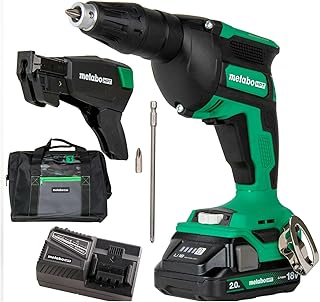
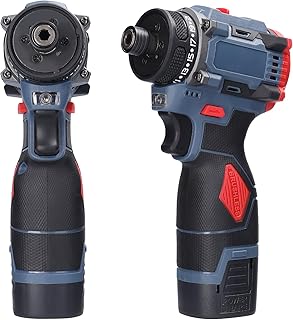
Choosing a precision screwdriver is less about finding the tool with the longest feature list and more about matching the driver to the fasteners, materials and working conditions you encounter. For Canadian buyers, the right choice can range from a compact manual precision screwdriver for electronics and small hardware to a powered Metabo screwdriver suited to repetitive fastening work. Before comparing individual models, it is worth understanding the differences in drive type, torque control, bit compatibility, ergonomics, battery systems and intended application.
Metabo is a well-established professional power-tool brand, but the word “precision” covers a broad range of tools. A compact driver intended for delicate screws should not be evaluated by the same criteria as a higher-torque cordless screwdriver intended for construction or installation work. The best option depends on the level of control you need, how frequently you will use the tool and the type of fasteners involved.
Precision fastening generally means applying controlled force to relatively small screws without damaging the fastener, workpiece or screwdriver bit. Precision is therefore influenced by more than torque alone. Bit quality, handle design, speed control, clutch behaviour, balance and the ability to select an appropriate bit all affect how accurately a screw can be installed or removed.
For small mechanical assemblies, electronics, appliances, instruments and delicate components, excessive torque can strip a screw head or damage the surrounding material. Conversely, a driver with insufficient torque can stall repeatedly, encourage excessive downward pressure and make repetitive work unnecessarily difficult.
A manual precision screwdriver remains an excellent choice when maximum tactile feedback matters. Turning the handle by hand lets the user feel changes in resistance and stop immediately when a screw is seated. This can be advantageous for delicate components and applications where powered rotation could easily apply too much force.
A powered screwdriver becomes more attractive when speed, repetitive fastening and reduced hand fatigue are priorities. A cordless Metabo driver can be particularly useful when working away from a bench or when a task involves a larger number of fasteners. The trade-off is that the user must pay closer attention to speed, torque and clutch settings.
For genuinely delicate work, a high-torque drill-style driver is not automatically the better product. A smaller, more controllable tool can be more appropriate even when its maximum power is considerably lower.
Torque describes the rotational force available from the screwdriver. A higher maximum torque rating can be useful for demanding fastening applications, but maximum torque is not the only specification that matters for precision work. The important question is whether the tool provides useful control across the lower portion of its torque range.
When comparing models, look for a practical adjustment system rather than simply choosing the tool with the highest published torque figure. For delicate screws, controlled low torque can be more valuable than a large maximum rating.
A mechanical or electronic clutch can help limit the torque delivered to a fastener. Multiple clutch settings allow the user to adapt the tool to different screw sizes and materials.
Clutch numbers are not directly comparable across every manufacturer or model, so they should not be treated as universal torque measurements. Always consult the manufacturer's specifications and operating instructions when a particular torque value is important.
Low speed provides greater control when starting a screw or working with fragile components. Higher speed can reduce installation time when working with larger quantities of fasteners. Variable-speed triggers or other speed-control systems can provide a useful middle ground between these two requirements.
For precision applications, smooth control at low speed is generally more useful than an impressive no-load speed figure by itself.
Bit compatibility should be checked before buying. Depending on the tool, the interface may be designed for a particular bit format, hex shank or quick-change system. A driver can be highly capable but inconvenient if the bits you already own are incompatible.
For precision work, the quality and geometry of the bits are especially important. Phillips, Pozidriv, Torx, slotted, hex and other drive profiles should be selected according to the actual fasteners being serviced rather than simply choosing the largest assortment.
For cordless Metabo screwdrivers, battery compatibility can influence the overall value of the purchase. Buyers who already own compatible cordless tools may benefit from staying within the same battery ecosystem, provided the selected driver meets the application's requirements.
Consider battery capacity, charging time, tool weight and the availability of compatible batteries. A larger battery can increase operating time but may also make a compact driver heavier and less convenient for precision work.
Weight matters more during extended use than during a short demonstration. A heavy driver can create wrist fatigue, particularly when the tool is repeatedly held at an awkward angle. Balance is equally important because a well-balanced tool can feel easier to control than a lighter tool with poor weight distribution.
For detailed work, examine the relationship between the handle, motor housing, battery and bit axis. A compact front end can make it easier to position the driver precisely around crowded assemblies.
Electronics work generally prioritizes low-force control, accurate bit selection and a compact form factor. Small Torx, Phillips and other miniature fasteners are common in electronic equipment, although the exact screw types vary considerably by device.
A driver designed primarily for construction fastening may be unnecessarily large or powerful for this type of work. Buyers should prioritize controllability and suitable precision bits rather than maximum torque.
Computer assembly and maintenance can involve repeated removal and installation of small screws. A compact precision screwdriver kit with commonly used bit profiles can be convenient for this application. Magnetic bit retention can also help when working in confined spaces, although users should follow the equipment manufacturer's service guidance where applicable.
Appliances can use a mixture of small and medium-sized fasteners. The ideal driver depends heavily on the appliance and fastener type. A precision tool can be useful for smaller screws, while a more powerful cordless driver may be appropriate for larger fasteners or repeated installation tasks.
Furniture assembly often involves a larger number of screws, making powered operation attractive. In this situation, speed, battery life, ergonomics and clutch control may matter more than ultra-small dimensions. A driver with an appropriate low-torque setting can help reduce overtightening of screws in wood-based materials.
Woodworking requires attention to the relationship between screw size, material hardness, pilot holes and torque. A screwdriver that offers adjustable torque and variable speed can provide better control than a tool used continuously at maximum power.
For cabinetry, the ability to make consistent adjustments is particularly useful because overtightening can damage surfaces, deform hardware or strip a fastener.
For general household work, versatility can be more valuable than extreme specialization. A compact cordless screwdriver with variable speed, adjustable torque and a practical bit system can cover a wide range of light-duty fastening jobs.
The screwdriver is only one part of the fastening system. A poorly matched bit can damage the screw even when the driver itself has excellent control.
Bit size is just as important as bit type. Using a bit that is too small can damage the screw head, while an oversized bit may not seat correctly. For precision work, select the bit that fits the fastener rather than forcing a similar-looking profile.
High-quality bits can provide a more consistent fit and may resist premature wear better than poorly manufactured alternatives. However, even a premium bit will not compensate for the wrong size or drive profile.
Inspect bits regularly for rounded edges, deformation, corrosion or other signs of wear. A worn bit can slip more easily and may increase the risk of damaging a screw head. Replacing an inexpensive worn bit is often preferable to continuing to use one that no longer fits securely.
Precision work often involves small movements rather than brute force. Handle diameter, grip texture, trigger placement and overall balance can therefore have a meaningful effect on usability.
Cordless tools offer mobility and avoid the need to work close to a power outlet. They can be particularly convenient for installation, maintenance and field work. Their disadvantages can include battery weight, charging requirements and the eventual need to replace batteries.
Corded models can provide continuous operation without battery changes, but the cable can restrict movement and may be inconvenient around a small workbench. For most buyers, the better choice depends on where the tool will be used rather than on a simple assumption that one power source is universally superior.
Buyers considering cordless Metabo tools should verify the exact battery platform specified for the model. Compatibility should never be assumed simply because two products carry the same brand name.
Check the manufacturer's current documentation for battery compatibility, charger requirements and any platform-specific limitations. This is particularly important when buying a tool as a bare unit, because a bare tool may not include a battery or charger.
If you already own compatible cordless tools, an additional bare tool can sometimes be a practical way to expand an existing system. If you are starting from scratch, compare the combined cost and usefulness of the tool, batteries and charger rather than looking only at the advertised tool price.
Price comparisons should account for the complete package rather than the headline price alone. Two apparently similar screwdrivers may differ substantially in what is included.
Canadian shoppers should also pay attention to whether a product listing represents a Canadian-market configuration or a different regional package. Voltage, charger configuration, included accessories and warranty terms can vary by market.
More power is not automatically better for precision fastening. Excessive torque can make delicate work harder and can increase the consequences of an incorrect setting.
A driver without the correct bits may be less useful than a less powerful model that supports the fasteners you encounter regularly. Identify the screw profiles used in your applications before choosing the tool.
A larger battery can provide greater energy capacity, but it can also add weight. For precision tasks performed close to the workpiece, compactness and balance may be more important than maximum runtime.
The presence of a screwdriver function does not necessarily make a tool a precision screwdriver. Look for practical control features, appropriate dimensions and specifications that match the work.
A box containing many profiles may look attractive, but unused bits do not add much value. A smaller selection of durable, correctly sized bits can be more useful for regular work.
Manufacturers may offer several closely related tool configurations. Always compare the complete model designation, included accessories and specifications rather than assuming products with similar names are identical.
Customer reviews can provide useful information, but they should be interpreted carefully. A review describing a driver as “too powerful” may actually indicate that the product is unsuitable for a delicate application rather than that the tool is defective.
Look for repeated observations across multiple reviews instead of relying on isolated comments. Useful review themes include battery life, trigger control, ergonomics, bit retention, clutch behaviour, charging convenience and long-term usability.
Also distinguish between reviews of the exact model and reviews associated with a product family or different kit configuration. Marketplace listings can sometimes group multiple variations together, so the specifications attached to a review may not correspond precisely to the version you are considering.
Some features are not essential for occasional household use but become increasingly useful for frequent or professional work. These may include electronic controls, multiple torque settings, brushless motor technology on applicable models, improved battery management, integrated lighting and more durable housings.
Brushless motors can offer efficiency and reduced mechanical wear compared with brushed designs, although motor type should still be considered alongside the complete tool design. A brushless driver is not automatically the best precision tool if its size, torque range or ergonomics are poorly matched to the application.
Even users who prefer cordless power tools can benefit from keeping a manual precision screwdriver available. Manual operation provides direct feedback and eliminates concerns about battery charge, trigger sensitivity or accidental powered rotation.
For final tightening of delicate fasteners, inspection work or situations where the appropriate torque is extremely low, a manual tool may offer a level of control that a general-purpose cordless driver cannot replicate.
The correct technique can be as important as the tool. Position the bit squarely in the fastener before applying rotational force. Avoid using excessive downward pressure because this can increase the risk of slipping when the bit or fastener is not properly matched.
Start slowly when using a powered screwdriver. Once the threads engage correctly, maintain alignment and allow the tool's control system to perform its intended function. When a clutch is available, select an appropriate low setting first and increase it only when necessary.
For particularly delicate assemblies, follow the equipment or fastener manufacturer's specified torque requirements whenever they are available. Do not rely on a generic setting simply because the screw appears small.
Regular maintenance helps preserve performance and reduces avoidable wear. Keep the tool clean and free from accumulated dust, metal particles and debris. Inspect the chuck or bit holder periodically and remove contamination according to the manufacturer's instructions.
Canadian temperature and humidity conditions can vary considerably by season and region. Tools and batteries should be stored according to the manufacturer's environmental recommendations rather than left exposed to extreme temperatures or moisture.
For workshop storage, a clean, dry location can help reduce corrosion and protect small bits from contamination. Keeping precision bits organized also makes it easier to select the correct profile and size instead of repeatedly using whichever bit is already installed.
Always use the correct bit and inspect the tool before operation. Secure the workpiece when appropriate and keep hands away from the rotating bit. Eye protection may be appropriate when fastening or removing hardware that could generate fragments.
Before servicing electrical equipment, make sure the equipment is appropriately powered down and follow the manufacturer's safety and service procedures. A screwdriver should never be treated as a substitute for the specialized procedures required for potentially energized or hazardous equipment.
A precision screwdriver is not intended to replace every fastening tool. Large structural screws, heavily rusted fasteners, high-torque mechanical applications and certain specialist jobs may require a more suitable drill, impact driver, torque screwdriver or other purpose-built tool.
Using a small precision driver outside its intended application can damage the tool or produce poor results. Likewise, using a powerful impact driver on fragile components can cause unnecessary damage. Matching the tool to the fastener and material is more important than choosing the most powerful product.
When researching cordless screwdrivers, it can be useful to compare Metabo with other established manufacturers such as Bosch, Makita, DEWALT and Milwaukee. The purpose of the comparison should not be to assume that one brand is universally superior, but to evaluate the specific tool platforms available for your requirements.
Brand-level comparisons are only a starting point. A particular model can be better suited to a specific task even when another manufacturer has a broader or more popular product range.
When comparing a list of ten precision Metabo screwdriver options, avoid ranking them solely by star ratings or maximum specifications. A more useful approach is to classify each candidate according to its intended use.
Before completing an online purchase, verify the exact product title, model number, kit contents and current specifications. Product photographs can be useful for identifying the physical configuration, but the written specification should take priority when determining compatibility.
Check whether the listed price applies to a bare tool or a complete kit. Also review the seller information, delivery terms, return conditions and applicable manufacturer warranty information. These details can differ between retailers and product configurations.
For Amazon Canada and other Canadian retail marketplaces, pay particular attention to the exact variation selected before checkout. A product page can contain several battery sizes, kit combinations or accessory packages under a single listing.
The best model depends on the application rather than a universal ranking. For delicate fastening, prioritize controllable low torque, smooth speed adjustment, suitable bits and a compact, balanced design. For repetitive installation work, ergonomics, battery performance and consistent fastening control become more important.
It can be suitable when the specific model provides sufficiently fine control and the correct bit system, but a general-purpose cordless driver may be unnecessarily powerful for delicate electronics. Always match the tool's operating characteristics to the equipment being serviced.
Not necessarily. Brushless technology can offer advantages in efficiency and motor design, but the importance of those benefits depends on how the tool will be used. For precision work, torque control, ergonomics, speed control and bit compatibility may be more immediately important.
No. A larger number of settings can provide more adjustment choices, but the usefulness of the clutch depends on how consistently and predictably the tool delivers those settings. Compare the manufacturer's specifications and intended application rather than judging the tool by the number of clutch positions alone.
Not if precision is the primary requirement. High maximum torque is useful for demanding fastening, but delicate work often benefits from controlled lower torque. Choose a tool with a useful operating range for the fasteners you actually handle.
The ideal selection depends on your equipment. A practical collection commonly includes the Phillips, slotted, Torx and hex profiles relevant to your work, in sizes that properly match your fasteners. Specialist equipment may require security or proprietary profiles.
No assumption should be made about universal compatibility. Check the exact battery platform and manufacturer's compatibility information for the specific tool, battery and charger combination.
Yes, particularly when the tool offers appropriate torque control. Furniture fasteners can be damaged or driven too deeply when excessive force is applied, so controlled fastening is generally preferable to operating at maximum power.
Neither specification is universally more important. Precision applications generally benefit from controllable low speed and appropriate torque, while repetitive assembly can place greater emphasis on efficient speed and consistent fastening. The correct balance depends on the job.
Compare the exact model number, torque range, speed control, bit interface, dimensions, weight, battery platform, included accessories and current Canadian pricing. Customer feedback can then be used as supplementary evidence about day-to-day usability.
The best precision Metabo screwdriver is the one that provides the right level of control for your actual fastening work. Do not let maximum torque, the size of a bit set or a high headline specification determine the decision by itself. Start with the fasteners, materials and working environment, then work backward to the required torque, speed, form factor and power source.
For Canadian buyers, also compare the complete ownership package: tool configuration, battery and charger requirements, compatible accessories, current local pricing and applicable retailer and manufacturer terms. If you already use a compatible cordless platform, battery compatibility can simplify the decision. If your work involves very small or delicate fasteners, prioritize precision and tactile control over raw power.
Before buying, compare the shortlisted Metabo models side by side with the alternatives that genuinely fit your application. Check the manufacturer's current specifications, review the exact kit contents, examine recent customer feedback and verify today's Canadian price. That approach is more reliable than selecting a screwdriver based solely on popularity, maximum torque or a generic “best” label.