

♥ Wishlist
Compare 53 Red Lion Water Pump products in Canada. Reviews, ratings, pros, cons and buying advice updated for October 2026.
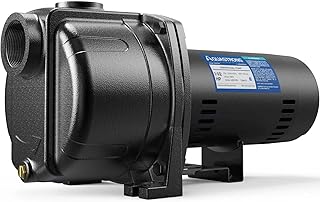

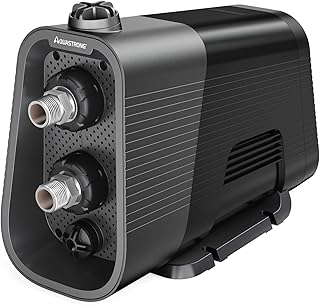


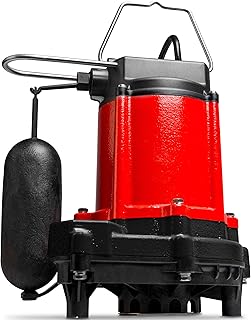


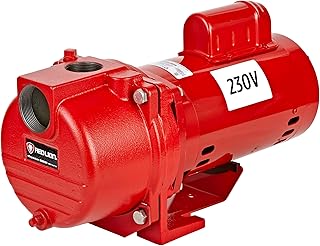



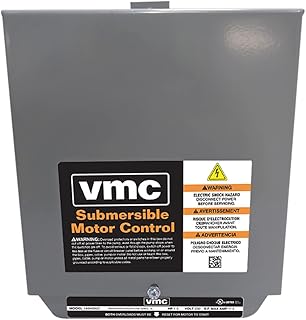


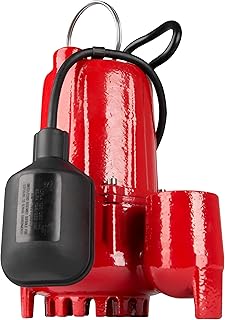


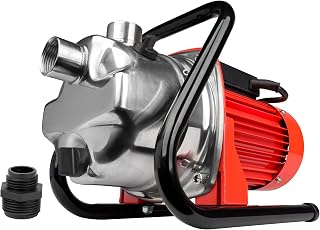


Finding the right Red Lion water pump is less about choosing the model with the highest horsepower and more about matching the pump to the water source, pumping depth, required flow, pressure, electrical supply, pipe size and intended application. For Canadian homeowners, farms, cabins and property owners, those details can make the difference between a pump that performs reliably and one that is poorly matched to the installation.
Red Lion's current clean-water range includes shallow-well jet pumps, convertible jet pumps, 4-inch submersible well pumps, pump-and-tank systems, pressure-boosting equipment and pressure tanks. The manufacturer also separates products by application, including clean water, sump, effluent/sewage, lawn and irrigation, multi-purpose and engine-driven pumping. That distinction is important because a pump designed for clean water should not automatically be treated as a sewage, trash or abrasive-water pump.
This guide focuses on the information that matters when comparing Red Lion water pumps for Canadian installations. Instead of treating a generic “best” ranking as suitable for every property, use the technical criteria below to identify the configuration that actually fits your well, water source and household demand.
Before comparing horsepower, flow ratings or customer feedback, identify the type of pump required. Red Lion's clean-water guidance broadly separates residential well pumping into shallow-well jet pumps, convertible jet pumps and deep-well submersible pumps. The correct category depends primarily on the pumping water level and the installation configuration.
A shallow-well jet pump is designed for applications where the pumping water level is within the practical suction range of the pump. Red Lion identifies its shallow-well applications for suction lifts down to 25 feet. These pumps remain outside the well and draw water through suction piping.
This arrangement can be appropriate for shallow wells, some cistern installations and rural properties where the water source is close enough to the pump. A typical installation also requires appropriate suction piping, a foot valve or check valve, fittings and a pressure tank where a pressurized household water system is being built.
For example, the Red Lion PWJET50 is a 1/2-horsepower shallow-well jet pump with a dual-voltage motor and a 30/50 pressure switch. Its published performance varies substantially with suction lift and discharge pressure, demonstrating why horsepower alone is not enough to compare pumps.
Convertible jet pumps provide greater installation flexibility because they can be configured for shallow-well or deep-well applications. Red Lion's clean-water guidance places convertible jet pumps in shallow configurations down to 25 feet and deep configurations down to approximately 90 feet, depending on the installation.
This category can make sense when the water table changes seasonally or when a property owner wants a pump capable of accommodating more than one well configuration. Deep-well jet installations use additional piping and an injector arrangement, so the complete system must be evaluated rather than judging the pump body alone.
Convertible pumps can be particularly relevant to rural Canadian properties where well conditions vary from one installation to another. Always verify the manufacturer's pump curve, injector requirements, piping arrangement and maximum pumping depth before purchasing.
Submersible well pumps are installed inside the well and push water toward the surface instead of relying on the same suction arrangement used by a surface-mounted jet pump. Red Lion's 4-inch RL and RS series are intended for drilled wells measuring at least 4 inches in diameter and are specified for applications reaching depths of up to 250 feet.
The current RL series includes 12-gallon-per-minute models in several horsepower and voltage configurations. The RS series adds stainless-steel discharge components and is positioned for applications involving more aggressive water conditions.
Submersible pumps are often attractive when the well is relatively deep or when minimizing pump noise around the house is important. Because the pump is below the water level, installation and replacement generally require more planning than swapping a surface-mounted utility pump.
There is no single Red Lion water pump that is best for every Canadian property. A pump supplying a rural home from a drilled well has different requirements from a pump draining a basement, transferring water from a cistern or supplying an irrigation system.
A useful comparison should consider:
Flow rate describes how much water the pump can deliver under a particular operating condition. Red Lion uses gallons per minute (GPM) for many clean-water pump specifications. A pump's maximum or nominal GPM should never be interpreted as the amount of water it will deliver in every installation.
As pressure and lifting requirements increase, available flow normally changes. This is why a pump curve or detailed performance table is more useful than a single maximum-flow figure.
When comparing two pumps, look for their flow at the pressure or head you actually need. A model advertised with a higher maximum flow may not outperform another model at the operating point required by your property.
Head is one of the most important specifications when choosing a water pump. It represents the energy required to move water through the system and accounts for elevation and other resistance within the installation.
Do not confuse well depth with pumping water level. A deep well does not necessarily mean the pump must overcome the entire drilled depth. What matters is the relevant water level while the system is operating and the vertical distance to the point where water must be delivered.
Red Lion's published pump-selection material specifically distinguishes pumping water level from the static water level. For replacement installations, the existing system configuration can also provide useful information, provided the original pump was correctly sized for the application.
Horsepower is useful but should not be the primary selection criterion. A larger motor can be inappropriate if the pump curve, well yield, piping or electrical service does not support the intended application.
For example, increasing horsepower does not automatically solve low water pressure. The pump must still be capable of producing the necessary pressure and flow at the system's total dynamic head.
Electrical compatibility is essential. Red Lion's product range includes different voltage configurations, including 115-volt and 230-volt models depending on the pump series.
Check the electrical service available at the installation location before purchasing. A pump's voltage, amperage, motor wiring and control-box requirements should be treated as system specifications rather than minor product details.
Submersible well pumps may use two-wire or three-wire motor configurations. The correct control equipment depends on the specific motor design.
Red Lion's RL series includes both two-wire and three-wire configurations depending on the model, while the RS series uses three-wire configurations in its listed models. Some three-wire submersible systems require an external control box, so verify exactly what is included before ordering.
Connection size matters because the pump must work with the plumbing system and appropriate fittings. Red Lion's 4-inch RL and RS submersible pump ranges use 1-1/4-inch FNPT discharge connections in the listed models.
Do not assume that changing pipe diameter is harmless. Long runs, elbows, valves and undersized piping can increase friction losses and reduce usable performance at the outlet.
A pump curve is one of the most valuable documents to consult when comparing water pumps. It shows how flow and head interact and helps identify the approximate operating range of the pump.
Suppose two pumps appear similar because both are rated at the same horsepower. One may produce the required flow at the desired pressure while the other may not. Conversely, a higher-horsepower pump can sometimes be unnecessary if the smaller model already meets the system requirements.
When reading a pump curve, identify the operating point created by:
The goal is not to choose the pump with the largest number. The goal is to choose a pump whose performance curve intersects the system's actual operating requirements within an appropriate range.
Household demand depends on the number of occupants, fixtures and simultaneous water uses. Red Lion's clean-water guidance provides a practical fixture-based approach to estimating required pump capacity.
Consider the fixtures that may operate at the same time rather than simply counting every fixture in the building. Showers, faucets, toilets, washing machines, dishwashers, refrigerators with water connections and outdoor taps can all contribute to demand.
For a Canadian rural home, the calculation should also account for seasonal activities such as lawn watering, garden irrigation, livestock watering or filling outdoor tanks. These demands may justify a different pump configuration from a small cabin used intermittently.
Cast iron is commonly used in surface-mounted jet pumps because it provides a substantial pump housing and is suited to many conventional clean-water installations.
Cast iron can be a practical choice when the water chemistry is compatible with the equipment and the installation environment does not create unusual corrosion concerns.
Stainless steel can be advantageous where corrosion resistance is a higher priority. Red Lion specifically positions stainless-steel pump options for harsher water conditions in applicable product families.
Do not assume that “stainless steel” means the entire pump is made from stainless steel. Check the exact construction details of the model, including the housing, discharge, motor bracket and other wetted components.
Engineered thermoplastic components are used in some Red Lion pump designs. The RL-MP16 and RL-MP25, for example, are thermoplastic submersible utility pumps designed for general water transfer and household water-removal applications.
These models illustrate why material selection should be connected to the application. A lightweight utility pump intended for water transfer should not be compared directly with a dedicated well pump simply because both move water.
This distinction is especially important when shopping online. Search results can place many different pump categories next to one another even though their intended uses are completely different.
A utility pump is generally used for water transfer or water removal. A well pump is part of a pressurized water-supply system. The plumbing, controls, pressure requirements and installation method can therefore be substantially different.
For example, Red Lion's RL-MP16 and RL-MP25 utility pumps are designed for water transfer and household water removal, while the RL and RS 4-inch submersible series are designed for supplying fresh water from drilled wells.
The RL and RS families are useful examples of why model-level comparison matters.
The Red Lion RL series is offered in 12 GPM configurations with several motor and voltage choices. Listed features include a stainless-steel pump shell, thermoplastic discharge and motor bracket, built-in suction screen and check valve.
The RS series includes 5 GPM, 12 GPM and 22 GPM models in the manufacturer's current product information. The series uses a stainless-steel discharge and stainless-steel pump shell, with a thermoplastic motor bracket and built-in suction screen and check valve.
The RS family is specifically positioned for aggressive water conditions, making material selection a meaningful differentiator when the water chemistry creates additional corrosion concerns.
Red Lion should not be evaluated in isolation. Depending on the application, Canadian shoppers may also encounter brands such as Wayne, Superior Pump, Simer, Little Giant and other pump manufacturers.
The fairest comparison is based on specifications rather than brand recognition alone.
Do not compare a Red Lion shallow-well jet pump against a competitor's sump pump simply because both have similar horsepower. Start by matching the application and installation type.
If one pump publishes flow at 20 feet of head and another publishes maximum flow at zero head, those figures are not directly equivalent. Look for comparable operating points.
Check voltage, amperage, wire configuration and whether a control box or other electrical equipment is required.
Look at the materials used in the pump shell, discharge components, motor bracket and wetted parts. Material differences can matter in water containing minerals or other conditions that accelerate corrosion.
For a long-term installation, manuals, technical documentation, replacement components and troubleshooting information can be more valuable than a small difference in purchase price.
A 1-horsepower pump is not automatically better than a 1/2-horsepower pump. The correct model depends on the complete hydraulic system.
Using the total drilled-well depth as the only measurement can lead to an incorrect selection. Determine the relevant pumping water level and operating conditions.
The water level when the pump is idle may be different from the level while water is being pumped. That difference can materially affect pump selection.
A pump cannot continuously produce more water than the well can sustainably provide. Excessive pumping can lead to low water levels, air ingestion, cycling problems or other system issues.
Always verify the electrical requirements against the installation rather than assuming that a physically identical pump uses the same voltage.
Some submersible pump configurations require an external control box. Confirm what is included with the exact model and what must be purchased separately.
Maximum flow generally represents a particular test condition. Real-world flow changes with head, pressure, pipe friction and system configuration.
Long pipe runs, multiple elbows, restrictive valves and undersized plumbing can reduce delivered flow. The pump must be selected for the complete system rather than the pump outlet alone.
Water containing significant sediment, solids or debris may require a pump designed specifically for that liquid. Check the manufacturer's application guidance before using a clean-water pump in a different environment.
Canadian installations can experience conditions that are less forgiving than many indoor or temperate applications. Outdoor pump systems, exposed plumbing and seasonal properties may be affected by freezing temperatures.
Freezing can damage water-filled plumbing and pump components. Where a system is exposed to winter conditions, the installation should be designed, insulated, drained or otherwise protected according to the equipment manufacturer's instructions and applicable local requirements.
For seasonal cabins and cottages, winterization should be treated as part of the pump-selection decision. A pump that works well during summer operation may still require a carefully planned shutdown and drainage procedure before freezing weather.
Water chemistry should be considered when choosing pump construction. Minerals, sediment and aggressive water conditions can affect components over time.
Red Lion's RS submersible series is specifically described as having stainless-steel discharge components suitable for aggressive water conditions. That makes the construction specification worth considering where water chemistry is a known concern.
If a well contains substantial sand or sediment, do not simply choose a more powerful pump. Investigate the cause, verify the pump's permitted operating conditions and determine whether filtration, well maintenance or another system change is appropriate.
A residential well pump often works as part of a larger pressure system rather than operating independently. The pressure tank stores pressurized water and reduces the need for the pump to start every time a small amount of water is used.
Pressure switches control when the pump starts and stops according to system pressure. Red Lion's clean-water information describes common 30/50 psi pressure-switch operation for applicable equipment, while individual models should always be checked for their exact factory configuration.
When replacing a pump, compare the existing pressure switch, pressure tank, gauge, piping and electrical configuration. Replacing only the pump without understanding the rest of the system can leave the underlying problem unresolved.
These symptoms do not automatically prove that the pump is undersized. Electrical problems, damaged piping, blocked filters, pressure-tank issues, check-valve problems, leaks and well conditions can create similar symptoms.
Before selecting a pump, collect the following information:
Water pumps generally benefit from periodic inspection even when they appear to be operating normally. Maintenance requirements vary by pump type and installation, so the owner's manual for the exact model should take priority over generic maintenance advice.
Inspect visible piping, fittings, valves and connections for leakage. A small leak can cause pressure problems and may make the pump run more frequently.
Unexpected pressure cycling can indicate a problem with the pressure tank, pressure switch, plumbing, check valve or pump system.
Changes in water clarity or increased sediment can indicate a well or water-source issue. Excessive sediment may also affect pump components and should not simply be ignored.
New grinding, rattling, excessive vibration or unusual electrical behaviour deserves investigation. A change in operating sound can be an early warning sign of mechanical or hydraulic problems.
Record the pump model, horsepower, voltage, installation date, pressure settings and relevant well information. This makes future replacement or troubleshooting substantially easier.
Customer reviews can help identify recurring usability concerns, but they should not replace technical specifications. Reviews are most useful when the reviewer describes a similar application.
For example, a review from someone using a pump to drain a shallow basement does not provide strong evidence about how that same pump will perform in a deep drilled well. Likewise, comments about installation difficulty may reflect the reviewer's existing plumbing rather than the pump itself.
When reading verified customer reviews, look for information about:
Water-pump pricing can change based on model, horsepower, voltage, included accessories, retailer, availability and seasonal demand. A lower listed price is not necessarily the lower total cost if the pump requires additional control equipment, fittings, wiring or installation components.
When comparing current Canadian listings, check the exact model number rather than relying on a product title. Similar-looking pumps can have different voltage ratings, flow capacities, motor configurations and included accessories.
Also compare the complete configuration. For a submersible pump, determine whether the control box, cable, check valve, pressure switch and other required components are included. For a jet-pump system, verify whether the pressure tank and installation fittings are part of the package or separate purchases.
Red Lion can be a strong candidate when the required pump category, hydraulic performance, materials and electrical configuration align with the installation. The brand has dedicated product families for residential clean-water applications, including shallow wells, convertible well systems and 4-inch submersible wells.
The most important point is to select the correct Red Lion model rather than assuming that every pump carrying the brand name is interchangeable.
A Red Lion clean-water well pump may not be the appropriate solution if the actual task involves sewage, heavy solids, construction debris, aggressive chemicals or another liquid outside the product's intended application.
Similarly, if the problem is low municipal water pressure rather than inadequate well extraction, a pressure-boosting system may make more sense than a conventional well pump. Red Lion's product range includes a pressure-boosting system designed for homes with municipal water where incoming pressure is below the desired level.
The best model depends on the home's water source, pumping water level, required flow, pressure, electrical service and plumbing configuration. A shallow-well home may need a jet pump, while a deeper drilled well may be better suited to a 4-inch submersible pump.
Red Lion's current 4-inch RL and RS clean-water submersible pump information identifies applications for drilled wells up to 250 feet. The exact model's performance curve and installation requirements still need to be checked before purchase.
Both are 4-inch submersible well-pump families, but their configurations and material specifications differ. The RS series uses a stainless-steel discharge and is specifically positioned for aggressive water conditions, while the RL series uses a thermoplastic discharge and motor bracket with a stainless-steel pump shell.
A conventional shallow-well jet pump is intended for shallow applications. Red Lion identifies its shallow-well configuration for suction lifts down to 25 feet. A deeper installation requires an appropriate convertible jet-pump configuration or a suitable submersible pump, depending on the well.
No. Pump selection should be based on the required flow, head, pressure, well yield, piping and electrical system. Oversizing can create its own operating problems and does not automatically improve household water delivery.
Start with the water demand and pumping conditions rather than horsepower. Determine the required GPM, pumping water level, total head, pressure requirement and electrical configuration, then use the manufacturer's performance information to select the appropriate model.
Red Lion maintains a Canadian customer-relations presence and offers clean-water pump families intended for residential, rural, farm and cabin applications. The specific model still needs to match the Canadian installation's water source, electrical supply, plumbing and climate conditions.
It depends on the exact model and motor configuration. Red Lion lists both two-wire and three-wire configurations within its product families, and applicable three-wire systems may require a separate control box. Always verify the model documentation and package contents.
Stainless steel can be valuable when corrosion resistance is important, but the appropriate material depends on the actual water chemistry and pump design. Red Lion specifically positions its RS series for aggressive water conditions.
A well pump is not automatically the right choice for basement drainage. Basement dewatering is normally handled with an appropriate sump or utility pump designed for that application. Choose equipment according to the liquid, solids, operating environment and required discharge conditions.
Ratings can provide useful feedback about installation, noise and ownership experiences, but technical compatibility should come first. A highly rated pump can still be unsuitable if its flow, head, voltage or installation configuration does not match your system.
Replacement difficulty varies significantly by pump type. A surface-mounted jet or utility pump may be accessible at the installation location, whereas replacing a deep submersible pump requires access to equipment installed inside the well. Before ordering a replacement, document the existing pump's model and system configuration.
The smartest way to choose among Red Lion water pumps in 2026 is to start with the installation rather than the product list. Determine the water source, pumping water level, required flow, total head, pressure requirement, well diameter, electrical configuration and water quality first.
For shallow wells, investigate the appropriate shallow-well jet-pump category. For installations requiring greater flexibility, compare convertible jet pumps. For deeper drilled wells, examine the 4-inch RL and RS submersible families and compare their performance at the required operating point. For water removal or transfer, move to the appropriate utility, sump or multi-purpose category instead of forcing a well pump into an unsuitable role.
Finally, compare exact model numbers, pump curves, materials, voltage, wiring, accessories, documentation and current Canadian retailer pricing. Read verified customer reviews as supporting evidence rather than as a substitute for technical specifications. The best Red Lion water pump is ultimately the one that matches the complete system and the actual demands of the property—not simply the model with the biggest motor, highest advertised flow or highest star rating.