

♥ Wishlist
Compare 1 Cordless Impact Wrench: Powerful Battery-Powered Tools for Fastening products in Canada. Reviews, ratings, pros, cons and buying advice updated for October 2026.
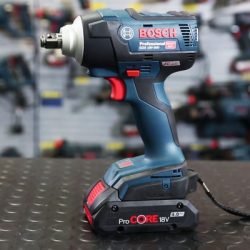
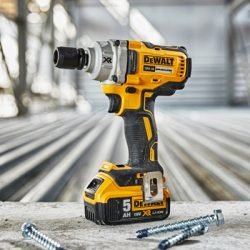
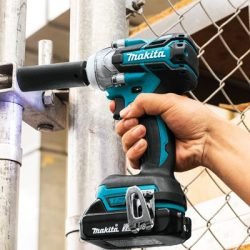
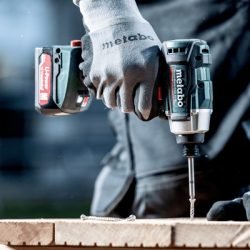
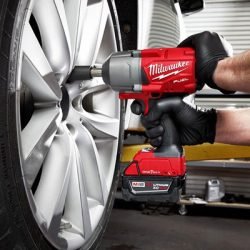
A cordless impact wrench can save considerable time when removing or installing fasteners, but choosing the right model requires more than comparing advertised torque. For buyers in Canada, the decision can also involve battery compatibility, cold-weather use, tool size, fastener control, charger requirements, socket compatibility, and the type of mechanical work being performed.
The phrase “precision cordless impact wrench” is best treated as a buying objective rather than a guarantee of a particular technical category. An impact wrench is primarily designed to deliver rotational impact force for loosening or tightening fasteners. Precision comes from how effectively the tool allows the user to control that force, select an appropriate operating mode, and finish the job without relying on excessive torque.
For that reason, a strong buying decision should balance torque, speed, impact mechanism, control settings, ergonomics, battery platform, anvil size, overall dimensions, and the manufacturer's published specifications. Brands such as Milwaukee, DeWalt, Makita, Bosch, Ryobi, Metabo HPT, and Craftsman offer cordless tools across different performance categories, but the best choice depends on the application rather than the brand name alone.
Precision does not necessarily mean that an impact wrench can replace a calibrated torque wrench. In most mechanical applications, an impact wrench should be viewed as a productivity tool, while a suitable torque wrench may still be required when a fastener must be tightened to a specified torque value.
A precision-oriented impact wrench typically makes it easier to avoid unnecessary over-tightening through features such as selectable speed modes, electronic power settings, trigger control, automatic shut-off functions, fastening modes, or other manufacturer-specific control systems.
Torque is one of the most prominent specifications on cordless impact wrenches, but it can also be one of the easiest to misunderstand. Manufacturers may publish different torque figures for different operating conditions, and terms such as fastening torque, breakaway torque, nut-busting torque, maximum torque, or reverse torque are not necessarily interchangeable.
When comparing models, do not assume that the highest number automatically represents the best tool. A very high-output wrench may be unnecessary for routine automotive work and can be less convenient if it is physically larger or heavier.
Fastening torque describes the rotational force available during tightening under the manufacturer's stated conditions. Breakaway or loosening figures describe the tool's ability to overcome resistance when removing a fastener. These figures can differ substantially.
A wrench advertised with a particularly high loosening figure should not be interpreted as meaning that every fastening operation will produce the same torque. Buyers should read the manufacturer's specification sheet and determine which measurement is being quoted.
A high-torque impact wrench can be valuable for heavy equipment, large fasteners, stubborn automotive components, or demanding construction applications. However, more torque can also be unnecessary for smaller fasteners.
For general automotive maintenance, wheel service, light mechanical work, and home projects, controllability and appropriate output can be more useful than simply selecting the strongest available model. For heavy-duty applications, output becomes increasingly important, but size, battery capacity, anvil configuration, and duty cycle should still be considered.
The square-drive size affects the type of sockets the wrench accepts and gives buyers an early indication of the tool's intended application.
Smaller cordless impact tools are useful when access and reduced size matter more than extreme torque. A 3/8-inch drive can be attractive for lighter automotive and mechanical work where a full-size 1/2-inch wrench would be unnecessarily bulky.
These tools should not automatically be treated as substitutes for higher-output impact wrenches. Always compare the manufacturer's torque rating with the fastener requirements of the intended application.
The 1/2-inch drive is one of the most versatile configurations for automotive and general mechanical work. It supports a broad range of impact-rated sockets and is commonly considered when working on wheels, suspension components, larger fasteners, and equipment.
For many Canadian garage users looking for a single cordless impact wrench, the 1/2-inch category is worth serious consideration because it can cover a wide range of common tasks without immediately moving into the largest heavy-duty tool classes.
Larger drive sizes are generally aimed at demanding mechanical, industrial, agricultural, commercial vehicle, or heavy-equipment applications. They can deliver substantial output but are typically less attractive for casual automotive use because of their greater size, weight, and battery demands.
If your work routinely involves large fasteners, heavy machinery, commercial vehicles, or industrial equipment, compare these larger platforms based on the manufacturer's published torque, dimensions, weight, battery requirements, and intended duty cycle.
Brushless motors are common in higher-end cordless power tools and are worth considering when an impact wrench will see frequent use. A brushless design eliminates traditional motor brushes and can support efficient electronic motor control.
For buyers, the practical benefits can include efficient use of battery energy, reduced mechanical wear associated with brushes, and sophisticated electronic control systems. However, brushless construction alone does not guarantee that one impact wrench will outperform another in every real-world application.
When comparing brushless models, look beyond the motor label. Consider torque, speed, impact rate, control modes, battery platform, tool dimensions, weight, warranty terms, replacement battery cost, and the manufacturer's intended application.
Battery compatibility can be one of the most important long-term decisions. Cordless impact wrenches are often sold as part of a broader tool ecosystem, and buying into a battery platform may influence the cost and convenience of future tool purchases.
For example, a buyer already using Milwaukee batteries may find a compatible Milwaukee bare tool more practical than starting a completely new battery ecosystem. The same consideration applies to DeWalt, Makita, Bosch, Ryobi, Craftsman, and other manufacturers with established cordless platforms.
A bare tool normally makes the most sense when you already own compatible batteries and a charger. A complete kit can be more practical for first-time buyers because it typically provides the tool, battery, and charger together.
Canadian users may encounter operating conditions that are very different from those found in mild climates. Lithium-ion batteries can behave differently at low temperatures, particularly when exposed to prolonged cold.
If an impact wrench will be used in an unheated garage, outdoor work area, service vehicle, farm setting, or winter construction environment, consult the battery manufacturer's operating and charging guidance. Avoid assuming that a battery's normal warm-weather performance will remain identical in extreme cold.
Battery storage is also worth considering. Keeping batteries in an appropriate environment before use can be more practical than leaving them exposed to freezing temperatures for extended periods. Always follow the specific storage, charging, and operating instructions supplied with the battery.
Torque receives the most attention, but rotational speed and impact rate also influence productivity.
RPM refers to revolutions per minute. A higher rotational speed can help spin a fastener on or off more quickly when resistance is relatively low. However, maximum RPM is not necessarily desirable for every operation.
IPM means impacts per minute. The impact mechanism delivers repeated blows to the output shaft, helping the tool overcome resistance. A high impact rate can contribute to fast operation, but it should be considered alongside torque and electronic control.
For precision-oriented work, a tool with multiple speed and power settings can be more useful than one that simply offers the highest maximum RPM or IPM figure.
Selectable modes can make a cordless impact wrench considerably easier to use across different tasks. A lower-power mode may be appropriate for lighter fastening work, while a higher setting can be reserved for more demanding fasteners.
Some advanced impact wrenches provide specialized fastening or removal modes. Depending on the manufacturer, these may reduce the chance of over-tightening, stop or reduce output after a certain condition is detected, or help control fastening behaviour.
Because manufacturers implement these features differently, buyers should read the exact product documentation rather than assuming that two tools with similarly named modes perform identically.
These tools serve different purposes and are often best used together rather than viewed as direct substitutes.
This distinction is particularly important for automotive wheel fasteners and other applications where the vehicle or equipment manufacturer specifies a particular tightening torque.
Automotive users should consider the tasks they actually perform instead of selecting a wrench based solely on maximum advertised output.
A cordless impact wrench can make wheel removal substantially faster than manually loosening every lug nut. A 1/2-inch drive is often a practical category to investigate for general automotive work.
However, the impact wrench should not be relied upon as the final authority for wheel fastener torque. Check the vehicle manufacturer's recommended torque specification and use an appropriate torque wrench for final tightening when required.
Suspension components can involve heavily loaded or corrosion-affected fasteners. In this environment, available loosening torque, battery capacity, tool clearance, and socket access become especially relevant.
A compact mid-torque wrench can sometimes offer a useful compromise between accessibility and power, while a high-torque model may be more appropriate for particularly stubborn or large fasteners.
Engine bays can contain tight spaces where a large impact wrench is difficult to position. Buyers should therefore compare head length and overall dimensions in addition to torque.
Compact models prioritize accessibility and reduced size. They are attractive for technicians and DIY users who frequently work in confined areas.
The primary trade-off is output. Buyers should confirm whether the compact model's published torque is sufficient for their largest and most difficult fasteners.
Mid-torque models can provide a useful balance between portability and performance. This category is worth investigating for general automotive maintenance, garage projects, equipment repair, and users who want one versatile tool rather than separate compact and heavy-duty wrenches.
High-torque models are intended for applications where substantial loosening or fastening force is required. They can be appropriate for heavy equipment and demanding mechanical work, but their additional power may come with increased size, weight, and battery consumption.
For a typical homeowner who occasionally removes vehicle wheels, a high-torque model may provide more capability than necessary. For professional or heavy-equipment users, the additional output may be justified.
Impact wrench specifications should not be evaluated exclusively on a product page's torque figures. Tool weight and balance can directly affect comfort, particularly during repetitive work.
The anvil is the output section where the socket attaches. Common retention configurations include friction rings and pin-detent systems, with the exact availability depending on the manufacturer and model.
A friction ring can make socket changes convenient, while a pin-detent arrangement can provide strong mechanical retention. Neither should automatically be treated as universally superior; the better choice depends on how the tool will be used and how frequently sockets need to be changed.
Impact wrenches should be paired with sockets designed for impact use. Impact sockets are engineered differently from many conventional chrome hand-tool sockets and are intended to tolerate the repeated shock loads produced by impact tools.
Do not choose sockets solely because they physically fit the square drive. Check the socket's intended use and ensure the size is correct for the fastener.
The strongest tool is not automatically the best tool. Excess capacity can mean additional weight, bulk, and expense without providing a meaningful benefit for the buyer's actual work.
The initial tool price can look attractive until the cost of batteries and chargers is considered. If you do not already own compatible batteries, compare complete kit costs as well as bare-tool prices.
Maximum fastening torque and maximum loosening or breakaway figures can represent different operating characteristics. Compare like-for-like specifications whenever possible.
A high-output impact wrench may not fit where you need it. Check the tool's length, head size, and overall dimensions before buying.
Electronic modes can improve control, but they should not automatically be interpreted as a substitute for a calibrated torque wrench when a specified final torque is required.
Confirm that the impact wrench's square drive matches the socket sizes and applications you intend to use. Adapters can change drive sizes, but they should not be treated as a reason to disregard the correct tool configuration.
A compact tool can become substantially heavier with a large-capacity battery. Consider the complete operating weight rather than judging portability from the bare tool alone.
Battery-powered tools have an ongoing ownership consideration that corded tools generally do not. Check the availability and cost of compatible replacement batteries before committing to a platform.
When two models appear similar, use a structured comparison rather than focusing on one headline specification.
Milwaukee, DeWalt, and Makita are prominent names in cordless power tools, but choosing between them should start with the battery ecosystem already available to you.
If your garage or workshop already contains several tools from one platform, staying within that ecosystem can reduce the need to purchase additional batteries and chargers. If you are starting from scratch, compare the impact wrench itself as well as the broader range of compatible tools you may want later.
Do not assume that every product from a well-known brand offers the same performance. Each manufacturer sells multiple impact wrench families, sizes, generations, and output levels. Model-specific specifications remain more important than the logo on the tool.
Depending on budget and intended use, buyers may also encounter cordless impact wrench options from Bosch, Ryobi, Metabo HPT, Craftsman, and other established power-tool manufacturers.
The best comparison is not simply brand against brand. Compare the specific model, battery platform, drive size, torque rating, control features, physical dimensions, warranty information, included accessories, and intended application.
Professional users should place greater emphasis on durability, ergonomics, battery availability, charging speed, service support, repeated-use comfort, and compatibility with an existing tool ecosystem.
For someone using an impact wrench throughout the working day, a small difference in weight or balance can become more significant than it would for a homeowner who uses the tool occasionally.
DIY users can often prioritize versatility and value. A compact or mid-torque model may cover common maintenance tasks without the size and expense associated with the largest professional-grade impact wrenches.
However, if the tool will also be used for agricultural equipment, trailers, larger machinery, or frequent automotive repairs, moving up to a higher-output model may be justified.
Proper care can help preserve the tool and battery system over time. Always follow the manufacturer's maintenance instructions because service procedures vary by model.
Cordless impact wrench performance depends heavily on the condition and suitability of the battery. A high-output wrench paired with an inappropriate or depleted battery may not provide the operating experience a buyer expects from the tool's headline specifications.
Use the manufacturer's recommended charger and battery combinations. Follow the specified temperature guidance for charging, especially after working in cold Canadian conditions. If a battery has been stored in a very cold environment, allow it to reach an appropriate temperature before charging if the manufacturer's instructions require it.
Impact wrenches are powerful tools and should be used with appropriate protective equipment and safe working practices.
Consistency starts with choosing the appropriate mode rather than immediately using maximum power. Begin with a lower setting when the application allows it and increase output only when necessary.
Thread condition also matters. Rust, contamination, lubrication, damaged threads, and fastener condition can all change the amount of torque required to achieve a particular clamping force. Consequently, an impact wrench's output should not be treated as a direct measurement of fastener preload.
For applications with specified torque requirements, use the impact wrench primarily for speed and then verify final tightening using the appropriate calibrated tool.
Customer reviews can be useful when researching a cordless impact wrench, but they should supplement rather than replace technical specifications. A buyer reviewing a compact wrench for occasional wheel changes may have very different expectations from a professional mechanic using the same model every day.
Look for recurring observations rather than relying on a single enthusiastic or negative comment. Useful review themes can include battery life, ergonomics, tool balance, ease of changing sockets, mode usability, size, and long-term ownership concerns.
At the same time, separate subjective preferences from measurable information. Torque ratings, drive size, battery compatibility, dimensions, and warranty information should be checked against manufacturer documentation.
A specification sheet can reveal more than the marketing headline. When comparing products, look for the complete set of technical details rather than one maximum figure.
An impact wrench is not the correct solution for every fastening task. Small fasteners can be damaged by excessive force, while precision applications may require a tool specifically designed to apply a defined torque.
For very small fasteners, a manual wrench, ratchet, screwdriver, or lower-output powered tool may offer better control. For final tightening where an exact torque is specified, use the appropriate torque-controlled tool.
Likewise, buyers who only need an impact wrench once or twice a year should consider whether investing in a complete cordless ecosystem makes financial sense compared with other options available for occasional use.
For a 2026 purchase in Canada, start by identifying your actual workload and then narrow the selection by drive size, torque class, battery ecosystem, and physical dimensions. This approach prevents the common mistake of selecting a tool solely because it has the largest number in the product title.
For occasional automotive work, prioritize manageable size, sufficient torque, good control, and a battery platform that fits your existing tools. For frequent professional use, place greater weight on ergonomics, battery capacity, durability-oriented design, platform compatibility, and service considerations. For heavy equipment, focus on the manufacturer's high-output specifications, appropriate drive size, battery requirements, and suitability for large fasteners.
There is no single best model for every Canadian buyer. The right choice depends on the required torque, drive size, access limitations, battery platform, frequency of use, and budget. A compact model may be preferable for confined automotive work, while a high-torque model can be more appropriate for heavy equipment.
An impact wrench should not automatically be considered a substitute for a calibrated torque wrench. Even models with sophisticated electronic modes should be evaluated according to the manufacturer's documentation. When a vehicle or equipment manufacturer specifies a final torque, use an appropriate torque-controlled tool to verify it.
A 1/2-inch drive is a versatile option for many automotive applications because it accommodates a broad range of common impact sockets. The correct torque class still depends on the vehicle and the fasteners involved.
Choose compact when access, weight, and maneuverability are priorities. Choose high-torque when your work routinely involves large or stubborn fasteners. A mid-torque model can be a useful middle ground for buyers who want versatility.
Brushless motor technology can provide efficiency and sophisticated electronic control, but the motor type should not be the only purchasing criterion. Compare the complete tool specification and intended application.
Battery capacity and output characteristics can affect how a cordless tool performs, but battery size alone should not be interpreted as a guaranteed increase in maximum torque. Check the manufacturer's recommended batteries and performance specifications for the exact model.
Use sockets specifically designed for impact tools. Impact-rated sockets are intended to handle the shock loading generated by an impact mechanism.
If you already own compatible cordless tools, staying within that battery ecosystem can be convenient. If you are starting from scratch, compare the impact wrench together with the manufacturer's broader range of compatible tools, battery choices, charger options, and long-term ownership considerations.
Not necessarily. The appropriate torque class depends on the vehicle, fasteners, and workload. Many users can complete ordinary wheel-removal tasks with a less extreme tool, while professional or heavy-duty applications may justify greater output.
An impact wrench can help overcome resistance from difficult fasteners, but there is no guarantee that a particular tool will remove every rusted or seized fastener. Corrosion, thread damage, fastener size, access, and mechanical condition all affect the result.
No. More torque provides greater capability but can add weight, bulk, and cost. The best tool is normally the one that provides sufficient output while maintaining the size, control, and ergonomics appropriate for the intended work.
Consider a suitable drive size, enough torque for your vehicles and projects, multiple control settings, a practical battery system, manageable weight, appropriate dimensions, and battery operating guidance suitable for your storage and working environment.
The strongest cordless impact wrench is not automatically the most precise, most useful, or best value choice. A better purchasing decision comes from matching the tool to the fasteners, working environment, frequency of use, and existing battery ecosystem.
For Canadian buyers, pay particular attention to battery management in cold conditions, the availability of compatible batteries and chargers, the difference between bare-tool and kit pricing, and the physical size of the wrench. Compare manufacturer specifications carefully and treat customer feedback as supporting information rather than a replacement for technical documentation.
For automotive work, a practical combination of appropriate torque, compact dimensions, electronic control, and a 1/2-inch drive may offer a strong balance. For heavy-duty mechanical work, prioritize the manufacturer's published high-torque specifications and a suitable larger drive configuration. For frequent professional use, ergonomics, battery ecosystem, durability considerations, and long-term platform value become increasingly important.
Before purchasing any model featured in a 2026 buying guide, verify the current specifications, included accessories, battery configuration, warranty information, and retailer price for the exact model number. Product generations and kit contents can change, so the model-specific information should always take priority over a generic product description.