

♥ Wishlist
Compare 38 Best Cordless Angle Drill Options for Tight Spaces and Precision Work products in Canada. Reviews, ratings, pros, cons and buying advice updated for October 2026.
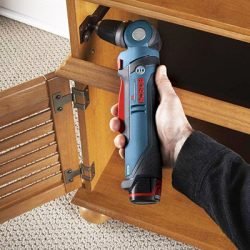
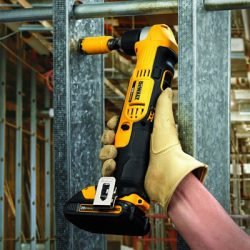
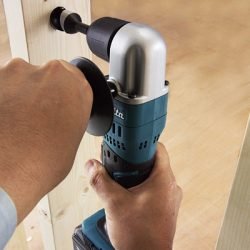
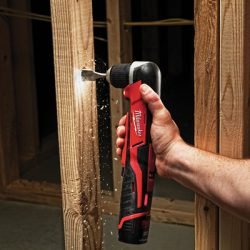


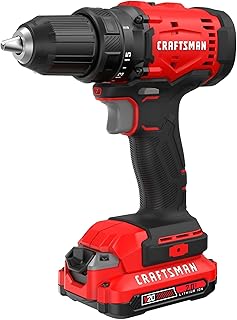
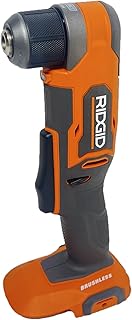

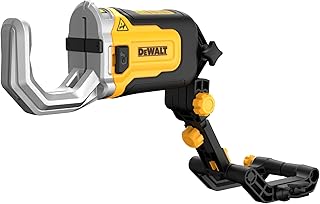


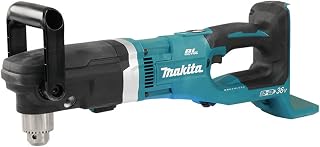


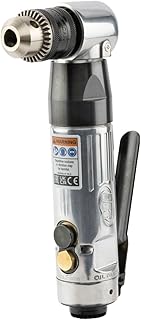

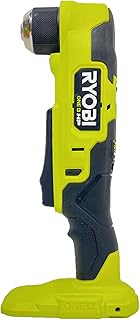


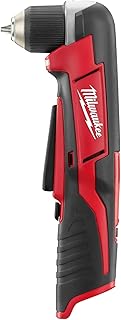


A precision cordless angle drill is designed for drilling and fastening where a conventional drill is difficult to position. Its compact right-angle configuration can be particularly useful inside cabinets, between framing members, beneath sinks, around ducting, and in other restricted Canadian residential, renovation, automotive, and workshop applications.
When comparing the best precision cordless angle drills for 2026, look beyond maximum torque or headline RPM. The most useful model depends on the combination of head length, overall body size, chuck or bit interface, speed control, clutch behaviour, battery platform, ergonomics, and the type of material being drilled. A compact tool that fits into a narrow cavity can be considerably more useful than a larger, more powerful drill that cannot be positioned correctly.
A cordless angle drill places the drilling axis at approximately 90 degrees to the motor and main handle arrangement. This allows the operator to work in spaces where the length of a conventional drill would cause the rear of the tool to collide with surrounding material.
The term “precision” is best understood as a description of intended control rather than a universal technical specification. For delicate fastening, cabinet installation, electrical work, furniture assembly, and pilot-hole drilling, controllable speed, a responsive trigger, compact dimensions, and a suitable clutch can matter more than maximum power.
A standard cordless drill is usually the more versatile choice for general drilling and fastening because its straight configuration accommodates a broader range of tasks. A right-angle drill becomes advantageous when access is the primary problem.
A right-angle drill should not automatically be considered a replacement for a standard drill. For many buyers, the best setup is a conventional drill for everyday work plus a compact angle drill for jobs where access is the limiting factor.
The chuck or tool interface determines which accessories can be used. Some angle drills use a conventional keyed or keyless chuck, while compact models may use a hex interface intended primarily for driver bits and compatible drill bits.
A chuck provides flexibility when you regularly switch between different drill-bit diameters. A hex interface can make sense when the priority is compactness and rapid bit changes. Before buying, check the exact interface and the accessory range required for your work.
Head length is one of the most important specifications for confined-space drilling. A tool with a shorter head may fit between framing components where a physically larger right-angle drill cannot.
Do not evaluate head length in isolation. The battery, handle, auxiliary components, chuck, and selected bit all contribute to the actual clearance required around the workpiece.
A compact body can improve access, but an extremely small tool may involve compromises in runtime, sustained power, or grip comfort. Consider the actual spaces in which the drill will be used rather than selecting the smallest model simply because it has a compact specification.
Variable speed is important for controlled drilling. Lower speeds are generally useful when starting holes, driving fasteners, or working with materials and accessories that require slower operation. Higher speeds can be useful for suitable drilling applications where the accessory and material permit it.
A broad speed range is valuable, but the trigger's controllability also matters. A drill that makes it easy to maintain a low, steady speed can be more useful for precision work than one that simply advertises a high maximum RPM.
Torque indicates the tool's rotational force, but the highest advertised torque is not automatically the best choice for precision applications. Excessive force can make small fasteners easier to overtighten and can increase the likelihood of damaging delicate materials.
When comparing torque figures, also consider the manufacturer's testing conditions and whether the figures being compared were measured using the same methodology. Specifications from different manufacturers are not always directly equivalent.
A multi-position clutch can help control fastening force. This is particularly useful for cabinet hardware, furniture, trim, light-duty assembly, and other applications where consistent fastening is more important than maximum torque.
For drilling, the appropriate clutch or drill setting depends on the tool design and application. Always follow the manufacturer's instructions rather than assuming that a particular numbered setting represents the same torque across different brands.
Popular cordless tool ecosystems from Milwaukee, DeWalt, Makita, Bosch, and Ryobi use different battery families and compatibility systems. A battery from one manufacturer's platform generally should not be assumed to work with another manufacturer's tool.
If you already own compatible batteries and chargers, staying within the same platform can reduce the total cost of adding an angle drill. However, do not choose a tool solely because its battery is already in your workshop. Check the drill's dimensions, performance characteristics, and intended application first.
Brushless motors are widely used in modern cordless power tools and can offer efficiency, durability, and electronic control advantages. Brushed motors remain available and can be suitable for occasional or budget-conscious use.
For frequent professional use, a brushless angle drill may be worth prioritising because the motor design is generally better suited to demanding cordless-tool applications. For occasional household projects, other factors such as ergonomics, included accessories, battery cost, and purchase price may have greater importance.
Right-angle drilling is fundamentally an access problem. If the drill cannot physically reach the hole, additional torque does not solve the problem.
When comparing models, imagine the complete drilling position rather than looking only at the drill's specifications. Measure the available clearance if necessary. Pay attention to the distance from the centre of the chuck to the back of the tool, the battery position, handle orientation, and the amount of room needed for your hand.
This is especially important for Canadian renovation work involving closely spaced framing, cabinetry, utility rooms, basements, mechanical spaces, and finished interiors where avoiding unnecessary contact with surrounding surfaces matters.
Prioritise compact dimensions, precise trigger control, a suitable clutch, comfortable grip, and low-speed operation. Extremely high torque is rarely the primary requirement for delicate cabinet hardware.
Look for a compact head, dependable speed control, suitable drilling capacity, and a work light. The exact bit type and diameter should match the material being drilled and the installation requirements.
Always follow applicable electrical safety practices and the requirements of the installation. A cordless drill is a drilling tool; it does not make an electrical work area safe by itself.
Renovation work can involve wood framing, composite materials, masonry, metal, and other substrates. Select a drill and accessories specifically rated for the materials involved. For larger holes, verify the manufacturer's permitted accessory sizes and operating instructions.
A compact right-angle drill can be useful in restricted automotive spaces, particularly for drilling or fastening where a standard drill body cannot be positioned easily. Consider grip access, lighting, battery clearance, and the possibility of exposure to oils or workshop contaminants.
If right-angle access is only an occasional requirement, a compact model may be preferable to a large professional tool. Buyers who already own a cordless platform should compare compatible models before investing in another charger and battery system.
Brand selection should be based on the specific tool platform rather than brand recognition alone. Established manufacturers such as Milwaukee, DeWalt, Makita, Bosch, Ryobi, and Metabo HPT offer cordless tools across different professional and consumer-oriented segments.
The appropriate brand depends on battery compatibility, tool availability in Canada, specifications, intended workload, accessory requirements, and the overall cost of building or expanding a cordless tool system.
Battery performance can be affected by temperature. Canadian users who work in unheated garages, workshops, vehicles, construction sites, or other cold environments should pay particular attention to battery-storage and operating recommendations provided by the manufacturer.
Do not assume that a battery performing well indoors will provide identical runtime in very cold conditions. Store batteries according to the manufacturer's guidance and allow them to reach an appropriate temperature before charging when required by the manufacturer's instructions.
A compact lower-voltage cordless platform can be attractive for precision and access-focused work because the tool and battery combination may be easier to handle. Higher-voltage platforms can provide greater capability for demanding applications but may add size and weight.
There is no universally superior voltage category. Match the platform to the work. If the primary objective is drilling small holes and installing fasteners in confined areas, compactness and control may be more important than maximum output. If the drill will regularly encounter demanding materials or larger accessories, additional power may justify a larger platform.
Two drills with similar published specifications can feel very different in actual use. A precision angle drill should be evaluated for grip shape, trigger reach, balance, weight distribution, switch placement, and how easily the operator can maintain alignment with the hole.
A high-quality angle drill cannot compensate for an unsuitable or worn accessory. Select drill bits according to the material, required hole size, speed, and manufacturer's recommendations.
Use controlled trigger pressure when beginning a hole. A slow start can help keep the bit positioned correctly and reduce wandering, particularly on smooth surfaces.
Keep the drill aligned with the intended hole throughout the operation. An angle drill's compact geometry can make it easier to work in confined areas, but the operator still needs sufficient clearance to maintain a stable position.
More pressure is not always better. Excessive force can generate heat, reduce bit life, increase the likelihood of slipping, and make it harder to maintain precision.
For deeper holes, follow the accessory manufacturer's recommendations for clearing chips and controlling heat. Different materials require different drilling techniques.
Maximum torque is only one part of a drill's performance. For confined-space and precision work, access, controllability, and ergonomics can be more important.
A drill advertised as compact may still be too large for the specific location where you intend to use it. Compare actual dimensions and account for the battery and accessory.
The cost of a cordless tool system can include the tool, batteries, charger, and future replacement batteries. Compare the complete setup rather than judging the drill by its bare-tool price.
Right-angle configuration describes geometry, not performance. Chuck type, speed range, torque characteristics, motor design, battery system, and drilling capacity can differ substantially between models.
The wrong drill bit can make a capable drill appear ineffective. Match the accessory to the material and intended hole.
Ratings can be useful during commercial research, but they should be considered alongside specifications, verified customer feedback, intended application, and manufacturer documentation. A model that works exceptionally well for one user may be poorly suited to another's job.
When reading verified customer reviews, focus on comments that describe actual use rather than relying solely on an overall star rating.
Professional users typically place greater emphasis on durability, battery ecosystem depth, serviceability, sustained workload capability, ergonomics, and compatibility with a wider range of jobsite tools.
DIY users may place greater emphasis on purchase cost, ease of use, compactness, included accessories, and compatibility with tools already owned.
Neither category is inherently better for every buyer. A professional-grade drill may be unnecessary for occasional furniture assembly, while a basic consumer-oriented tool may not be the most economical choice for someone using an angle drill every day.
Before purchasing from a Canadian retailer or marketplace, verify the complete product configuration. Product listings can vary by kit and region.
A bare tool can appear less expensive than a complete kit because it excludes batteries and a charger. For users already invested in the same battery platform, this can be the most economical route.
For someone starting from scratch, however, the relevant comparison is the complete system cost. Add the price of the required battery and charger before deciding which option offers better value.
When comparing today's prices, also check whether different listings contain different battery capacities, accessory packages, or tool generations. A lower advertised price does not necessarily represent the same configuration.
Regular care can help preserve the performance and safety of a cordless angle drill. Always follow the manufacturer's maintenance instructions for the exact model.
Read the manufacturer's instructions before operating any cordless angle drill. Wear appropriate eye protection and use additional protective equipment when the material or application requires it.
Before drilling, identify potential hazards behind or within the workpiece. Walls, floors, cabinets, framing, and automotive components can conceal electrical wiring, plumbing, fasteners, structural components, or other objects that should not be drilled.
For most buyers, the following order is a useful starting point when comparing precision cordless angle drills:
For users who primarily need access inside cabinets, framing cavities, and other tight locations, prioritise minimum head length and manageable overall dimensions. A compact tool can be preferable even when a larger model offers greater maximum torque.
Frequent renovation work may justify a durable brushless platform with a strong battery ecosystem, good ergonomics, useful speed control, and sufficient capacity for the accessories used on the job.
Occasional users should look for an affordable and easy-to-control tool that does not require an unnecessarily expensive battery ecosystem. Existing battery compatibility can be a major value factor.
Prioritise compactness, clutch control, low-speed precision, a comfortable grip, and an appropriate chuck or bit interface over maximum torque.
For demanding drilling, compare torque, motor type, battery capacity, permissible accessory sizes, cooling characteristics, and the manufacturer's intended applications. More power should be paired with suitable accessories and proper operating technique.
If a right-angle drill is only one part of a larger tool collection, consider the battery ecosystem as a system rather than buying each tool independently.
This approach can be particularly useful for homeowners and tradespeople who gradually build their cordless tool collection over several years.
There is no single best model for every Canadian buyer. The right choice depends on access requirements, drilling materials, desired control, battery platform, workload, and budget. Compare the exact specifications and configuration rather than choosing solely from a ranked list.
Yes. Their primary advantage is their compact right-angle configuration, which can make drilling and fastening possible in locations where a conventional drill is difficult to position. The actual usefulness depends on the tool's head length, body dimensions, battery size, and accessory.
A brushless model can be a strong choice for frequent users because brushless motor technology is widely associated with efficient cordless-tool operation and reduced brush-related wear. Occasional users should also consider price, ergonomics, battery costs, and the actual workload.
If you already own compatible batteries and a charger, a bare tool may be the more practical option. If you do not own the battery platform, compare the total cost of the tool, battery, and charger rather than the bare-tool price.
The appropriate voltage depends on the application. Compact lower-voltage systems can be attractive for access and handling, while higher-voltage platforms can provide additional capability for demanding work. Choose based on the complete tool design and workload rather than voltage alone.
Sometimes, but not universally. A right-angle drill excels where access is restricted, while a conventional drill is generally more versatile for everyday drilling and fastening. Users who regularly encounter both types of applications may benefit from having both.
Controllable speed, stable handling, appropriate accessories, correct alignment, suitable clutch settings for fastening, and compact dimensions can all contribute to precision. Maximum torque by itself does not guarantee accurate results.
They are established power-tool brands with different cordless ecosystems and product ranges. The best option depends on the specific model, battery platform, specifications, application, and overall cost. Compare the individual tool rather than assuming every model from a particular brand is equally suitable.
Battery performance can change with temperature. Follow the battery and tool manufacturer's recommendations for operating, charging, storage, and temperature conditions. Cold-weather work may require additional planning for battery storage and runtime.
Identify potential wiring, plumbing, structural components, and other concealed hazards before drilling. Use appropriate detection and verification methods for the situation, and follow applicable safety practices.
Before selecting a precision cordless angle drill for use in Canada, confirm these points:
The best precision cordless angle drill is the one that solves the access problem without sacrificing the control, compatibility, and power required for the job. For many buyers, the deciding factors will be compact head geometry, battery-platform compatibility, variable-speed control, ergonomics, and the correct chuck or bit interface.
Professional users should place greater emphasis on durability, workload capability, battery ecosystem depth, and long-term ergonomics. DIY users may obtain better value by choosing a compact, easy-to-control model that shares batteries with tools they already own. Before purchasing, compare the exact model specifications, kit contents, verified customer feedback, and current Canadian pricing so that the final choice matches the work rather than simply the marketing headline.