

♥ Wishlist
Compare 43 DeWalt Cordless Chainsaws products in Canada. Reviews, ratings, pros, cons and buying advice updated for October 2026.







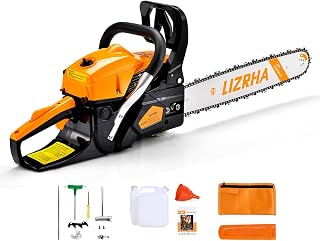


Choosing a cordless chainsaw for Canadian conditions involves more than comparing bar length or battery voltage. The right model depends on the type and diameter of wood you expect to cut, how often you will use the saw, the battery platform you already own, the weight you can comfortably control, and the environmental conditions in which the tool will operate. DeWalt cordless chainsaws are particularly worth comparing as a system because the battery, charger, motor, chain, bar and safety features all contribute to the overall experience.
This guide is designed for Canadian shoppers comparing DeWalt cordless chainsaws for property maintenance, pruning, firewood preparation, storm cleanup and other general outdoor cutting tasks. Product specifications can vary by model, kit configuration and market, so always confirm the exact specification of the individual saw, battery and charger before purchasing.
A modern battery chainsaw can be considerably more convenient than a petrol model for many residential tasks. There is no fuel mixing, no pull-start procedure and no engine exhaust during use. For occasional cutting around a property, the ability to insert a charged battery and begin work can be a major practical advantage.
DeWalt also has a broad cordless tool ecosystem, making battery compatibility an important consideration for shoppers who already own compatible DeWalt batteries. However, battery compatibility should never be assumed solely from the brand name. Check the manufacturer's compatibility information for the exact chainsaw and battery generation before relying on an existing battery.
Chainsaw specifications should be interpreted according to the job rather than treated as isolated numbers. A longer guide bar is not automatically better, and a higher-voltage battery does not by itself guarantee that one model will outperform every other model in every cutting situation.
The guide bar determines the approximate size and type of cutting work the saw is designed to handle. Shorter bars are generally easier to manoeuvre and can make a compact saw attractive for pruning, small branches and light property maintenance. Longer bars can provide additional cutting capacity for larger material but may also increase overall size, weight and handling demands.
For Canadian homeowners, the most useful approach is to match the bar length to the typical diameter of material you actually expect to cut. Avoid choosing a larger saw simply because its specification appears more impressive. A chainsaw that is appropriately sized for the work can be easier to control and less cumbersome during repeated cuts.
Voltage and amp-hour capacity describe different aspects of a battery system. Voltage is associated with the electrical architecture and power system, while amp-hour capacity provides an indication of stored electrical capacity. Neither figure should be interpreted as a direct guarantee of cutting time.
Actual runtime can change substantially depending on wood species, moisture, diameter, chain sharpness, cutting technique, ambient temperature, battery condition and the amount of time the motor spends under load.
Canadian users should pay particular attention to temperature. Cold conditions can affect battery performance, and a battery that performs normally indoors may behave differently when used in winter weather. Follow the battery manufacturer's instructions regarding storage, charging and operating temperatures.
A chainsaw may be sold as a bare tool or as a kit containing one or more batteries and a charger. Comparing the headline price without checking the package contents can lead to an inaccurate assessment of value.
Always compare the exact kit designation rather than assuming two listings for an apparently identical chainsaw contain the same accessories.
Chain speed is one of the specifications worth examining when comparing cordless chainsaws. It can provide useful context about cutting performance, but it should not be used in isolation. Chain condition, chain design, motor control, lubrication and the material being cut all affect how the saw behaves in real use.
Weight becomes increasingly important as cutting sessions become longer. A chainsaw that feels manageable for several quick cuts may become tiring when used continuously for cleanup or firewood preparation.
Look beyond the advertised tool-only weight when possible. The installed battery contributes to the actual carrying weight, and battery size can materially affect balance. A well-balanced saw can feel easier to control than a similarly weighted tool with a less favourable centre of gravity.
Many current cordless power tools use brushless motors because the design can offer efficient power delivery, electronic control and reduced maintenance compared with traditional brushed motor arrangements. In a chainsaw, motor technology works together with the battery, controller and mechanical drive system.
For buyers, the important question is not simply whether a chainsaw says "brushless." Consider the complete system: cutting performance, battery compatibility, runtime expectations, weight, chain adjustment, lubrication, safety controls and availability of replacement consumables.
The cutting system is the part of the chainsaw that physically engages the wood. A powerful motor cannot compensate indefinitely for a poorly maintained or incorrectly tensioned chain.
A sharp chain should cut efficiently without requiring excessive force from the operator. As the chain becomes dull, cutting can become slower and more demanding, and the saw may produce fine sawdust rather than the larger chips associated with an efficiently cutting chain.
Do not judge a chainsaw solely by its initial performance. Consider how easy it will be to maintain the chain and obtain the correct replacement chain when necessary.
Chain pitch and gauge are technical measurements that determine compatibility between the chain, guide bar and drive system. These specifications matter when buying replacement chains or bars. Never purchase a replacement chain based only on the general description of the chainsaw.
Record the exact information specified for your model and verify the replacement component before installation.
Chain lubrication reduces friction between the chain and guide bar during operation. An automatic oiler can make routine operation more convenient, but it still requires the operator to check the oil reservoir and follow the manufacturer's recommended lubricant guidance.
Chainsaws are inherently high-risk cutting tools. A buying decision should therefore consider safety and controllability alongside performance. Features such as a chain brake, hand guard, trigger controls and electronic safety mechanisms can contribute to safer operation, but no safety feature replaces correct technique and appropriate protective equipment.
Kickback occurs when the moving chain near the upper portion of the guide bar nose contacts an object or becomes pinched in a way that causes the saw to move rapidly toward the operator. It is one of the most important hazards associated with chainsaw operation.
Choosing a saw with appropriate safety equipment is only one part of risk management. Users should understand the manufacturer's operating instructions, maintain a sharp and correctly tensioned chain, maintain secure footing and avoid cutting positions that place the body in the potential path of the bar.
Do not use a cordless chainsaw for a task simply because its specifications appear capable of handling the material. Tree felling, large-diameter cutting, work at height and cutting near electrical infrastructure can require specialist knowledge or professional assistance.
For pruning and light garden maintenance, compactness and control can be more important than maximum cutting capacity. A smaller cordless chainsaw can be easier to manoeuvre around branches and may be less tiring during short jobs.
When pruning live trees, the cutting method and location of each cut matter. Avoid using a chainsaw beyond the limits specified for the particular model, and do not work from an unstable ladder or elevated position simply to reach a branch.
Storm-damaged trees require additional caution because branches can be under tension and may move unexpectedly when cut. Fallen trunks can also shift, roll or pinch a guide bar.
For routine cleanup of relatively small material, a cordless chainsaw may be convenient. However, heavily damaged trees, suspended branches, root plates, large trunks and trees close to structures should be assessed by someone with appropriate training.
Firewood cutting places different demands on a chainsaw because the work can involve repeated cuts through larger pieces of wood. Here, battery capacity, chain maintenance, ergonomics and cutting speed become increasingly important.
If you regularly process substantial quantities of firewood, compare the cordless saw's intended application and battery requirements against the workload rather than assuming that a consumer-oriented model is suitable for continuous heavy-duty production.
For homeowners maintaining a rural or suburban property, a cordless chainsaw can be useful for occasional branch removal, cutting small fallen limbs and dealing with routine woody growth. The convenience of battery operation can be especially attractive when the saw is used for relatively short jobs.
Canada's climate makes seasonal operating conditions an important part of cordless-tool ownership. Battery-powered equipment should be stored and charged according to the manufacturer's instructions, particularly during periods of very low temperature.
Cold weather can influence battery behaviour, while wet snow, rain and freezing conditions can introduce additional operational hazards. Check the specific chainsaw's instructions for environmental limitations rather than assuming that every cordless tool has identical weather resistance.
Do not leave batteries exposed to extreme temperatures unnecessarily. For long periods without use, follow the manufacturer's recommended storage procedure. Batteries should also be protected from moisture, physical damage and conditions outside their specified operating range.
Frozen wood can behave differently from warmer material and may increase the demands placed on the cutting system. Keep the chain properly maintained and avoid forcing the saw through material when the cutting system is not performing normally.
Battery runtime is one of the most frequently misunderstood cordless-chainsaw specifications. Manufacturers may provide runtime information under particular test conditions, but real-world performance depends heavily on the job.
For occasional jobs, one suitable battery may be sufficient. For extended property maintenance, having a second compatible battery can reduce interruptions, provided the batteries and charger are approved for the selected chainsaw.
A useful comparison should focus on specifications and suitability rather than simply selecting the model with the highest advertised number. When evaluating the leading DeWalt cordless chainsaw options for 2026, use a consistent checklist.
A longer guide bar is not automatically the best choice. Oversizing can add weight and make a tool less convenient for routine pruning or small-property work. Select a bar according to the work you actually perform.
Battery voltage is useful for identifying the electrical platform, but it is not a universal ranking system. Motor design, controller behaviour, chain speed, cutting system and application all influence practical performance.
A low bare-tool price may not represent the complete cost of ownership if you do not already have the appropriate battery and charger. Compare the complete setup required to operate the chainsaw.
Battery families and tool requirements can differ. Confirm compatibility for the exact chainsaw and battery rather than relying on brand familiarity.
Customer ratings can provide useful context, but they should not replace technical comparison. A chainsaw that is excellent for light pruning may be a poor fit for someone processing large quantities of firewood. Read reviews for recurring observations about ergonomics, setup, battery use and maintenance while giving greater weight to verified specifications.
The chain is a consumable component. Before purchasing a chainsaw, determine the correct replacement-chain specification and whether suitable replacements are reasonably accessible in your market.
Proper maintenance helps preserve cutting performance and allows problems to be identified before they become more serious. Always follow the exact maintenance instructions supplied with your chainsaw.
Chain maintenance should not be based solely on a calendar. Cutting performance provides useful clues. If the saw requires unusual downward pressure, produces fine dust instead of effective chips, cuts unevenly or generates excessive vibration, inspect the chain and cutting system.
A chain can be sharpened when appropriate, but chains and guide bars are wear components and eventually require replacement. Use replacement parts that meet the specifications for the exact chainsaw.
Shoppers comparing DeWalt should also consider alternatives from established power-tool manufacturers such as Milwaukee, Makita, EGO and Greenworks. The best choice is not necessarily the brand with the highest specification; it is the system that best matches the buyer's workload, battery requirements, ergonomics and long-term maintenance expectations.
DeWalt can be particularly attractive to users already invested in its compatible cordless tool ecosystem. The main comparison point is battery-platform compatibility and whether the available chainsaw models match the user's intended workload.
Milwaukee is another major cordless-tool brand worth comparing for shoppers who already own compatible equipment. Examine the exact chainsaw's bar, battery, weight, cutting specifications and intended application rather than comparing brands at a general level.
Makita has an extensive cordless power-tool ecosystem and offers another useful benchmark when comparing ergonomics, battery platforms and cutting equipment.
EGO focuses heavily on cordless outdoor power equipment. Its chainsaws can be relevant for shoppers whose priority is a dedicated outdoor-power battery platform rather than integration with a broader construction-tool collection.
Greenworks is another brand worth including in a Canadian cordless outdoor-tool comparison. As with other manufacturers, evaluate the exact model, battery platform, bar size, intended use and replacement-component requirements.
Reviews are most valuable when they explain the circumstances behind an opinion. A statement that a chainsaw has excellent battery life is less useful without knowing the type of wood, cutting diameter, battery capacity and workload involved.
When reading verified customer reviews, look for repeated observations rather than isolated comments. Pay attention to whether multiple users mention similar issues involving chain adjustment, balance, oiling, battery consumption, starting, controls or long-term durability. Also distinguish between complaints about the chainsaw itself and complaints caused by an incorrect battery, unsuitable application, damaged chain or incorrect maintenance.
The most economical chainsaw is not necessarily the model with the lowest initial price. Total ownership considerations include the tool, battery, charger, replacement chains, bar wear, maintenance equipment and the expected frequency of use.
For someone already equipped with compatible DeWalt batteries, a bare tool can potentially represent a different value proposition from a complete kit. A first-time cordless-tool buyer should instead compare the cost and contents of the complete system.
It is also sensible to compare current retailer pricing only after confirming that the listings represent the same model and kit configuration. Promotional pricing can change, and apparently similar listings may contain different batteries or accessories.
Use this checklist when narrowing the field to the best DeWalt cordless chainsaw for your requirements:
The performance of any chainsaw depends partly on how it is maintained and operated. A correctly sized saw with a sharp chain and suitable battery can be more useful than a substantially larger tool that is poorly maintained or difficult to control.
Use the chain and bar combination specified for the tool, maintain correct tension, keep the lubrication system supplied as directed and avoid forcing the saw through wood. Let the cutting system perform the work rather than applying excessive pressure.
Before beginning a job, inspect the work area for unstable branches, hidden objects, nails, wire, stones, uneven terrain and other hazards. Plan where the material can move after cutting and maintain a secure stance throughout the operation.
When the chainsaw will not be used for an extended period, clean it according to the manufacturer's instructions and store it in a dry, secure location. Batteries should be stored according to the battery manufacturer's temperature, charging and storage recommendations.
Avoid leaving a battery-powered chainsaw exposed outdoors where moisture, freezing conditions, direct sunlight or physical impacts can damage the equipment. Before seasonal use resumes, inspect the chain, bar, oil system, battery and safety controls rather than assuming the tool is ready simply because it was stored after the previous season.
A chainsaw should be treated as serious cutting equipment. Appropriate protective equipment is an essential part of responsible use. Depending on the task, this can include chainsaw-rated leg protection, suitable footwear, eye protection, hearing protection, gloves and head protection.
Protective equipment should be selected for the specific work and used according to applicable safety guidance. Ordinary clothing should not be assumed to provide chainsaw protection.
The best option depends on the cutting task, wood diameter, required runtime, battery platform and preferred weight. There is no single model that is ideal for every Canadian homeowner. Compare the exact specifications and kit contents of the models under consideration before deciding.
They can be suitable for firewood tasks that fall within the particular model's intended application and cutting capacity. For frequent or high-volume firewood processing, compare the workload against the manufacturer's intended use, battery requirements and cutting-system specifications.
Only if the battery is specifically compatible with the selected chainsaw. DeWalt has multiple cordless products and battery configurations, so verify compatibility for the exact model instead of assuming that every DeWalt battery can be used.
Runtime varies with battery capacity and operating conditions. Wood species, cutting diameter, chain sharpness, cutting frequency, temperature and operator technique can all affect how long a charge lasts. Treat published runtime figures as application-dependent rather than a universal guarantee.
Neither power source is universally better. Cordless models offer convenience, easy starting and no engine exhaust during operation, while petrol equipment may be better suited to certain sustained or heavy-duty applications. The appropriate choice depends on workload, portability, maintenance preferences and operating conditions.
Suitability depends on the exact equipment and application, but large-tree cutting and felling can involve hazards that go well beyond the saw's cutting capacity. Tree condition, lean, branches, tension, falling direction and surrounding structures all matter. Complex or hazardous tree work should be handled by appropriately trained professionals.
Select a bar based on the size and type of material you expect to cut and the manufacturer's specified capabilities. A compact bar can be preferable for pruning and light maintenance, while a larger bar may be appropriate for larger material when the specific saw is designed for that application.
Yes. Brushless motor technology does not eliminate routine chainsaw maintenance. Chain sharpening and tensioning, guide-bar inspection, lubrication, cleaning and battery care remain important.
There is no universal interval because cutting conditions vary. Inspect the chain regularly and sharpen it when cutting performance indicates that it has become dull, following the manufacturer's sharpening guidance or using a qualified service professional when appropriate.
Use the lubricant recommended or permitted by the chainsaw manufacturer. The oiling system and operating conditions should be considered when selecting chain lubricant.
If you already have a compatible battery and charger, a bare tool may be the more relevant configuration to compare. If you are entering the battery platform for the first time, compare complete kits and include the cost of the required battery and charger in your assessment.
Cold conditions can affect battery performance and equipment behaviour. Review the exact manufacturer's operating and storage instructions for temperature limitations, battery handling and charging. Never assume that all cordless equipment has identical cold-weather specifications.
The strongest DeWalt cordless chainsaw choice is the one that fits the work rather than the one with the most impressive specification sheet. Start by identifying your typical cutting diameter and workload, then compare bar length, motor characteristics, battery requirements, weight, chain system, safety features and maintenance requirements.
If you already own compatible DeWalt cordless equipment, battery compatibility can simplify the decision, but it should still be verified for the exact chainsaw. If you are building a cordless outdoor-tool collection from scratch, compare the complete system cost rather than focusing exclusively on the chainsaw body.
Before purchasing, check the latest Canadian specifications, package contents, warranty terms and retailer pricing for the exact model. Read verified customer feedback for practical information while using manufacturer documentation as the primary reference for technical specifications, operating limits and safety requirements.
Product listings and configurations can change during the year, so verify the details at the time of purchase. Confirm the exact model number, bar and chain specification, included battery, charger contents, manufacturer's warranty information for Canada and any stated operating limitations.
For an independent buying decision, compare specifications from the manufacturer with current retailer listings and verified customer feedback. This approach helps separate genuine differences between models from differences created by kit contents, promotional descriptions or individual user circumstances.