
♥ Wishlist
Compare 9 DEWALT Cordless Caulking Guns for Precise Sealant Application products in Canada. Reviews, ratings, pros, cons and buying advice updated for October 2026.


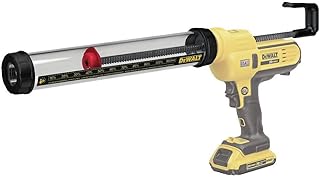


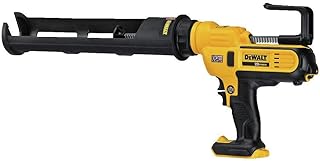
Choosing a cordless caulking gun is less about finding the tool with the most features and more about matching dispensing control, cartridge compatibility, battery platform, ergonomics and working conditions to the type of sealing work you actually perform. For Canadian buyers, the right choice can vary considerably between occasional home maintenance, renovation work, professional finishing, window and door installation, roofing applications and repetitive construction-site use.
A precision DEWALT cordless caulking gun is particularly worth evaluating when consistent material flow matters. Powered dispensing can reduce the hand force required compared with a conventional manual caulking gun, while adjustable control can help users manage the bead more accurately. However, cordless models differ in their trigger response, speed range, thrust capability, battery configuration, barrel design and compatibility with different sealant packaging systems.
Before comparing individual models, consider the material you will dispense, the size and type of cartridge or sausage pack, how frequently you will use the tool, whether you already own compatible DEWALT batteries and how important low-speed precision is for your projects.
Precision in a powered caulking gun is primarily about controlling how quickly material leaves the nozzle and how consistently the tool maintains pressure. A tool that operates too aggressively can make it difficult to produce a clean bead, particularly with narrow joints or low-viscosity sealants. Conversely, insufficient dispensing force can make thick construction adhesives and high-viscosity sealants frustrating to apply.
A useful precision-oriented design generally combines variable dispensing control with a responsive trigger and a mechanism capable of maintaining material pressure without excessive surging. The objective is not simply maximum output. For many finishing jobs, predictable output is more valuable than raw speed.
Battery compatibility can be one of the most important buying factors for Canadian shoppers considering a DEWALT cordless caulking gun. If you already use compatible DEWALT cordless tools, staying within the same battery ecosystem may reduce the need to manage another charger and another battery platform.
However, battery compatibility should never be the only selection criterion. A caulking gun is a specialized tool, and its practical usefulness depends on the dispensing mechanism, speed control and packaging format as much as the battery system.
Check the exact battery platform specified for the model rather than assuming that every DEWALT battery will fit every cordless tool. Product generations and voltage platforms can differ, and Canadian listings may include tool-only configurations as well as kits containing batteries and chargers.
A tool-only configuration can make sense when you already own the required battery and charger. A complete kit may be more practical for someone entering the battery platform for the first time. When comparing prices, make sure you are comparing equivalent configurations rather than judging a bare tool against a complete kit.
A larger battery can increase runtime potential but also adds weight. Since a caulking gun is often held in one hand while the other hand guides the nozzle, overall balance can be more important than maximum battery capacity for detailed finishing work.
Thrust force determines how effectively a powered caulking gun can push material through the cartridge and nozzle. Thick construction adhesives, polyurethane products, certain sealants and cold-weather materials can require substantially more dispensing force than lightweight acrylic or silicone products.
More thrust is not automatically better. Excessive output can make a tool difficult to control when applying small beads. The best specification depends on the materials you expect to use and the level of control available at lower dispensing speeds.
Some cordless caulking guns provide variable control through the trigger, while others emphasize selectable speed settings or a combination of controls. These approaches can feel quite different during use.
A variable trigger can provide fine adjustment when you are moving from a tight joint into a wider gap. Preset speed levels can make operation more predictable and may be easier for users who prefer a repeatable setting. When comparing precision models, look beyond the number of speed settings and consider how the control system affects real-world bead consistency.
Packaging compatibility is an easy specification to overlook. A cordless caulking gun is useful only when its dispensing system accommodates the materials and packaging formats used for your projects.
Standard cartridges are common for many household sealants and construction products, but professional applications can also involve foil sausage packs or other dispensing containers. Some tools use interchangeable holders or conversion components, while others are designed around a particular format.
Sealant viscosity has a direct relationship with the performance required from a cordless caulking gun. A product that flows easily through a nozzle places different demands on the drive mechanism than a dense construction adhesive.
Always check the dispensing requirements specified by the material manufacturer before assuming that a particular tool is suitable. Cold conditions can also make some materials harder to dispense, so Canadian users working in garages, workshops or partially heated construction areas should consider the temperatures in which the tool and sealant will actually be used.
When comparing two otherwise similar tools, the better choice may be the one offering more useful low-speed control for thin materials or greater dispensing force for high-viscosity products, depending on your application.
Canada's climate makes temperature an important consideration for many construction and maintenance projects. Sealant behavior can change as temperatures fall, and the tool itself should be used within the operating conditions specified by its manufacturer.
A cordless caulking gun does not eliminate the effect of cold temperatures on the material being dispensed. A sealant that becomes significantly more viscous in cold conditions can demand greater dispensing force, regardless of the power of the tool.
Caulking is a control-intensive task. You may need one hand to operate the gun while the other guides the nozzle, maintains the correct angle or smooths the bead. Consequently, grip shape, trigger position, balance and overall weight deserve serious attention.
For extended work, a tool that feels comfortable during the first few minutes may not remain comfortable after repeated applications. Consider where the battery is positioned, how far the tool projects in front of your hand and whether the trigger can be operated without an awkward wrist angle.
A front-heavy tool can require more wrist effort to keep the nozzle stable. A rear-heavy design may feel different when reaching overhead. Neither configuration is universally better, so buyers should match the tool's ergonomics to their typical working position.
Material continuing to emerge after the trigger is released can create oversized beads, messy joints and wasted sealant. Cordless caulking guns may use a mechanism intended to reduce this effect by relieving pressure or retracting the drive system.
Anti-drip performance should still be considered alongside the sealant itself. Different materials have different flow characteristics, and nozzle size, cartridge pressure and working temperature can influence how much material remains at the nozzle.
The drive system is one of the most important internal components of a powered caulking gun. It converts motor power into controlled forward movement of the plunger. Buyers should consider the tool's intended duty level rather than relying solely on external appearance or maximum output claims.
For occasional home use, simple operation and easy cleaning may matter more than maximum-duty construction. For frequent professional use, repeated loading cycles, demanding materials and extended operating periods make mechanical durability and serviceability more important.
DEWALT is not the only brand worth considering when shopping for a cordless caulking gun in Canada. The most useful comparison is based on your existing battery ecosystem, material requirements and desired control rather than brand recognition alone.
The best brand depends on the rest of your tool collection and the specific characteristics required for the job. A tool from a familiar battery platform can be particularly convenient, but buyers should still compare the dispensing specifications and included components.
Homeowners who only occasionally seal windows, doors, trim, bathrooms or other joints may not need the highest thrust rating. Easy loading, comfortable handling, straightforward speed control and compatibility with commonly available cartridges can be more valuable.
DIY renovators should look for versatility. Renovation work can involve acrylic caulk, silicone sealant, construction adhesive and other materials. A broad control range and flexible dispensing compatibility can make one tool useful across several projects.
Professional users should place greater emphasis on repeatability, ergonomics, battery availability, dispensing force, cartridge capacity and durability. The best professional tool is generally the one that remains predictable and comfortable across repeated applications rather than simply the one with the highest headline specification.
For trim, cabinetry, detailed interior finishing and other appearance-sensitive work, low-speed control and trigger responsiveness should receive particular attention. Excessive dispensing speed can make an otherwise capable tool difficult to use precisely.
Maximum dispensing force is useful for demanding materials, but finishing work often requires controlled output. Evaluate the complete speed and control system instead of focusing on thrust alone.
Do not assume that an existing battery fits simply because the tool carries the same brand name. Verify the exact battery platform and configuration listed for the model.
A tool can appear attractive on paper but become inconvenient if it does not accept the cartridges or packaging you routinely use.
When comparing Canadian listings, confirm whether the price includes a battery, charger, case or additional dispensing components. A lower advertised price may represent a bare tool rather than a complete kit.
The quality of a finished bead depends on more than the power tool. Nozzle opening, cutting technique, application angle, travel speed and material characteristics all contribute to the result.
A homeowner who uses a caulking gun several times per year has different priorities from a contractor who uses one throughout the working day. Match durability, battery capacity and ergonomics to actual usage.
When reviewing a shortlist of ten models or configurations, use a consistent evaluation framework. This makes it easier to distinguish genuinely useful differences from minor specification variations.
Product specifications are most useful when interpreted in the context of the job. A long specification sheet does not automatically indicate a better tool.
Even the best cordless caulking gun cannot compensate for poor preparation or technique. Clean results begin with a properly prepared joint and a sealant suitable for the application.
Caulking guns can become difficult to operate when cured material accumulates around the plunger, holder, nozzle area or other exposed components. Regular cleanup is therefore an important part of keeping a cordless dispensing tool ready for its next use.
A cordless caulking gun is a powered mechanical tool and should be handled accordingly. Read the manufacturer's operating instructions before use and use personal protective equipment appropriate for the material and application.
Customer reviews can provide useful information, but they are most valuable when interpreted alongside technical specifications. Look for recurring comments about practical characteristics rather than relying on an isolated rating.
For example, repeated comments concerning trigger sensitivity, cartridge loading, balance, material compatibility or battery handling may reveal useful information about day-to-day operation. At the same time, individual users may be applying completely different materials or working in different conditions, so a review should not be treated as universal evidence.
Prices and inventory can change frequently, so Canadian buyers should compare the exact model number and package configuration before purchasing. Check whether a listing represents a bare tool, a battery-and-charger kit or a package with additional dispensing components.
When comparing retailers, also confirm the current product specifications, package contents and applicable Canadian terms before making a purchase. Do not assume that two listings with similar product names contain identical configurations.
The lowest purchase price is not necessarily the lowest overall cost. A cheaper cordless caulking gun may require a separate battery, charger, adapter or different dispensing accessories. Conversely, paying more for capabilities you never use may not provide meaningful value.
A practical value assessment should consider the complete setup required for your work. Existing battery ownership, frequency of use, material compatibility, ergonomics and expected service life can all influence which model represents the better purchase.
They can be suitable for precision applications when the specific model provides sufficiently controlled dispensing and is matched to the sealant being used. Variable speed, trigger response and appropriate nozzle selection are especially important for detailed work.
No. Higher thrust can be beneficial for thick materials, but precision applications also require controllable output. The ideal combination depends on the viscosity of the materials and the type of work.
No. Compatibility depends on the tool's dispensing system, cartridge or packaging format, thrust capability and the manufacturer's stated limitations. Always check the specifications of both the tool and material.
A tool-only configuration can be practical when you already have the exact compatible battery platform and charger. Verify compatibility rather than relying on the brand name alone.
For many finishing applications, control is more important than maximum dispensing speed. A slower, predictable bead is generally easier to manage around trim, joints and other appearance-sensitive areas.
Some are designed to handle demanding adhesives, but suitability depends on the particular model, packaging and material. Check the tool's specified dispensing capabilities before using a high-viscosity adhesive.
Powered dispensing can reduce the manual squeezing effort associated with conventional caulking guns. However, overall fatigue still depends on tool weight, balance, battery size, working position and how long the tool is used.
Battery capacity affects potential runtime, but it also contributes to overall weight. For detailed caulking, the lightest suitable configuration may sometimes be preferable to the highest-capacity battery.
Confirm the exact model number, battery configuration, cartridge capacity, included accessories, current price, retailer terms and Canadian availability. Product listings can differ even when their titles appear similar.
Cleaning frequency depends on how often the tool is used and which materials are dispensed. Removing excess material promptly, following the manufacturer's maintenance instructions and preventing cured sealant from accumulating around moving components can help keep the tool operating properly.
The best precision DEWALT cordless caulking gun for a Canadian buyer is the model that provides the right combination of dispensing control, material compatibility, battery convenience, ergonomics and duty capability for the work being performed. There is no single specification that determines the best choice for every user.
For detailed finishing, prioritize controllable low-speed operation and comfortable handling. For construction adhesives and thick sealants, give greater weight to dispensing force and compatible cartridge formats. For professional users, consider durability, battery availability and ergonomics over extended periods. For occasional DIY use, a simpler configuration may provide better overall value.
Before purchasing, compare the exact specifications of the shortlisted models, verify compatibility with your preferred materials and check the current Canadian package contents and pricing. Using those criteria alongside verified customer feedback makes it easier to identify the cordless caulking gun that genuinely fits your projects rather than simply choosing the model with the most impressive headline specification.