

♥ Wishlist
Compare 35 Makita Corded Sander products in Canada. Reviews, ratings, pros, cons and buying advice updated for October 2026.


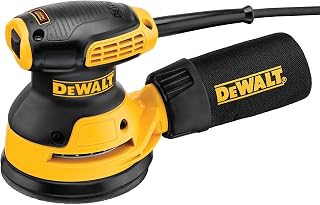


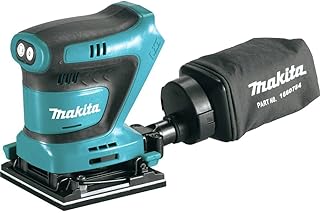


Choosing a precision sander is less about selecting the most powerful motor and more about matching the sanding mechanism, pad size, speed control, abrasive system and dust-management setup to the work being performed. A compact finishing sander can be a better choice for controlled work on trim and furniture, while a random-orbit sander is generally more versatile for preparing larger wood surfaces.
For Canadian buyers, the electrical specification deserves particular attention. A corded tool should be appropriate for the electrical supply in the intended workspace, and buyers should confirm the voltage, plug configuration and electrical requirements shown on the current product documentation before ordering. Product configurations and included accessories can also differ between Canadian and other-market versions.
Makita has produced several corded sanding platforms covering finishing, random-orbit and belt-sanding applications. Models such as the BO4556, BO3710, BO3711, BO5030, BO5041, BO6030, 9046, 9403 and 9903 illustrate how substantially sanding tools can differ even when they share the same general purpose.
Precision sanding is primarily about control. A tool that removes material aggressively may be useful for stock removal but can be unnecessarily difficult to manage when the objective is to produce a consistent surface without rounding edges, creating visible sanding marks or removing too much material.
There is no single Makita corded sander that is ideal for every application. The following categories provide a practical framework for comparing the leading options in a buying guide.
Compact finishing sanders are designed around controlled surface preparation. A quarter-sheet or similar finishing-sander format can be particularly useful when working on smaller wooden components, painted surfaces, furniture parts, trim and areas where maneuverability matters.
The Makita BO4556 is an example of this type of compact finishing-sander design. Its smaller sanding footprint makes this class of tool fundamentally different from a larger random-orbit sander. Buyers should compare the abrasive attachment system, sanding area, ergonomics and dust-collection arrangement rather than assuming that a larger pad automatically means better performance.
A 1/3-sheet finishing sander can occupy a useful middle ground for users who want more sanding coverage than a compact quarter-sheet design while retaining the controlled action associated with finishing sanders.
The Makita BO3710 and BO3711 belong to this category. When comparing models in this class, pay close attention to speed control, paper-retention design, pad dimensions, grip comfort and whether the tool's operating characteristics suit detailed finishing work.
Five-inch random-orbit sanders are among the most versatile options for general woodworking. Their sanding action is intended to reduce the likelihood of obvious directional sanding patterns when the tool is operated correctly, making this format useful for surface preparation and finishing.
The Makita BO5030 and BO5041 are examples of 5-inch corded random-orbit sanders that may appear in comparisons. The important buying distinction is not simply the model number. Compare speed control, grip configuration, pad and abrasive attachment, dust collection and the overall handling characteristics.
Six-inch random-orbit sanders can provide a larger working area and may make sense when sanding broad surfaces is a priority. The larger footprint can improve productivity on suitable workpieces, but it can also make the tool less convenient for narrow components and detailed areas.
Makita models such as the BO6030 and 9046 represent larger corded sanding formats. Before selecting one, consider whether the additional sanding area actually benefits the projects you undertake most frequently.
Belt sanders occupy a different part of the sanding spectrum. They are generally selected when rapid material removal is more important than delicate finishing. They can be valuable for flattening, stripping or aggressive preparation, but they require substantially more attention to movement and pressure because excessive dwell time can remove material quickly.
Makita's 9403 and 9903 are examples of corded belt-sander platforms. These should not be evaluated using exactly the same criteria as a 5-inch random-orbit sander. A buyer looking for precision furniture finishing may prefer a more controllable finishing or random-orbit format, whereas a user preparing large rough surfaces may place greater emphasis on belt-sanding capability.
Motor power can provide useful context, but it should not be used as the sole indicator of sanding performance. The sanding mechanism, pad size, abrasive condition, applied pressure and material being worked all influence the actual result.
For Canadian purchasers, verify the electrical requirements of the exact model and market-specific version. Do not assume that a similarly named tool intended for another country has identical electrical specifications or accessories.
Pad size affects both coverage and maneuverability. A larger sanding surface can reduce the number of passes required over a broad workpiece, while a smaller pad can be easier to control around confined areas.
Five-inch random-orbit sanders are particularly common for general-purpose woodworking, while six-inch machines can make more sense when larger surfaces dominate the workload. Finishing sanders use different abrasive formats altogether, so pad dimensions should always be evaluated together with the actual replacement abrasive system.
Variable speed can be valuable when a single sander is expected to handle different materials and finishing stages. Lower settings may offer greater control in situations where aggressive sanding would be undesirable, while higher settings can support faster work when the material and abrasive permit it.
Speed adjustment should not be treated as a substitute for correct technique. Excessive pressure, unsuitable abrasive grit or leaving the tool stationary can still damage a surface.
The sanding mechanism determines how the tool behaves on the workpiece. Random-orbit machines combine orbital and rotational movement, while finishing sanders use a different sanding pattern. Belt sanders use a continuous abrasive belt and are designed for substantially different work.
When comparing products, identify the sanding mechanism first. It is usually more useful to ask whether the mechanism matches the intended application than to compare motor figures between unrelated tool categories.
Dust management is an important consideration for both work quality and workshop cleanliness. A collection bag can be convenient for light work, while connection to a suitable workshop vacuum may be preferable when larger quantities of dust are generated.
Check the exact dust-port arrangement and included components for the model being considered. Compatibility with existing extraction equipment can affect the total cost of ownership.
Sanding often involves extended periods of repetitive movement, so ergonomics can matter as much as headline specifications. Look for a grip that allows the tool to remain stable without excessive hand pressure, a switch that can be operated naturally and a weight that is manageable for the intended orientation of the workpiece.
Balance is particularly important. A tool that feels manageable when held for a few seconds may feel very different after repeated passes over a large panel.
The abrasive is a major part of the sanding system. Even an excellent sander can produce poor results when paired with an unsuitable grit or worn abrasive.
There is no universal grit progression for every project. The correct sequence depends on the starting condition of the surface, the material, the finish and the amount of material that needs to be removed.
Precision sanding requires particular care around edges and thin surfaces. Powered sanders can remove material much faster than hand sanding, making it easy to unintentionally change an edge profile.
Veneered panels deserve particular caution because the decorative layer can be relatively thin. When the objective is preservation rather than aggressive stock removal, conservative sanding is generally preferable.
A more powerful motor does not automatically make a sander better for precision work. Excess capacity can be counterproductive if the tool is harder to control or is designed primarily for aggressive material removal.
A belt sander, finishing sander and random-orbit sander are not interchangeable. Selecting the wrong mechanism can result in slower work, unnecessary surface damage or difficulty achieving the required finish.
Before purchasing, confirm that replacement abrasives in the required dimensions and attachment format are readily obtainable in Canada. A tool can become inconvenient if the appropriate abrasive supplies are difficult to source.
Dust collection should be considered before purchase rather than after the first sanding session. Check whether the sander can work with the dust-extraction equipment already used in the workshop and whether adapters or additional components may be required.
Model names can appear across multiple markets. Packaging, accessories, electrical specifications and included components can vary. Always review the exact Canadian listing and current manufacturer documentation for the version being considered.
A larger pad can be advantageous on broad surfaces, but it does not automatically provide greater precision. For cabinet components, trim, small furniture pieces and confined areas, a more compact tool may be easier to control.
Pressing harder is not a reliable way to make a powered sander work faster. Excessive pressure can interfere with the intended sanding action, increase fatigue and contribute to inconsistent results. Let the abrasive and tool do the work.
Corded and cordless sanders can both be useful, but the better choice depends on the working environment. Corded tools are particularly attractive for fixed workshop use where continuous access to mains power is convenient.
Cordless equipment can provide greater mobility and eliminates the power cord from the immediate work area, but battery availability, charging and additional battery costs become part of the ownership equation.
If most sanding takes place at a permanent bench or workshop, a corded Makita sander can be a practical choice. If work regularly moves between locations without convenient electrical access, a cordless platform may deserve comparison.
A corded random-orbit sander is worth considering when one machine needs to handle a broad selection of woodworking tasks. It can be appropriate for smoothing boards, preparing furniture surfaces, refining previous sanding marks and preparing wood for finishing.
The 5-inch format is especially worth investigating for general-purpose work because it combines a relatively manageable footprint with a commonly used abrasive size. Users who regularly sand large surfaces may instead prefer to investigate 6-inch alternatives.
A finishing sander can make more sense when controlled linear or orbital finishing is the priority. These machines can be useful for flat surfaces, trim, furniture components and final preparation where maintaining predictable contact with the workpiece is important.
They can also be useful when the preferred abrasive is sheet-based rather than hook-and-loop random-orbit discs. The choice ultimately depends on the user's workflow and the type of finish required.
A belt sander is best considered when substantial material removal is a primary requirement. It can be useful for rough stock preparation, flattening suitable surfaces and removing material considerably faster than many finishing-oriented sanders.
However, the increased material-removal capability means technique becomes especially important. Belt sanders should not normally be selected simply because they appear more powerful. For delicate finishing, their aggressive sanding action may be unnecessary.
Different materials respond differently to powered sanding. Softwoods can be vulnerable to uneven material removal and pressure marks, while hardwoods may require a different grit progression and more sanding time.
Engineered wood products, painted surfaces and previously finished materials introduce additional considerations. Paint and coatings can clog abrasives, while thin veneers require particularly conservative sanding.
For unknown materials, test the selected abrasive and sanding approach on an inconspicuous area before committing to the visible surface.
Furniture work often benefits from a combination of sanding methods rather than a single tool. A random-orbit sander can handle broad flat areas efficiently, while hand sanding or a smaller finishing sander can provide greater control around edges, profiles and difficult-to-reach areas.
A practical furniture workflow usually involves progressively refining the surface instead of attempting to achieve the final finish with one aggressive sanding pass. Inspect the workpiece under appropriate lighting because scratches that are difficult to see during sanding can become obvious after stain, paint or clear finish is applied.
Cabinet components often include large panels combined with narrow rails, stiles and edges. This makes tool versatility important. A 5-inch random-orbit sander may be useful for broad panels, while a compact finishing sander or hand-sanding block can provide better control in narrower areas.
Extra caution is required around finished edges and thin veneer. Sanding should be controlled so that the surface remains flat and the original geometry is preserved.
A good sanding setup includes more than the sander itself. Consider the abrasive, dust collection, workholding arrangement, lighting and personal protective equipment as one system.
Customer ratings can be useful, but a high average rating does not automatically mean a tool is appropriate for precision sanding. Read reviews for information about the actual use case rather than focusing only on the star rating.
When comparing customer feedback, recent reviews can also provide useful context about the current product configuration, but individual experiences should not be treated as controlled performance testing.
For most buyers, the following priorities provide a more useful decision framework than simply choosing the model with the longest specification list.
The purchase price is only one part of the cost of owning a corded sander. Buyers should also consider replacement abrasives, dust-collection accessories, compatible extraction equipment and the expected frequency of use.
A lower-priced tool may not represent the best value if its abrasive system is inconvenient for the user's workflow. Conversely, paying more for features that will rarely be used may not improve the outcome. The best value comes from selecting a tool whose specifications closely match the work it will actually perform.
Routine maintenance can help keep a power sander operating consistently. Always disconnect the tool from its power source before performing maintenance, cleaning or accessory changes.
Powered sanding produces airborne dust and can generate significant noise. The appropriate protective equipment depends on the material and working environment, but eye protection, hearing protection and suitable respiratory protection should be considered where applicable.
Never assume that dust from a particular material is harmless. Painted, treated, composite and unknown materials can require additional precautions. Follow the material manufacturer's safety information and the sander manufacturer's instructions.
Secure the workpiece before sanding and maintain a stable stance. Keep hands away from moving abrasive surfaces, disconnect power before changing accessories and avoid operating the tool when the cord, plug or other safety-critical components show signs of damage.
The best choice depends on what precision means for the project. A compact finishing sander can be advantageous for controlled surface preparation, while a 5-inch random-orbit sander can provide a broader combination of versatility and finishing capability. For delicate work, control and abrasive selection are often more important than maximum power.
Neither is universally better. Random-orbit sanders are versatile for many general woodworking tasks, while finishing sanders can be particularly useful when controlled sheet-abrasive sanding is preferred. The correct choice depends on the workpiece and desired surface result.
A belt sander can perform precise work in experienced hands, but its primary advantage is rapid material removal. For delicate final finishing, a random-orbit or finishing sander is often a more natural category to investigate.
A 5-inch model is generally easier to position on smaller components and is a versatile format for many woodworking tasks. A 6-inch model can offer more coverage on broad surfaces. Choose according to workpiece size, handling preference and the abrasives you expect to use.
Variable speed can be useful when sanding different materials or moving between aggressive preparation and more controlled finishing. It is not essential for every user, however, so buyers should decide whether the added control is relevant to their normal workflow.
No single sanding mechanism is ideal for every situation. A random-orbit sander can cover many general-purpose applications, but detailed finishing, narrow components and aggressive material removal can benefit from different tools or complementary hand-sanding techniques.
The correct grit depends on the starting surface and desired result. Coarser abrasives remove material more rapidly, medium grits refine the surface and finer abrasives are generally used for final smoothing. Use a progression appropriate to the material rather than automatically following one fixed sequence.
When the model supports suitable dust extraction, connecting it to an appropriate workshop vacuum can be useful for reducing airborne dust and keeping the work area cleaner. Check the exact dust-port design and compatibility before purchasing adapters or accessories.
Canadian buyers should verify the electrical requirements of the exact model and Canadian-market configuration before purchase. Product listings can vary by market, so the model number, voltage information, plug configuration and current manufacturer documentation should all be checked.
Replace abrasives when they become worn, clogged or ineffective enough that additional pressure is required to achieve normal sanding results. Continuing to use a deteriorated abrasive can reduce consistency and encourage excessive pressure.
Focus on reviews from users performing similar work. Handling, vibration, dust collection, abrasive attachment, ergonomics and long-session comfort are generally more useful for buying decisions than isolated comments about packaging or delivery.
This buying guide is intended to help Canadian shoppers evaluate Makita corded sanding tools according to application, specifications, handling considerations, abrasive requirements and workshop compatibility. Product specifications, packaging, included accessories, retailer pricing and availability can change, so the exact configuration should always be confirmed before purchase.
When comparing options, start with the sanding mechanism and intended use, then evaluate pad size, speed control, ergonomics, dust management and electrical requirements. Finally, compare current specifications and customer feedback from reliable retail sources. This approach is more useful than choosing a sander based solely on a star rating, headline power figure or promotional description.
The best precision Makita corded sander is the one whose sanding action and physical design match the work you actually perform. For versatile woodworking, investigate 5-inch random-orbit models such as the BO5030 and BO5041; for controlled finishing, consider compact and 1/3-sheet formats such as the BO4556, BO3710 and BO3711; for larger surfaces, compare larger random-orbit designs such as the BO6030 and 9046; and for aggressive stock removal, investigate belt-sander platforms such as the 9403 and 9903.
Before purchasing, verify the exact Canadian configuration, current specifications, included accessories, abrasive compatibility and dust-extraction requirements. Comparing those practical details will help you select a Makita corded sander that provides the right combination of precision, control, coverage and productivity for your workshop.