

♥ Wishlist
Compare 45 Makita Torches & Lighting products in Canada. Reviews, ratings, pros, cons and buying advice updated for October 2026.


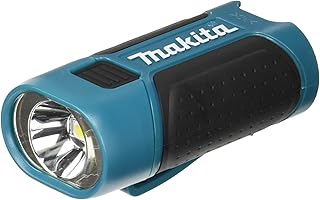


Choosing a Makita torch or work light is less about selecting the highest lumen figure and more about matching the light pattern, battery platform, runtime, mounting options and working environment to the task. Makita's cordless lighting range includes compact flashlights, adjustable-beam models, spotlights, lanterns, headlamps, magnetic work lights, area lights and larger site-lighting solutions, giving Canadian buyers several distinct formats to consider. :contentReference[oaicite:0]{index=0}
For an independent buying guide, the most useful comparison is therefore not simply “which Makita torch is brightest?” Instead, consider where the light will be used, how far the beam needs to reach, whether both hands need to remain free, which Makita batteries you already own, and whether the light may encounter dust, moisture, cold or demanding job-site conditions.
A conventional cordless flashlight is a practical choice when portability and directional illumination matter more than lighting an entire room. Models such as the Makita DML815 are designed around a focused beam, while the DML801 adds a multi-position head for more flexible task illumination. The DML801, for example, uses 12 LEDs and provides up to 240 lumens, with a head that can fold and rotate to change the direction of the light. :contentReference[oaicite:1]{index=1}
This type of torch can be particularly useful for electrical panels, plumbing spaces, vehicle repairs, utility areas, toolboxes, basements and inspection work where a large floodlight would be unnecessarily bulky.
An adjustable-beam torch can be more versatile than a fixed-beam flashlight because the user can change how concentrated the illumination is. A narrow beam is useful when inspecting a distant point, while a broader beam can illuminate a nearby working area.
When comparing adjustable-beam models, look beyond the maximum brightness. Check how easily the beam can be changed, whether the head can be repositioned, how comfortably the light can be held with gloves, and whether the overall shape works with the way you normally carry tools.
For users who regularly need both close-up and long-distance illumination, a combination flashlight/spotlight can make more sense than carrying two separate lights. The Makita DML812 is one example of this design approach, offering four lighting modes: spot, flood, combined spot/flood and strobe. Its manufacturer lists up to 1,250 lumens in spot/flood operation and a 90-degree pivoting head. :contentReference[oaicite:2]{index=2}
This configuration is worth considering for outdoor work, inspections, construction, property maintenance and situations where the required lighting distance changes frequently.
A lantern/flashlight combination is better suited to users who sometimes need broad-area illumination and sometimes need a directional beam. The Makita DML806, for example, provides 360-degree lantern, 180-degree lantern and flashlight modes. Makita lists 620 lumens for its 360-degree lantern mode and up to 59 hours of flashlight operation under its stated battery and testing conditions. :contentReference[oaicite:3]{index=3}
The DML807 follows a similar multi-mode concept while adding a USB power port and dust- and water-resistance features through Makita's XPT design. :contentReference[oaicite:4]{index=4}
A magnetic work light can be more useful than a traditional handheld torch when both hands need to remain available. The Makita DML819, for example, combines a magnetic base with a retractable hook and a foldable, rotating light head. Its three power settings reach up to 1,200 lumens, while the head can be repositioned horizontally and vertically. :contentReference[oaicite:5]{index=5}
For automotive work, metal fabrication, machinery maintenance and service work around steel surfaces, this type of mounting flexibility can be more valuable than simply adding more brightness.
Automotive technicians and DIY mechanics should consider a dedicated under-hood light when the work area extends across the engine compartment. The Makita DML818 uses a folding bar design, a 270-degree rotating arrangement and multiple mounting options. Makita lists three light combinations, three power selections and up to 1,700 lumens, with a stated runtime of up to 31 hours on low using a 4.0Ah 18V LXT battery. :contentReference[oaicite:6]{index=6}
The advantage of an under-hood design is positioning: instead of holding a torch in one hand, the light can be arranged across the work area while the technician works with both hands.
One of the biggest decisions when choosing a cordless Makita light is battery compatibility. A light may appear inexpensive when sold as a bare tool, but the total cost can be substantially different if you do not already own the required battery and charger.
Makita's lighting portfolio spans different cordless systems, including 18V LXT and 40V max XGT products, while other models use 12V max CXT or different configurations. Makita describes its Canadian cordless lighting range as part of its broader cordless ecosystem. :contentReference[oaicite:7]{index=7}
For buyers who already own several Makita 18V LXT tools, staying within the LXT ecosystem can be convenient because compatible lighting can use batteries already present in the workshop. This is particularly useful for tradespeople who want one battery platform across drills, impact drivers, saws, grinders and lighting.
XGT lighting is aimed at users invested in Makita's higher-voltage cordless ecosystem. A model such as the ML002G provides lantern and flashlight functionality and includes features such as a swivelling metal hook, USB charging and XPT dust- and water-resistance engineering. :contentReference[oaicite:8]{index=8}
A common buying mistake is assuming that every Makita cordless light accepts every Makita battery. Battery-platform compatibility should always be checked against the exact model number before purchasing. Voltage family, physical battery interface and manufacturer compatibility information are more important than simply seeing the Makita name on both products.
Lumens measure the amount of visible light produced, but the number alone does not tell you how useful a torch will be for a particular job. Beam shape, optics, distance, positioning and the environment all influence how effectively that light reaches the work surface.
A compact flashlight with a concentrated beam can be preferable for inspecting a distant component, while a lower-output flood light may be better for evenly illuminating a bench. Similarly, an extremely bright site light can be unnecessary for close-up electrical work where excessive glare makes small components harder to inspect.
Runtime should always be evaluated alongside the lighting mode and battery capacity. A manufacturer's maximum runtime normally refers to a particular brightness setting and battery size rather than every operating condition.
For example, Makita specifies different runtimes for different modes on its multi-function lighting products. The DML806 is rated for different operating durations in 360-degree lantern, 180-degree lantern and flashlight modes, demonstrating why a single “maximum runtime” number can be misleading without context. :contentReference[oaicite:9]{index=9}
When comparing two lights, check:
A higher-capacity battery can provide longer operating time, but it can also increase the overall weight of a handheld light. This matters when a torch will be carried or held for extended periods.
For occasional inspection work, a compact battery may provide a better balance. For a stationary work light that sits on the floor or hangs from a structure, additional battery weight may be less significant than runtime.
Think about the complete system weight rather than the weight of the bare light. Manufacturer specifications frequently distinguish between tool-only weight and weight with a battery installed. For example, Makita lists the DML806 at 2.1 lb with battery, while the DML819 is listed at 3.0 lb with a BL1860B battery. :contentReference[oaicite:10]{index=10}
Canadian users may encounter substantial variation in working conditions, from dry indoor workshops to damp construction sites, garages, outdoor maintenance areas and winter environments. A light intended for demanding work should therefore be evaluated for construction, dust and water resistance, mounting stability and protection around the controls.
Makita uses different protection designs across its lighting range. For example, the DML809 and DML811 are specified with IP65-rated dust and water-resistant construction, while the DML814 tower light is specified with IP55-rated protection. :contentReference[oaicite:11]{index=11}
Protection ratings should not be interpreted as permission to expose a product to conditions outside its stated operating limitations. Always check the exact manufacturer's instructions for cleaning, water exposure, storage and operating conditions.
Cold temperatures can affect rechargeable battery performance. If a cordless torch will be used outdoors during Canadian winter conditions, consider where batteries will be stored, whether the light will be carried between heated and unheated environments, and what the manufacturer's operating and storage instructions specify.
A practical approach is to avoid treating a maximum runtime figure as guaranteed in every season. Temperature, battery age, brightness setting, workload and storage conditions can all affect real-world performance.
A handheld torch is not always the right solution. If the goal is to illuminate a room, workbench, renovation area or construction zone, a dedicated work light can provide broader and more consistent coverage.
Makita's larger work-light range includes cordless/corded models and area lighting. The DML805, for example, can operate from an 18V LXT battery or corded power and provides two brightness settings. :contentReference[oaicite:12]{index=12}
The DML811 moves further toward job-site illumination, offering three brightness settings up to 3,000 lumens and cordless or corded operation. :contentReference[oaicite:13]{index=13}
For larger workspaces, maximum output becomes more relevant. The Makita DML809 is an example of a substantially higher-output light, with three settings rated at 10,000, 4,000 and 2,000 lumens. It can operate from 18V LXT batteries or corded power and is specified with IP65-rated dust and water resistance. :contentReference[oaicite:14]{index=14}
Such a light is fundamentally different from a pocket or handheld torch. It is designed to illuminate a working area rather than provide a narrow beam for an individual task.
When shadows and light positioning are major problems, a tower-style light can be more effective than a low-mounted floodlight. The Makita DML814 has three adjustable light heads, three brightness levels and a foldable design that extends to approximately 7-1/4 feet according to Makita's specifications. :contentReference[oaicite:15]{index=15}
The higher mounting position can help spread light across a larger area and reduce some of the shadows created by low-level lighting. This can be useful during renovation, framing, finishing, maintenance and other work where workers move around a sizeable area.
A light that cannot be positioned correctly may perform worse in practice than a lower-output model that can be mounted exactly where illumination is needed.
Electrical and plumbing jobs often involve confined spaces where a large area light is difficult to position. A compact flashlight with directional control or a headlamp can be more practical.
For inspection work, prioritize controlled illumination rather than simply choosing the highest lumen specification. You want enough light to distinguish wiring, fittings, labels, connectors, valves and fasteners without creating excessive glare.
Automotive work presents several competing lighting requirements. You may need a focused beam to inspect a component, broad illumination beneath a vehicle, or hands-free light inside an engine bay.
A magnetic light can be particularly convenient where a suitable metal mounting surface exists. An under-hood light is useful when the entire engine compartment needs consistent illumination. A handheld spotlight is better when inspecting areas farther away from the immediate work surface.
For a permanent or semi-permanent workshop, consider using more than one lighting format rather than expecting one torch to perform every job. A broad work light can provide general illumination while a compact flashlight handles detailed inspections.
This layered approach also makes it easier to avoid shadows. Place general lighting above or behind the work area, then use a portable task light to illuminate specific components.
A cordless torch can serve as useful backup lighting during power interruptions, provided the battery is maintained and stored according to the manufacturer's instructions. Lantern/flashlight combinations can be especially practical because they provide both directional and area illumination.
For emergency preparedness, evaluate storage life, battery availability, ease of operation in darkness and whether the light can stand or hang without requiring someone to hold it.
Not every premium feature provides equal value. Consider paying extra when a feature directly solves a problem you encounter frequently.
More features do not automatically mean a better purchase. If a light will spend most of its life in a toolbox for occasional inspections, a large tower system may add unnecessary size and cost. Conversely, using a small handheld torch as the only illumination for a large renovation area can create frustration.
Choose the light format first, then compare features among models that genuinely fit the intended application.
The highest lumen number does not automatically produce the most useful light. Beam pattern and positioning can be just as important.
Check the exact battery platform before buying. A bare-tool price is not the complete cost if you need a new battery and charger.
Always compare runtime at equivalent brightness settings and battery capacities. Maximum-runtime claims can correspond to lower-output modes.
If you routinely need both hands, consider a headlamp, magnetic work light, under-hood light, hook-mounted torch or other hands-free design.
A large spotlight may be powerful but inconvenient to carry. A compact flashlight may be easy to store but unsuitable for illuminating a wide work area.
Dust and water-resistance ratings have defined meanings and limitations. Check the manufacturer's specifications rather than assuming that any job-site light can be submerged or exposed indefinitely to heavy water.
When two models appear similar, compare them in the following order:
Makita model numbers can look similar, but the actual designs can be very different. A model described as a flashlight may have a narrow directional beam, while a lantern/flashlight may provide multiple illumination patterns. Work lights can introduce corded operation, broader flood illumination and mounting systems.
Do not infer performance from model-number similarity. Always compare the exact model's published specifications, battery requirements, modes, runtime and intended application.
Cordless lighting offers mobility and eliminates the need to locate an outlet or manage an extension cord. This can be a major advantage on construction sites and during outdoor maintenance.
Corded operation, however, can be useful when the light will remain stationary for extended periods. Some Makita work lights combine both options. The DML805 and DML811, for example, support battery or corded operation, while the DML809 provides battery or corded operation with substantially higher light output. :contentReference[oaicite:16]{index=16}
Proper maintenance can help preserve reliable operation over time. Follow the specific instruction manual for the exact model, especially regarding battery care, cleaning and storage.
For buyers entering the Makita ecosystem for the first time, the battery and charger can materially change the overall purchase decision. A light advertised as “tool only” does not include those components.
If you already have compatible Makita batteries, a bare light may be more attractive because you can use an existing power source. If you do not own the relevant platform, compare the complete kit cost rather than comparing bare-tool prices.
Customer reviews can be useful, but they are most valuable when you separate recurring observations from isolated comments. For a cordless torch, pay particular attention to comments about battery compatibility, switch operation, beam quality, durability, mounting convenience, balance and actual usefulness for the intended task.
Do not treat a single review as proof of long-term reliability. Look for patterns across multiple verified customer experiences and compare those observations with the manufacturer's published specifications.
Makita is not the only established power-tool manufacturer offering cordless job-site lighting. Buyers may also encounter lighting products from Milwaukee, DeWalt, Bosch and other professional tool brands.
The most sensible comparison is usually the battery ecosystem you already own. If your workshop is heavily invested in Makita 18V LXT, a Makita light can offer the convenience of using the same battery family. If your existing tools belong to another ecosystem, the competing brand may offer a more practical overall ownership proposition.
Rather than comparing brands purely by lumen ratings, compare the complete system: battery compatibility, lighting formats, mounting options, runtime, durability specifications, accessories and total cost.
For regular tool users, battery sharing can be one of the strongest reasons to choose a particular cordless light. Buying a light that works with batteries already in the toolbox can avoid duplicating chargers and battery packs.
However, this advantage only applies when the exact battery platform is compatible. Before ordering, verify the model and battery requirements rather than relying on the appearance of the battery or broad brand compatibility.
Professional users should prioritize reliability of workflow over specifications that look impressive on a product page. The best light is the one that can be positioned quickly, provides the appropriate beam, works with the batteries already carried and does not interfere with the task.
Electricians may prefer compact directional illumination or head-mounted lighting. Automotive technicians can benefit from magnetic and under-hood formats. Plumbers and HVAC technicians may value compact lights that can illuminate confined spaces. Construction crews may benefit more from broad area or tower lighting.
DIY buyers should consider versatility because one light may be expected to cover several different tasks. A combination flashlight/lantern, adjustable-beam model or flexible work light can be more useful than a highly specialized product if your projects vary considerably.
Also consider storage. A light that fits naturally into your existing toolbox or workshop storage system is more likely to be available when you need it.
Precision lighting is about controlling illumination rather than simply maximizing brightness. For detailed work, you want to direct light exactly where it is needed, minimize unwanted shadows and avoid excessive glare.
Features such as pivoting heads, adjustable beams, narrow spot modes, magnetic mounting and flexible hooks can all contribute to more precise lighting. The right combination depends on the task.
There is no single best Makita torch for every Canadian buyer. A compact flashlight can be preferable for portability, a spotlight for long-distance illumination, a lantern/flashlight for versatility, and a magnetic or under-hood light for hands-free work. The best choice depends on the application, battery platform and desired mounting options.
Many Makita lighting products are offered as light-only or tool-only products, meaning the battery and charger are purchased separately. Always check the exact package contents before ordering. For example, Makita lists the DML806 and DML807 as flashlight-only products with batteries and chargers sold separately. :contentReference[oaicite:17]{index=17}
No. Compatibility depends on the exact Makita battery platform and product specifications. Check the manufacturer's information for the particular model before purchasing or installing a battery.
No. Higher output can be valuable for large work areas or long-distance illumination, but close-up precision work may benefit more from beam control, positioning and appropriate brightness.
It depends on the job. A flashlight is useful for inspecting individual components, while an under-hood or magnetic work light can provide hands-free illumination across a larger area.
Yes. Makita offers several lighting formats intended for job-site applications, including area lights, tower lights, site lights and portable flashlights. Larger models can provide substantially broader illumination than handheld torches. :contentReference[oaicite:18]{index=18}
Check the exact model number, battery platform, included accessories, brightness settings, runtime, mounting features, weight and environmental protection specifications. Then compare current Canadian retailer pricing and verified customer feedback.
Some models support both cordless and corded operation. For example, Makita identifies the DML805, DML811 and DML809 as cordless/corded work lights. :contentReference[oaicite:19]{index=19}
A magnetic work light can attach to suitable ferrous surfaces, allowing illumination to remain positioned while both hands are available for the job. The DML819 combines magnetic mounting with a rotating and folding light head. :contentReference[oaicite:20]{index=20}
Compare runtime using the same battery capacity and the same brightness mode whenever possible. A light's longest published runtime normally corresponds to a lower-output setting, so maximum brightness and maximum runtime should not be treated as the same measurement.
If you already own compatible 18V LXT batteries and chargers, an 18V LXT light can be convenient because the lighting product can share that battery ecosystem. Confirm exact compatibility before purchase.
The best Makita torch or lighting solution for 2026 is the one that fits the job rather than the one with the most impressive specification on paper. For compact inspection work, prioritize portability and beam control. For automotive work, consider magnetic or under-hood designs. For general workspace illumination, look at flood and area lights. For large construction or renovation areas, high-output work and tower lights may be more appropriate.
For Canadian buyers, the battery ecosystem deserves particular attention because it can influence both convenience and the total cost of ownership. Compare the exact model specifications, battery requirements, runtime, lighting modes, mounting features and environmental protection, then check current Canadian pricing and verified customer feedback before making the final decision.