

♥ Wishlist
Compare 27 Bosch Corded Routers for Precision Woodworking products in Canada. Reviews, ratings, pros, cons and buying advice updated for October 2026.


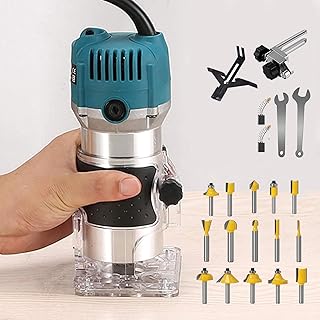


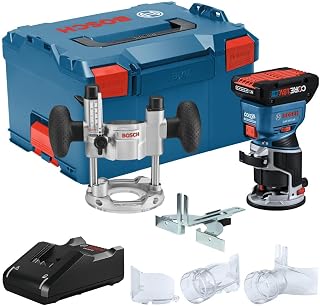


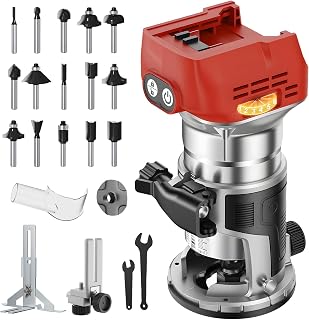


Choosing a precision router is less about selecting the tool with the highest headline power rating and more about matching the router's control system, adjustment range, collet capacity, base design, ergonomics and compatibility with the work you actually plan to perform. For Canadian woodworkers, DIY users, contractors and furniture makers, a corded Bosch router can be particularly attractive when consistent mains power, repeatable cutting performance and extended workshop use matter more than cordless portability.
The phrase "precision router" covers several different requirements. A user making decorative edge profiles may prioritise smooth speed control and a comfortable fixed base, while someone cutting dados, mortises or templates may place greater importance on depth adjustment, plunge action and base stability. Before comparing individual products, identify the type of routing work you perform most often and then compare the specifications that directly affect that work.
Precision routing depends on the interaction between the motor, cutter, collet, base, depth-adjustment mechanism and the operator. A powerful motor alone does not guarantee accurate results. A router that is easy to control and adjust can produce better practical results than a more powerful tool that is difficult to position consistently.
One of the most important buying decisions is the type of router base. Fixed-base and plunge-base routers can both deliver accurate work, but they are designed around different cutting techniques.
A fixed base is often well suited to edge profiling, trimming, rabbeting and routing operations where the cutter can be positioned before the cut begins. The fixed relationship between the motor and base can also make the tool feel predictable during an edge pass.
For repetitive work, depth adjustment is especially important. A good adjustment mechanism allows the user to establish the desired cutting depth and reproduce it without excessive trial and error. When evaluating a Bosch fixed-base router, pay attention to the adjustment method rather than considering motor power alone.
A plunge router allows the cutter to enter the workpiece after the base has been positioned. This makes the configuration particularly useful for mortises, stopped grooves, internal openings, template routing and other operations where starting at an outside edge is not practical.
For precision plunge work, look for smooth plunge movement, a secure depth stop and a mechanism that makes repeated depth settings straightforward. A plunge router should feel controlled throughout its vertical travel rather than requiring excessive force or awkward positioning.
Some router systems are designed around interchangeable bases so the same motor can be used for both fixed-base and plunge-style applications. This can be an efficient choice for a workshop that performs several types of routing rather than specialising in a single operation.
However, flexibility can add complexity. Compare the included bases, adjustment mechanisms and accessories carefully rather than assuming every combination package provides the same functionality.
Motor power is an important consideration, but it should be interpreted alongside cutter diameter, material hardness, cutting depth, feed rate and the type of operation. A router used for light edge work has different requirements from one used for substantial joinery or large-diameter profiling cutters.
For Canadian buyers, also remember that corded tools are designed for the local electrical environment. Confirm the tool's electrical specifications and plug configuration before purchasing, particularly when considering equipment intended for another market.
Rather than choosing solely by horsepower or wattage, consider whether the router can maintain controlled cutting behaviour under the specific workload you expect.
Variable speed can be valuable when working with different cutter sizes and materials. Larger cutters generally require more conservative rotational speeds than small-diameter bits because the cutting edge travels a greater distance during each revolution.
Speed control can also be useful when routing materials that respond differently to heat and cutting pressure. The objective is not simply to run the router as fast as possible. The appropriate setting should be selected according to the cutter manufacturer's guidance, workpiece material and cutting operation.
When comparing Bosch corded routers, determine whether the particular model under consideration provides the speed-control features you need. Do not assume that every router in a manufacturer's range has identical electronic controls.
Electronic motor control can help a router maintain more consistent operating behaviour as cutting resistance changes. This can be useful when the cutter moves from a lighter section of material into a denser area.
For precision work, consistency matters because sudden changes in motor behaviour can affect feed control. Electronic systems should therefore be considered as part of the complete control package rather than as a replacement for proper cutter selection and technique.
Collet compatibility is one of the easiest specifications to overlook when comparing routers. The router must be compatible with the shank diameter of the bits you intend to use, and the cutter must be seated correctly and securely.
Depending on the particular Bosch router and included accessories, users may encounter different collet configurations. Always check the exact specifications of the model and the cutter before purchase rather than assuming that a commonly used bit size is included.
The router itself is only one part of the cutting system. A high-quality router paired with an unsuitable, damaged or poorly maintained bit will not produce reliable results.
Straight bits are commonly used for grooves, dados, rabbets and material removal. Different diameters and cutting lengths are suited to different applications, so select a bit according to the required cut rather than simply choosing the largest available option.
Flush-trim bits are useful when one surface needs to follow the profile of another, such as template routing or trimming laminated edges. Bearing placement and cutter length should be matched to the workpiece and template arrangement.
Round-over cutters create softened edges and are common in furniture, cabinetry and general woodworking. The cutter radius should be selected according to the desired finished profile.
Chamfer cutters create angled edges and can be used for both decorative and functional purposes. Consistent depth and stable handling are especially important when producing a uniform chamfer along a long edge.
Template routing requires accurate cutter positioning and a stable relationship between the router base, bearing and template. A router with good visibility and predictable control can make this work easier to manage.
Depth adjustment deserves close attention when comparing precision routers. Small changes in cutter height can significantly alter a groove, rabbet, mortise or decorative profile.
Look for an adjustment system that is easy to read, secure after adjustment and practical to use while the router is set up for the intended operation. If the mechanism allows fine incremental adjustment, it can be especially helpful for dialing in a cut through test pieces.
For repeated work, a depth-stop arrangement can be equally important. The ability to establish a repeatable reference point reduces the need to measure the same setting repeatedly.
A router base should remain stable while the tool moves across the workpiece. Any tendency to rock, tilt or shift during a cut can affect the finished profile.
When assessing a Bosch router for precision applications, consider the diameter and rigidity of the base, the position of the handles, the adjustment mechanism and the amount of contact area available on the workpiece. These details can matter more in practical use than a small difference in motor specifications.
Routing can involve long passes, awkward positions and repeated movements. A tool that is technically capable but uncomfortable to control can make precision work more difficult.
Routing produces chips and fine wood dust, and poor dust management can quickly obscure the cutting area. A compatible dust-extraction arrangement can improve visibility and help keep the workspace cleaner.
Compatibility should be checked at the individual-model level because dust ports, adapters and base configurations can differ. If your workshop already uses a shop vacuum or dust extractor, verify that the router can be connected using the appropriate equipment.
Dust extraction should complement, not replace, appropriate respiratory protection and workshop ventilation. Follow the safety instructions for both the router and the material being machined.
A controlled startup can make a corded router easier to handle because the motor does not necessarily reach full operating speed instantaneously. This can reduce the tendency of the tool to feel abrupt when starting.
For precision routing, controlled startup is particularly useful when positioning a relatively powerful router on a small or valuable workpiece. Even with soft-start electronics, the router should be firmly supported before the cutter contacts the material.
The best Bosch corded router configuration depends heavily on the type of woodworking you intend to perform.
Prioritise stability, visibility, comfortable handles, appropriate speed control and easy depth adjustment. A fixed-base arrangement can be especially convenient for repeated edge work.
Depth accuracy and lateral stability are important. When cutting a groove to receive another component, make test cuts in scrap material before routing the final workpiece.
A plunge configuration can be advantageous because the cutter can enter the material at a controlled location. A reliable depth stop becomes particularly valuable when several mortises must match.
Cabinet work often involves repetitive cuts, so repeatability and setup efficiency become major considerations. A router should work well with jigs, templates and straightedges appropriate to the application.
Furniture projects can combine edge profiles, joinery, templates and decorative details. A versatile router system can therefore be more useful than a tool optimised for only one type of cut.
A router can be used by hand or, where the specific router and table are compatible and the manufacturer's instructions permit it, as part of a router-table setup. Table routing changes the way the tool is controlled and can be useful for repeatable edge profiles and certain joinery operations.
Do not assume that every Bosch corded router is automatically suitable for every router table. Confirm compatibility, mounting requirements, cutter limitations and safety requirements for the exact combination of equipment.
Router size should be selected according to the balance between cutting capacity, portability and control.
There is no universal "best" size. A router that is unnecessarily large can be cumbersome for delicate work, while a small router may be unsuitable for deep or demanding cuts.
Canadian buyers should compare more than the product's advertised specifications. Product listings can vary between Canadian and U.S. markets, and package contents can differ between retailers or model variants.
A high power rating does not automatically mean a router is the best option for precision work. Handling, adjustment, base stability and cutter compatibility can have a greater effect on practical usability.
Buying a router without checking your existing bit collection can create an avoidable compatibility problem. Verify supported shank sizes before placing an order.
A large, powerful router may be unnecessary for small decorative profiles and light trimming. Extra size and weight can make delicate work less comfortable.
The opposite mistake can be equally frustrating. If your projects involve substantial material removal or larger cutters, a compact tool may not provide the capacity you require.
Two apparently similar listings can represent different packages. Check the contents carefully instead of assuming that every version includes the same base, collets or accessories.
If the router will be used regularly indoors, dust management should be considered before purchase rather than added as an afterthought.
Even a precisely adjusted router should be tested on scrap material. Test cuts reveal whether the bit, depth, feed direction and speed are appropriate before the final workpiece is routed.
When narrowing a shortlist, use a consistent comparison framework. This prevents a prominent specification such as motor power from overshadowing features that are more important to your application.
Bosch is not the only established manufacturer worth considering when shopping for a corded woodworking router. Depending on your requirements, it can also be useful to compare equivalent offerings from brands such as DeWalt, Makita, Milwaukee, Porter-Cable and Triton.
The purpose of a brand comparison should not be to assume that one manufacturer is universally superior. Instead, compare the exact tools on the factors that matter to your work: base design, adjustment system, motor characteristics, cutter compatibility, ergonomics, accessory ecosystem, dust collection and current Canadian availability.
For an affiliate buying guide, the most useful comparison is therefore model-to-model rather than brand-to-brand. A well-specified router from one manufacturer may be the better choice for a particular application even when another brand has a strong reputation overall.
The tool's specifications are only part of the equation. Consistent technique can make a significant difference to the quality of a routed edge or joint.
Removing too much material in a single pass can increase the load on the router and make the tool more difficult to control. Depending on the operation, several shallower passes can provide a more controlled approach to reaching the final depth.
The appropriate cutting depth depends on the router, cutter, material and operation. Always stay within the limits specified by the tool and cutter manufacturers rather than treating a general rule as a universal setting.
Wood species and engineered wood products can behave differently under a router. Harder materials may require more controlled feed rates and appropriate cutter selection, while softwoods can sometimes present different tear-out or burning concerns.
Plywood, MDF and other sheet materials also have their own cutting characteristics. Adhesives, veneers and layered construction can influence the appearance of the finished edge.
For valuable hardwoods or finished furniture components, always perform a test cut using the same material where possible. This helps identify tear-out, burning, depth and finish issues before they affect the final component.
Feed direction matters when using a handheld router. Conventional routing and climb cutting behave differently, and an uncontrolled climb cut can cause the router to move unexpectedly.
For general handheld work, follow the routing direction specified by the manufacturer and use appropriate guides and workholding. Climb-cutting techniques should only be considered when the operator understands the associated control and safety requirements and can maintain secure control of the tool.
Routers use rapidly rotating cutting tools and should be treated as serious woodworking equipment. Read the manufacturer's instructions for the exact Bosch model before use and follow the cutter manufacturer's requirements as well.
Regular maintenance helps keep a router operating consistently and makes it easier to identify problems before they become serious.
Customer reviews can be useful when comparing routers, but they should be interpreted carefully. A single review may reflect a specific project, accessory combination, shipping issue or user expectation rather than the general characteristics of the tool.
Look for recurring observations across multiple reviews. Pay particular attention to comments concerning adjustment accuracy, ergonomics, durability, cutter compatibility, dust extraction, base stability and ease of setup.
Also distinguish between reviews of the exact model and reviews of a similar-looking product. Model numbers and package versions matter when researching power tools.
A corded Bosch router can make sense for users who primarily work in a workshop and value continuous electrical operation over battery portability. It can be particularly relevant for woodworkers who perform repeated routing operations and want a tool integrated into a broader stationary or bench-based workflow.
For occasional DIY users, the deciding factor may instead be versatility and ease of setup. For experienced woodworkers, adjustment precision, cutter compatibility, base options and repeatability may carry greater weight.
A corded router is not automatically the ideal choice for every user. Someone who frequently works away from a workshop may prefer cordless equipment for mobility. A user who performs only light trimming may find a compact router more convenient than a larger general-purpose machine.
Likewise, a workshop focused heavily on production routing may have different requirements from a hobbyist building occasional furniture. The right buying decision should therefore be based on workload, workspace, materials, cutter requirements and frequency of use.
The cheapest listing is not necessarily the best value. Consider the complete cost of ownership, including compatible router bits, collets, guides, templates, dust-extraction accessories and any additional bases or adapters required for your intended applications.
At the same time, paying more for features you will never use does not automatically create better value. A sensible purchase provides the required capacity and control without unnecessary specifications that add cost or weight.
The best option depends on the type of precision work being performed. Compare the available Bosch models according to base configuration, depth adjustment, motor capacity, speed control, collet compatibility, ergonomics and accessory requirements. There is no single configuration that is ideal for every woodworking application.
Yes, a corded router can still be a practical choice for a workshop user who values continuous power and does not need cordless mobility. The decision should be based on how and where the router will be used.
Neither is universally better. A plunge router is particularly useful for internal cuts, mortises and operations that require controlled entry into the workpiece. A fixed base can be convenient for edge profiling and other cuts where the cutter begins outside the workpiece.
Not necessarily. Motor capacity is important, but precision also depends on base stability, depth adjustment, cutter quality, speed control, ergonomics and operator technique.
Use a bit appropriate for the operation, material and router. The cutter's shank must match a compatible collet, and the cutter must be operated within its rated limitations. Follow the bit manufacturer's instructions rather than selecting a size solely because it is larger.
A suitable Bosch router can be useful for cabinetmaking operations such as grooves, dados, rabbets, edge profiles and template work. The exact router configuration should be selected according to the scale and repetition of the work.
Variable speed can be valuable when using different cutter diameters or working with materials that require different cutting conditions. If your projects use a narrow range of small cutters, the feature may be less important than other considerations.
Dust collection is important for visibility, workspace cleanliness and responsible dust management. Check the compatibility of the exact router, base and extraction equipment before buying.
Compare exact models rather than choosing solely by brand reputation. Look at adjustment systems, bases, motor capacity, speed control, collets, ergonomics, accessories, dust extraction and current Canadian pricing.
Confirm the exact model number, electrical specifications, included accessories, supported bit sizes, base configuration and current retailer listing. Also check current customer feedback and compare the complete package rather than evaluating only the headline price.
The best precision Bosch corded router is the one that provides the right combination of control, capacity, compatibility and usability for your specific woodworking tasks. Start with the jobs you need to perform, then work backward to the required base style, motor capacity, speed control, depth-adjustment system and cutter compatibility.
For Canadian buyers in 2026, careful model-level comparison is particularly important. Product names, specifications, package contents and pricing can vary, so verify the exact listing before making a purchase. A methodical comparison of performance requirements, ergonomics, accessories and long-term workshop needs will usually produce a more useful buying decision than choosing the highest-powered or lowest-priced option.