

♥ Wishlist
Compare 9 Corded Mitre Saw products in Canada. Reviews, ratings, pros, cons and buying advice updated for October 2026.
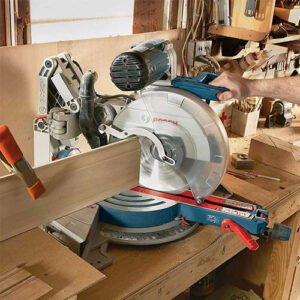
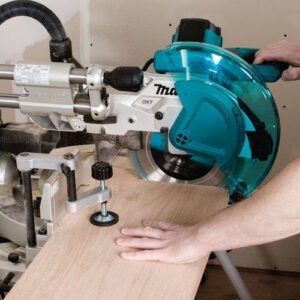
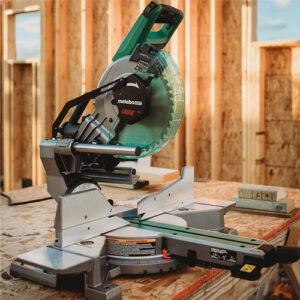


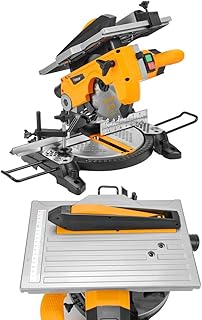


A precision corded mitre saw is designed for accurate crosscuts, mitre cuts and bevel cuts while providing the consistent electrical power that many workshop and jobsite users prefer. For Canadian buyers, the right choice depends on more than cutting capacity alone. Blade quality, fence design, bevel adjustment, mitre detents, dust collection, motor performance, portability and long-term serviceability can all affect how accurately a saw performs in everyday use.
This buying guide is intended to help Canadian shoppers compare specifications and evaluate suitable options before purchasing. Product specifications, included accessories, retailer pricing and availability can change, so it is sensible to confirm the latest details before placing an order.
Precision is not simply a matter of having a powerful motor. A saw can have plenty of cutting power and still produce inconsistent results if the fence moves, the mitre mechanism has excessive play, the blade is poorly suited to the material, or the adjustment system is difficult to repeat accurately.
A precision-oriented mitre saw should make it relatively straightforward to establish a repeatable cutting position. Important characteristics include a rigid fence, clearly defined mitre positions, dependable bevel adjustment, a stable base, a properly aligned blade and controls that can be locked securely.
For trim work, cabinetry components, framing, flooring projects and general woodworking, repeatability can be more important than maximum motor output. A buyer who routinely makes dozens of identical cuts may benefit more from a stable adjustment system and accurate stops than from paying extra for specifications that will rarely be used.
Common mitre saw configurations use blades in different diameters, with larger blades generally offering greater potential cutting capacity when the saw is designed around them. A larger blade does not automatically make a saw more precise, however.
When comparing models, consider the blade diameter together with the manufacturer's stated maximum crosscut and mitre capacities. Also check whether the required blade size is readily available in Canada and whether replacement blades for the materials you cut are easy to source.
Corded models are attractive to users who want continuous operation without managing batteries or charging cycles. When comparing motor specifications, look beyond a single advertised power figure and consider the overall design of the saw, including blade speed, soft-start behaviour, overload protection where specified, and the type of work for which the manufacturer recommends the machine.
Canadian buyers should also verify the electrical requirements and ensure that the saw is appropriate for the intended workshop or jobsite setup. Do not assume that every model sold through an international marketplace has identical electrical specifications or included accessories.
The mitre range determines how far the saw can rotate for angled crosscuts. Frequently used settings can include common angles for framing, trim and furniture work, but the useful range varies between designs.
Pay particular attention to how the mitre mechanism locks into position. Positive detents can make frequently used angles faster to select, while a fine-adjustment mechanism can be valuable when a project requires an angle between standard preset positions.
Bevel capability allows the blade to tilt relative to the workpiece. Single-bevel designs tilt in one direction, while dual-bevel or compound configurations can tilt in both directions.
A dual-bevel configuration can reduce the need to flip or reposition a workpiece when making matching compound cuts. This can be especially useful for detailed trim work. Buyers who mainly make straightforward crosscuts may not need to pay more for advanced bevel functionality.
Maximum cutting capacity is one of the most important specifications to compare because it determines the size of material that can be processed in a single operation.
Do not judge capacity solely from the blade diameter. Sliding mechanisms, blade position, fence geometry and the manufacturer's stated specifications all influence the actual cutting envelope. If you regularly work with wide boards, larger dimensional lumber or substantial trim, compare the published crosscut capacity at relevant angles rather than relying on a general statement such as “large capacity.”
The fence is a critical component for repeatable precision. A rigid fence helps keep the workpiece positioned consistently while the blade enters the material.
Look for a fence that is substantial, easy to align and capable of supporting the material being cut. If the saw is intended for tall baseboards or crown moulding, check the manufacturer's specifications for vertical cutting capability and fence clearance.
Detents are preset positions that help the operator select common mitre angles quickly. A useful system should engage positively and allow the selected angle to remain stable during cutting.
For fine woodworking, the ability to make small adjustments outside the preset positions can be just as important. Compare the locking mechanism, adjustment controls and overall rigidity rather than judging a saw only by the number of detent positions advertised.
Blade speed influences how the saw interacts with different materials and blade designs. Higher speed is not automatically better for every application. The appropriate blade and tooth configuration remain essential.
For clean woodworking cuts, selecting a blade designed for the intended material can have a substantial effect on the finished edge. Always follow the saw and blade manufacturer's compatibility requirements.
A sliding mitre saw allows the blade assembly to travel through the workpiece, generally increasing crosscut capacity. This configuration is useful when cutting wider boards and larger pieces of material.
The trade-off is that the sliding mechanism introduces additional moving components. Buyers focused heavily on precision should pay close attention to the rigidity and smoothness of the slide system and ensure that the mechanism locks securely when required.
A conventional compound mitre saw has a more compact cutting mechanism and can be an excellent choice when the majority of work involves narrower boards, trim or repeated crosscuts.
Its simpler design can also make it attractive to buyers who prioritise compactness and straightforward operation over maximum cutting width.
A single-bevel saw can be sufficient for many general-purpose projects. It can produce bevel and compound cuts, but the operator may need to reposition the workpiece when changing the direction of the bevel.
A dual-bevel saw provides greater flexibility because the blade can tilt in both directions. This is particularly useful for users who frequently work with crown moulding, architectural trim or other components where matching compound angles are required.
If your projects involve mostly 90-degree crosscuts and occasional mitre cuts, a dual-bevel mechanism may not provide enough additional value to justify choosing a more complex model. Match the feature set to the work rather than assuming the most sophisticated configuration is automatically the best choice.
Some mitre saws use lasers or other visual systems to indicate the intended cutting path. These features can be convenient, but they should not be treated as proof of mechanical precision.
A laser can require adjustment and may be affected by ambient lighting or changes in setup. A shadow-line system can provide a useful indication of the blade's position without requiring a separate laser alignment procedure. Traditional blade visibility and careful marking remain important even when a saw includes an illuminated or projected cutting indicator.
When comparing models, consider whether the cut-line system is genuinely useful for your working environment rather than selecting a saw solely because the feature appears prominently in the product description.
Mitre saws can produce a considerable amount of sawdust because the blade is exposed around the cutting area. Effective dust management can make the workspace easier to maintain and can reduce airborne dust when combined with an appropriate extraction system.
Compare the location and design of the dust port, the supplied dust bag where applicable, and compatibility with the extraction equipment you already use. No dust-collection system should be assumed to capture every particle.
For indoor woodworking, particularly in an enclosed Canadian workshop during colder months, dust management can be an important purchasing consideration rather than an afterthought.
The correct material depends on the saw, blade and manufacturer's instructions. Wood products are the most common application, including dimensional lumber, softwood, hardwood, moulding and various engineered wood products when the equipment and blade are suitable.
Specialised blades can be designed for particular materials, but buyers should never assume that a general-purpose wood mitre saw is suitable for cutting metal, masonry, plastics or other materials simply because a compatible-looking blade exists.
Always check the saw manufacturer's permitted applications and the blade manufacturer's instructions before cutting anything outside the normal intended use.
Blade tooth count can influence the balance between cutting speed and finish quality. Blades with more teeth are often selected when a smoother woodworking finish is important, while configurations with fewer teeth may be more appropriate when faster material removal is the priority.
The best choice depends on the material, thickness, desired finish and saw. A precision mitre saw paired with an unsuitable or damaged blade cannot deliver the expected quality simply because the machine itself has good adjustment features.
Different tooth geometries are intended for different cutting applications. When shopping for replacement blades, compare the blade diameter, arbor specification, kerf, tooth configuration and maximum rated speed with the requirements of your mitre saw.
A dull blade can increase cutting resistance and reduce the quality of the finished edge. If cuts begin to become rough, slow or inconsistent, inspect the blade rather than immediately assuming that the saw requires replacement or calibration.
Cordless tools have become increasingly capable, but corded mitre saws remain relevant for stationary workshops, renovation work and applications where continuous electrical power is convenient.
The disadvantage is reduced mobility and the need to manage the power cable safely. For professional users who move between locations frequently, a cordless model may be more convenient even when a corded model offers a compelling stationary-workshop solution.
Brand reputation can be a useful starting point, but it should not replace specification-level comparison. Established power-tool manufacturers such as DeWalt, Bosch, Makita, Milwaukee, Metabo HPT, Ryobi and Craftsman offer different tool families and configurations, so the individual model remains more important than the logo on the housing.
When comparing a particular model, examine its exact cutting capacity, adjustment system, blade specification, bevel range, fence configuration, dust-management design and included accessories. Two saws from the same manufacturer can be designed for very different users.
Professional users often need a combination of durability, repeatability, fast adjustment and convenient material handling. A saw that is used frequently may justify investment in more robust construction and better adjustment controls even if its maximum cutting capacity is not the largest available.
Portability also matters. Consider the machine's overall weight, carrying points and compatibility with a mitre saw stand or mobile workstation if it will be transported regularly.
A homeowner or hobbyist may benefit from prioritising ease of adjustment, accuracy, reasonable capacity and straightforward maintenance. Paying for specialised professional features that will rarely be used may not provide meaningful value.
If the saw will only be used for occasional renovation or home-improvement projects, reliability and ease of setup can be more important than advanced productivity features. Storage space should also be considered, particularly when a sliding saw requires more clearance behind or around the machine.
A precision saw is only part of the cutting system. Poorly supported material can shift during a cut and undermine otherwise accurate settings.
For longer boards, consider a stable mitre saw stand, extension supports or an appropriately constructed workbench. The support surface should keep the material level with the saw table and prevent sagging that could alter the position of the workpiece.
If repeat cutting is common, integrated or compatible stops can make it easier to produce multiple pieces of identical length. Always verify the compatibility and weight capacity of the stand or support equipment before use.
Customer reviews can provide useful information about ownership, but they should be interpreted carefully. Look for recurring comments rather than relying on one unusually positive or negative review.
For a precision mitre saw, useful review themes include fence stability, mitre accuracy, ease of adjustment, dust collection, blade changes, portability, assembly requirements and long-term usability.
Pay attention to reviews that identify the exact model and explain how the tool was used. A complaint about portability may be irrelevant if you intend to keep the saw permanently installed in a workshop, while comments about alignment could be highly relevant if you need accurate repeat cuts.
When two models appear similar, create a simple specification checklist rather than comparing marketing language.
Dust and debris can prevent a workpiece from sitting flat. Clean the table and fence area regularly so that material rests against the intended reference surfaces.
Check for damage, excessive wear, resin buildup and other conditions that could affect cutting performance. Replace blades according to their condition and the manufacturer's guidance.
Periodic alignment checks can help identify movement or changes in setup. If the fence or another component requires adjustment, follow the manufacturer's procedure rather than relying on improvised modifications.
Sliding rails, pivots, locking mechanisms and other moving components should remain clean and operate as intended. Unusual play, binding or movement is a reason to stop and investigate rather than continuing to make precision cuts.
For projects where angle accuracy is important, periodically verify frequently used settings with an appropriate measuring or reference method. This can help distinguish a setup issue from a problem with the workpiece or blade.
Mitre saws use rapidly rotating cutting blades and require deliberate operating procedures. Read the manufacturer's instructions before use and use the guards and safety features as designed.
Secure the workpiece appropriately, maintain a stable stance, keep the cutting area clear and never place hands in the blade's path. Eye and hearing protection are important considerations, and additional protective equipment may be appropriate depending on the material and working environment.
Manage the power cord so that it cannot enter the cutting path or create a tripping hazard. Disconnect the machine from its power source before performing maintenance or changing a blade when the manufacturer's procedure calls for it.
Canadian buyers should verify that the exact model is intended for the Canadian market and that its electrical requirements are suitable for the intended installation. Product listings can sometimes vary between regions, and specifications for similarly named models are not necessarily interchangeable.
Before ordering, confirm the exact model number, blade specification, included accessories, warranty information, retailer return conditions and current availability. If purchasing through Amazon Canada or another retailer, compare the retailer listing with the manufacturer's published specifications where possible.
Also consider seasonal promotions and changes in inventory. A lower listed price is useful only when the product configuration, included accessories and warranty conditions are comparable.
There is no single price that represents the best value for every Canadian buyer. Budget, intended workload and required features should determine the appropriate tier.
Entry-level models can make sense for occasional home projects when cutting capacity and advanced adjustment features are not major requirements. Mid-range models may offer a useful balance between capacity, precision features and portability. Higher-end professional machines can be justified when the saw will be used frequently and features such as robust adjustment mechanisms, greater capacity and improved workflow efficiency have measurable value to the user.
Rather than setting a budget first and choosing the most feature-rich model within it, identify your essential requirements and then compare models that meet those requirements.
The best choice depends on the type of work, required cutting capacity, budget and desired adjustment features. A professional trim installer may prioritise repeatability and bevel flexibility, while an occasional DIY user may prefer a simpler and more compact configuration.
Yes. Corded models remain practical for workshops, renovation projects and long cutting sessions where continuous mains power is convenient. They are particularly attractive when portability is less important than uninterrupted operation.
Not automatically. A sliding design generally provides greater cutting capacity, but accuracy depends on the complete mechanical system, including the slide mechanism, fence, blade, adjustment system and setup.
Dual-bevel models offer more flexibility for compound cuts because the blade can tilt in both directions. Whether that advantage is worthwhile depends on how frequently you perform bevel and compound cuts.
A laser can help indicate the cutting position, but it does not automatically improve the mechanical accuracy of the saw. Proper alignment, a suitable blade, stable material support and correct technique remain essential.
The appropriate blade depends on the material, desired finish and saw specifications. A blade with a suitable tooth count and geometry can be preferable when finish quality is more important than maximum cutting speed. Always match the blade to the manufacturer's requirements.
The fence is extremely important for repeatable positioning. A rigid, properly aligned fence helps keep the workpiece in a consistent relationship with the blade.
Only if the saw is specifically designed for that blade size. Blade diameter, arbor dimensions and maximum rated speed must match the manufacturer's requirements. Never install an incompatible blade to increase capacity.
They serve different purposes. A mitre saw excels at crosscuts, mitre cuts and bevel cuts, while a table saw is generally better suited to ripping and other operations requiring a different cutting setup. Many woodworking environments benefit from using the appropriate machine for each task.
Confirm the exact model number, blade size, cutting capacity, mitre and bevel ranges, electrical requirements, included accessories, warranty information, current retailer price and delivery conditions. Also check that customer feedback applies to the exact configuration you are considering.
The best precision corded mitre saw is not necessarily the one with the largest blade, highest advertised power or longest feature list. The strongest choice is the model whose cutting capacity, adjustment system, fence design, bevel capability, blade compatibility, dust management and physical footprint match the work you actually perform.
For Canadian buyers, compare the exact specifications of shortlisted models and verify current retailer information before purchasing. Brands such as DeWalt, Bosch, Makita, Milwaukee, Metabo HPT, Ryobi and Craftsman can provide useful starting points for comparison, but the individual model should always be evaluated on its own specifications.
If precision is the priority, place particular emphasis on mechanical stability, fence rigidity, repeatable mitre and bevel adjustments, suitable blades and proper workpiece support. These factors have a direct relationship with the consistency of finished cuts and are more meaningful than relying on marketing terminology alone.
Finally, consider the complete cost of ownership rather than the purchase price alone. Replacement blades, dust extraction, material supports, stands and other accessories can affect the total investment. A well-matched saw that fits your workload and workspace can provide better practical value than an unnecessarily complex machine with capabilities you rarely use.