

♥ Wishlist
Compare 9 Corded Circular Saws for Powerful, Consistent Cutting products in Canada. Reviews, ratings, pros, cons and buying advice updated for October 2026.
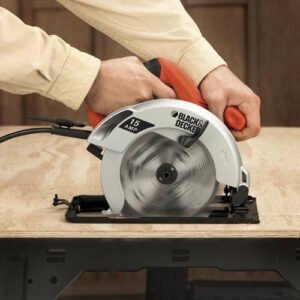
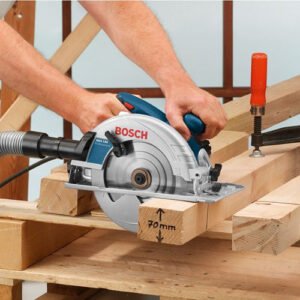
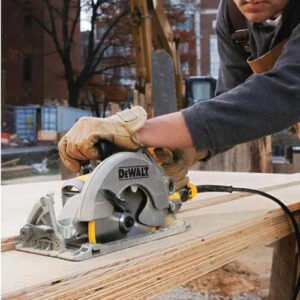
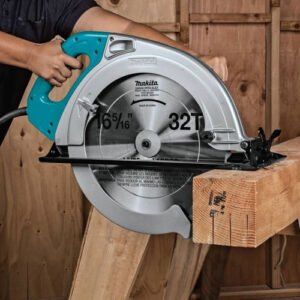
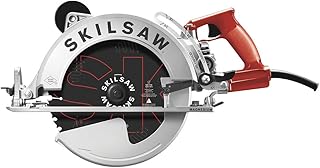


A precision corded circular saw is best evaluated as a complete cutting system rather than by motor power alone. For Canadian buyers, the right choice depends on the type of material being cut, required cut depth, desired accuracy, blade availability, cord length, handling, dust control, and compatibility with the electrical setup in the workshop or job site.
The term “precision circular saw” does not describe one universal technical specification. It generally refers to a circular saw that can produce controlled, repeatable cuts when paired with an appropriate blade, accurate measurement, a stable workpiece, and suitable guidance. A well-designed saw can contribute to precision, but the final result also depends heavily on technique and setup.
When comparing models from brands such as DEWALT, Makita, Bosch, Milwaukee, SKILSAW, and Metabo HPT, look beyond headline wattage or amperage. Features such as a rigid base, smooth depth adjustment, clear sightlines, dependable bevel adjustment, low blade runout, comfortable trigger operation, and effective dust management can have a greater practical effect on cutting control.
Precision begins with control. A circular saw that is powerful but difficult to guide may be less useful for accurate work than a model with balanced handling and predictable adjustment mechanisms.
Corded and cordless circular saws can both produce accurate cuts, but they suit different working environments. A corded model can be particularly attractive for users who regularly work near a suitable electrical outlet and want continuous operation without changing or charging battery packs.
A cordless saw can offer greater mobility and convenience, especially on construction sites or in locations where power access is limited. A corded saw, however, avoids battery capacity becoming a consideration during extended cutting sessions. For stationary workshop work, renovation projects, framing preparation, sheet-goods cutting, and repeated cuts near a power source, that continuous electrical connection can be useful.
The trade-off is cable management. The power cord must remain behind the cutting path and away from the blade, while the operator must account for the cable when moving around a workpiece. In a compact workshop, this can matter more than the difference between two otherwise similar saws.
Motor amperage is an important specification when comparing corded circular saws, but it should not be treated as a direct measurement of cutting quality. A higher-rated motor may provide useful capacity for demanding work, but the blade, gearing, motor design, load response, shoe stability, and overall construction also affect real-world performance.
For occasional DIY work, an extremely powerful professional-grade saw may offer capabilities that are rarely used. For frequent framing, renovation, or heavy sheet-material work, a more robust motor and durable construction can make sense.
Canadian buyers should also verify the electrical requirements of the exact model before purchasing. Check the manufacturer's specification for voltage, amperage, plug configuration, and intended electrical supply. Do not assume that every corded saw sold internationally has identical electrical requirements.
Blade diameter determines much of a circular saw's potential cutting capacity. A common full-size format is the 7-1/4-inch circular saw, although smaller and larger formats are also available.
Do not compare blade diameter without checking the manufacturer's stated maximum cutting depth. Maximum depth can vary according to the saw's design and the cutting angle. A saw that provides sufficient depth at 90 degrees may have considerably less capacity when set for a bevel cut.
Before selecting a saw, identify the thickest material you expect to cut. Consider not only standard dimensional lumber but also sheet goods, laminated panels, plywood, hardwood boards, and other materials relevant to the project.
A 90-degree cut is the standard reference point for maximum cutting depth. It is particularly relevant to crosscuts and rip cuts through dimensional lumber.
Bevel cutting reduces the effective cutting depth. If angled cuts are part of your projects, compare the published 45-degree capacity rather than relying exclusively on the 90-degree figure.
Kerf refers to the width of material removed by the blade. Thin-kerf blades can reduce material removal and may require less cutting effort, while full-kerf blades can provide advantages in particular applications. Always make sure the blade is compatible with the saw and intended material.
Even an excellent circular saw can deliver disappointing results with an unsuitable blade. Blade selection should be based on the material and desired finish rather than simply choosing the highest tooth count available.
Tooth count is not the only consideration. Tooth geometry, carbide quality, blade thickness, kerf, hook angle, material compatibility, and the manufacturer's recommendations all matter.
Blade runout describes unwanted lateral movement or deviation of the blade from its intended plane. Excessive runout can contribute to vibration, uneven cutting, and a less predictable cut. It can originate from the blade itself, mounting surfaces, arbor components, contamination, damage, or other mechanical factors.
For precision-oriented work, inspect the blade and arbor area regularly. A blade should be correctly installed and tightened according to the manufacturer's instructions. Do not attempt to compensate for a damaged or unsuitable blade by forcing the saw through the cut.
The shoe, or base plate, is one of the most important physical interfaces between the tool and workpiece. A rigid shoe helps the saw remain stable while the operator follows the cutting line.
When comparing circular saws, examine how the shoe feels when depth and bevel adjustments are locked. Look for a design that remains secure without excessive movement. Aluminum or other metal shoe constructions can offer a different combination of rigidity, weight, and durability than lighter materials.
The shape of the shoe also matters. A broad, stable base can be beneficial on sheet material, while a compact design may be easier to maneuver around framing members or in restricted spaces.
A saw with a dependable bevel mechanism is important for users who regularly make mitre-like angled cuts with a circular saw. The adjustment should be easy to read, secure when locked, and resistant to accidental movement during operation.
Positive stops can speed up common settings such as 45 degrees, but users should still verify the actual angle when precision is important. A positive stop is a convenience feature, not a substitute for checking the cut when the project requires tight dimensional accuracy.
Correct depth setting improves both control and cutting efficiency. Setting the blade substantially deeper than necessary can increase the amount of exposed blade and may make the saw harder to manage. For many wood-cutting applications, the blade should be set to an appropriate depth for the material according to established safe-work practices and the manufacturer's instructions.
A good depth lever or knob should be easy to operate but should also hold the selected position firmly. When comparing models, check the scale readability and locking mechanism rather than simply looking at the maximum depth specification.
Some corded circular saws include an electric brake designed to stop the blade more quickly after the trigger is released. This can be convenient during repetitive work because it reduces the waiting time between cuts. It should still be regarded as a convenience and control feature rather than a replacement for safe operating practices.
Other useful features may include a dust port, rafter hook, onboard wrench storage, LED illumination, soft-start behavior, overload protection, and improved grip surfaces. Feature value depends on the work being performed.
Dust management matters for both workshop cleanliness and visibility of the cut line. A dust port that can connect to a suitable extraction system may help direct airborne debris away from the operator and work area.
However, not every circular saw is equally suited to dust extraction. Before purchasing, check the manufacturer's specifications for the dust outlet and compatible accessories. Also consider whether the extraction setup interferes with the cord, sightline, or movement of the saw.
Two saws with similar specifications can feel completely different in use. Weight distribution is particularly important because the operator supports and guides the tool throughout the cut.
Brand reputation can help narrow the field, but it should never replace specification-level comparison. Different product families from the same manufacturer can target very different users.
DEWALT offers a broad range of power tools and circular saws aimed at construction, woodworking, renovation, and professional applications. When evaluating a DEWALT corded model, compare the exact motor rating, blade capacity, shoe construction, bevel range, depth adjustment, weight, and included features rather than assuming that every model offers the same performance.
Makita is another established power-tool manufacturer with circular saws spanning different applications and configurations. Makita models can be worth comparing when ergonomics, handling, cutting capacity, and workshop-oriented use are important factors.
Bosch circular saws are available in designs intended for different types of woodworking and construction work. Compare the specific model's blade size, adjustment system, handling characteristics, visibility, and accessories before making a decision.
Milwaukee is widely associated with professional power tools and offers products across several tool categories. For corded circular saw comparisons, examine the individual model's electrical specifications, cutting capacity, ergonomics, and intended application.
SKILSAW has a long association with circular saws and is particularly relevant to buyers interested in traditional corded saw designs. Model-specific specifications should be checked carefully because cutting capacity, motor configuration, weight, and features vary between products.
Metabo HPT offers power tools for professional and DIY users. Its circular saw models can be compared on motor specifications, shoe design, adjustment mechanisms, bevel capability, weight, and overall suitability for the intended work.
Canadian buyers should consider the actual environment in which the saw will be used. A workshop-based user has different priorities from someone performing renovation work in an unfinished building or moving between job sites.
A dependable general-purpose saw can be sufficient for occasional shelving, framing repairs, plywood projects, garden structures, and basic renovation work. Prioritize straightforward controls, comfortable handling, appropriate cutting depth, readily available compatible blades, and good visibility.
Frequent professional use places greater emphasis on durability, consistent performance, ergonomics, adjustment reliability, serviceability, and compatibility with the user's existing tool ecosystem. A robust shoe and dependable depth and bevel mechanisms can become especially valuable when the saw is used repeatedly.
For finish-sensitive woodworking, the saw itself is only one component of the system. A suitable fine-tooth blade, stable workholding, a straightedge or guide rail where appropriate, accurate measurement, and careful feed technique can have a substantial effect on the result.
Sheet goods reward good support and guidance. A full sheet should be adequately supported so that the cut does not pinch the blade or cause the material to shift. A straightedge or compatible guide system can improve repeatability when long, straight cuts are required.
If straight-line accuracy is a major priority, consider whether the saw can be used with an appropriate guide system. A guide rail or carefully positioned straightedge can provide a more repeatable reference than attempting to follow a pencil line freehand over a long distance.
Compatibility must be checked before purchase. Some saws are designed around proprietary guide systems, while others may work with suitable third-party solutions or conventional clamping methods. Verify the exact saw and accessory specifications rather than assuming universal compatibility.
A precision-oriented saw cannot compensate for an unstable workpiece or an inaccurate layout. For repeatable results, use a consistent process.
Motor rating does not tell the entire story. A high-amperage saw may be unnecessary for light-duty work, while a demanding application may require more than motor power alone can provide.
Check blade diameter, arbor requirements, maximum rated speed, material compatibility, and manufacturer guidance. Never install a blade simply because its diameter appears correct.
Maximum cutting depth is useful, but additional capacity can add weight or size. Match the saw to the thickest material you actually expect to cut.
If angled cuts are part of the project, compare both bevel range and cutting depth at the intended angle.
A heavy saw can be advantageous in some demanding applications but tiring during repetitive or overhead work. Consider how long the tool will normally be held and guided.
Guide systems vary. Confirm compatibility before purchasing a rail or accessory.
The lowest purchase price is not necessarily the lowest long-term cost. Consider the saw's construction, compatible blades, accessories, intended workload, and replacement requirements.
Electrical compatibility deserves particular attention when purchasing corded power tools in Canada. Always use the electrical information supplied for the exact product intended for the Canadian market.
Do not assume that a saw marketed under the same brand and model family has identical electrical specifications in every country. International versions can differ. Check the product label, manufacturer documentation, plug configuration, voltage requirements, and any applicable instructions before use.
Extension cords should also be selected appropriately for the tool and working environment. An unsuitable or excessively long extension cord can affect tool performance and create unnecessary electrical and trip hazards. Follow the saw manufacturer's instructions and applicable Canadian electrical safety guidance.
Accuracy should never be achieved by compromising safe operation. Circular saws can cause serious injury when used incorrectly, so read and follow the manufacturer's operating instructions before use.
Kickback is one of the most important hazards associated with circular saw operation. It can occur when the blade binds, stalls, or becomes improperly engaged with the material. Workpiece movement, inadequate support, incorrect blade depth, and unsuitable cutting technique can contribute to hazardous situations.
Proper material support is particularly important when cutting sheet goods. The workpiece should be arranged so that the cut does not create conditions where the material closes onto the blade or causes the offcut to interfere with the saw.
Never rely on a saw's safety features alone. Use the operating procedures specified by the manufacturer and maintain control of the tool throughout the cut.
Regular maintenance can help preserve the saw's cutting characteristics and make problems easier to identify before they become more serious.
There is no universal number of cuts that determines when a blade should be replaced. Wear depends on the material, blade type, cutting technique, operating conditions, and blade quality.
Signs that a blade may require replacement or professional evaluation include increasingly rough cuts, excessive burning, unusual vibration, repeated difficulty entering material, visible damage, missing teeth, or performance that does not improve after appropriate cleaning and adjustment.
A dull blade can also tempt an operator to apply excessive force. Replacing an unsuitable or worn blade is often a better solution than attempting to overcome poor cutting performance through pressure.
When two models appear similar, use a consistent comparison framework instead of focusing on one headline feature.
A corded circular saw can be a practical choice for a wide range of cutting applications when the tool, blade, and setup are properly matched.
A circular saw is versatile, but it is not automatically the best tool for every precision application. If the project requires extremely fine joinery, intricate curves, very small components, or highly repeatable production cuts, another tool may be more appropriate.
A table saw can be preferable for controlled repetitive ripping when a suitable setup is available. A mitre saw can be advantageous for repeated crosscuts and mitres. A track saw may offer greater control for long straight sheet-material cuts. A jigsaw is generally more suitable for curved cuts. A band saw may be preferable for certain curved or resawing applications.
The best buying decision is therefore not simply “which circular saw is most powerful?” but “which cutting system best matches the work I actually perform?”
Accessories can have a significant effect on the usefulness of a circular saw. Depending on the project, consider a quality straightedge, compatible guide rail, clamps, appropriate blades, dust-extraction equipment, and a suitable storage solution.
A reliable measuring and marking system is equally important. A premium saw paired with inaccurate measurements can still produce poor results. For repeatable work, the complete setup should be treated as a system consisting of the saw, blade, guide, workholding, measuring tools, and operator technique.
Customer reviews can provide useful information, but they should be interpreted carefully. A review describing a tool as “powerful” does not establish a measurable performance advantage, and a complaint about a product may reflect a particular application rather than a universal defect.
Look for recurring, specific observations about balance, adjustment controls, blade visibility, durability, cord handling, vibration, dust collection, and suitability for particular materials. Give greater weight to reviews that identify the exact model and explain the application rather than relying on a simple star rating.
Before making a purchase, compare customer feedback with the manufacturer's current specifications. Retailer descriptions can occasionally omit important details or combine information from related models.
The most expensive model is not automatically the best choice, and the cheapest model is not necessarily the best value. Value depends on how closely the tool's capabilities match the intended workload.
For occasional projects, paying substantially more for professional features may provide limited practical benefit. For frequent use, durability, ergonomics, adjustment reliability, blade availability, and consistent handling can justify spending more than the entry-level price.
When comparing prices in Canada, remember that retailer pricing, promotions, bundles, taxes, shipping charges, and included accessories can change. Compare equivalent configurations rather than comparing headline prices for different packages.
Use this checklist when narrowing down the top options in the Canadian market:
There is no single best model for every Canadian buyer. The right choice depends on the materials, cutting depth, frequency of use, desired accuracy, budget, ergonomics, and whether the saw will be used with a guide system. Compare exact model specifications and current customer feedback before deciding.
Yes. Corded models can remain practical for workshops, renovation projects, construction work, and other applications where mains power is readily available. Their primary advantage is continuous operation without relying on rechargeable battery capacity.
A 7-1/4-inch saw is a versatile format for many woodworking and construction tasks. Its suitability depends on the required cutting depth and the materials involved. Always check the exact model's published specifications.
Not necessarily. Motor power can influence cutting capability, but precision also depends on blade quality, shoe rigidity, adjustment accuracy, vibration, balance, visibility, workpiece support, and operator technique.
A blade intended for plywood or fine-finish woodworking applications is generally more appropriate than a coarse framing blade when minimizing tear-out is important. Check the blade manufacturer's recommendations for the specific material.
A skilled operator can make accurate straight cuts freehand, but a suitable straightedge or guide system can improve repeatability, particularly on long cuts. The guide must be compatible with the saw and securely positioned.
The shoe is highly important because it provides the main support surface between the saw and the workpiece. A stable shoe can make the tool easier to guide and can contribute to more consistent cuts.
A metal shoe can provide a rigid platform and may be desirable for demanding use, but shoe material alone does not determine overall quality. Evaluate the entire construction, adjustment system, weight, balance, and intended application.
Not necessarily, but dust extraction can be useful in enclosed workshops and indoor renovation environments. Check whether the specific saw has a suitable dust outlet and whether your extraction equipment is compatible.
Replacement frequency depends on the blade, material, workload, and operating conditions. Replace or professionally assess a blade when it becomes damaged, excessively worn, or consistently produces poor results despite correct setup.
For framing, consider cutting capacity, motor performance, durability, weight, balance, visibility, bevel capability, blade availability, and ease of repeated operation. A suitable framing blade is equally important.
Woodworkers may place greater emphasis on clean cutting, blade selection, low vibration, accurate adjustments, stable support, guide compatibility, dust management, and ergonomics.
No. Higher-priced models may provide additional durability or features, but those advantages only have meaningful value when they match the user's requirements. Compare specifications and intended use rather than price alone.
DEWALT, Makita, Bosch, Milwaukee, SKILSAW, and Metabo HPT are among the established brands worth considering. The exact model matters more than the logo, so compare the specifications and features of competing models directly.
The best precision corded circular saw is the one that provides the right combination of cutting capacity, control, durability, ergonomics, blade compatibility, and electrical suitability for the work you actually perform. Avoid choosing solely from a headline specification such as amperage, blade size, or price.
For a general-purpose purchase, start with the materials and thicknesses you cut most often, then determine the required blade size and cutting depth. From there, compare shoe construction, bevel and depth adjustment, handling, sightlines, dust management, cord arrangement, and accessory compatibility. Finally, verify the exact Canadian-market specifications and compare current retailer pricing before purchasing.
If precision is the primary objective, give particular attention to the complete cutting setup. A quality blade, stable workpiece, accurate measurement, suitable guide, correct depth setting, and controlled feed technique can make a substantial difference regardless of which reputable saw brand you select.
Because product specifications, retailer pricing, package contents, and availability can change during 2026, verify the exact model information before placing an order. Use the manufacturer's current documentation alongside retailer listings and verified customer feedback to make the final comparison.