

♥ Wishlist
Compare 4 Cordless Mitre Saw: Portable Precision for Every Cut products in Canada. Reviews, ratings, pros, cons and buying advice updated for October 2026.
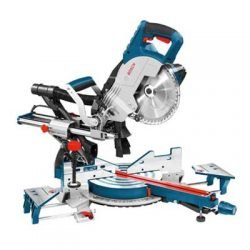
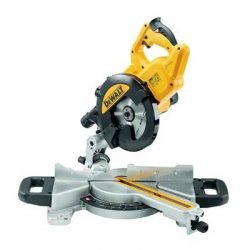
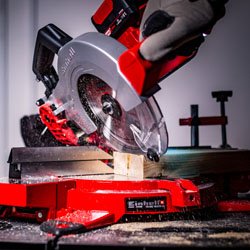
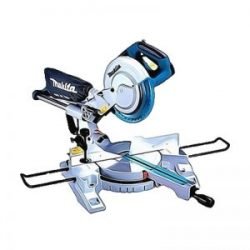
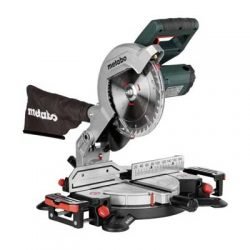
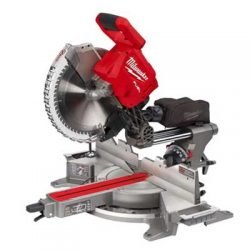

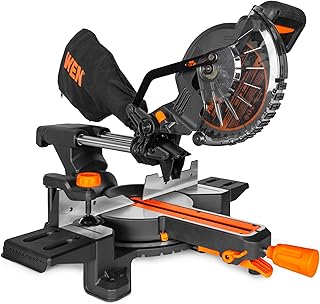

Choosing a cordless mitre saw for precision work involves more than comparing battery voltage or headline cutting capacity. A useful buying decision should consider cutting accuracy, repeatability, bevel and mitre adjustment, blade quality, dust collection, battery platform, portability, stand compatibility, visibility of the cut line, and the type of material you expect to cut. For Canadian buyers, workshop conditions, seasonal temperature changes, local availability of batteries and chargers, and the difference between occasional DIY use and professional jobsite work can also influence which saw makes the most sense.
This guide is designed to help you compare precision cordless mitre saws on the factors that matter most rather than relying on a single specification. Product specifications can vary between configurations, kits, bare-tool versions and regional models, so always compare the exact model number and included accessories before purchasing.
A precision mitre saw is not simply a saw with a high-power motor. Precision comes from the complete mechanical system: the blade, arbor, fence, pivot mechanism, bevel mechanism, detents, table, scale markings, blade alignment and ability to hold settings consistently.
For trim carpentry, framing, flooring, cabinetry, furniture projects and general woodworking, a saw that makes an accurate first cut is valuable. A saw that can make the same accurate cut repeatedly is even more useful. Repeatability is particularly important when producing multiple pieces of moulding, baseboard, casing, framing components or other parts that must match.
When comparing cordless models, look for a combination of rigid construction, positive detents, easy-to-read scales, minimal play in the pivot system and a fence that remains square to the blade. A sophisticated electronic system cannot compensate for excessive mechanical movement.
Blade diameter directly influences the type and size of material a mitre saw can cut. Common cordless mitre saw categories include compact models around 7-1/4 inches, 8-1/2 inches, 10 inches and 12 inches. Larger blades can provide greater cutting capacity, although blade diameter alone does not determine actual capacity.
A compact saw may be easier to transport and perfectly adequate for trim, small framing work and punch-list jobs. A larger model may be preferable when you regularly cut wider boards, dimensional lumber or larger moulding.
Do not assume that a larger saw is automatically more precise. A well-built compact saw can be easier to handle and may produce better real-world results for work that does not require large capacity.
Cordless mitre saws rely on battery-powered motors, so performance depends on the motor, electronic controls, battery technology, blade condition and material being cut. Brushless motors are common in premium cordless power tools because they can provide efficient operation, controlled power delivery and reduced maintenance compared with brushed designs.
When comparing motor performance, consider how the saw behaves under load rather than focusing exclusively on a marketing power figure. A saw intended for occasional trim work does not need the same cutting capability as one used throughout a construction day.
One of the most important differences between cordless and corded mitre saws is the battery ecosystem. If you already own cordless tools, staying within the same platform can significantly reduce the cost and inconvenience of buying additional batteries and chargers.
Brands such as DeWalt, Milwaukee, Makita, Bosch, Ryobi and Metabo HPT offer cordless tool ecosystems, but batteries are generally platform-specific. Before buying a bare tool, verify that the battery you already own is genuinely compatible with the exact saw model.
Battery capacity is normally expressed in amp-hours, but a larger amp-hour rating does not automatically make a saw better. Larger batteries can increase runtime while also adding weight. For a portable mitre saw, the balance between runtime and transport weight can be important.
Some cordless mitre saws are designed around one battery while others use multiple batteries. Multi-battery systems can be engineered for demanding cutting applications, but they may increase overall weight and require more batteries to operate.
For a stationary workshop, additional weight may be less significant. For contractors moving tools between vehicles, floors and jobsites, portability can be more important. Match the battery architecture to your work pattern rather than assuming that more batteries always mean a better purchase.
Mitre detents are preset positions that help the operator quickly set commonly used angles. Useful detents can make repetitive work faster, especially when cutting standard trim angles.
The quality of the detent mechanism matters. A scale with many markings is less useful if the mechanism does not hold the selected angle securely. Look for a design that allows positive engagement while still permitting fine adjustment between preset positions.
Bevel adjustment controls the angle of the blade relative to the material. A saw capable of compound cuts can combine a mitre angle with a bevel angle, making it useful for applications such as crown moulding and complex framing.
Single-bevel saws generally tilt in one direction, while dual-bevel saws can tilt in both directions. A dual-bevel design can reduce the need to flip a workpiece when making matching compound cuts.
The fence provides a reference surface against which the workpiece is positioned. A rigid and accurately aligned fence is fundamental to repeatable crosscuts.
Tall sliding or adjustable fences can be useful for larger moulding and taller stock. However, the fence must remain secure and properly aligned. A large fence is not inherently better if it introduces movement or complicates access to the workpiece.
A stable table helps keep material positioned consistently. Look for a broad support area, positive clamping options and compatibility with appropriate stands or extensions when working with long boards.
Long stock can be difficult to control if it extends far beyond the table. Even an accurate saw can produce poor results when the workpiece moves during cutting. For precision work, proper material support is part of the cutting system rather than an optional accessory.
Cutting capacity describes the maximum dimensions of material that a saw can cut under specified conditions. It can vary according to blade diameter, mitre angle, bevel angle and the physical design of the saw.
A saw might provide a substantial straight crosscut capacity but a smaller capacity when making a compound cut. This is why buyers should review the manufacturer's capacity chart instead of relying on a single headline measurement.
If you regularly cut wide boards, compare actual capacity for the specific angle you use most often. A smaller, lighter saw may be sufficient for narrow trim but frustrating for larger stock.
The factory blade should not be treated as the only blade you will ever need. Blade selection has a significant influence on finish quality, cutting speed, material compatibility and the amount of tear-out.
For fine woodworking and trim, a blade with a higher tooth count can provide a smoother finish. For general construction, a balanced-purpose blade may provide a useful combination of speed and finish. Specialized blades can be appropriate for particular materials.
Always verify blade diameter, arbor size, maximum permitted blade speed and material compatibility before installing a replacement blade. Never use a blade outside the saw manufacturer's specifications.
Kerf is the width of material removed by the blade. Thin-kerf blades can reduce material removal and may be useful in battery-powered tools because they can require less cutting effort under appropriate conditions. However, blade rigidity and application suitability also matter.
Tooth geometry influences how a blade interacts with the material. Different tooth configurations can favor clean crosscuts, rapid material removal or particular sheet and solid-wood applications. When precision is the priority, the best blade is not necessarily the one with the highest tooth count; it is the blade whose design matches the material and desired finish.
Good visibility of the cutting area makes accurate positioning easier. Cordless mitre saws may use different approaches, including lasers, LED illumination or blade-shadow systems.
A shadow-style cut indicator can show the approximate kerf position by projecting a shadow from the blade. Laser systems can provide a visible reference line, while basic LED lighting can improve visibility without necessarily indicating the exact blade kerf.
Regardless of the system, the indicator should be treated as an aid rather than a substitute for accurate measurement and proper blade alignment. Dust, lighting conditions and blade thickness can influence how easy the reference is to see.
Dust collection is important for both visibility and workshop cleanliness. A mitre saw generates chips and fine dust that can accumulate around the cutting area, fence and table.
Some saws provide a dust bag, while others can connect to a shop vacuum or dust extractor. Collection performance varies significantly by cutting geometry and the way the dust is directed away from the blade.
For enclosed Canadian workshops, especially during colder months when doors and windows may remain closed, effective dust management can make the working environment considerably more practical.
Portability is one of the strongest reasons to choose cordless equipment. Without a power cord, the saw can be positioned on a jobsite without planning around an electrical outlet or extension cord.
However, cordless does not automatically mean lightweight. A large saw, stand, battery and accessories can become a substantial load. Consider the complete system you will carry, not merely the bare-tool weight listed in a specification sheet.
A sliding mitre saw allows the blade assembly to move forward and backward, increasing cutting capacity. This can be especially useful for wider boards and larger moulding.
A non-sliding compound mitre saw can be simpler and more compact. It may be a strong choice when most of your work involves narrower material and portability is more important than maximum capacity.
Sliding mechanisms introduce additional moving components, so buyers interested in maximum precision should pay attention to mechanical rigidity and smoothness rather than treating sliding capacity as the only priority.
A dual-bevel saw can tilt in both directions. This feature can save time when making symmetrical compound cuts because the workpiece does not always need to be repositioned.
Single-bevel models can still be highly capable for general crosscutting and mitre work. If most of your projects involve square cuts and straightforward mitres, paying extra for dual bevel may provide little practical benefit.
For professional trim installation, crown moulding, architectural details and repeated compound cuts, dual-bevel capability can become much more valuable.
Trim carpentry places unusually high demands on repeatability and finish quality. A small dimensional error can become obvious when several pieces of casing or baseboard meet at corners.
For trim applications, prioritize:
Brands including DeWalt, Makita, Milwaukee and Bosch have extensive cordless woodworking and construction tool ranges, so buyers already invested in one of these ecosystems may find platform compatibility particularly useful.
Framing work emphasizes cutting speed, capacity, durability and portability. Finish quality still matters, but the priorities can differ from fine woodworking.
A high-tooth-count finishing blade is not necessarily the best choice for demanding framing work. Match the blade to the application and follow the manufacturer's recommendations for compatible materials and accessories.
DIY users often benefit from versatility more than maximum specifications. If the saw will be used for occasional shelving, flooring, garden projects, furniture repairs, trim and small construction tasks, a compact or mid-size model may provide a better overall balance than a heavy professional saw.
Consider the following questions before spending more on advanced features:
Brushless motors are widely used in modern cordless power tools. They eliminate conventional motor brushes and can provide efficient electronic control and reduced brush-related maintenance.
For a frequently used cordless mitre saw, a brushless motor can be an attractive feature. Nevertheless, motor technology should be considered alongside the entire tool. A brushless motor does not guarantee superior cutting accuracy if the fence, pivot or blade system is poorly suited to the application.
Electronic braking can reduce the time required for a spinning blade to slow after the trigger is released. Soft-start systems can help bring the blade up to operating speed in a controlled manner.
These features can improve the user experience, but they should not be confused with cutting accuracy. For a precision-oriented purchase, mechanical alignment and repeatability remain more important.
Mitre saws are powerful cutting machines and should be operated according to the manufacturer's instructions. Safety features can help, but they do not replace correct operating technique.
Keep hands away from the blade path, secure the workpiece when appropriate, wait for the blade to stop before lifting the saw head, and use appropriate eye and hearing protection. Follow the specific safety instructions supplied with the model you purchase.
Battery voltage is an incomplete way to compare cordless mitre saws. Motor design, electronics, battery chemistry, blade choice, cutting capacity and overall engineering all influence performance.
A large 12-inch saw can be useful for demanding applications, but it may be unnecessarily heavy for someone who mainly cuts trim or small boards. Bigger also means more storage space and potentially greater transportation effort.
A bare tool can appear attractive until the buyer realizes that compatible batteries and a charger are required. If you are starting from zero, compare the complete cost of the tool, batteries and charging equipment.
Maximum capacity is important, but it is only one part of the decision. Accuracy, fence quality, bevel adjustment, portability, dust extraction and battery compatibility may matter more for your actual projects.
The supplied blade may be appropriate for general use but may not deliver the finish or cutting characteristics required for every material. Factor replacement blades into the long-term ownership experience.
Long workpieces require adequate support. A saw can be perfectly capable while the surrounding setup remains unstable. Consider the saw and its support equipment as one system.
A visible laser line can help with positioning, but it does not guarantee that the blade is perfectly aligned. Mechanical setup, calibration and correct measuring technique remain essential.
A simple comparison framework makes it easier to distinguish genuinely useful features from specifications that may not matter to your work.
Cordless tools are often sold in more than one configuration. A bare tool generally includes the saw but excludes the battery and charger. A kit may include one or more batteries, a charger and sometimes additional accessories.
For existing users of a battery ecosystem, a bare tool can make financial sense. For first-time buyers, compare the complete package because the additional cost of batteries and charging equipment can materially change the overall purchase.
When comparing Canadian prices, make sure you are comparing equivalent configurations. A lower advertised price may represent a bare tool while a higher price may include a battery, charger or additional accessories.
Customer reviews can provide useful information, but they should be interpreted carefully. Review volume alone does not establish product quality, and a review about shipping, packaging or retailer service may tell you little about the saw's actual cutting performance.
Look for recurring comments concerning mechanical accuracy, fence alignment, battery behavior, dust collection, adjustment quality, portability and long-term usability. Pay particular attention to reviews that identify the exact model rather than a product family containing several generations.
Several established power-tool manufacturers are relevant when comparing cordless mitre saw platforms in Canada. The best choice depends on the exact model and your existing battery ecosystem rather than brand recognition alone.
Brand should be a starting point for comparison, not the final decision. Compare the exact saw's specifications, configuration, battery requirements and intended application.
The most obvious advantage of cordless operation is freedom from a power cable. This can be valuable on construction sites, outdoor projects, unfinished buildings and locations where electrical access is inconvenient.
Corded models can remain attractive for workshop users who prioritize continuous operation and do not need mobility. A corded saw eliminates battery management and may be more practical when the machine stays in one location.
A circular saw is more versatile for breaking down large sheet goods and making long cuts, while a mitre saw is designed around controlled crosscuts and angled cuts.
If your projects involve repeated 90-degree cuts, mitres, bevels or compound angles, a mitre saw can provide a more convenient setup. If you need maximum portability and the ability to cut large sheets or long boards without a dedicated support station, a circular saw may be more flexible.
A table saw excels at ripping material and making controlled longitudinal cuts. A mitre saw is optimized for crosscutting and angled cuts. These tools serve different roles rather than being direct replacements.
For a workshop with enough space and a broad range of woodworking requirements, owning both can provide complementary capabilities. For occasional home projects, choosing one tool should depend on the types of cuts you perform most often.
Even a high-quality saw can produce inaccurate cuts if it is not properly set up. Begin with a stable, level support surface and make sure the saw is securely positioned.
Calibration is the process of checking and, where the design permits, adjusting the saw so that its indicated angles correspond closely with actual cutting angles.
Small deviations can become significant when several pieces are assembled. For example, a small error repeated across multiple pieces can produce noticeable gaps at joints.
Always follow the manufacturer's calibration instructions. Do not modify structural components or adjustment mechanisms in ways that are not approved by the manufacturer.
Accurate mitre joints depend on both the saw and the technique. Measure carefully, maintain consistent material orientation and make sure the workpiece is firmly supported against the fence.
When cutting multiple pieces that need to match, use a consistent reference orientation. Marking the finished side of the material can help prevent accidental reversal of the workpiece.
Regular maintenance helps preserve performance and makes problems easier to identify before they affect a project. Always remove the battery before performing maintenance, cleaning or blade-related work as directed by the manufacturer.
Sawdust and debris can prevent a workpiece from sitting flush against the table or fence. Even a small amount of material trapped between the workpiece and reference surface can affect the cut.
A dull, damaged or inappropriate blade can increase cutting effort and reduce finish quality. Replace blades when they are no longer suitable for the intended application.
The blade guard should move as designed and should not be obstructed by accumulated dust or debris. If the guard does not operate correctly, stop using the saw until the issue has been addressed according to the manufacturer's instructions.
Regularly inspect accessible fasteners, fences and adjustment mechanisms. Excessive movement, unusual vibration or difficulty holding an angle can indicate that inspection or servicing is needed.
Use only compatible batteries and chargers. Follow the battery manufacturer's instructions for charging, storage and temperature conditions. Avoid exposing batteries to conditions outside their specified operating or storage limits.
Canada's climate can create additional considerations for cordless power-tool owners. Battery performance can be affected by temperature, and lithium-ion batteries should be used, charged and stored according to the manufacturer's specified temperature guidance.
If tools are transported in very cold conditions, allow equipment to reach an appropriate operating temperature before use when required by the manufacturer. Do not assume that a battery that has been stored outdoors in freezing conditions should immediately be placed on a charger.
For contractors working through Canadian winters, battery management can be an important part of maintaining reliable jobsite productivity.
Store the saw in a dry environment and protect it from unnecessary dust and moisture. When transporting it, use the designed transport lock or carrying mechanism and avoid placing heavy objects on exposed adjustment controls.
Remove batteries when recommended for storage or transportation, and store battery packs according to the manufacturer's instructions.
The saw itself is only part of a precision cutting setup. The right accessories can improve productivity and workpiece control.
A stand can be particularly valuable for anyone who cuts long material regularly. It can provide a stable working height, integrated support and sometimes repeat stops for consistent cuts.
Before buying a stand, verify its weight rating, mounting compatibility, support width and transport requirements. Not every stand is equally convenient for a large cordless saw.
Start with the material you actually use rather than buying based on maximum capacity. Measure the widest and tallest stock you regularly cut and identify whether you need to make bevel or compound cuts through that material.
A versatile cordless saw with dependable mitre adjustment, adequate capacity and manageable weight can be a practical choice for renovation projects. Battery compatibility becomes especially valuable if you already own other cordless tools.
Professional users should prioritize repeatability, durability, adjustment quality, battery availability and compatibility with their existing jobsite system. A saw that saves setup time and produces consistent cuts can be more useful than one with a specification advantage that is rarely used.
Focus on fine adjustment, dual bevel capability, fence accuracy, visibility and finish quality. Blade selection becomes particularly important because trim materials can reveal small defects.
Capacity, cutting speed, battery runtime, durability and portability are usually more important than furniture-grade finish. A rugged saw that is easy to transport can be a better fit for repeated jobsite use.
Workshop users may benefit from precision adjustment, stable mounting, efficient dust extraction and a broad selection of compatible blades. Because the saw may remain in one location, portability may be less important than accuracy and support.
Do not overbuy. A compact or mid-size saw from a reputable battery ecosystem may cover common projects without the weight and cost of a larger professional machine.
A top-10 list should not be interpreted as a universal ranking where the first product is automatically right for every buyer. Different saws can be better suited to different users.
One model may be attractive because of portability, another because of cutting capacity, another because of battery compatibility and another because of precision-oriented features. The most useful comparison is therefore the one that matches the saw's strengths to your intended application.
Before purchasing any product appearing in a buying guide, verify the exact model, configuration, current specifications and included accessories. Manufacturer product lines can change, and regional configurations may differ.
Published tool weight can be listed with or without a battery depending on the manufacturer and product configuration. This makes direct comparisons difficult unless the specifications are normalized.
For a cordless saw, consider the weight of the saw plus the battery you expect to use. A high-capacity battery can substantially change the handling characteristics of a portable machine.
If the saw is used primarily on a stand, weight may matter less. If you carry it up stairs or between vehicles and work areas, a lighter configuration can provide a meaningful practical advantage.
Mitre saws are inherently loud power tools, so hearing protection is appropriate when required by the working environment. Vibration can also affect comfort and potentially make controlled positioning more difficult.
A rigid saw with a stable base and balanced blade can feel more controlled during use. Keep the blade sharp and use the correct cutting technique to avoid forcing the tool through the material.
Long boards can create leverage against the saw table. If the unsupported section of material sags or shifts, the cut can change even when the blade and fence are perfectly aligned.
For repeatable work, use suitable extensions, stands or supports so the material remains stable and level with the saw table. This is especially important for long baseboard, casing, framing lumber and moulding.
If you need ten or twenty pieces of identical length, repeatedly measuring each piece introduces opportunities for small inconsistencies. A properly positioned stop can make repetitive cutting faster and more consistent.
Before producing a full batch, verify the stop position with a test piece. Measure the finished part and confirm that the setup is producing the intended length.
A blade that is dull, damaged or contaminated can behave differently from a sharp blade. Cutting may become slower, the material can require greater pressure and the finish can deteriorate.
Do not continue using a blade that is damaged or unsuitable for the material. Follow the manufacturer's instructions for blade inspection, replacement and cleaning.
Different materials place different demands on a cordless mitre saw. Softwoods, hardwoods, engineered wood products, moulding and construction lumber can require different blade characteristics.
Some materials can contain adhesives, coatings or embedded components that make them unsuitable for a general-purpose woodworking blade. Always check the material manufacturer's recommendations and the mitre saw manufacturer's approved applications before cutting unfamiliar products.
Moulding can be challenging because its profile means the material may not sit flat on the table in the same way as ordinary dimensional lumber. Correct orientation and consistent support are essential.
For baseboard and casing, identify whether the cut is an inside corner, outside corner, left-hand or right-hand piece before cutting. A simple labeling system can prevent costly orientation mistakes.
Crown moulding frequently requires compound angles and careful workpiece positioning. A dual-bevel saw can make certain workflows easier because the blade can be tilted in either direction.
Do not rely solely on generic angle charts because installation conditions, wall angles and the particular profile can affect the required cut. Use test pieces whenever practical and verify the fit before cutting expensive moulding.
For mobile professionals, the ideal cordless mitre saw is often the one that integrates efficiently into the rest of the jobsite setup. Battery compatibility, carrying handles, stand mounting, dust management and quick adjustment can collectively matter more than one exceptional specification.
Consider how frequently you move between floors, vehicles and work areas. A saw that is easy to transport and set up can save time over many workdays.
Workshop users may have different priorities. If the saw remains mounted in one location, a larger cutting capacity, dual bevel mechanism, high-quality fence and dust extraction connection may be more valuable than minimum weight.
A dedicated workshop setup can also benefit from accurate material supports and repeat stops, allowing the saw to become a repeatable production tool rather than simply a portable cutting machine.
Battery runtime depends on many variables, including material density, blade condition, cutting dimensions, number of cuts, feed pressure, battery capacity and tool design. It is therefore difficult to translate an advertised battery specification into an exact number of cuts for every user.
When comparing battery-powered saws, consider your normal workload. Occasional trim work may require far less battery capacity than repeated construction cuts throughout a full workday.
Compact cordless mitre saws can be attractive because they are easier to carry and store. Full-size models generally make more sense when larger cutting capacity is routinely required.
The correct choice is the smallest saw that comfortably handles your actual workload while providing the precision and features you need. Buying more capacity than you use can mean carrying additional weight for no practical benefit.
The cheapest cordless mitre saw is not necessarily the lowest-cost choice over its useful life. Consider battery compatibility, additional batteries, replacement blades, stands, accessories and the frequency with which you will use the tool.
A tool that integrates with batteries you already own may provide better overall value than a cheaper tool requiring an entirely new battery system.
When checking current Canadian deals, compare equivalent configurations rather than comparing headline prices alone. Verify whether each offer is for a bare tool, a kit, a specific battery size or a package with additional accessories.
Staying with an existing battery platform can be one of the strongest reasons to choose a particular brand. If you already own several compatible tools, additional batteries and chargers may not be necessary.
However, do not buy a poor-fitting saw simply to remain loyal to a battery system. If precision, capacity or workflow requirements are substantially different, compare the complete alternatives before deciding.
There is no single cordless mitre saw that is objectively best for every Canadian buyer. The best choice depends on the intended workload.
The best option depends on your application, required cutting capacity, preferred battery platform and budget. A professional trim installer may prioritize dual bevel and repeatable adjustment, while a DIY homeowner may value compact size and affordability. Compare the exact models against your requirements rather than choosing solely by brand or ranking.
Many modern cordless mitre saws are designed for demanding construction and woodworking applications. Suitability depends on the exact model, battery system, blade and workload. Professional users should compare cutting capacity, battery requirements and manufacturer-specified applications before purchasing.
Neither size is universally better. A 12-inch model can provide greater capacity, while a 10-inch model may provide a more convenient balance of capacity, weight and portability. Choose according to the material dimensions you actually cut.
A sliding mechanism is useful when you regularly cut wider material. If most of your projects involve narrow trim or standard boards, a non-sliding saw may be simpler and easier to transport.
Dual bevel is particularly useful for compound cuts and applications such as crown moulding. If you mostly make straight crosscuts and basic mitres, single bevel may be sufficient.
Brushless motors offer advantages in modern cordless tool design, including electronic control and reduced brush-related maintenance. However, motor type should be evaluated together with accuracy, capacity, battery platform and mechanical construction.
The appropriate battery depends on workload and desired portability. Higher-capacity batteries can provide greater energy storage but may add weight. Check the saw manufacturer's compatible battery recommendations.
No. Battery compatibility depends on the specific cordless platform and tool generation. Always confirm compatibility for the exact saw and battery model before use.
Yes. Cordless operation can be convenient in a workshop, particularly when the saw needs to be moved or the workspace is shared. If the saw will remain in one location, a corded model may also be worth comparing.
A suitable fine-finish blade can provide cleaner cuts than a general construction blade, but the correct choice depends on the material and desired finish. Verify that the blade matches the saw's diameter, arbor, speed requirements and intended application.
Possible causes include incorrect calibration, fence misalignment, workpiece movement, inadequate material support, a damaged or unsuitable blade, debris between the material and fence, or incorrect angle settings. Check the complete setup rather than assuming the saw itself is defective.
Use a properly positioned stop or repeat-stop accessory where compatible with your setup. Verify the first few cuts before producing a complete batch, and keep the workpiece orientation consistent.
A stand can be valuable if you frequently cut long boards or move the saw between locations. For occasional use on a stable workbench, a dedicated stand may not be necessary.
They can be. Crown moulding requires accurate compound angles and careful workpiece positioning, so a model with suitable bevel adjustment, stable support and repeatable angle settings can be particularly useful.
There is no universal replacement interval. Blade life depends on material, cutting volume, blade quality and technique. Replace a blade when it becomes unsuitable, damaged or excessively dull, following the manufacturer's guidance.
Yes, cordless operation can be particularly convenient outdoors because it removes dependence on a nearby electrical outlet. Battery and tool operating conditions should remain within the manufacturer's specified temperature and environmental limits.
Confirm the exact model number, battery platform, included accessories, blade specifications, cutting capacity and current Canadian availability. Product configurations can differ between regions, so verify the details for the Canadian version before purchasing.
The right cordless mitre saw is the one that combines sufficient cutting capacity with the accuracy, battery compatibility and ergonomics your work actually demands. For precision applications, mechanical alignment, fence stability, repeatable angle adjustment and appropriate blade selection deserve more attention than headline power claims.
For Canadian buyers in 2026, battery-platform compatibility is another major part of the decision. If you already own DeWalt, Milwaukee, Makita, Bosch, Ryobi or Metabo HPT cordless tools, a compatible mitre saw may simplify battery ownership and jobsite logistics. If you are starting a new platform, compare the complete ecosystem rather than the price of the saw alone.
Before purchasing, compare the exact model number, configuration, cutting-capacity chart, battery requirements and included accessories. Check current Canadian specifications and retailer information, and read verified customer feedback with attention to comments about accuracy, durability, adjustment quality and real-world usability.
A carefully matched cordless mitre saw can be a highly productive tool for trim carpentry, framing, renovation, woodworking and general DIY work. The strongest buying decision is not necessarily the model with the most features or the largest blade; it is the model whose capabilities align most closely with the materials, cuts, mobility requirements and level of precision you need.