

♥ Wishlist
Compare 4 Corded SDS Hammer Drill for Powerful Concrete and Masonry Work products in Canada. Reviews, ratings, pros, cons and buying advice updated for October 2026.
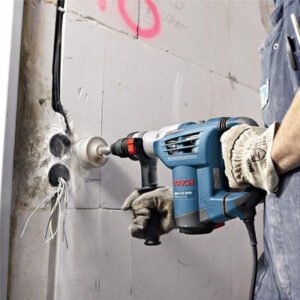
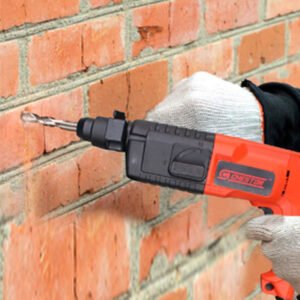
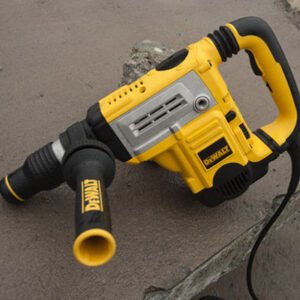
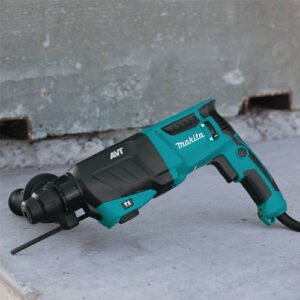


Choosing the right precision corded SDS hammer drill is less about selecting the tool with the biggest motor and more about matching the drill's impact system, chuck format, ergonomics, control features and intended workload to the job. A corded SDS hammer drill can be an excellent choice for Canadian workshops, renovation projects, masonry work and construction applications where consistent electrical power is available and long operating sessions are more important than cordless convenience.
For buyers comparing products in 2026, the most useful approach is to evaluate the complete specification rather than relying on a single headline figure. Motor power, impact energy, no-load speed, impact rate, drilling capacity, vibration control, clutch or overload protection, operating modes and tool weight can all influence real-world performance.
SDS systems are designed around a specialized bit-retention mechanism that allows compatible drill bits and accessories to be inserted and removed quickly while permitting the bit to move axially during hammer operation. This makes SDS tools particularly suited to drilling into concrete, masonry and other hard construction materials.
Several SDS formats exist, so compatibility should always be checked before purchasing accessories. SDS-Plus is widely associated with general-purpose rotary hammer applications, while SDS-Max is generally used for larger, heavier-duty equipment and accessories. The larger format can accommodate more substantial drilling and demolition applications, but it also tends to be associated with heavier tools and higher-capacity work.
An SDS hammer drill should not automatically be treated as a substitute for a conventional drill/driver. A traditional drill is often more appropriate for wood, metal and fastening work, whereas an SDS rotary hammer is designed primarily around masonry drilling and impact applications. Some models provide multiple operating modes, allowing rotary-only work, rotary hammer drilling and, on suitable models, chiselling.
Motor wattage can provide a useful indication of the electrical input capacity of a corded drill, but it does not tell the entire performance story. Two tools with similar wattage can behave differently because of differences in mechanical design, gearing, impact mechanism and efficiency.
When comparing models, consider motor power together with impact energy, drilling capacity, duty requirements and the manufacturer's intended application. A high-powered tool may be unnecessary for occasional anchor holes, while a compact model may be poorly suited to repeated large-diameter drilling.
Impact energy is one of the most important specifications for masonry and concrete work. It describes the energy delivered by the hammer mechanism with each impact and is commonly expressed in joules.
Higher impact energy can be advantageous when drilling larger holes or working in demanding concrete, but more is not automatically better for every user. Excessive impact can make a tool unnecessarily heavy and can increase vibration and operator fatigue. Precision work may benefit from a more controlled tool rather than simply the highest-rated impact figure.
The impact rate indicates how frequently the hammer mechanism strikes, generally expressed as impacts per minute. A high impact rate can contribute to efficient material removal, but it should be assessed alongside impact energy rather than in isolation.
A useful comparison therefore considers both the force of each impact and the frequency of those impacts. Manufacturers may use different testing conditions and measurement conventions, so specifications should be interpreted within the complete product documentation.
No-load rotational speed describes how quickly the tool's chuck or bit holder rotates when the tool is running without drilling into material. Speed requirements vary according to bit type, material and operating mode.
For masonry applications, the hammer mechanism is usually more important than maximum rotational speed. A variable-speed trigger or electronic speed control can nevertheless be valuable when starting holes, positioning a bit accurately or adapting the tool to different materials.
Maximum drilling diameter is another important comparison point. Manufacturers commonly specify capacities for concrete, masonry or similar materials, but the recommended diameter range can vary according to the bit type and operating mode.
Do not select a tool solely because its maximum advertised capacity exceeds your needs. If most projects involve relatively small holes for anchors, fasteners or electrical installations, a lighter tool with appropriate control may be more practical than a large rotary hammer designed around high-capacity drilling.
Rotary-only operation allows the bit to rotate without hammering. Where a particular model supports this function, it can increase versatility for suitable drilling tasks. Always verify accessory compatibility and the manufacturer's permitted applications before using an SDS tool in this mode.
Rotary hammer mode combines rotation with axial impacts. This is the primary operating mode for drilling many holes in concrete, brick, block and masonry.
The hammer mechanism helps break material at the drilling point while rotation clears debris. This combination is generally more effective for hard masonry than relying on rotation alone.
Some SDS rotary hammers provide a hammer-only or chiselling function. This can be useful for applications such as removing tile, chasing masonry or performing controlled light demolition, depending on the tool's design and rated capacity.
Buyers who expect to perform substantial demolition should pay close attention to the manufacturer's stated duty class rather than assuming every SDS hammer drill is suitable for heavy chiselling simply because it includes a hammer-only setting.
Variable-speed control can make a noticeable difference when starting holes and working with different materials. Lower speeds can provide greater control during initial positioning, while higher speeds may be appropriate for other applications when permitted by the manufacturer.
Electronic speed regulation can help maintain more consistent operation under changing loads. Some tools also incorporate electronic protection, soft-start functionality or other control systems designed to improve handling.
Overload protection can help reduce the risk associated with excessive load conditions. This feature is particularly relevant when a tool is used for larger holes, prolonged drilling or demanding construction applications.
A mechanical or electronic safety system can be valuable if a bit binds unexpectedly. When the bit catches in the material, the reaction torque can be transmitted back through the tool. A suitable safety clutch or equivalent protection system can reduce the severity of this reaction.
A depth stop is useful when holes need to be drilled to a consistent depth. It can help avoid repeatedly measuring individual holes, particularly when installing anchors, brackets or other components in a series.
An integrated light can improve visibility around the drilling point, especially in confined spaces, unfinished construction areas or locations where ambient lighting is limited. It is a convenience feature rather than a substitute for proper work lighting.
A powerful SDS hammer drill can become difficult to control if its weight, grip arrangement and vibration characteristics are poorly matched to the task. For buyers who expect to drill many holes during a workday, ergonomics deserve as much attention as electrical specifications.
Look for a handle configuration that allows a secure two-handed grip. Auxiliary handles can improve control and help the operator maintain alignment. Their adjustment range also matters because users may need different positions for vertical, horizontal or overhead drilling.
Vibration-control systems can improve comfort during extended use, but no vibration-reduction feature eliminates the need for sensible operating practices. Users should follow the manufacturer's safety instructions, use appropriate personal protective equipment and take suitable breaks during repetitive work.
Weight is one of the easiest specifications to overlook when comparing powerful tools. A heavier machine can sometimes reflect a larger motor, more substantial gearing or a more capable impact mechanism, but extra mass can also increase fatigue.
For occasional household masonry drilling, a compact SDS-Plus tool may be easier to handle. For frequent construction work involving larger holes, harder concrete or chiselling, a heavier-duty machine may make more sense.
The best choice is therefore the lightest tool that comfortably provides the required performance and capacity. Buying substantially more capacity than the job requires can result in a tool that is harder to control and less pleasant to use.
SDS-Plus and SDS-Max are not interchangeable accessory standards. The appropriate format depends on the tool and the type of work it is designed to perform.
Concrete presents different challenges depending on its hardness, aggregate composition, thickness and reinforcement. For ordinary anchor holes, a properly matched SDS-Plus rotary hammer may provide sufficient capacity. Larger holes, repeated drilling and demanding construction work may justify a higher-capacity machine.
When drilling reinforced concrete, users should also consider the possibility of encountering reinforcement. The correct procedure depends on the application and site requirements. Do not assume that a powerful hammer drill should simply be forced through every obstruction. Follow appropriate construction practices and use accessories specifically intended for the material and application.
Brick and block can generally require less impact capacity than dense concrete, although the appropriate tool depends on the material and hole size. Excessive impact can be counterproductive when working with fragile masonry because it may cause unwanted cracking or breakout.
For masonry renovation, installation and repair work, controlled operation can therefore be more useful than selecting the most aggressive hammer mechanism available.
The performance of an SDS hammer drill depends heavily on using suitable accessories. Even an excellent tool can produce poor results when paired with a damaged, unsuitable or incorrectly sized bit.
Carbide-tipped SDS masonry bits are widely used for drilling concrete and masonry. The cutting geometry and carbide construction are designed to withstand abrasive mineral materials and repeated impact.
Accessory design varies considerably, so buyers should compare the manufacturer's specifications and intended applications rather than assuming every SDS bit offers identical performance.
Concrete and masonry drilling can generate substantial airborne dust. Dust management should therefore be part of the purchasing decision, particularly for indoor renovation projects.
Depending on the application, users may consider compatible dust extraction systems, drilling dust collectors or other manufacturer-approved solutions. Appropriate respiratory protection and workplace controls may also be necessary depending on the material and environment.
Dust management is not simply a cleanliness issue. Reducing airborne particulate exposure can be an important part of maintaining a safer work environment.
One of the central purchasing decisions is whether the convenience of cordless operation outweighs the continuous power availability of a corded machine.
Canadian buyers should verify the electrical requirements of any corded power tool before purchase. Check the product documentation for voltage, amperage, plug configuration and other applicable electrical information.
Use the tool with an appropriate electrical supply and extension arrangement when an extension cord is permitted. Extension cords should be correctly rated for the tool and application, and cable length and gauge can affect electrical performance.
For jobsite use, follow applicable Canadian workplace and electrical safety requirements. When working in unfamiliar environments, consult a qualified professional when the electrical installation or site conditions are uncertain.
A ranked list can be useful, but the number-one position is not necessarily the best match for every buyer. A more meaningful comparison separates tools by the job they are designed to perform.
When comparing corded SDS hammer drills, established power-tool manufacturers can provide useful reference points for specifications, accessory ecosystems and product documentation. Brands commonly encountered in the Canadian power-tool market include Bosch, DEWALT, Makita, Milwaukee, Metabo, Hilti and RIDGID.
Brand recognition should not replace specification-based comparison. A well-known manufacturer can offer several tools aimed at completely different users, so compare the individual model's capacity, SDS format, impact energy, weight, controls and intended workload.
A larger wattage figure does not automatically mean that a tool is the best performer for your application. Consider impact energy, drilling capacity, gearing, controls and ergonomics as well.
A very powerful SDS hammer drill can be excessive for small anchor holes. More weight and impact capacity can make routine work less comfortable without providing a meaningful benefit.
Before purchasing bits, chisels or specialty accessories, verify the exact SDS format. An accessory that does not match the tool cannot be treated as a universal replacement.
Long periods of masonry drilling can be physically demanding. Vibration-control features, handle design and overall tool balance should be considered before selecting a model for frequent use.
Corded tools provide continuous electrical power, but the cord becomes part of the work environment. Make sure the intended workspace provides an appropriate electrical supply and that cable routing will not create a trip or damage hazard.
More pressure does not necessarily produce faster drilling. Excessive force can increase operator fatigue and place additional stress on the tool and accessory. Let the hammer mechanism and cutting accessory perform the work while maintaining appropriate control.
Two apparently similar tools may differ in included accessories, auxiliary handles, depth stops, cases and other equipment. Compare the complete stated package rather than assuming every model includes the same extras.
Routine care can help keep a power tool operating reliably. Always disconnect the tool from its electrical supply before performing maintenance that requires access to components or cleaning around moving parts.
Start by selecting the correct SDS accessory for the material and required hole diameter. Mark the drilling position accurately, establish a stable stance and position the auxiliary handle appropriately.
Begin with controlled pressure and allow the bit to establish the hole before applying the level of force appropriate for the tool and material. Keep the tool aligned with the intended drilling direction rather than forcing the bit sideways.
For deep holes, follow the accessory manufacturer's recommendations regarding hole cleaning and drilling technique. Periodically clearing drilling debris can help maintain effective cutting and reduce unnecessary loading.
Professional users typically need more than peak specifications. A tool intended for frequent jobsite use should be evaluated for sustained workload, ergonomics, serviceability and control.
For homeowners and occasional DIY users, usability may be more important than maximum performance. A compact corded SDS-Plus rotary hammer can be attractive when projects involve mounting fixtures, drilling masonry anchor holes, installing brackets or completing occasional renovation work.
Look for simple mode selection, manageable weight, variable-speed control and a comfortable auxiliary handle. If the tool will spend most of its life stored between projects, a straightforward model with sufficient capacity can be more practical than paying for capabilities that will rarely be used.
Customer ratings can be useful when comparing products, but they should be interpreted carefully. A rating alone does not explain whether reviewers used a tool for the same type of work you intend to perform.
When reading verified customer reviews, look for recurring observations about ergonomics, durability, vibration, ease of changing bits, control layout and performance on the materials relevant to your projects. Give more weight to reviews that describe the application, workload and accessory used.
Be cautious about treating isolated complaints or enthusiastic comments as definitive evidence of product quality. Specifications and manufacturer documentation should remain the foundation of a technical comparison.
The lowest purchase price is not always the lowest-cost option over the life of a tool. A buyer should consider the intended frequency of use, required accessories, expected workload and whether the tool provides enough capacity to avoid an immediate upgrade.
Conversely, buying a premium heavy-duty rotary hammer for occasional small holes may provide little practical value if the additional capacity remains unused. The best value generally comes from matching tool capability closely to the user's actual workload.
There is no single best model for every Canadian buyer. The right choice depends on the required drilling diameter, material, frequency of use, SDS format, desired operating modes, ergonomics and budget. Compare the individual specifications of shortlisted models rather than choosing solely by ranking.
Yes. SDS rotary hammers are specifically designed for impact-assisted drilling in materials such as concrete and masonry. Select a model and accessory combination appropriate for the required hole size and material.
Neither format is universally better. SDS-Plus is generally well suited to smaller and general-purpose masonry applications, while SDS-Max is commonly associated with larger, more demanding rotary hammer applications. The correct choice depends on the project.
Many SDS hammer drills are suitable for brick and masonry drilling when used with an appropriate accessory and operating mode. Because masonry can vary significantly in hardness and fragility, use the manufacturer's recommended settings and accessories.
Some models provide rotary-only operation, but this does not mean they are universal replacements for conventional drills. Check the manufacturer's approved applications and use compatible accessories for the material.
Variable speed can be useful for controlled starting, positioning and adapting the tool to different applications. It is particularly helpful for users who want greater control rather than simply maximum rotational speed.
They can be. A corded model can be a practical choice when continuous operation, consistent electrical power and extended drilling sessions are more important than cordless mobility. The decision should be based on the working environment and project requirements.
Impact energy is highly relevant to concrete and masonry drilling because it indicates the energy delivered by the hammer mechanism. It should nevertheless be considered alongside impact rate, drilling capacity, weight, vibration and intended duty.
Not necessarily. Higher impact energy can be beneficial for demanding applications, but an oversized tool may be heavier and less comfortable for smaller jobs. Choose the capacity that corresponds to your actual work.
Check the tool's exact SDS format, the accessory's compatible material, diameter, length and intended application. Inspect accessories for wear and follow the manufacturer's recommendations.
The strongest way to compare precision corded SDS hammer drills in 2026 is to start with the work rather than the product ranking. Define the materials, hole sizes and workload first, then narrow the options using impact energy, drilling capacity, SDS format, operating modes, weight, vibration management and control features.
For occasional renovation and DIY projects, prioritise control, manageable weight and sufficient capacity. For frequent construction work, place greater emphasis on durability-oriented design, sustained-duty suitability, impact performance, ergonomics and safety features. For larger drilling or chiselling applications, verify that the tool is specifically designed for those tasks instead of relying on a generic SDS label.
Before purchasing, compare the latest specifications, included accessories, electrical requirements and verified customer feedback for each shortlisted model. Check today's retailer pricing separately, because prices and availability can change. Most importantly, select the drill that provides the right balance of performance, control and handling for the work you actually expect to perform.