

♥ Wishlist
Compare 12 Dewalt SDS Hammer Drill products in Canada. Reviews, ratings, pros, cons and buying advice updated for October 2026.


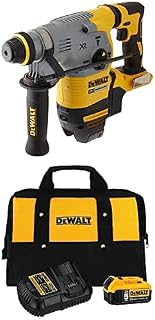


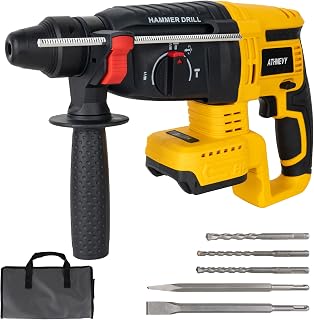


Choosing a precision DEWALT SDS hammer drill is less about selecting the drill with the largest headline specification and more about matching the tool to the material, drilling diameter, duty cycle, power source, accessory system, and working environment. SDS rotary hammers are designed for demanding masonry and concrete applications, but different models can behave very differently when used for anchoring, chipping, repetitive drilling, or heavier demolition.
For Canadian buyers, the decision also deserves attention to voltage, battery platform, winter storage, corded versus cordless operation, replacement accessories, and the type of concrete or masonry encountered on the job. A tool intended for occasional home repairs does not necessarily need the same capabilities as one used every day by a contractor, electrician, plumber, renovator, or concrete specialist.
Before comparing individual models, identify which type of SDS hammer drill matches your work. The SDS designation primarily describes the chuck and bit-retention system, while the hammer mechanism, motor, controls, and overall construction determine how the tool performs.
SDS-Plus is commonly associated with compact and mid-size rotary hammers. These tools are particularly useful for drilling holes for concrete anchors, fasteners, electrical installations, plumbing work, and general masonry applications.
An SDS-Plus tool is often the sensible choice when portability and control matter as much as raw drilling capacity. The smaller bit system also provides a broad selection of masonry and concrete accessories for common hole sizes.
SDS-Max tools use a larger accessory system designed for more demanding drilling and chiselling. They are generally better suited to larger holes, heavier concrete work, and more substantial demolition applications.
The trade-off is increased tool size and weight. If most of your work involves relatively small anchor holes, an SDS-Max hammer can provide more capability than necessary and may be less comfortable for repetitive overhead or horizontal drilling.
A conventional hammer drill and an SDS rotary hammer should not be treated as interchangeable tools. A hammer drill typically uses a standard chuck and an impact mechanism intended for lighter masonry work. A rotary hammer uses a dedicated hammer mechanism and SDS accessory system designed specifically for drilling concrete and masonry.
For occasional drilling into brick or block, a conventional hammer drill may be sufficient. For frequent concrete drilling, especially when installing anchors or drilling multiple holes, an SDS rotary hammer is usually the more appropriate tool category.
The word “precision” should not be interpreted as a single technical specification. Precision in concrete drilling is influenced by several factors working together.
Impact energy is one of the most useful specifications for comparing rotary hammers, but it should not be viewed in isolation. Higher impact energy can be advantageous for tougher drilling and chiselling, while a smaller tool may offer better control and easier handling for routine anchor holes.
Consider the typical diameter of the holes you drill, the hardness of the concrete, and whether chiselling is part of the job. A tool optimized for small-to-medium drilling may be a better everyday choice than a substantially heavier model if demolition is only an occasional requirement.
No-load speed describes how quickly the tool rotates without a drilling load. A higher number does not automatically mean faster real-world drilling because performance also depends on the hammer mechanism, bit design, motor control, material, drilling diameter, and operator technique.
The hammering rate indicates how frequently the mechanism delivers impacts. When comparing models, consider impact rate together with impact energy rather than treating either figure as a standalone measure of performance.
Maximum drilling diameter is an important reference point, but it should not be treated as the ideal size for continuous work. Manufacturers may specify different recommended ranges for particular materials and applications.
If your regular work involves concrete anchors, electrical conduit, plumbing penetrations, or small mounting holes, compare the model's practical working range with your normal hole sizes instead of selecting solely on the largest advertised capacity.
Weight becomes increasingly important during overhead drilling, ladder work, horizontal drilling, and repetitive installations. A heavier rotary hammer may deliver additional capability, but the extra mass can become tiring during a long installation.
Also consider tool length. A compact design can be easier to position in mechanical rooms, service spaces, utility areas, and other locations where there is limited clearance.
Cordless SDS rotary hammers offer mobility without requiring a power cable at the work area. This can be particularly useful for construction sites, exterior projects, renovations, remote locations, and jobs where extension cords would restrict movement.
The main considerations are battery capacity, charger availability, runtime, tool weight with the battery installed, and compatibility with the battery platform already used by your other tools.
For Canadian users, battery storage deserves additional consideration. Lithium-ion batteries should be stored and handled according to the manufacturer's instructions, particularly when tools are moved between heated indoor spaces and very cold outdoor environments.
Corded rotary hammers can be practical when continuous operation is more important than mobility. They eliminate the need to manage battery charge during extended drilling sessions, provided a suitable electrical supply is available.
A corded model can make sense for workshop use, renovation projects with reliable mains power, or applications where the tool is operated for long periods in one location.
Neither configuration is universally superior. Choose cordless when mobility and fast setup are priorities. Choose corded when sustained operation and access to dependable mains power are more important.
A capable rotary hammer cannot compensate indefinitely for an unsuitable or worn bit. SDS accessories should be selected according to the material, hole diameter, drilling depth, and application.
Use SDS-compatible masonry or concrete bits designed for rotary hammer operation. For reinforced concrete, bit design becomes especially important because aggregate and reinforcement can place significantly different demands on the accessory.
Multi-material accessories can be useful when a project involves several substrates, but buyers should verify that the specific accessory is approved for the intended hammer mode and material. Do not assume that an accessory designed for impact drilling is suitable for every SDS operating mode.
SDS systems can also accept chiselling accessories on compatible rotary hammers. Point chisels, flat chisels, scaling accessories, and other shapes can serve different removal and preparation tasks.
When chiselling is a regular part of your work, pay close attention to whether the model includes a dedicated hammer-only mode and whether its size and impact capability match the material being removed.
Different SDS rotary hammers may provide different combinations of operating modes. Common configurations include rotary drilling, hammer drilling, and hammer-only operation.
Check the manufacturer's instructions for the exact operating modes supported by the model you are considering. The presence of a selector switch does not mean every accessory or material is appropriate for every mode.
Concrete drilling can generate substantial vibration, especially during prolonged use. A well-designed handle arrangement, vibration-control system, balanced housing, and appropriate grip can make a meaningful difference to day-to-day usability.
Do not evaluate comfort solely from the advertised weight. The position of the auxiliary handle, trigger arrangement, battery location on cordless models, centre of gravity, and overall grip can affect how the tool feels during actual drilling.
For professional users, ergonomics can be a legitimate buying criterion rather than a secondary feature. A tool that is easier to control can also make repetitive work less frustrating and may reduce unnecessary operator fatigue.
Rotary hammers can encounter sudden resistance when a bit contacts embedded material or becomes stuck. A clutch or electronic anti-rotation system, where provided, can help manage certain bind-up situations.
Safety features vary by model, so review the manufacturer's specifications rather than assuming that every DEWALT SDS hammer drill provides the same protection.
Always follow the manufacturer's safety instructions and use appropriate eye, hearing, respiratory, and other protective equipment for the task and environment.
Concrete drilling creates fine dust that should not simply be allowed to accumulate around the work area. Dust extraction can improve housekeeping and may be particularly useful during indoor renovation, electrical, plumbing, and installation work.
When comparing SDS rotary hammers, look for compatibility with the manufacturer's dust-management accessories or an appropriate extraction solution. The exact system can vary between tool generations and models.
Dust control is especially worth considering when drilling many holes in occupied buildings. It can help keep surrounding surfaces cleaner and reduce the amount of airborne material generated during the task.
DEWALT is not the only manufacturer worth considering. Commercial buyers may also compare products from Bosch, Makita, Milwaukee, Hilti, and Metabo HPT. The best choice depends on the specific model rather than the logo alone.
DEWALT is particularly relevant for buyers already invested in its cordless tool ecosystem. When evaluating a cordless SDS hammer, consider whether you already own compatible batteries and chargers, because platform compatibility can influence the overall value of the purchase.
Bosch has a long-standing presence in rotary hammers and concrete-drilling equipment. Compare individual models based on impact energy, ergonomics, accessory compatibility, vibration control, and intended drilling range rather than assuming that brand reputation alone determines the best option.
Makita offers cordless and corded power tools across professional construction categories. For buyers considering Makita against DEWALT, battery-platform compatibility, tool weight, controls, drilling capacity, and accessory availability are useful comparison points.
Milwaukee is another major option for users who prioritize cordless construction equipment. Its SDS rotary hammer models should be compared with equivalent DEWALT products on a model-to-model basis, especially when deciding between battery ecosystems.
Hilti is strongly associated with professional construction and concrete applications. Buyers considering Hilti should compare the complete ownership proposition, including the specific tool's intended duty cycle, accessory ecosystem, service arrangements, and purchase cost.
Metabo HPT provides another alternative in the professional power-tool market. As with other brands, compare equivalent SDS tool classes rather than comparing brand names without accounting for differences in size, application, and specifications.
The biggest rotary hammer is not automatically the best rotary hammer. Excess capacity can mean additional weight and reduced convenience for work that mainly involves smaller holes.
For cordless buyers, the cost and practicality of batteries and chargers can substantially affect the ownership equation. If you already have compatible DEWALT batteries, a bare-tool purchase may be evaluated differently from starting an entirely new platform.
Impact energy matters, but drilling performance also depends on the motor, hammer mechanism, electronics, accessory, material, hole diameter, and operating conditions.
A dull or damaged bit can make drilling slower and increase the effort required from both the operator and the tool. Accessory condition should therefore be part of your maintenance routine.
Check the physical dimensions of the tool before buying if you regularly work in confined spaces. A specification sheet can look excellent while the tool itself may be awkward to position around pipes, studs, cabinets, electrical equipment, or other obstacles.
A homeowner drilling several anchor holes each year has very different requirements from a contractor drilling concrete every working day. Estimate how frequently the tool will be used, how long each session will last, and how demanding the material will be.
For concrete anchors, prioritize accurate control, appropriate SDS bit availability, suitable drilling capacity, manageable weight, and a dependable depth-control method when needed.
Electricians often need a balance of portability and precision. A compact SDS-Plus rotary hammer can be advantageous for repeated holes associated with conduit, cable supports, boxes, and mounting hardware.
Plumbing and mechanical installations can require drilling through concrete, block, and other masonry while working around existing infrastructure. Tool length, handle positioning, drilling range, and dust management may therefore be particularly important.
Renovators may benefit from a versatile model capable of both drilling and compatible chiselling work. Consider whether the additional capability will actually be used often enough to justify a larger or heavier tool.
If material removal is part of the job, pay attention to hammer-only capability, impact energy, accessory compatibility, vibration control, and tool weight. For substantial demolition, compare SDS-Max equipment or dedicated demolition hammers rather than expecting a compact SDS-Plus model to perform every task efficiently.
Canadian buyers should evaluate more than the tool itself. Jobsite conditions, transportation, storage, and electrical requirements can influence which configuration is most practical.
Regular maintenance can help preserve tool performance and identify problems before they become more serious.
Good results depend on technique as well as equipment. Mark the drilling location carefully, establish the bit position with controlled pressure, and keep the tool aligned with the intended hole throughout the operation.
Use an accessory designed for the material and hole size. Excessive force is not necessarily beneficial; the hammer mechanism should be allowed to do its intended work while the operator maintains stable control.
For repeated holes, use a consistent depth reference or depth stop where appropriate. This can make anchor installation and mounting work more uniform.
Customer reviews can be useful when they are evaluated for specific information rather than overall star ratings alone. Look for repeated comments concerning issues that matter to your intended application.
Give greater weight to detailed reviews that explain the application and operating conditions. A review from someone drilling occasional masonry holes is not necessarily relevant to a professional user performing repetitive concrete drilling.
When several models appear similar, create a simple comparison using the specifications that directly affect your work.
For homeowners, the ideal model is usually the one that provides enough concrete-drilling capability without unnecessary size, weight, or complexity. If the tool will be used for occasional anchors, shelving, fixtures, masonry repairs, or renovation projects, a compact SDS-Plus model may be easier to justify than a heavy-duty SDS-Max machine.
Consider buying the tool that matches the largest realistic task you expect to perform rather than an extreme specification you may never use.
Contractors should evaluate an SDS rotary hammer as part of a working system rather than as an isolated purchase. Daily users may place greater value on ergonomics, vibration management, battery logistics, serviceability, accessory availability, and consistent performance across repetitive jobs.
If several workers use the same battery platform, compatibility can also simplify charging and inventory management. For high-volume concrete work, compare the intended duty cycle and application range carefully before choosing a compact tool simply because it is easier to carry.
If concrete drilling is infrequent, focus on versatility and ownership practicality. An SDS-Plus rotary hammer with appropriate drilling and chiselling modes may provide a useful middle ground for homeowners and occasional users.
There is little advantage in paying for extreme drilling capacity if your normal work consists of relatively small holes for anchors and mounting hardware.
For demanding concrete applications, compare larger SDS-Plus and SDS-Max rotary hammers according to the hole diameter and material you regularly encounter. Larger SDS systems can be appropriate when the work requires substantial drilling or chiselling capacity.
At this level, impact energy, tool durability, vibration control, accessory selection, and service considerations become increasingly important. A heavy-duty model should be selected because its capabilities match the workload, not simply because it has a higher specification.
Cordless SDS hammer drills may be sold as bare tools or as kits that include batteries and chargers. The apparent price difference can therefore be misleading if the two packages contain different equipment.
When comparing listings, check exactly what is included. A bare tool can be attractive to someone who already owns compatible batteries, while a complete kit may make more sense for a buyer entering the battery platform for the first time.
Also compare the included case, auxiliary handle, depth stop, accessories, and other components because package contents can vary between configurations.
The best choice depends on the required hole diameter, drilling frequency, concrete hardness, portability requirements, and whether chiselling is necessary. A compact SDS-Plus model can be appropriate for common anchor holes, while heavier applications may justify a higher-capacity SDS-Plus or SDS-Max tool.
Neither is universally better. SDS-Plus is generally more practical for compact and medium-duty drilling, while SDS-Max is designed for larger and more demanding applications. Choose the accessory system that matches your normal workload.
Yes, compatible SDS rotary hammers can be used for masonry drilling when the correct accessory and operating mode are selected. Always follow the manufacturer's instructions for the tool and bit.
Some models support additional drilling functionality or compatible accessories, but capabilities vary. Do not assume that every SDS rotary hammer can replace a conventional drill or impact driver for every application.
A compatible rotary hammer with hammer-only operation and an appropriate chisel can be useful for certain tile-removal and surface-preparation tasks. The suitability depends on the tool, accessory, substrate, and required level of control.
Modern cordless rotary hammers can be suitable for many concrete-drilling applications. The appropriate choice depends on the particular model, battery system, drilling diameter, material, and workload.
If you already own compatible DEWALT batteries, a bare tool may be worth comparing. If you do not own the platform, compare the cost of a complete kit against the combined cost of a bare tool, battery, and charger.
Choose the bit diameter required by the fastener, anchor, penetration, or installation specification. The tool's recommended drilling range should also be respected.
Possible causes include an unsuitable or worn bit, drilling outside the tool's intended capacity, excessive pressure, embedded reinforcement or aggregate, overheating, dust accumulation, or a mechanical issue. Check the manufacturer's troubleshooting guidance before continuing to use a tool that behaves abnormally.
There is no universal service life. Longevity depends on construction quality, workload, drilling conditions, maintenance, accessory quality, storage, and frequency of use. Professional equipment subjected to demanding daily work should be evaluated according to its intended duty and maintained accordingly.
Yes, an SDS-Plus rotary hammer can be an excellent choice for DIY users who regularly need to drill concrete or masonry. For very occasional masonry work, however, buyers should compare the cost and size of an SDS tool against their actual needs.
The strongest DEWALT SDS hammer drill choice is the model that fits your actual workload rather than the one with the most impressive specification on paper. Start with the required hole sizes and materials, then narrow the selection according to SDS system, impact capability, power source, weight, ergonomics, vibration management, operating modes, and accessory compatibility.
For Canadian buyers, also verify the exact model configuration, battery or charger inclusion, electrical requirements, warranty information, and current retailer pricing before making a purchase. Product bundles and specifications can change, so compare the exact model number rather than relying solely on a product name.
Whether you are installing concrete anchors, completing electrical or plumbing work, renovating a property, or handling heavier masonry applications, a properly matched SDS rotary hammer can provide substantially better control and productivity than using a conventional drill for work it was not designed to perform.