

♥ Wishlist
Compare 21 Milwaukee SDS Hammer Drills products in Canada. Reviews, ratings, pros, cons and buying advice updated for October 2026.


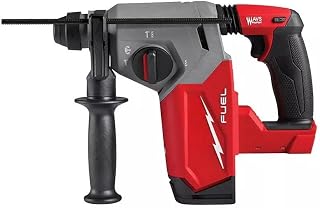



Choosing the right Milwaukee SDS hammer drill is less about selecting the most powerful-looking tool and more about matching the hammer mechanism, chuck system, power platform, drilling capacity, ergonomics and intended workload to the job. Milwaukee's SDS rotary hammer range includes cordless M12 and M18 solutions as well as corded options, with different models designed for light-duty drilling, general construction, concrete anchoring, masonry work, demolition and heavier professional applications.
For Canadian buyers, the decision also involves choosing between battery-powered convenience and corded continuous operation, considering the availability of compatible batteries and chargers, and checking whether the selected model is appropriate for the voltage and electrical requirements used in Canada. Product specifications, included accessories, kit contents and availability can change, so compare the current manufacturer information and retailer listing before purchasing.
An SDS hammer drill, more accurately described in many cases as an SDS rotary hammer, is designed to transfer impact energy efficiently into masonry and concrete. Unlike a conventional hammer drill, an SDS rotary hammer uses a dedicated SDS-style tool-holder system and a mechanical hammering mechanism intended for repetitive drilling in hard materials.
Milwaukee offers several tool families and configurations, so the phrase “best Milwaukee SDS hammer drill” does not identify one universal model. The best choice depends on whether you need small anchor holes, occasional masonry drilling, larger concrete holes, chiselling or demolition work.
The chuck or tool-holder standard should be one of the first things you check. SDS-Plus is widely used for general concrete and masonry drilling, while SDS-Max is intended for larger, heavier-duty applications and compatible larger accessories.
Do not assume that an SDS-Plus accessory will fit an SDS-Max tool. The shank system is not interchangeable simply because both tools are described as SDS rotary hammers.
Milwaukee's battery platforms give buyers different compromises between portability, runtime, tool size and available power. An M12 rotary hammer can make sense where compact dimensions and reduced weight are priorities. M18 models generally provide a broader selection for professional construction applications, while corded rotary hammers can be attractive when uninterrupted operation is more important than cordless mobility.
A bare-tool price can appear attractive until the cost of a compatible battery and charger is added. If you are entering a battery platform for the first time, compare the complete kit rather than the tool-only price.
Impact energy is an important indicator of how aggressively a rotary hammer can attack concrete and masonry. Higher impact energy can be useful for demanding drilling and chiselling, but maximum impact energy is not automatically the best choice for every user.
A compact tool with sufficient impact energy for the required hole sizes may be easier to control and less tiring during overhead or repetitive work. Conversely, selecting an undersized rotary hammer for large concrete work can make the job slower and place unnecessary strain on both the tool and operator.
No-load speed describes how quickly the tool rotates without drilling into material. It should be evaluated alongside impact rate, impact energy, electronic controls and the intended accessory rather than treated as a standalone measure of performance.
Blows per minute, often abbreviated BPM, describes the frequency of the hammering action. A higher number does not necessarily mean that a tool will drill every hole faster because drilling efficiency also depends on impact energy, bit design, concrete composition, operator technique and the diameter of the hole.
Check the manufacturer's published drilling capacities for concrete and other materials relevant to your work. Maximum capacity is a limit, not necessarily the diameter at which the tool operates most efficiently for hours at a time.
If most of your work involves small anchor holes, buying a much larger SDS-Max machine simply because it has a higher maximum capacity can add unnecessary weight and cost. If your work routinely involves larger holes or chiselling, however, a compact SDS-Plus model may be the wrong tool category.
Many Milwaukee rotary hammers provide multiple operating modes. Depending on the model, these can include rotary hammering, hammer-only chiselling and rotation-only drilling.
Always check the exact operating modes of the model under consideration rather than assuming that every Milwaukee SDS tool provides the same functions.
Rotary hammering produces significant vibration. For people who use these tools frequently, vibration control can be an important purchasing consideration. Milwaukee's higher-end tools may incorporate vibration-reduction systems designed to reduce transmitted vibration, but the presence and implementation of the technology vary by model.
For occasional DIY use, vibration may be a secondary consideration. For construction professionals performing repetitive drilling or chiselling, ergonomics and vibration management deserve much more attention.
Electronic controls can improve consistency and provide additional control over the tool. Depending on the model, features may include variable-speed control, electronic clutch functions, overload protection or other electronic management systems.
These features are particularly useful when a rotary hammer is used across different materials, accessory sizes and drilling conditions. Compare the actual control functions provided on each model instead of paying extra for features you will rarely use.
Weight becomes increasingly important when drilling overhead, working from ladders or scaffolding, positioning the tool at awkward angles, or completing many holes in succession.
A heavier rotary hammer can provide advantages in demanding applications, but unnecessary weight can reduce productivity when the task only requires smaller holes. Think about the typical job rather than the most extreme job you might perform once a year.
Handle shape, auxiliary-handle adjustment and overall balance influence how confidently the tool can be positioned. A well-balanced rotary hammer can feel easier to control than another tool with a similar published weight.
When comparing models, consider whether the auxiliary handle can be positioned conveniently for your usual drilling direction and whether the controls can be operated without changing your grip unnecessarily.
Concrete and masonry drilling produces fine dust that can affect the work environment and contribute to premature wear if it enters inappropriate areas of the tool. A suitable dust-extraction solution can be particularly valuable for indoor renovation, commercial construction and repetitive anchor drilling.
Check whether the specific Milwaukee model is compatible with the dust-extraction accessories or systems you intend to use. The availability of a dust solution should be evaluated alongside the rotary hammer rather than treated as an afterthought.
For Canadian shoppers who already own several Milwaukee M18 tools, staying within the existing battery ecosystem can simplify ownership. If you do not already have compatible batteries, compare the complete cost of the cordless kit against a suitable corded alternative.
Concrete anchoring is one of the most common reasons to purchase an SDS rotary hammer. For this type of work, look beyond headline power and evaluate the hole diameters you actually use, drilling speed, depth control, vibration characteristics, dust management and compatibility with the manufacturer's recommended accessories.
For repeated anchor installation, a model that comfortably handles the required hole diameter can be preferable to an oversized demolition-oriented machine. Consistent control is especially useful when drilling multiple holes to the same depth.
Masonry includes a wide range of materials, including concrete block, brick and other construction products. The appropriate tool and bit depend on the material and the required hole diameter.
For smaller masonry holes, a compact SDS-Plus tool can be easier to handle. For larger penetrations or demanding work, a heavier rotary hammer may provide a more suitable combination of impact performance and accessory compatibility.
If chiselling is a major part of your work, do not purchase a model based solely on its drilling specifications. Check whether the tool has a dedicated hammer-only mode and whether its design is intended for the level of chiselling you expect to perform.
Light tile removal and occasional masonry correction are very different workloads from sustained concrete demolition. The latter generally calls for a purpose-appropriate heavy-duty rotary hammer or demolition tool rather than a compact drill selected primarily for portability.
Milwaukee's M18 FUEL designation is associated with higher-performance cordless tools that combine the company's brushless motor technology with electronic systems and REDLITHIUM battery technology. Within the M18 family, specifications and intended applications differ considerably, so shoppers should compare individual model numbers rather than assuming all M18 FUEL rotary hammers perform identically.
When comparing M18 FUEL SDS models, examine the SDS format, impact energy, drilling capacity, operating modes, tool weight, vibration features, battery configuration and included accessories. A premium model can be excellent value for frequent professional use while being unnecessary for occasional home repairs.
Milwaukee is not the only established manufacturer producing rotary hammers. Buyers in Canada may also encounter products from Bosch, DeWalt, Makita and Hilti. Brand reputation should be considered, but the exact model matters more than the logo on the housing.
Bosch has a long-established presence in rotary hammers and concrete drilling equipment. When comparing Bosch and Milwaukee, focus on the specific SDS system, impact performance, ergonomics, accessories and battery ecosystem rather than choosing solely by brand.
DeWalt offers cordless rotary hammer options alongside its broader battery-tool ecosystem. For a buyer already invested in one battery platform, platform compatibility can be a significant practical advantage. Compare complete tool kits, battery requirements and specifications for the exact models.
Makita has an extensive range of cordless and corded rotary hammers. The comparison should include SDS format, drilling capacity, impact energy, weight, vibration management and the battery system you already own.
Hilti is strongly associated with professional construction and concrete applications. For demanding commercial work, compare not only tool specifications but also the total ownership proposition, accessory ecosystem and service arrangements available through the appropriate Canadian channels.
The highest-rated model is not necessarily the most appropriate model. A compact rotary hammer can be the better choice when most jobs involve smaller holes and portability is important.
A tool-only listing may not include a battery or charger. If you are not already invested in the corresponding Milwaukee platform, calculate the complete purchase requirement before comparing prices.
Confirm whether your existing bits and chisels are SDS-Plus or SDS-Max. Buying the wrong tool-holder format can make an otherwise suitable accessory collection unusable with the new tool.
A conventional hammer drill and an SDS rotary hammer are different categories. A hammer drill uses a chuck and a hammer-drilling mechanism suitable for lighter masonry work, while an SDS rotary hammer is purpose-built for more efficient impact drilling in hard materials.
Specifications do not describe everything that matters on a construction site. Tool balance, handle position, vibration, trigger access and weight distribution can strongly influence day-to-day usability.
A large SDS-Max rotary hammer can be excessive if your normal work consists of small anchor holes. More power can also mean additional weight and bulk.
The opposite mistake can be equally frustrating. If the tool will regularly drill large holes or perform demanding chiselling, selecting a compact model solely because it is cheaper or lighter may reduce productivity.
When reviewing a shortlist of ten models, use the same criteria for every product. This prevents a low price or a prominent headline specification from dominating the decision.
Customer reviews can provide useful information, but they should be evaluated carefully. Look for comments that describe the actual application instead of relying on a star rating alone.
Reviews are most useful when they provide context. A complaint about battery life from someone drilling concrete continuously may have very different relevance to a homeowner who needs to drill a few holes occasionally.
Concrete and masonry dust can accumulate around the tool and accessories. Follow the manufacturer's cleaning and maintenance instructions and avoid introducing inappropriate cleaning materials into the mechanism.
Worn, damaged or unsuitable bits can reduce drilling performance and increase the effort required from the operator. Inspect bits before use and replace them when they no longer provide the required cutting performance.
Different concrete and masonry applications call for different bit designs. A high-quality SDS accessory can make a meaningful difference to drilling efficiency and hole quality.
Inspect the housing, handles, power cord on corded models, battery connection on cordless models and SDS tool-holder area before demanding work. If a tool shows signs of damage or abnormal operation, follow the manufacturer's service guidance rather than continuing to use it.
For cordless tools, use and store batteries according to Milwaukee's current battery instructions. Avoid exposing batteries to unsuitable temperatures, moisture or conditions outside the manufacturer's recommendations.
Homeowners who occasionally drill concrete or masonry generally benefit from a compact SDS-Plus rotary hammer. Prioritize manageable weight, straightforward controls and compatibility with the hole sizes you actually need.
Renovation work can involve concrete anchors, masonry drilling, tile removal and occasional chiselling. A multi-mode SDS-Plus rotary hammer may offer useful versatility when those functions are supported by the model.
Contractors should consider durability, ergonomics, battery-platform compatibility, vibration control and accessory availability in addition to raw drilling performance. The best tool is often the one that handles the majority of daily tasks efficiently without adding unnecessary weight.
Professionals performing high volumes of concrete drilling should place greater emphasis on impact energy, sustained performance, dust management, vibration control, accessory compatibility and serviceability. Larger SDS-Max equipment may be more appropriate when hole sizes and chiselling requirements exceed the practical range of SDS-Plus tools.
If demolition is the primary application, evaluate the tool as a demolition-capable machine rather than simply a drill. Hammer-only operation, impact performance, vibration management, weight and chisel compatibility become particularly important.
Value is not determined by the lowest purchase price. A tool that matches your workload can be more economical over its useful life because it reduces unnecessary compromises in drilling speed, handling and accessory compatibility.
Concrete drilling can create flying debris, dust, vibration and high noise levels. Use appropriate personal protective equipment and follow the manufacturer's operating instructions for the tool and accessory.
There is no single best model for every Canadian buyer. The appropriate choice depends on whether you need SDS-Plus or SDS-Max, cordless or corded operation, the required hole diameter, the amount of chiselling and your existing Milwaukee battery platform.
Neither system is universally better. SDS-Plus is generally the more practical choice for common drilling and anchoring tasks, while SDS-Max is designed for larger and more demanding applications.
It depends on the model and its available operating modes. Some rotary hammers support rotation-only drilling, but a dedicated drill or drill/driver may still be more convenient for routine work in wood, metal and other materials.
M18 is Milwaukee's cordless battery platform. The exact battery requirements, kit configuration and performance vary by model, so check the current specifications for the particular rotary hammer you are considering.
Some listings are sold as complete kits while others are tool-only. Always check the current package contents before purchasing, particularly when comparing prices between Canadian retailers.
Choose a model that comfortably supports the anchor-hole diameters you routinely install. For common smaller and medium-sized anchor holes, SDS-Plus is often the more practical category. Larger anchoring applications may justify a heavier rotary hammer.
No. More power can be beneficial for demanding concrete work, but a larger tool can also be heavier and less convenient for smaller tasks. Match the tool to your normal workload rather than the most demanding job you might occasionally encounter.
The compatible battery type depends on the exact tool model and the manufacturer's recommendations. Check the current model documentation before choosing a battery, particularly if runtime, tool balance and weight are important to you.
Only when the tool and an appropriate compatible accessory or chuck system are specifically designed to support them. Do not force a conventional drill bit into an SDS tool-holder. Confirm compatibility before using any accessory.
There is no universal replacement interval. Bit life depends on the material, hole diameter, drilling volume, accessory quality and operating technique. Replace or service bits when wear or damage prevents them from producing the required result safely and efficiently.
Before choosing from a list of Milwaukee SDS hammer drills, work through this checklist:
A useful buying guide should distinguish between specifications that look impressive and specifications that matter for a particular application. For that reason, compare each candidate according to its tool-holder system, intended workload, impact performance, drilling capacity, operating modes, power source, ergonomics, vibration characteristics, accessory compatibility and total ownership requirements.
Customer ratings can provide an additional perspective, but they should not replace technical specifications or application-based comparison. Product information can also change during 2026, so confirm the current model number, specifications, kit contents, Canadian availability and retailer terms before making a purchase.
The best Milwaukee SDS hammer drill for a Canadian buyer in 2026 is the model that fits the actual job rather than simply the one with the biggest specifications. SDS-Plus is a strong starting point for general concrete drilling, masonry and anchoring, while SDS-Max is more appropriate when larger accessories and heavier-duty drilling or chiselling are central to the workload. Cordless M12 and M18 models provide different portability and platform advantages, while corded machines remain useful for extended work where reliable electrical access is available.
Before purchasing, compare the exact Milwaukee model, SDS system, impact performance, drilling capacity, operating modes, weight, vibration control, battery requirements and included accessories. Then check current Canadian retailer information and verified customer reviews so that your final choice reflects both the technical requirements of the job and the total cost of ownership.