

♥ Wishlist
Compare 16 Dewalt Multi Tools: Versatile Tools for Cutting, Sanding & More products in Canada. Reviews, ratings, pros, cons and buying advice updated for October 2026.
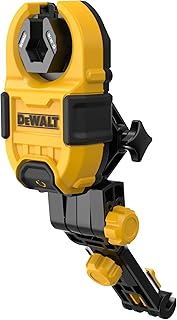


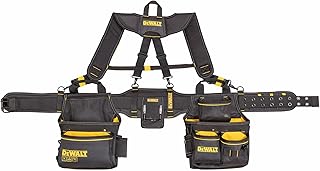


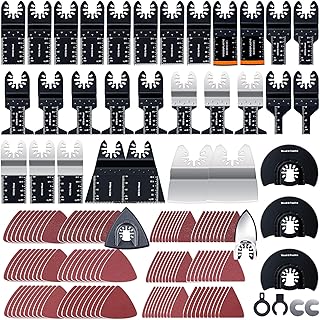
A precision multi-tool can be one of the most versatile cordless tools in a workshop, renovation kit, maintenance bag, or jobsite. The right DeWalt multi-tool can handle detailed cutting, plunge cuts, trimming, scraping, sanding, grout removal, finish work, and other tasks that are difficult to complete efficiently with a conventional saw or rotary tool. For Canadian buyers, however, choosing the right model involves more than comparing headline power or the number of included accessories.
The most useful comparison starts with the type of work you actually perform. Consider whether you need a compact tool for cabinetry and finish carpentry, a higher-performance model for renovation work, a tool-only option for an existing DeWalt battery collection, or a kit that includes batteries, a charger, and accessories. Also consider vibration control, variable-speed operation, accessory compatibility, ergonomics, visibility around the cutting area, and the availability of replacement blades and sanding accessories.
This guide is designed to help Canadian shoppers compare DeWalt multi-tools more intelligently. Product specifications, package contents, retailer pricing, stock status, and included accessories can change, so check the current listing and manufacturer documentation before purchasing.
A DeWalt multi-tool is generally an oscillating multi-tool designed to perform several precision tasks using interchangeable accessories. Instead of rotating a blade like a circular saw or reciprocating like a reciprocating saw, an oscillating tool moves its accessory through a small, rapid arc. This makes it particularly useful when controlled cutting, flush cutting, scraping, sanding, or working in confined spaces matters more than making long, fast cuts.
Typical applications include cutting door jambs, trimming baseboards, undercutting flooring, removing old caulk, scraping adhesive, sanding corners, removing grout, trimming nails and screws, making plunge cuts in suitable materials, and performing repair work where a larger power tool cannot easily fit.
DeWalt's cordless multi-tools are especially relevant to users who already own compatible DeWalt battery platforms. A shared battery ecosystem can reduce the need to purchase separate batteries and chargers for every cordless tool, although buyers should still confirm the exact battery requirements and kit contents of the model being considered.
Precision is not simply a matter of maximum speed. In detailed work, control can be more important than raw output. A multi-tool that allows the user to regulate speed, maintain a stable grip, see the accessory clearly, and change accessories efficiently can be more useful than a model selected solely because it has a high advertised speed range.
Precision becomes particularly important when working close to finished surfaces. Cutting a door casing, trimming flooring beside a wall, removing a small section of damaged material, or sanding an inside corner requires controlled movement. Excessive pressure, an unsuitable accessory, or an unnecessarily aggressive speed can damage the workpiece.
Variable speed is one of the most useful features on an oscillating multi-tool because different jobs benefit from different operating speeds. Delicate sanding or work close to finished surfaces may require a more controlled setting, while suitable cutting applications may benefit from a faster setting.
Do not assume that maximum speed automatically means better performance. A good buying decision considers how easily the speed can be controlled and whether the available range suits the materials and accessories you expect to use.
Oscillation speed and oscillation angle can influence how aggressively an accessory works. The exact specifications vary by model, so compare manufacturer-listed specifications rather than assuming that every DeWalt multi-tool performs identically.
A more aggressive oscillation setup can be useful for demanding cutting applications, while controlled operation may be preferable for detailed work. The accessory itself also has a major influence on cutting behaviour.
Many modern cordless power tools use brushless motors because brushless motor systems can provide efficient power delivery and reduce the maintenance associated with replaceable carbon brushes. For buyers planning frequent use, a brushless DeWalt multi-tool may be worth prioritising.
However, brushless construction should not be treated as the only purchasing criterion. The overall tool design, battery system, ergonomics, accessory compatibility, intended workload, and price of the complete setup still matter.
Battery compatibility can be one of the most important factors for Canadian DeWalt users. If you already own compatible DeWalt cordless tools and batteries, a tool-only multi-tool may be more economical than purchasing another battery and charger.
New users should compare the cost of a bare tool against the corresponding kit. A kit can make more sense when it includes the battery capacity you need, an appropriate charger, and useful accessories. Always verify the battery platform and exact package contents because similarly named products can be sold in different configurations.
Runtime depends on the battery, workload, material, accessory, operating speed, and how continuously the tool is used. Cutting dense material repeatedly can place a substantially different demand on a battery than occasional detail sanding.
For short repair jobs, a compact battery can help keep the tool lightweight. For longer renovation sessions, a higher-capacity battery may reduce interruptions. The trade-off is additional weight and bulk.
Accessory changes are common with multi-tools. A tool-free or simplified accessory-change mechanism can save time when a project involves switching between cutting, scraping, and sanding tasks.
When comparing models, look beyond the phrase "tool-free." Check how the accessory is secured, whether the mechanism is easy to operate while wearing appropriate work gloves, and which accessory interfaces the tool accepts.
An integrated LED can improve visibility when working inside cabinets, under counters, behind trim, or in other areas where ambient lighting is limited. It should be viewed as a convenience and visibility feature rather than a substitute for proper jobsite lighting.
Oscillating tools naturally generate vibration because the accessory moves rapidly. Vibration management therefore matters when the tool is used repeatedly or for extended periods.
Compare the handle shape, grip surface, balance, trigger or switch placement, overall weight, and vibration-control features. A specification sheet cannot fully describe how comfortable a tool will feel for every user, so customer feedback can provide useful supplementary information when evaluating ergonomics.
Compact models are suited to users who value manoeuvrability and portability. They can be particularly convenient for electricians, installers, remodelers, maintenance workers, DIY users, and anyone working in confined spaces.
Their main advantage is often accessibility rather than maximum cutting capacity. If your typical jobs involve trim, small repairs, cabinet work, flooring adjustments, or detail work, compact dimensions can be more valuable than a heavier high-output design.
Higher-performance models are intended for users who expect to perform more demanding cutting and renovation tasks. These tools can be attractive to professional tradespeople and serious DIY users who use an oscillating tool regularly rather than keeping it as an occasional emergency tool.
When comparing high-performance models, examine the complete specification set instead of focusing on one performance number. Motor technology, speed control, vibration characteristics, accessory changes, battery requirements, ergonomics, and overall size should be evaluated together.
A tool-only configuration can be the logical choice when you already have compatible DeWalt batteries and a charger. It can also make it easier to build a specialised tool collection without accumulating duplicate charging equipment.
Before choosing this configuration, confirm that your existing battery is compatible and that its capacity is appropriate for the intended workload.
A complete kit may be more convenient for someone entering the DeWalt cordless ecosystem. Compare the included battery capacity, charger type, accessory selection, case or storage arrangement, and total kit contents rather than comparing the kit price alone.
An oscillating multi-tool is useful for trimming moulding, adjusting casing, making precise cuts around existing structures, and completing installation work where a larger saw would be awkward.
Multi-tools can help with undercutting door jambs, trimming flooring around obstacles, and making controlled adjustments. The correct blade for the flooring material is essential, and users should follow the accessory manufacturer's instructions.
Scraping adhesive, removing old caulk, cutting fasteners, and accessing damaged sections are common renovation applications. A multi-tool is especially valuable when a controlled cut is required in an already-developed work area.
Tradespeople may use oscillating tools for controlled access cuts, trimming materials, or modifying openings. Because existing walls and assemblies can contain hidden utilities, users should establish what is behind the work surface before cutting.
Compact dimensions and controllable operation can make an oscillating tool useful around cabinetry, shelving, furniture repairs, and installation adjustments. The appropriate sanding accessory can also help with corners and small surfaces that are difficult to reach with conventional sanders.
Occasional users should prioritise versatility, ease of use, battery convenience, and a useful selection of accessories. There is little benefit in paying for professional-oriented features that will rarely be used if a simpler model comfortably handles the intended projects.
Renovators generally benefit from a stronger emphasis on runtime, durability, vibration management, accessory changes, and cutting performance. Renovation work often involves several different materials in the same project, so accessory selection and speed control become particularly important.
Professionals should consider productivity over the entire working day. Ergonomics, battery strategy, accessory-change speed, reliability, visibility, and compatibility with an existing DeWalt tool collection can all have a larger practical impact than a small difference in headline specifications.
If the tool will spend most of its life in a storage cabinet, prioritise versatility and sensible ownership cost. A multi-tool is most valuable in this situation because it can cover several unusual repair tasks without requiring multiple specialised tools.
The multi-tool itself is only part of the system. The accessory determines what the tool can actually do. A buyer who chooses an advanced multi-tool but uses an unsuitable or worn accessory may not achieve the expected result.
Always match the accessory to the material and follow the accessory manufacturer's operating instructions. Do not select a blade solely because it physically fits the tool.
Accessory compatibility can be confusing because oscillating tools have been sold with different mounting interfaces and accessory standards. Some DeWalt multi-tools can accept accessories from multiple manufacturers, but compatibility should be confirmed for the exact tool and accessory combination.
When shopping in Canada, check whether the listing specifies the mounting interface, included adapters, or compatible accessory systems. Do not assume that every oscillating blade marketed as "universal" will deliver identical fit, clearance, or performance on every tool.
A useful comparison should be based on the tasks you perform most frequently. Create a shortlist and evaluate each model against the same criteria.
DeWalt is not the only established brand in the oscillating multi-tool category. Canadian shoppers may also encounter products from Milwaukee, Makita, Bosch, RIDGID, Ryobi, and other manufacturers.
The most meaningful comparison is not necessarily which brand has the highest specification. Instead, consider the battery ecosystem you already own, the tool's ergonomics, available accessories, intended workload, service considerations, and the total cost of building the setup.
For users already invested in the respective cordless ecosystems, battery compatibility can be a decisive factor. Compare equivalent tool configurations rather than comparing a bare DeWalt tool with a fully equipped Milwaukee kit or vice versa.
Both brands offer extensive cordless tool ecosystems. Buyers should compare the exact multi-tool models for handling, speed control, accessory compatibility, battery options, and included equipment rather than choosing solely from brand reputation.
Bosch is another established power-tool manufacturer with products spanning professional and DIY applications. When comparing Bosch and DeWalt, pay particular attention to accessory interfaces, tool dimensions, ergonomics, and compatibility with batteries already owned.
Ryobi is widely associated with the DIY-oriented cordless market. The best choice depends on the user's expected workload and existing battery ecosystem. A homeowner who already owns compatible batteries may value platform compatibility more than a small difference in individual tool specifications.
Building around one cordless platform can simplify tool ownership. A single battery family can potentially serve drills, impact drivers, saws, lights, sanders, multi-tools, and other compatible equipment.
Before buying another bare tool, check your existing battery inventory. If you have several high-capacity batteries already, a tool-only configuration may be attractive. If you have only compact batteries, consider whether their runtime and physical size are suitable for the multi-tool's intended workload.
Also remember that battery compatibility does not necessarily mean identical performance. Different battery capacities and battery technologies can affect runtime, weight, and overall tool balance.
Canadian buyers should evaluate the complete purchase rather than focusing on a headline price. A lower-priced tool may become more expensive if it requires batteries, a charger, blades, and other accessories that are not included.
A multi-tool kit with a broad assortment of useful accessories can be more practical than a similarly priced bare tool when starting from scratch. Conversely, an experienced user may already have preferred blades and sanding pads, making a bare tool more efficient.
Look at the actual accessory types rather than simply counting the number of pieces. Ten inexpensive or rarely useful accessories may provide less value than a smaller set containing the blades and sanding pads you routinely use.
Maximum oscillation speed is only one part of the performance picture. Control at lower settings, accessory selection, ergonomics, and battery performance can be more important for precision work.
A tool-only listing can appear inexpensive until the cost of a compatible battery and charger is added. Compare complete ownership cost rather than the tool price in isolation.
Different materials require different accessories. Using an inappropriate blade can produce poor results, accelerate wear, or create unnecessary safety risks.
Professional-grade performance can be valuable for frequent renovation and trade work, but an occasional DIY user may benefit more from a lighter, easier-to-control configuration.
A cordless multi-tool can become noticeably heavier once a larger battery is installed. If you frequently work overhead or in awkward positions, balance and weight deserve serious consideration.
Vibration can affect comfort and control, especially during long sessions. Consider the tool's vibration-management design and your expected workload before purchasing.
Two listings can appear to describe the same basic tool while containing different batteries, accessories, storage solutions, or other equipment. Always compare the exact model and package contents.
Good multi-tool technique begins with selecting the correct accessory and allowing the tool to do the work. Excessive downward pressure can reduce cutting efficiency and make control more difficult.
Flush cutting is one of the most useful applications for an oscillating tool. The goal is to remove material without unnecessarily damaging the surrounding surface.
Use a suitable flush-cutting accessory and approach the work gradually. Keep the tool stable and avoid twisting the blade during the cut. For finished surfaces, protecting adjacent areas and carefully controlling the tool can help minimise accidental marks.
Oscillating sanding pads are particularly useful where conventional sanders struggle to reach. They can access corners, narrow edges, and irregular areas that require a small sanding surface.
Because the sanding area is relatively small, a multi-tool is not normally the first choice for sanding large flat surfaces. It is better regarded as a detail and access solution. Use suitable abrasive grades and avoid excessive pressure, which can reduce abrasive effectiveness and increase heat.
Scraper accessories can be useful for removing suitable adhesives, old sealants, coatings, and other unwanted material. The correct scraping angle and controlled movement are important when working near finished surfaces.
Before scraping, determine whether the underlying material can tolerate the process. A tool capable of removing a stubborn substance can also damage a softer substrate if used too aggressively.
Regular maintenance can help keep a cordless multi-tool ready for use. Follow the maintenance instructions supplied with the exact DeWalt model because procedures and service requirements can differ between products.
Multi-tools are versatile but should be treated as cutting and power equipment. Read the instruction manual for the exact model before operation and use protective equipment appropriate to the task and material.
Customer reviews can provide useful information, but they should be interpreted carefully. Look for repeated comments about specific characteristics rather than relying on a single enthusiastic or negative review.
Specifications are most useful when they answer a specific buying question. Instead of collecting numbers without context, translate each specification into its practical effect.
For 2026 buying decisions, a strong precision multi-tool should be evaluated as a complete working system rather than as a collection of headline specifications. The best fit combines controllable performance, useful ergonomics, practical battery compatibility, suitable accessories, and a configuration that matches the user's workload.
For Canadian users, the battery ecosystem can be particularly important. Someone already using DeWalt cordless equipment may reasonably prioritise platform compatibility, while a first-time buyer should compare the complete kit and the cost of building the required battery and accessory setup.
A DeWalt multi-tool makes particular sense for people who regularly encounter jobs where conventional power tools are too large, too aggressive, or difficult to position accurately. Remodelers, finish carpenters, installers, maintenance professionals, electricians, plumbers, and serious DIY users can all benefit from the flexibility of an oscillating platform.
It may be less useful as a primary cutting tool for large quantities of straight material. A circular saw, reciprocating saw, jigsaw, or dedicated sander can be substantially more appropriate for specialised applications. The multi-tool's strength is versatility and access rather than replacing every other power tool.
The best choice depends on the type and frequency of precision work. Prioritise controllable speed, comfortable handling, visibility, appropriate size, vibration management, and accessory compatibility. For occasional detail work, a compact configuration may be sufficient; frequent professional users may prefer a higher-performance model.
DeWalt offers cordless oscillating multi-tools within its cordless tool ecosystem. Exact battery requirements and kit configurations vary, so verify the specifications for the particular model before purchasing.
If you do not already own compatible DeWalt batteries, a complete kit can be more convenient. If you already have suitable batteries and a charger, a tool-only configuration may avoid unnecessary duplication.
Brushless models are worth considering for frequent users who value modern motor technology and efficient cordless operation. Whether the additional cost is worthwhile depends on workload, existing batteries, desired features, and the difference between comparable configurations.
Suitable DeWalt multi-tools can be used with appropriate metal-cutting accessories for compatible applications. The accessory must be specifically suited to the material, and users should follow the tool and accessory manufacturers' instructions.
Oscillating multi-tools can be used for suitable grout-removal applications when fitted with an appropriate grout accessory. Work carefully around surrounding tile and follow the accessory manufacturer's guidance.
Compatibility depends on the exact mounting interface and accessory design. Some accessories from other manufacturers may be compatible, but buyers should verify compatibility rather than relying on a generic "universal" description.
Higher-capacity batteries can provide longer runtime, but they can also add weight and change the balance of the tool. Choose battery capacity according to the job duration and the handling characteristics you prefer.
Look for controllable speed, good visibility, balanced ergonomics, manageable vibration, suitable dimensions, reliable accessory retention, and compatibility with the accessories required for your projects.
Generally, no. An oscillating multi-tool is designed for versatility and controlled access rather than high-volume straight cutting. A circular saw is normally a more appropriate choice for repeated long, straight cuts in suitable sheet or dimensional materials.
It can perform some overlapping tasks, but the two tools serve different purposes. A reciprocating saw is generally better suited to aggressive demolition and longer cuts, while an oscillating multi-tool excels at controlled access, flush cuts, detail work, scraping, and sanding.
There is no universal replacement interval. Blade life depends on the material, accessory quality, cutting technique, pressure, operating speed, and frequency of use. Replace an accessory when it becomes excessively worn, damaged, or unsuitable for producing the required result.
The strongest way to choose among the best DeWalt multi-tools is to start with your actual jobs and work backwards toward the specifications. Determine the materials you cut, the amount of sanding and scraping you perform, how often the tool will be used, whether you already own DeWalt batteries, and how important low weight and vibration control are to you.
For a homeowner, versatility and sensible kit contents may matter most. For a renovation professional, runtime, durability-oriented design, ergonomics, accessory changes, and productivity may deserve greater emphasis. For an established DeWalt cordless user, battery compatibility can simplify the decision considerably.
Before purchasing in Canada, compare the exact model number, current specifications, included accessories, battery configuration, retailer pricing, warranty information, return conditions, and recent customer feedback. Product availability and package contents can change throughout the year, so the most reliable buying decision is based on the current listing rather than an old price or an outdated kit description.