

♥ Wishlist
Compare 14 Cordless Multi Tool for Cutting, Sanding & Renovation products in Canada. Reviews, ratings, pros, cons and buying advice updated for October 2026.
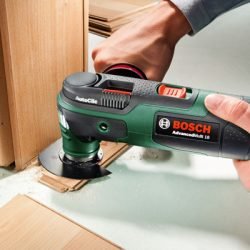
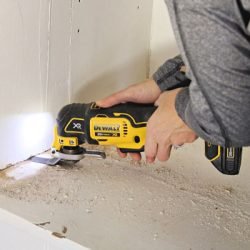
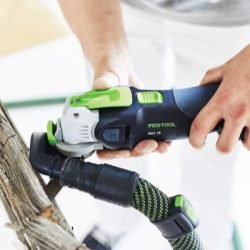
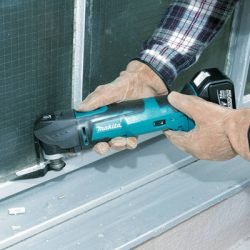
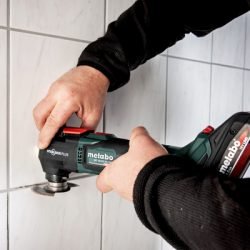
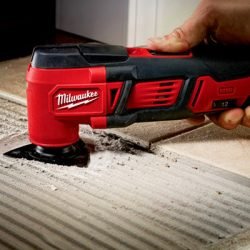
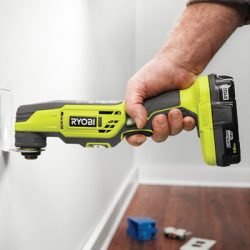


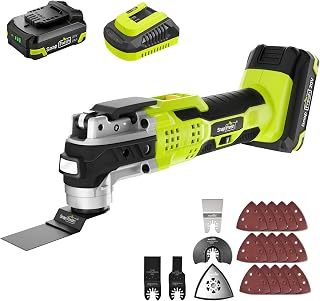


A precision cordless multi-tool can be one of the most versatile tools in a Canadian workshop, renovation kit, maintenance box, or DIY collection. Unlike a conventional saw or grinder designed for one primary operation, an oscillating multi-tool can accept different accessories for cutting, sanding, scraping, grout removal, detail work, plunge cuts, and other controlled tasks. The cordless format adds portability and eliminates the need to work close to a wall outlet.
For Canadian buyers, the best choice is not necessarily the model with the highest advertised speed or the largest battery. A better decision comes from matching the tool's oscillation characteristics, accessory system, battery platform, ergonomics, vibration control, runtime, and intended workload to the jobs you actually perform.
When comparing products, consider the complete system rather than the bare tool alone. A lower-priced tool can become considerably more expensive if it requires a new battery platform, proprietary accessories, or additional chargers. Conversely, a bare tool may be excellent value when you already own compatible batteries from a brand such as DEWALT, Milwaukee, Makita, Bosch, or Ryobi.
A cordless oscillating multi-tool uses a rapidly oscillating attachment rather than a rotating blade. The small side-to-side movement makes it particularly useful where controlled cutting or surface access matters more than raw cutting speed.
Typical applications include trimming door jambs during flooring installation, cutting through drywall or wood, removing old caulk, scraping adhesive, sanding corners, removing grout with an appropriate blade, cutting plastic components, and performing detail repairs in confined areas.
The compact head is especially useful when a conventional reciprocating saw, circular saw, or grinder cannot comfortably reach the work area. The trade-off is that an oscillating tool is generally a precision and access tool rather than the fastest choice for long, repetitive cuts through thick material.
Manufacturer specifications can look similar across cordless multi-tools, but small differences can substantially affect how a tool feels and performs. Comparing specifications systematically is more useful than choosing solely from headline power claims.
Oscillation speed describes how rapidly the tool moves the accessory through its operating arc. Higher speed can be useful for certain cutting and sanding tasks, while lower speeds can provide greater control when working with delicate materials or accessories.
A wide variable-speed range is often more useful than simply having an exceptionally high maximum speed. It allows the operator to adapt the tool to the accessory, material, and required level of control.
The oscillation angle affects how far the accessory travels during each movement. A larger angle can contribute to aggressive material removal, while a smaller movement can be advantageous for controlled detail work. When comparing models, check the manufacturer's stated oscillation angle rather than assuming that all multi-tools operate identically.
A variable-speed trigger, dial, or electronic speed control can make a multi-tool substantially more versatile. Slow operation can help when beginning a cut or working with sensitive materials, while faster settings can be appropriate for many sanding and cutting applications.
Electronic speed management may also help maintain more consistent operation as the workload changes. The exact behaviour varies between tool designs, so specification sheets should be compared alongside user feedback and the manufacturer's documentation.
Brushless motors are common in higher-end cordless power tools. They eliminate conventional motor brushes and can provide efficiency, reduced maintenance requirements, and effective electronic control. They are particularly attractive for users who expect to use the tool frequently.
Brushed models can still make sense for occasional DIY work when the purchase price and compatibility with an existing battery system are more important than premium motor technology. Do not assume that brushless automatically means the best overall purchase; the complete tool design matters.
Cordless multi-tools are commonly sold as part of a broader battery ecosystem. Platform compatibility can be one of the most important buying factors because an existing battery and charger may eliminate the need to purchase them again.
For someone already invested in a particular cordless system, staying within that platform can be more economical and convenient than selecting a completely different brand for a single tool.
Battery capacity is typically expressed in ampere-hours. Higher capacity can provide greater potential runtime, but it can also increase battery size and weight. Runtime depends heavily on the workload, accessory, material, speed setting, battery condition, and tool electronics.
Do not treat amp-hour capacity as a direct guarantee of operating time. Two tools using batteries with similar nominal capacities can have very different real-world runtime characteristics.
Weight matters more with a multi-tool than many first-time buyers expect. Oscillating tools are frequently held at unusual angles and used in awkward positions. A tool that feels manageable for five minutes may become tiring during extended sanding or overhead work.
Pay attention to bare-tool weight, battery weight, overall length, grip position, and how the battery changes the balance. A compact tool can be particularly valuable when working inside cabinets, beneath flooring, around door frames, or in other confined spaces.
For Canadian homeowners and tradespeople, battery-platform compatibility can be a major part of the total ownership cost. If you already use a cordless system, a compatible bare tool may allow you to share batteries and chargers across drills, impact drivers, saws, lights, sanders, and other equipment.
Popular cordless ecosystems include DEWALT, Milwaukee, Makita, Bosch, Ryobi, Metabo HPT, and other established manufacturers. Each platform has its own battery designs, chargers, electronic controls, tool selection, and compatibility rules.
Before purchasing, identify the exact battery family rather than relying only on the manufacturer's name. A brand can have multiple battery generations or voltage classes that are not interchangeable.
A bare tool is often the logical choice when compatible batteries and a charger are already available. It can reduce duplication and allow the buyer to put more of the budget toward the tool itself.
A complete kit can be more practical for a first-time user entering a battery platform. Compare what is actually included: tool, battery capacity, charger, case or bag, accessories, and any other components.
When comparing kit prices, avoid comparing a bare-tool price against a complete kit without accounting for the cost of a compatible battery and charger.
A quick accessory-change mechanism can save significant time when moving between cutting, scraping, and sanding tasks. Different manufacturers use different mechanisms, so check whether the design requires a lever, clamp, screw, or other retention method.
Fast changes are particularly useful on renovation projects where several accessories may be needed during a single task.
An integrated LED can improve visibility around the cutting area, especially inside cabinets, beneath appliances, behind trim, or in poorly illuminated renovation spaces. It should be viewed as a convenience feature rather than a substitute for appropriate work lighting.
The grip should allow secure control without requiring excessive hand pressure. A slimmer housing can help users with smaller hands, while a larger grip may feel more substantial to others. Trigger placement and speed-control accessibility also influence how comfortably the tool can be operated.
Oscillating tools inherently produce rapid movement, so vibration management is an important consideration. Housing design, motor characteristics, internal balancing, grip construction, and electronic control can all affect perceived vibration.
When comparing models, do not judge vibration performance from specifications alone. Look for consistent user feedback describing comfort during extended use, while remembering that individual experiences can vary.
A compact head and unobstructed accessory area can make it easier to see the cutting line. This is especially useful for flush cuts and plunge cuts where positioning the blade accurately matters.
The accessory can have as much influence on performance as the multi-tool itself. A powerful tool fitted with an unsuitable or worn accessory may perform poorly, while the correct high-quality accessory can make a moderate tool substantially more effective.
Wood blades are useful for trim, boards, shims, and similar applications. Teeth configuration, blade width, tooth material, and intended cutting application should all be considered.
Bi-metal accessories are designed for applications where greater durability is required and may be appropriate for certain wood-and-metal cutting tasks. Always verify the accessory's intended material range before use.
Rigid and flexible scrapers can help remove adhesives, caulk, paint residue, flooring material, and other deposits. The correct scraper depends on the material being removed and the surface underneath.
Triangular sanding pads allow the tool to reach corners and narrow edges that can be difficult to sand with a conventional random-orbit sander. They are best suited to detail sanding rather than large flat surfaces.
Purpose-designed grout accessories can be useful during bathroom and tile renovation. Blade width and thickness should be selected according to the joint and application. Careful positioning is essential because the tool can damage surrounding tile or substrate if used incorrectly.
One of the most important details to check is whether the tool accepts the accessories you already own or intend to buy. Compatibility can depend on the mounting interface, accessory standard, manufacturer-specific system, and the particular tool generation.
Do not assume that two products with similar-looking mounting systems are automatically compatible. Confirm compatibility in the manufacturer's specifications before purchasing accessories in bulk.
Universal or broadly compatible accessories can offer convenience, but proprietary systems may provide particular advantages in retention, accessory changes, or integration with a manufacturer's tool design.
An occasional DIY user generally benefits from a reasonably priced cordless model with variable-speed control, a comfortable grip, practical accessory compatibility, and a battery platform that can support future tools.
Maximum cutting performance may be less important than ease of use, manageable weight, and the availability of basic accessories.
Renovation work often involves frequent accessory changes and demanding materials. Look for strong accessory retention, convenient tool-free changes, effective speed control, good visibility, and sufficient battery capacity for repeated cutting and scraping.
Frequent professional users should place greater emphasis on durability, ergonomics, battery-system availability, accessory costs, service support, and performance consistency. A tool used every day should be evaluated on total ownership value rather than initial purchase price alone.
For detailed work, prioritize controllability, low-speed behaviour, compact dimensions, visibility around the accessory, and a comfortable grip. A highly aggressive tool is not necessarily the best precision instrument.
If the tool is being added to an established cordless collection, battery compatibility can outweigh small differences in specifications. Staying within one ecosystem can simplify charging, storage, and battery management.
Brand selection should be based on the complete ecosystem rather than reputation alone. Established manufacturers such as DEWALT, Milwaukee, Makita, Bosch, Ryobi, and Metabo HPT offer different combinations of tools, batteries, accessories, ergonomics, and pricing.
DEWALT is widely associated with cordless construction and workshop tools. Buyers considering a DEWALT multi-tool should compare the specific model's motor type, battery requirements, accessory system, included equipment, and ergonomics rather than selecting solely by brand.
Milwaukee's cordless ecosystem is particularly relevant to buyers who already own compatible tools from the company's battery platform. When comparing Milwaukee models, consider whether the specific tool is intended for compact DIY use, professional workloads, or another application.
Makita has a broad cordless tool ecosystem and offers multiple tool configurations. Buyers should pay attention to battery compatibility within the applicable platform and compare the tool's size, control layout, accessory retention, and intended workload.
Bosch offers power tools across DIY and professional categories. Its multi-tool options can be worth considering when accessory compatibility, ergonomics, and integration with an existing Bosch battery system are priorities.
Ryobi is well known for a broad consumer-oriented cordless ecosystem. It can be particularly relevant for homeowners who want one battery family to support many occasional-use tools. Compare individual models carefully because platform membership does not mean every tool has identical performance or features.
Metabo HPT is another established power-tool manufacturer worth including in a broader comparison, particularly for buyers interested in cordless tools designed around a larger professional-oriented system.
Cordless operation provides freedom of movement and is particularly useful for outdoor work, renovation sites, unfinished rooms, vehicles, and locations without convenient electrical access.
A corded model can remain attractive for users who expect long periods of continuous operation and do not want to manage batteries. It can also make sense when the tool will be used primarily in a workshop with reliable access to mains electricity.
The better choice depends on the work environment. Cordless does not automatically mean superior; portability must be weighed against battery charging, runtime, battery cost, and the added weight of the battery pack.
A reciprocating saw is generally better suited to faster, more aggressive cutting through larger workpieces. A multi-tool has an advantage when access, control, flush cutting, or precision matters.
A jigsaw is generally more appropriate for longer controlled cuts and shaped cuts through sheet goods and boards. A multi-tool excels where the operator needs to start within the material or work close to an obstruction.
An angle grinder is designed for high-speed rotating accessories and is more appropriate for many grinding, cutting, and material-removal tasks. A multi-tool operates differently and can offer more controlled movement for detail applications where a rotating disc would be unsuitable.
A dedicated detail sander can be preferable for users who frequently sand larger areas. The multi-tool's sanding attachment is primarily valuable because it gives the user access to corners and awkward areas while retaining the ability to change to cutting or scraping accessories.
When reviewing ten competing cordless multi-tools, use the same criteria for every model. This prevents a heavily marketed specification from dominating the decision while more practical considerations are overlooked.
Customer ratings can be useful, but they should be interpreted alongside specifications and the intended application. A high rating does not necessarily mean a tool is ideal for every buyer.
Look for recurring comments about battery life, vibration, accessory changes, ergonomics, cutting control, durability, and compatibility. Give more weight to reviews that explain what the purchaser used the tool for than to reviews that simply provide a star rating.
Also distinguish between complaints about the tool itself and complaints caused by unsuitable accessories, incorrect expectations, battery issues, or an application outside the manufacturer's intended use.
Maximum oscillation speed is only one specification. A useful multi-tool also needs controllable low-speed operation, suitable power delivery, good ergonomics, and an appropriate accessory.
Buying into an entirely new battery platform for one tool can increase the actual cost substantially. Check whether an existing battery system already meets your needs.
Two similarly priced kits can contain very different batteries, accessories, chargers, and storage solutions. Always compare the included components line by line.
A large accessory bundle can appear attractive, but unused blades and sanding materials add little value. Start with accessories that match the jobs you actually expect to perform.
A heavier tool may be perfectly acceptable for short cuts but uncomfortable for overhead or extended detail work. Evaluate the complete battery-equipped setup.
Accessory compatibility varies. Confirm the mounting system and intended application before purchasing replacement or third-party accessories.
Cutting accessories are designed for particular materials and workloads. Using an unsuitable accessory can reduce performance, accelerate wear, and potentially create unsafe operating conditions.
A cordless multi-tool should be treated as a serious cutting and material-removal device even though its compact size can make it look less intimidating than larger power tools.
Dust control deserves particular attention during indoor renovation. Sanding drywall, wood, paint, grout, and other materials can produce airborne particles. The correct dust-management strategy depends on the material and the work environment.
Some multi-tools can be used with dust-extraction accessories or compatible vacuum systems. Where dust extraction is available, compare how the system attaches and whether it interferes with visibility or accessory movement.
Older buildings can present additional concerns because coatings and construction materials may contain hazardous substances. If the material or building age raises a safety concern, identify the material before disturbing it and follow applicable Canadian safety guidance.
Regular maintenance can help keep a cordless multi-tool operating reliably. The exact maintenance requirements depend on the manufacturer and model.
Battery-powered tools can be exposed to significant temperature variation in Canada. Lithium-ion batteries should be handled and stored according to the battery manufacturer's instructions rather than being treated like ordinary household batteries.
Cold conditions can affect battery performance and available runtime. Extremely hot conditions can also be detrimental to battery life. Avoid charging or storing batteries outside the temperature conditions specified by the manufacturer.
For users who work between a heated workshop and a cold vehicle or jobsite, allow equipment to reach an appropriate operating condition before use or charging when required by the manufacturer's guidance.
Excessive pressure can reduce control and accelerate accessory wear. Use the appropriate accessory, maintain a stable grip, and allow the oscillating action to perform the cutting or sanding work.
Start with a conservative speed when the material or accessory is unfamiliar. Increase speed as appropriate for the task while maintaining control.
For detailed work, positioning accuracy is often more valuable than trying to remove material as quickly as possible. Controlled movements can help reduce accidental damage to surrounding surfaces.
A worn blade can make a capable multi-tool feel underpowered. If cutting becomes noticeably slower or requires excessive pressure, inspect the accessory before assuming the tool itself is inadequate.
The advertised tool price is only part of the buying equation. Consider the cost of the battery, charger, blades, sanding pads, scrapers, storage, replacement accessories, and any additional equipment needed for your intended applications.
For someone already using a compatible cordless platform, the incremental cost may be relatively low because batteries and chargers can be shared. For a new cordless-tool user, the initial platform investment deserves greater attention.
Accessory availability is also important. A tool may appear inexpensive initially but become less attractive if commonly required accessories are difficult or expensive to replace.
A premium model can make more sense when the tool will be used frequently, particularly for renovation, professional maintenance, flooring, electrical installation, cabinetry, or other detail-intensive work.
Frequent users are more likely to benefit from improvements in ergonomics, vibration management, electronic control, accessory changes, durability, and battery-system integration.
For occasional users, however, spending significantly more may not provide proportional value. A well-specified mid-range model can be sufficient when workloads are light and usage is infrequent.
A budget-oriented option can be appropriate for occasional repairs, small DIY projects, light sanding, simple trimming, and infrequent renovation tasks. The key is to verify that the tool has the features required for the intended work.
Do not select a budget model solely because it is the cheapest listing. Compare the complete kit, battery situation, accessory compatibility, warranty terms supplied by the manufacturer or retailer, and long-term accessory availability.
A sensible starter collection does not need every accessory available. Build the set around your most likely jobs.
A ranked list should be treated as a starting point for comparison rather than a universal declaration that one tool is best for every Canadian buyer. The ideal choice depends on application, battery platform, frequency of use, budget, ergonomics, and accessory requirements.
When reviewing a top-10 selection, compare each model against the same criteria. A tool that ranks highly for professional renovation may not be the best choice for occasional home repairs, and a compact homeowner-oriented model may not be appropriate for continuous trade use.
Current customer ratings, retailer availability, specifications, package contents, and pricing can change during 2026. Verify those details immediately before purchase rather than relying on an older comparison.
There is no single best model for every Canadian buyer. The strongest choice depends on the work required, existing battery platform, desired ergonomics, accessory compatibility, runtime requirements, and budget. Compare current specifications and customer feedback for the exact model you are considering.
For homeowners, renovators, tradespeople, and DIY users who regularly encounter trimming, scraping, sanding, plunge-cutting, or difficult-to-access work, a cordless multi-tool can be extremely useful. Its value is greatest when versatility and access matter more than maximum cutting speed.
Brushless motors can provide efficiency and reduced brush-related maintenance, making them attractive for frequent use. However, the motor type should be considered alongside ergonomics, battery compatibility, accessory performance, control, and overall cost.
The appropriate power level depends on the material and workload. Light DIY jobs do not necessarily require the most powerful model, while frequent cutting and renovation work can justify a higher-performance tool. Battery system, accessory choice, and electronic control also influence practical performance.
Some multi-tools can cut certain metals when fitted with an accessory specifically designed and rated for that material. Always follow the accessory manufacturer's specifications and the tool manufacturer's operating instructions.
Yes, suitable oscillating-tool grout accessories are designed for grout-removal applications. Use the correct accessory size and work carefully to avoid damaging surrounding tile or the substrate.
No. Compatibility depends on the tool's accessory mounting system and the specific accessory standard. Confirm compatibility before purchasing or installing an accessory.
Choose a bare tool if you already have compatible batteries and a charger. A kit can make more sense when entering a new cordless platform or when the included battery, charger, and accessories provide better overall value.
Battery capacity primarily relates to potential runtime, not simply maximum tool power. Actual performance depends on the battery's design, electronic system, motor, workload, and other factors.
They can be particularly useful for trimming door casings, making access cuts, modifying small sections, and handling detail work. A different saw may be more efficient for long or repetitive cuts.
A practical starter set usually includes a general-purpose cutting blade, scraper, sanding pad, and the specific specialty accessory required for the projects you expect to perform. Buying accessories according to actual applications is usually more useful than purchasing the largest possible bundle.
Runtime varies significantly with battery capacity, material, accessory, speed setting, pressure, and workload. Manufacturer runtime information, where provided, should be treated as application-dependent rather than a universal operating-time guarantee.
Many cordless multi-tools are designed for professional applications, but suitability depends on the specific model and workload. Professional buyers should place particular emphasis on durability, ergonomics, battery availability, accessory costs, and manufacturer support.
The best precision cordless multi-tool for a Canadian buyer is the one that fits the actual work rather than simply winning a specification comparison. Start by identifying your main applications, then compare compatible battery platforms, motor technology, speed control, oscillation characteristics, weight, ergonomics, accessory systems, and total ownership cost.
If you already own cordless tools, battery compatibility can dramatically simplify the decision. If you are building a cordless collection from scratch, consider the wider ecosystem because the multi-tool may be only the first of several tools you eventually purchase.
Before ordering, verify the exact model number, current Canadian price, package contents, battery requirements, accessory compatibility, manufacturer warranty information, and current customer feedback. Prices, stock, ratings, and product configurations can change, so current retailer and manufacturer information should take precedence over an older listing.
For most buyers, the strongest shortlist will balance controllability, useful power, comfortable handling, reliable accessory retention, practical battery life, and reasonable long-term ownership costs. That approach makes it easier to identify a cordless multi-tool that remains useful well beyond a single renovation project.