

♥ Wishlist
Compare 18 DeWalt Power Tool Sets in Canada products in Canada. Reviews, ratings, pros, cons and buying advice updated for October 2026.


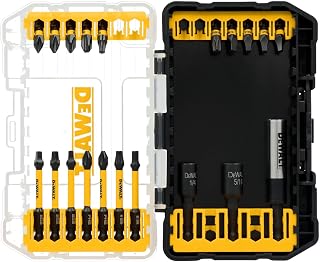


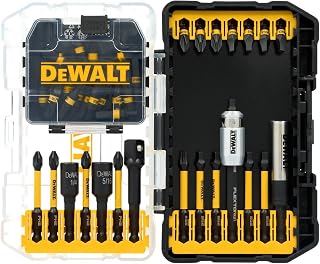


Choosing a DeWalt power tool set is less about buying the largest bundle and more about selecting a combination of tools, batteries, chargers and accessories that matches the work you actually perform. A compact kit can be the smarter choice for occasional home projects, while a larger cordless system may make more sense for renovation, construction, woodworking or professional trades.
For Canadian buyers, the decision also involves practical considerations such as battery platform compatibility, cold-weather storage, charger requirements, warranty terms, included accessories and the availability of replacement batteries or individual tools. DeWalt offers a broad cordless ecosystem, so comparing the contents of each kit is particularly important before making a purchase.
A useful power tool set should provide more than a high tool count. The value of a kit depends on whether the included tools complement one another, whether the batteries can support the workload, and whether the set leaves room to expand later without replacing the entire system.
One of the most important specifications to compare is the battery platform. DeWalt's cordless range includes different voltage and battery technologies designed for different workloads. The number printed on the tool or battery should therefore be considered alongside the actual tool type and intended application.
DeWalt 20V MAX tools form one of the company's most extensive cordless platforms. A starter kit based on this system can be attractive for homeowners, DIY users and tradespeople who want to build a collection gradually. The platform includes everything from drills and impact drivers to saws, lights, sanders and other specialized equipment.
When comparing 20V MAX kits, do not assume that two kits with the same nominal voltage will deliver the same working experience. Battery capacity, motor design, tool generation, included accessories and the specific model numbers can all affect practical performance.
DeWalt's XR designation is associated with higher-performance tools and batteries within the 20V MAX ecosystem. XR kits can be particularly relevant to users who expect more demanding or frequent use. However, the presence of an XR product does not automatically make an entire kit the best choice for every buyer.
Compare the individual tool models, battery capacities and included equipment rather than relying solely on a marketing designation.
FLEXVOLT technology is designed to provide greater flexibility for users who need equipment suited to heavier-duty applications. Certain FLEXVOLT batteries can automatically change voltage depending on the compatible tool, allowing them to work across appropriate DeWalt platforms.
For buyers considering high-demand saws, grinders or other power-hungry equipment, FLEXVOLT can be worth investigating. It may be unnecessary, however, if the primary workload consists of drilling, fastening, light woodworking and routine household maintenance.
The ideal bundle depends on the jobs you perform. A five-tool kit is not automatically better than a three-tool kit if the additional equipment does not address your needs.
A drill/driver is often the foundation of a general-purpose cordless collection. It can handle drilling and screw-driving tasks across many household, workshop and construction applications.
Compare chuck size, speed ranges, clutch settings, torque characteristics, physical size and weight. A compact drill may be easier to control in cabinets and tight spaces, while a more powerful model can be preferable for larger fasteners and demanding drilling applications.
An impact driver is particularly useful for driving longer screws, structural fasteners and other applications where a conventional drill may require more effort. Its impact mechanism can deliver high fastening performance while reducing the twisting sensation transferred to the user's hand.
Important comparison points include fastening control, speed settings, trigger response, overall length, weight and compatibility with common hex-shank accessories.
A reciprocating saw can be valuable for demolition, remodeling, cutting lumber and certain metal-cutting applications. It is more specialized than a drill or impact driver, so buyers should consider whether its inclusion reflects their actual workload.
A cordless circular saw can turn a general-purpose kit into a much more capable woodworking and construction package. Compare blade diameter, cutting depth, bevel range, visibility of the cutting line, shoe construction and overall balance.
An oscillating multi-tool is useful for detail work, flush cutting, trimming, scraping and jobs where a larger saw cannot easily fit. It can be especially useful during renovation projects where several different cutting and removal tasks arise.
An angle grinder expands the range of work a cordless collection can handle, including grinding, cutting and surface preparation with suitable accessories. Because grinders can place significant demands on batteries, compare battery capacity and the intended duty cycle rather than focusing only on tool count.
A cordless work light may appear less important than a saw or drill, but it can be genuinely useful in garages, basements, workshops and job sites where permanent lighting is inadequate. Shared batteries also make it convenient to use without maintaining a separate power source.
Tool count is one of the easiest specifications to misunderstand when comparing power tool bundles. A kit advertised with a large number of pieces may include batteries, chargers, bags, blades or small accessories in addition to the primary tools.
Before comparing two bundles, count the actual powered tools separately from accessories. Then identify whether every tool has a clear role in your projects.
A homeowner typically benefits from a practical combination such as a drill/driver, impact driver, compact saw and light. This covers many common maintenance and DIY tasks without creating unnecessary equipment.
Renovation work can justify adding an oscillating multi-tool, reciprocating saw or circular saw. The right combination depends on whether the work involves framing, cabinetry, flooring, demolition or general repair.
Professional users should evaluate the complete working system rather than simply purchasing a promotional bundle. Tool durability, battery availability, charging capacity, ergonomics, downtime and the ability to purchase individual replacement tools can have greater long-term importance than the initial number of pieces.
Battery capacity is commonly expressed in ampere-hours, or Ah. In general terms, a higher-capacity battery can provide more stored energy, although actual runtime depends heavily on the tool, material, workload, operating conditions and battery technology.
There is no universally best battery size. A large battery attached to a compact drill can make the tool unnecessarily heavy, while a small battery on a demanding saw may require frequent changes.
Battery capacity should not be treated as a direct measurement of tool performance. A battery with greater capacity can extend working time, but the actual result depends on how much energy the tool draws and how demanding the application is.
For example, repetitive drilling in soft material may consume considerably less energy than continuous cutting with a saw. Likewise, an impact driver working with large fasteners can place different demands on its battery than the same tool used for light fastening.
Motor design is another useful comparison point. Traditional brushed motors use physical brushes and a commutator, while brushless motors use electronic control instead of conventional motor brushes.
Brushless tools are often attractive because they can provide efficient operation, reduced mechanical brush wear and sophisticated electronic control. They can also be positioned toward buyers who use tools frequently or place greater demands on their cordless equipment.
That does not mean every brushless tool is automatically the right purchase. For occasional household tasks, a less expensive configuration may provide sufficient capability. Consider workload, expected ownership period and the difference in total cost before choosing.
Specifications do not tell the entire story. A tool can have impressive power while still being inconvenient if it is too heavy, poorly balanced or difficult to control.
Canadian buyers should assess a cordless tool set in the context of local working conditions and ownership requirements. The same tool combination that works well in a climate-controlled workshop may require additional planning for outdoor work during colder months.
Lithium-ion batteries can behave differently in very cold conditions. Reduced performance or runtime can occur when batteries are used or stored at low temperatures. Avoid treating a battery as an ordinary disposable item: follow the manufacturer's storage, charging and temperature guidance.
For winter work, keeping batteries protected from extreme temperatures and allowing them to reach an appropriate operating temperature before demanding use can be an important part of responsible cordless-tool ownership.
When purchasing through Canadian retailers or marketplaces, verify that the charger and complete kit are intended for the Canadian market. Be cautious with imported bundles where charger specifications, warranty coverage, manuals or included components may differ from Canadian versions.
Warranty coverage can vary by product, market, seller and purchase conditions. Before buying, review the applicable DeWalt warranty documentation and retain the purchase record where required. Do not assume that a tool purchased from an international seller receives exactly the same support as a product sold through an authorized Canadian channel.
DeWalt is not the only established professional power tool brand available to Canadian consumers. Depending on the user's priorities, it can be useful to compare its cordless ecosystem with Milwaukee, Makita, Bosch Professional, RIDGID and other established manufacturers.
Both brands offer broad cordless ecosystems and extensive tool selections. The better choice often comes down to the specific tools required, battery strategy, ergonomics, pricing at the time of purchase and the availability of compatible equipment through the user's preferred Canadian retailers.
Makita is another major cordless platform with a broad range of professional and DIY-oriented equipment. Buyers comparing the two should evaluate individual tool models rather than judging entire brands based on one drill, saw or battery.
Bosch Professional can be worth considering when ergonomics, specialized equipment or a particular tool design is more important than staying within the DeWalt ecosystem. Cross-brand battery compatibility should never be assumed.
RIDGID can be an alternative for buyers whose preferred retailer, warranty arrangement, pricing or tool selection makes its platform attractive. Compare the complete ownership proposition rather than focusing exclusively on the number of pieces in a starter kit.
When two bundles appear similar, use the following process rather than comparing headline tool counts.
A larger bundle can look attractive because the advertised tool count is higher. However, unused tools have little practical value. A smaller kit containing the tools you use frequently can be a better long-term purchase.
Comparing only the number of batteries can produce a misleading result. Two kits may contain the same number of batteries but offer substantially different capacities.
Voltage is not a complete measure of cordless-tool performance. Motor architecture, electronics, battery technology, tool design and application all influence results.
If the kit is intended to become the foundation of a larger collection, consider what tools you may need over the next several years. A compatible platform can reduce the need to buy batteries and chargers repeatedly.
Heavy tools can become tiring during repetitive work. This is particularly important for drilling overhead, installing fasteners for long periods or using saws continuously.
A bare tool may not include drill bits, driver bits, blades, sanding accessories or other consumables. Read the complete package contents before comparing offers.
Two products may have similar names while differing in battery configuration, motor technology, included accessories or regional packaging. Model numbers provide a much more reliable basis for comparison.
Understanding specifications makes product comparison considerably easier. Pay particular attention to the following information.
A bare tool can be the economical option once you already own compatible batteries and a charger. It avoids accumulating duplicate batteries and charging equipment.
A complete kit can make more sense when establishing a cordless platform for the first time. Compare the cost of the kit with the combined cost of purchasing the individual tools, batteries and charger separately, while also considering whether all included equipment is genuinely useful.
A premium kit is not automatically the best choice for a homeowner or occasional DIY user. If your workload consists primarily of assembling furniture, installing shelves, making occasional repairs and maintaining a property, a simpler combination may provide all the capability required.
More advanced kits become easier to justify when the tools will be used frequently, when demanding materials are involved, or when reducing downtime and maximizing cordless capability are important.
FLEXVOLT deserves closer consideration when the planned tool collection includes equipment with substantial power requirements. Users who regularly work with large saws, heavy-duty cutting equipment or other demanding cordless tools may benefit from the additional flexibility offered by the platform.
For light DIY work, the additional capacity and expense may not provide enough practical benefit to justify choosing a more advanced platform.
The usefulness of a power tool collection depends partly on having the correct accessories. Depending on the tools included, consider whether the kit provides or requires:
Accessories wear out and should be treated as consumables in many applications. The lowest-cost accessory is not always the best value if it performs poorly or wears rapidly under the intended workload.
Regular maintenance can help keep cordless tools in usable condition. Always follow the manufacturer's instructions for the specific model, particularly when maintenance involves electrical components, battery packs or internal mechanisms.
Cordless batteries store substantial amounts of energy and should be treated carefully. Use only compatible charging equipment and follow the manufacturer's instructions. Avoid modifying battery packs, chargers or electrical connections.
Do not use a battery that shows signs of serious physical damage, swelling, leakage or overheating. Store and transport batteries in accordance with the manufacturer's recommendations, and keep them away from conditions that can damage the cells.
The greatest benefit of a cordless platform can emerge after the initial purchase. Once batteries and chargers are already owned, adding compatible bare tools can be more efficient than repeatedly purchasing complete kits.
Before committing to a platform, make a list of the tools you may eventually need. Think beyond today's project and consider drills, drivers, saws, lights, sanders, grinders, specialty tools and outdoor equipment where relevant. A broad ecosystem can provide more flexibility over time.
A DeWalt set can be a sensible option for buyers who want several cordless tools operating within one ecosystem. It can be particularly useful for homeowners building a DIY collection, renovators who need multiple tools for a project, and professional users who value a broad selection of compatible equipment.
However, buyers who need only one specialized tool may be better served by purchasing that tool individually. Likewise, someone who already owns batteries from another platform should compare the cost of switching ecosystems with the benefits of doing so.
For most buyers, the strongest approach is to start with the tools that solve the largest number of real problems. A drill/driver and impact driver can form a useful foundation, after which the collection can expand into cutting, sanding, grinding or demolition tools as required.
If you frequently perform demanding work, prioritize motor technology, battery capacity, ergonomics, tool durability and charging efficiency. If your use is occasional, focus more heavily on essential tools, manageable weight and overall purchase value.
Before purchasing, compare the exact model numbers, package contents, battery specifications, charger, applicable Canadian warranty information and current retailer terms. Product configurations can change, so the contents of a particular bundle should always be verified at the time of purchase.
There is no single best set for every Canadian buyer. The right choice depends on the tools required, workload, battery capacity, budget, ergonomics and plans for expanding the cordless platform. A homeowner may need a very different combination from a professional contractor.
A combo kit can provide good value when most of the included tools are useful to you. Compare the individual model numbers, battery capacities, charger and accessories rather than judging value by the advertised tool count alone.
Compatibility depends on the specific DeWalt battery and tool platform. Buyers should verify compatibility for the exact models involved rather than assuming every DeWalt battery works with every DeWalt cordless tool.
Brushless tools can offer advantages for efficiency, electronic control and demanding use, but the best option depends on the application and budget. Occasional users may not need the additional capabilities of a premium brushless model.
The appropriate number depends on the workload. Two batteries can be convenient because one can be in use while another charges, while users operating several power-hungry tools may benefit from additional batteries and higher-capacity packs.
Choose a kit when it contains several tools you genuinely need and provides batteries and charging equipment at a useful overall value. Choose individual tools when you already have compatible batteries or need only one or two specialized products.
Not usually. FLEXVOLT is most relevant when the intended workload calls for compatible higher-demand equipment. Many household and general DIY applications can be handled effectively within a suitable 20V MAX configuration.
Verify the exact model number, package contents, battery configuration, charger, seller information, applicable warranty terms, return conditions and whether the product is intended for the Canadian market. Also compare the current total price rather than relying on an advertised discount percentage.
A higher Ah rating primarily indicates greater battery capacity rather than automatically indicating greater tool power. Actual performance depends on the battery design, tool electronics, motor and application. Higher-capacity batteries can also add weight.
Cordless tools can be used in cold conditions when permitted by the manufacturer's operating guidance, but low temperatures can affect battery performance. Follow the specific storage, charging and operating instructions supplied with the battery and tool.
The strongest DeWalt power tool purchase is the one that fits your actual workflow. Start by identifying the jobs you perform, select the essential tools, compare battery requirements and then consider how easily the platform can grow.
For Canadian shoppers in 2026, carefully checking exact specifications, package contents, battery capacities, charger compatibility, Canadian warranty conditions and current retailer information is more useful than choosing a kit solely because it has the highest advertised tool count. Whether you are assembling a first DIY collection or expanding an established professional setup, a thoughtful platform decision can make every future cordless-tool purchase easier.