

♥ Wishlist
Compare 37 Fein Battery and Charger products in Canada. Reviews, ratings, pros, cons and buying advice updated for October 2026.
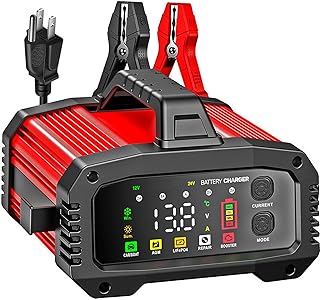


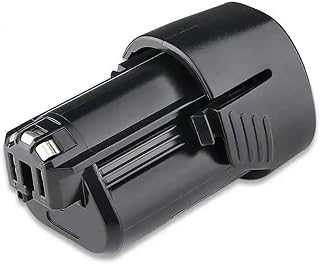

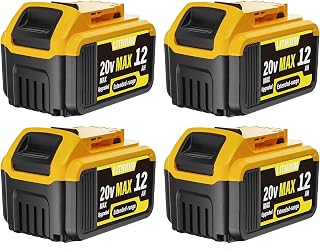


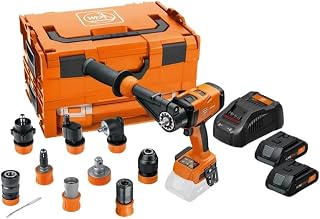


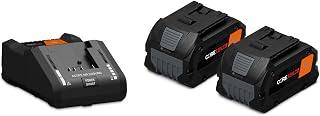


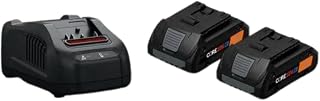
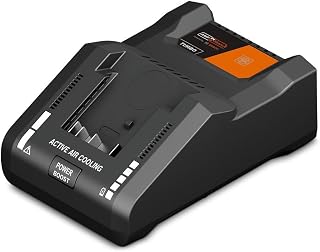

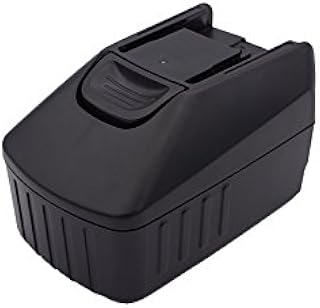


Choosing a battery and charger for a FEIN cordless power tool is about more than selecting the highest-capacity battery available. The right combination needs to match the tool's voltage platform, battery interface, charger compatibility, expected workload, runtime requirements and the working conditions common to Canadian users. A battery that is ideal for occasional precision work may not be the best choice for demanding renovation, fabrication, installation or professional workshop applications.
This buying guide is designed to help Canadian shoppers compare FEIN battery and charger options more intelligently. Rather than relying solely on ratings, promotional claims or a single specification, consider the complete system: battery chemistry, capacity, charging technology, tool compatibility, ergonomics, charging time, storage requirements and the type of work the tool will perform.
A cordless FEIN tool depends on two closely related components: the battery pack that stores electrical energy and the charger that safely replenishes it. Although these components are often purchased separately, they should be evaluated as a system.
The battery determines how much energy is available during use, while the charger controls how efficiently and safely that energy is restored. A larger battery can provide longer operating time, but it can also add weight. A faster charger can reduce downtime, but charging performance still depends on the battery design, temperature, charger technology and the specific tool platform.
For precision-oriented work, balance can be particularly important. A compact battery may make a cordless multi-tool, drill, rotary tool or other handheld machine easier to control, while a higher-capacity pack may be more appropriate when long periods of uninterrupted operation are more important than minimum weight.
Voltage is one of the first specifications to check because cordless power-tool batteries are designed around particular electrical platforms. Do not assume that two FEIN batteries with similar physical dimensions are interchangeable, and do not assume that a charger designed for one battery family will charge another simply because the connector appears similar.
Always verify the exact battery platform supported by your FEIN tool. Check the model number, voltage designation and manufacturer's compatibility information before purchasing. This is especially important when shopping through marketplace listings where product titles can combine several compatible models or use abbreviated descriptions.
Battery capacity is commonly expressed in amp-hours, or Ah. In simple terms, a higher Ah rating generally means that a battery can store more electrical energy within the same voltage platform. However, actual runtime varies according to the tool, material being worked on, accessory being used, operating speed and workload.
A higher-capacity battery can be valuable for professional users who want fewer interruptions. For short precision jobs, installation work or applications requiring frequent repositioning, a smaller battery may provide a better balance between runtime and handling.
Modern professional cordless tools commonly use lithium-ion battery technology because it provides a useful combination of energy density, weight and rechargeable performance. Nevertheless, not every lithium-ion battery should be treated as equivalent.
Cell configuration, electronic protection, thermal management and battery-management systems can influence performance and longevity. When comparing FEIN batteries, look beyond capacity and consider whether the pack is an official battery intended for the relevant tool platform.
A compatible charger is just as important as the battery itself. The charger should be designed for the battery platform and electrical requirements of the pack. Using an unsuitable charger can create compatibility and safety concerns and may prevent the battery from charging correctly.
When comparing chargers, check the supported battery family, input requirements, charging technology and manufacturer specifications. If you already own a compatible FEIN charger, determine whether purchasing another charger provides a meaningful benefit or whether your existing charger can adequately handle your additional battery.
Fast charging and high-capacity batteries solve different problems. A high-capacity battery attempts to extend the time between charges, whereas a faster charger attempts to reduce the length of the charging interruption.
For a professional who works throughout the day, the best setup may involve multiple batteries and a charger capable of efficiently replenishing them while another battery is in use. For a homeowner who uses a cordless FEIN tool only occasionally, investing in multiple large batteries may provide less practical value.
Consider your workflow rather than choosing a charger solely because its charging specification looks impressive. If your work naturally includes breaks during which batteries can be recharged, charging speed may be less important than battery capacity, handling and overall system compatibility.
Battery weight becomes increasingly noticeable when a tool is held above shoulder height, used at awkward angles or operated for extended periods. This is particularly relevant to precision applications where small movements can affect the quality of the finished result.
A larger battery may provide more runtime, but that advantage should be weighed against the additional mass attached to the tool. For sanding, cutting, trimming, installation and detail-oriented tasks, a lighter configuration can sometimes be easier to control.
Think about the complete tool rather than the battery in isolation. The best battery is not necessarily the one with the largest Ah rating; it is the one that gives you sufficient runtime without making the tool unnecessarily cumbersome for your application.
Rechargeable battery packs rely on electronic management to monitor operating conditions. Protection systems can help manage factors such as temperature, current and charging conditions. The exact protection features vary by product and should be confirmed against the manufacturer's specifications.
For buyers comparing several battery options, this is one reason an official battery designed for the relevant FEIN platform can be preferable to an unknown replacement. A low purchase price does not necessarily represent good value if compatibility, durability or electronic protection is uncertain.
Battery runtime cannot be determined from capacity alone. A cordless tool drawing relatively modest power during intermittent use may operate for considerably longer than the same battery powering a tool under continuous heavy load.
Runtime is influenced by several variables:
For this reason, avoid treating a manufacturer's maximum runtime statement as a universal result. Use it as a reference point and compare it with your own workload.
Occasional users typically benefit from a straightforward battery setup that is easy to maintain and sufficient for the projects they actually undertake. A compact battery can make a handheld tool easier to manage, particularly when the work involves short sessions.
There is little reason to pay for substantially greater capacity if the tool is used only for brief jobs and charging opportunities are readily available. Compatibility and dependable storage are generally more important than maximizing theoretical runtime.
Users who regularly undertake renovation, woodworking, repair or installation projects may benefit from having more than one battery. A spare pack allows work to continue while the depleted battery is being charged.
For this group, the ideal combination may be a practical mix of battery capacities rather than several identical high-capacity packs. A lighter battery can be useful for precision work, while a larger pack can be reserved for applications where runtime is the priority.
Professional users should evaluate the battery system as part of their complete daily workflow. Downtime has a greater practical cost when a cordless tool is used continuously across a workday.
Consider purchasing enough compatible batteries to maintain workflow continuity, while also considering charging locations, transportation, storage and the number of cordless tools sharing the same platform. If several tools use a common FEIN battery system, the value of additional batteries can increase because the packs may serve multiple machines within the compatible platform.
A battery-and-charger kit can be convenient when starting a cordless platform or expanding into a new system. Buying components separately can make more sense when you already own compatible equipment.
Always compare the contents of the package carefully. Marketplace listings can use similar product titles for configurations that contain different battery capacities, quantities or charger models.
One of the most important purchasing decisions is whether to use an original FEIN battery or a third-party replacement. Price can be attractive when shopping for aftermarket alternatives, but compatibility should not be judged from physical fit alone.
An official FEIN battery is designed for the manufacturer's cordless ecosystem. With a third-party battery, the buyer should independently verify electrical compatibility, physical fit, charging compatibility, protection electronics and the seller's stated specifications.
Be especially cautious of listings that make broad claims such as “universal,” “same as original” or “compatible with all models” without identifying the exact supported tool and battery platform.
A higher Ah rating is not automatically the best choice. A large battery can add weight and may be unnecessary for short-duration work. Match capacity to the application.
Battery compatibility should be confirmed against the exact tool model whenever possible. Do not rely on a product photograph or a vague marketplace description.
A charger is part of the battery system rather than a generic accessory. Confirm that it is designed for the relevant FEIN battery platform and electrical requirements before purchasing.
Ah describes battery capacity, not simply how powerful the tool will be. Tool performance depends on the tool's motor, electronics, operating conditions, battery characteristics and workload.
A battery that looks excellent on paper can become inconvenient when the tool is held for long periods. Ergonomics should be considered alongside runtime.
Product titles can be similar even when package contents differ. Confirm whether the listing includes one battery, multiple batteries, a charger or another accessory before making a purchasing decision.
A useful comparison should put the important specifications side by side instead of relying on a single headline feature.
Canadian buyers should consider more than the advertised product specification. The listing should clearly identify the product model, compatible battery platform and intended electrical configuration.
Canadian working conditions can also make storage and temperature considerations important. Lithium-ion batteries should be stored and handled according to the manufacturer's instructions, particularly during very cold or very hot weather. Avoid treating a battery as ordinary loose equipment that can be left anywhere in a vehicle or unprotected workspace.
When shopping through Amazon Canada or another trusted Canadian retailer, check the exact product variation, seller information, package contents and current terms before ordering. Product availability, pricing and retailer policies can change, so these details should be verified at the time of purchase rather than assumed from an older comparison.
Proper battery care can help preserve a rechargeable battery system over time. Follow FEIN's instructions for charging, storage, inspection and operating temperature rather than relying on generic battery advice when the manufacturer's guidance differs.
The battery is only one part of the runtime equation. Tool maintenance and operating technique can also influence how quickly energy is consumed.
A cordless tool platform becomes more valuable when several compatible tools can share its batteries. Before buying a new battery, consider your current and future FEIN tools rather than looking only at today's purchase.
If your workshop includes several compatible cordless FEIN machines, additional batteries can provide greater flexibility. You can dedicate larger packs to high-demand applications and lighter packs to tools where maneuverability matters more.
This approach can also simplify charging and storage because fewer battery platforms need to be maintained. However, compatibility must always be confirmed for each tool rather than assumed across an entire brand.
FEIN operates in a professional power-tool market that also includes established brands such as Bosch Professional, DEWALT, Makita, Milwaukee and Metabo. These brands have their own cordless ecosystems, battery interfaces and product families.
Brand comparison should not be based simply on which company offers the largest battery. If you already own FEIN cordless equipment, staying within the compatible FEIN ecosystem may be more convenient than creating an additional battery platform. Conversely, shoppers building a workshop from scratch should compare the complete ecosystem, including tools, batteries, chargers and future expansion options.
Battery systems are generally not interchangeable merely because competing brands use similar lithium-ion technology. Do not attempt to mix batteries and chargers from different manufacturers unless the equipment is specifically designed and approved for such compatibility.
Customer reviews can provide useful information, but they should be interpreted carefully. A five-star rating alone does not tell you whether a battery is appropriate for your tool or workload.
Look for reviews that identify the exact tool being used, the battery capacity, the nature of the work and whether the customer is discussing runtime, charging, weight or compatibility. Reviews that simply say a product “works great” provide less information for a technical purchase.
Also pay attention to recurring complaints. If multiple customers independently mention compatibility confusion, unexpected package contents, excessive weight or charging problems, those patterns deserve closer investigation. At the same time, isolated complaints should not automatically be treated as proof of a universal product defect.
Some users immediately look for the largest battery available when the more practical solution is a second compatible pack. Two appropriately sized batteries can keep a cordless workflow moving because one battery can be used while another is charging.
This can be particularly useful for contractors and tradespeople who cannot easily stop work for a lengthy charging period. It can also provide greater flexibility because a lightweight pack can be used for detail work while a higher-capacity pack is reserved for demanding applications.
For occasional users, however, a second battery may provide little benefit if the tool is only used for short sessions. Evaluate actual usage before spending more on additional capacity.
A higher-capacity battery can be appropriate when the tool is used continuously, charging opportunities are limited or changing batteries would interrupt an important workflow. Users performing extended cutting, sanding, drilling or other demanding operations may value additional stored energy.
The trade-off is increased size and weight. The ideal choice therefore depends on whether your work prioritizes maximum operating time or easier handling.
Rechargeable batteries naturally experience wear over their service life. A noticeable reduction in usable runtime can be one indication that a battery is approaching the end of its useful service, although performance can also be affected by temperature, tool load, storage conditions and charging practices.
Physical damage requires greater caution. Stop using a battery and follow the manufacturer's safety guidance if you notice swelling, cracking, leakage, unusual heat, damaged terminals or other abnormal behavior. Do not attempt improvised repairs to a damaged lithium-ion battery pack.
Use the charger specified for the battery system and follow the manufacturer's charging instructions. Charging should take place in an appropriate environment with adequate ventilation and away from conditions that the manufacturer identifies as unsuitable.
Do not modify battery packs, chargers or electrical connectors to force compatibility. If a battery does not fit correctly or a charger indicates a fault, investigate the cause rather than attempting to bypass the system's safety mechanisms.
A well-planned cordless setup should reflect the way you actually work. A simple configuration might start with one compatible battery and charger. As workload increases, adding another battery can reduce downtime. Users with several cordless tools can then consider different battery capacities for different applications.
When comparing products for a buying guide, battery capacity should be only one part of the assessment. A stronger comparison considers the entire ownership proposition and asks whether the product is appropriate for the intended user.
The best FEIN battery depends on the exact tool, required voltage platform, desired runtime, acceptable weight and frequency of use. A high-capacity battery can be ideal for extended work, while a smaller pack may be better for precision tasks where handling matters.
No. Compatibility depends on the battery platform and the specific tool. Always confirm the manufacturer's compatibility information for the exact model before purchasing.
Not necessarily. Ah primarily describes battery capacity. Tool performance depends on the complete electrical and mechanical system, including the tool, battery characteristics, operating conditions and workload.
No. Higher capacity generally brings additional energy storage but can also increase battery size and weight. Choose capacity according to the job rather than assuming the largest pack is automatically the best option.
An extra battery can be worthwhile if you use your cordless FEIN tools frequently or need to minimize downtime. For occasional work, one suitable battery may be sufficient.
Do not assume cross-brand compatibility. FEIN, Bosch Professional, DEWALT, Makita, Milwaukee and other manufacturers use different cordless platforms and interfaces. Use only combinations specifically identified as compatible by the relevant manufacturer.
Follow FEIN's storage instructions and protect the battery from unsuitable temperatures, moisture, impact and other damaging conditions. Avoid leaving batteries exposed to extreme environmental conditions for prolonged periods.
Use the correct accessory, avoid unnecessary continuous operation, maintain the tool appropriately and select a battery capacity suited to the workload. Keeping a second compatible battery available can also reduce interruptions.
It depends on what you already own. A kit can be convenient when you need both components, while separate purchases can be more efficient when you already have a compatible charger or battery.
Look for reviews that identify the exact tool, battery capacity and application. Pay particular attention to recurring comments about compatibility, charging, runtime, weight and package contents rather than relying solely on the overall star rating.
Charger compatibility depends on the battery platform and charger design. Verify the manufacturer's specifications for the exact battery and charger combination before use.
The best FEIN battery and charger combination is the one that fits your cordless tool ecosystem and your actual working habits. Start with compatibility, then compare capacity, weight, charging requirements, package contents and long-term practicality.
For occasional users, avoid paying for capacity or charging equipment that will rarely be used. For professionals, prioritize a battery strategy that minimizes downtime and supports the tools used throughout the working day. For precision applications, give ergonomics and controllability as much attention as runtime.
Before purchasing, compare current specifications from FEIN with the complete retailer listing, confirm the exact model numbers and review current Canadian purchasing terms. Product prices, stock status, package configurations and customer ratings can change, so verify those details at the time of purchase.
Ultimately, a thoughtful comparison is more useful than simply choosing the battery with the biggest number on the label. Match the FEIN battery and charger to your tool, workload, handling requirements and future cordless-tool needs, and you will be in a much stronger position to choose the right setup for 2026.