
♥ Wishlist
Compare 46 Festool Sanders for Precise Surface Finishing products in Canada. Reviews, ratings, pros, cons and buying advice updated for October 2026.








Choosing a precision sander is less about finding the most powerful machine and more about matching the sanding motion, pad size, stroke, ergonomics, dust extraction and abrasive system to the work you actually do. For Canadian woodworkers, cabinetmakers, finish carpenters, renovators and serious DIY users, Festool offers a broad sanding system that includes random orbital, orbital, delta, drywall and gear-driven eccentric sanders.
This guide is designed to make that range easier to compare. Instead of treating every Festool sander as interchangeable, the sections below explain where each type makes sense, what specifications matter, which accessories affect performance, and what to check before buying from a Canadian retailer.
Precision sanding depends on much more than motor power. A good finishing sander needs predictable abrasive movement, controlled material removal, stable handling, effective dust collection and an appropriate pad-and-abrasive combination. Festool's Canadian sanding range is built around an integrated system of sanders, abrasives, pads, dust extraction and accessories rather than treating the sander as an isolated power tool.
That system approach is particularly relevant when working on furniture, cabinetry, hardwood, painted surfaces, solid wood panels and other applications where surface quality matters. Festool describes its sanding system around low dust, controlled vibration, ergonomic operation and coordinated accessories. :contentReference[oaicite:0]{index=0}
There is no single best Festool sander for every application. The right choice depends primarily on the surface, required finish and amount of material that needs to be removed.
The ETS family is an important starting point for buyers looking for controlled sanding rather than aggressive grinding. Within the Canadian range, models such as the ETS 125 and ETS EC 150/3 are positioned for different types of fine and general-purpose sanding.
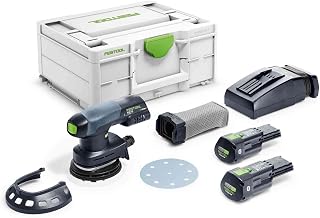
The ETS EC 150/3 EQ-Plus, for example, uses a 150 mm pad, a 3 mm sanding stroke and a brushless EC-TEC motor. Festool lists a compact 116 mm height, approximately 1.2 kg weight and features including variable speed control, a sanding-pad brake and vibration-control technology. These characteristics make the model particularly relevant when surface quality and comfortable hand sanding are more important than maximum stock removal. :contentReference[oaicite:1]{index=1}
A shorter sanding stroke generally suits fine surface refinement. If the objective is to prepare a surface for a clear coat, paint, stain or another final finish, controlled sanding can be more valuable than aggressive cutting speed.
For finish-oriented work, buyers should consider the relationship between stroke size, abrasive grit, pressure and machine speed rather than assuming that a larger or more aggressive sanding motion automatically produces a better result.
The ETS EC 150 family is available with different stroke configurations. A 3 mm version is particularly oriented toward fine sanding, while a 5 mm version provides a more balanced approach for buyers who want greater versatility in material removal without moving to a dedicated aggressive sanding machine.
Festool Canada currently lists both ETS EC 150/3 and ETS EC 150/5 variants within its Canadian sanding lineup. :contentReference[oaicite:2]{index=2}
The ROTEX range is fundamentally different from a conventional fine-finish random orbital sander. Festool describes the ROTEX system as combining multiple sanding modes for coarse sanding, fine sanding and polishing. :contentReference[oaicite:3]{index=3}
The RO 150 is particularly interesting for professionals who would otherwise need separate tools for aggressive sanding and finishing. Its 150 mm pad gives it a useful working area for larger surfaces, while the multi-mode design allows the tool to move from heavy material removal toward finer sanding and polishing.
The trade-off is that a multi-mode machine is not automatically the best option for delicate, repetitive finish sanding. If most of your work consists of final-pass sanding on cabinets or furniture, a dedicated ETS or ETS EC model may be a more logical fit.
The ROTEX RO 90 DX is worth considering when your projects include corners, narrow sections and detailed surface preparation. Its smaller format makes it more maneuverable than a 150 mm sander in confined areas, while the ROTEX concept gives it greater versatility than a basic detail sander.
Festool Canada includes the RO 90 DX in its current sanding lineup and positions ROTEX models as gear-driven eccentric sanders for aggressive material removal and finishing work. :contentReference[oaicite:4]{index=4}
A compact 125 mm sander can be easier to control when working on smaller furniture components, cabinet parts, edges and other areas where a larger 150 mm pad can feel unnecessarily bulky.
Festool Canada currently lists the ETS 125 REQ-Plus as part of its Canadian range. :contentReference[oaicite:5]{index=5}
When comparing a 125 mm model with a 150 mm model, do not judge solely by pad diameter. Consider the physical size of your workpieces, how often you sand edges, the amount of surface area covered per pass, abrasive availability and how comfortable the tool feels during prolonged use.
A conventional round-pad sander cannot efficiently reach every part of a workpiece. Inside corners, narrow frames, window details and shaped components often require a triangular sanding pad.
The Festool DTS 400 is a delta sander available in the Canadian lineup. It is a more specialized choice than an ETS random orbital, but that specialization can be valuable if your projects regularly contain areas that are difficult to reach with a circular sanding pad. :contentReference[oaicite:6]{index=6}
These names are easy to confuse, but the sanding motion matters. An orbital sander moves its pad in a controlled orbital pattern, while a random orbital sander combines orbital movement with pad rotation.
For buyers, the practical question is not which technology sounds more advanced. It is which sanding motion produces the surface quality, removal rate and control required for the project.
Sanding stroke is one of the most important specifications to understand before buying. It describes the size of the orbital movement and has a direct relationship with how aggressively the tool can work and how finely it can finish.
Stroke should never be considered independently. Abrasive grit, pressure, speed, material hardness and dust extraction all influence the final result.
Pad diameter affects both coverage and maneuverability. A 150 mm sander covers more surface per pass and is well suited to cabinet doors, tabletops, panels and larger woodworking components. A 125 mm tool can feel more natural on smaller parts and detailed projects.
Dust extraction is not simply a workshop-cleanliness feature. Fine sanding dust can interfere with visibility, settle on freshly prepared surfaces and shorten abrasive life when the sanding system becomes clogged.
Festool's sanding system is designed to work with compatible dust extractors and accessories. Its Canadian product information specifically emphasizes the relationship between sanders, abrasives, pads and dust extraction. :contentReference[oaicite:7]{index=7}
For buyers, the important consideration is system compatibility rather than simply choosing the largest extractor available. Check hose connections, extractor capacity, filter configuration and whether the extractor is appropriate for the material being sanded.
The backing pad can significantly affect sanding behaviour. Festool's MULTI-JETSTREAM 2 system is designed around airflow through the pad and abrasive to improve dust removal across the sanding surface. Festool Canada lists compatible 150 mm pads for models including the ETS 150, ETSC 2 150, ETS EC 150 and other compatible sanders. :contentReference[oaicite:8]{index=8}
Pad hardness also matters. A harder pad can behave differently on broad, flat surfaces than a softer or specialized pad intended for contours. For curved or profiled surfaces, using an inappropriate pad can make it harder to maintain consistent contact.
The sander is only one part of the result. Abrasive quality, grit, backing material and coating can influence cutting speed, clogging, scratch pattern and service life.
Festool Canada lists abrasives across a broad range of applications and grit sizes. For example, its Saphir D150 P80 abrasive is specified for heavy-duty applications and is compatible with several 150 mm Festool sanders. :contentReference[oaicite:9]{index=9}
Coarse abrasives are appropriate when removing substantial material, old coatings or damaged surfaces. They should not be treated as finishing abrasives simply because the machine can operate with them.
Medium grits are commonly useful for progressing from initial removal toward a surface that is ready for finer sanding. The correct sequence depends on the substrate and coating.
Fine abrasives are intended to reduce the visible scratch pattern and prepare a surface for subsequent finishing. Jumping excessively between grit levels can make it harder to remove the previous scratch pattern efficiently.
Cordless sanding can be attractive for installation work, remote locations and situations where a power cord becomes a nuisance. Festool's Canadian cordless sanding category emphasizes compact design, ergonomics, portability and compatibility with dust extraction. :contentReference[oaicite:10]{index=10}
Corded models remain compelling for workshop users who spend long periods sanding and want continuous operation without managing battery capacity. The best choice depends on whether your priority is uninterrupted runtime or unrestricted mobility.
Some Festool ETS EC models use brushless EC-TEC motors. Festool highlights the efficiency and reduced maintenance implications of brushless motor technology in its product information. :contentReference[oaicite:11]{index=11}
However, a brushless motor alone should not determine your purchase. A well-matched sanding stroke, pad size, ergonomic design and dust-extraction setup can matter more to the final result than motor terminology.
Precision sanding often involves long periods of repetitive movement, so physical handling should be part of the buying decision. A tool that feels difficult to control can encourage excessive downward pressure, which may reduce sanding efficiency and negatively affect the surface.
The ETS EC 150/3 is designed with a low-profile housing, balanced centre of gravity and vibration-control technology. Festool specifically positions these features around comfortable hand sanding and reduced fatigue. :contentReference[oaicite:12]{index=12}
Different materials and abrasives can require different operating speeds. Variable speed allows the operator to adapt the sanding process rather than treating every surface identically.
Lower settings can be useful when heat, delicate coatings or surface control are concerns, while higher settings may be useful when greater productivity is required. The appropriate setting depends on the tool, abrasive, substrate and manufacturer's instructions.
A sanding pad that continues spinning when the machine is lifted or set down can create unwanted marks. Festool incorporates pad-brake systems into several models. The company describes the pad brake on its ETS EC products as helping to stop pad movement quickly and reduce the risk of surface damage. :contentReference[oaicite:13]{index=13}
This feature is particularly useful when working on already-prepared surfaces where a brief unintended contact can create a visible mark.
When comparing two models, create a simple specification checklist rather than focusing on a single headline feature.
A sander should be evaluated as part of a complete working system. Before choosing a model, check the accessories you will actually need.
Festool's Canadian accessory catalogue demonstrates that pad and abrasive compatibility can vary by exact machine family. For example, Festool lists a 150 mm MULTI-JETSTREAM 2 pad for ETS 150, ETSC 2 150, ETS EC 150, LEX 150 and WTS 150/7 models. :contentReference[oaicite:14]{index=14}
Always confirm the exact model number before buying replacement accessories. Similar-looking sanders do not necessarily share every pad, interface or accessory.
Swirl marks are usually associated with technique, abrasive condition, machine movement and the sanding sequence rather than simply the brand of sander. Excessive pressure can prevent the pad from behaving as intended. Dirty or worn abrasives can also increase the likelihood of inconsistent scratches.
Keep the tool moving at a controlled pace, use appropriate extraction, avoid pressing down unnecessarily and inspect the surface between grit changes. On visible furniture surfaces, good lighting is especially useful for identifying scratches before finishing.
Cabinetmaking places unusual demands on a sander because the work combines broad panels, narrow components, edges, profiles and highly visible finished surfaces.
A 150 mm ETS or ETS EC can be a strong general-purpose option for large cabinet components, while a compact sander or delta machine can complement it for smaller or difficult areas. A ROTEX can make more sense where stock removal and restoration are frequent parts of the workflow.
Furniture work often benefits from a two-stage approach: efficient material removal followed by increasingly controlled finishing. The best tool depends on the material and the amount of shaping required.
For a furniture shop, it can be more useful to build a complementary sanding system than to search for one universal machine. A powerful multi-mode sander and a dedicated finishing random orbital can serve very different roles.
Paint preparation requires control because the goal may be to remove an existing coating, level imperfections or create an appropriate surface profile without unnecessarily removing substrate material.
Choose the sander and abrasive according to the coating and substrate. Aggressive sanding should be reserved for situations where material removal is actually required, while finer sanding can be more appropriate during final preparation.
Hardwood can require substantially more abrasive cutting than softer materials, particularly when flattening or correcting a surface. Abrasive selection becomes especially important because clogged or worn discs can dramatically reduce productivity.
For heavy removal, a ROTEX can be worth considering. For final surface preparation, a suitable ETS or ETS EC random orbital may offer better control. Festool's Canadian abrasive range includes products specifically described for heavy-duty applications on wood and other materials. :contentReference[oaicite:15]{index=15}
Canadian buyers should verify the exact North American model designation rather than relying solely on a product name found in an international listing. Check the manufacturer's Canadian product page, model number, included accessories, voltage information and retailer details before ordering.
Festool Canada maintains a dealer locator and identifies different dealer types based on product and accessory availability. :contentReference[oaicite:16]{index=16}
Warranty terms should be checked directly with the manufacturer before purchase because eligibility can depend on where the tool was purchased, registration requirements and the specific terms in force at the time of purchase.
Festool Canada's current service information states that one year of Warranty all-inclusive coverage is included with a tool purchase, with two additional years available when the tool is registered within 30 days. The Canadian warranty terms also specify conditions and exclusions, including restrictions relating to accessories, tools purchased outside Canada, misuse and improper maintenance. :contentReference[oaicite:17]{index=17}
Festool Canada also states that it guarantees spare-parts availability for at least ten years after production ends, subject to its stated service terms. :contentReference[oaicite:18]{index=18}
For users who sand professionally, a two-tool setup can be more productive than forcing one machine to perform every task. A common logic is to combine an aggressive machine for heavy removal with a dedicated random orbital for final finishing.
The advantage is specialization. The aggressive machine handles work that would otherwise overburden a finishing sander, while the precision random orbital remains optimized for controlled finishing passes.
For occasional DIY use, however, buying multiple specialized machines may not be necessary. A versatile model can be a better overall investment if the workload does not justify a larger tool collection.
Good maintenance helps preserve predictable sanding performance. Always follow the maintenance instructions supplied with the specific model.
Using excessive pressure is one of the easiest ways to make sanding less efficient. The abrasive needs to cut rather than simply rub against the surface. Effective dust extraction can also reduce loading and help maintain consistent performance.
Choose the abrasive according to the material and task, keep the extraction path clear and avoid continuing to use a disc after its cutting performance has deteriorated significantly.
When reading customer reviews or comparing retailer listings, concentrate on information that can actually help predict whether a machine fits your work. Look for repeated comments about ergonomics, dust collection, pad control, vibration, abrasive consumption, ease of use and the suitability of the tool for the stated application.
Be cautious with reviews that focus exclusively on price, packaging or first impressions. A precision sander is a workflow tool, so long-term usefulness depends heavily on how well the machine matches the user's materials and sanding process.
Festool occupies the premium professional end of the sanding market, but it is not the only brand worth considering. Depending on budget, availability and application, buyers may also compare sanding equipment from Mirka, Bosch Professional, Makita, DEWALT and Metabo.
The comparison should focus on actual workflow requirements rather than brand reputation alone. Look at pad size, sanding motion, vibration, dust extraction, accessory ecosystem, ergonomics, service support and the availability of replacement consumables in Canada.
The best precision Festool sander is the one that fits your sanding process rather than the one with the longest feature list. A cabinetmaker focused on final finishes may prioritize a compact ETS EC. A renovation professional who regularly removes coatings may benefit more from a ROTEX. Someone working around corners may need a DTS, while a highly mobile worker may prefer a cordless solution.
Before buying, compare the exact model number, sanding stroke, pad diameter, included accessories, compatible abrasives, dust-extraction requirements and current Canadian retailer pricing. Also verify current warranty and service conditions directly with Festool Canada, particularly if purchasing through a marketplace or cross-border seller.
For fine finishing, compare the ETS and ETS EC random orbital families. Models with shorter sanding strokes are particularly relevant when controlled surface refinement is the priority. The specific choice should depend on pad size, ergonomics, required coverage and the materials you normally sand.
Neither is universally better. ROTEX models are designed for more versatile and aggressive sanding, including coarse sanding, fine sanding and polishing. ETS and ETS EC models are better suited to users whose primary requirement is controlled random orbital finishing.
A 125 mm model is attractive for smaller components and maneuverability, while a 150 mm model provides greater coverage and is well suited to larger panels and furniture surfaces. Consider the typical size of your workpieces before choosing.
Festool designs its sanding system around compatible dust extraction, hoses, pads and abrasives. Always verify compatibility for the exact sander and extractor combination before purchasing.
Exact compatibility depends on the sander, pad and abrasive interface. Festool offers an extensive range of abrasives designed for its sanding system, but buyers should check the specific manufacturer's compatibility information before substituting accessories.
For cabinetmaking, ETS and ETS EC random orbital sanders are strong candidates for general finishing work, while a compact or delta model can complement them for smaller details. A ROTEX can be valuable where aggressive material removal is also part of the workflow.
A ROTEX model is worth comparing when substantial material removal is required. Its gear-driven sanding modes are intended for aggressive sanding as well as finer work. Select the abrasive according to the coating and substrate.
They can make sense for mobile work, installations and locations where a cord is inconvenient. Workshop users performing extended sanding sessions may still prefer a corded configuration depending on their workflow.
Very important. Pad diameter, hardness, contour compatibility and dust-extraction design can all influence sanding behaviour. Check the exact pad specification for the model you are buying.
There is no universal replacement interval. Inspect the pad for wear, deformation, loss of attachment performance or damage and follow the manufacturer's maintenance guidance.
No. The correct speed depends on the material, abrasive, sanding stage and machine. Excessive speed can be inappropriate for some applications, while insufficient speed may reduce productivity. Follow the manufacturer's guidance and adjust the process to the workpiece.
No. Different sanding motions and pad formats are optimized for different jobs. A versatile ROTEX can cover several functions, while ETS, ETS EC, DTS and specialized cordless or drywall models address more specific workflows.
Compare the complete configuration rather than the headline price. Check the exact model, included pad, Systainer or storage configuration, abrasive accessories and other included components. Then compare current prices from reputable Canadian retailers.
Use caution with cross-border purchases. Festool Canada's published warranty terms contain specific provisions concerning tools purchased outside Canada, so verify the current terms before purchasing an imported model. :contentReference[oaicite:19]{index=19}
There is no single specification that matters most for every user. Pad size, sanding stroke, ergonomics, dust extraction, speed control and the type of sanding motion should all be considered together.
Festool's Canadian sanding range covers a wide spectrum, from compact precision finishing machines to multi-mode ROTEX sanders and specialized detail equipment. The smartest purchase is determined by the sanding stage, surface size, material, finish requirements and working environment.
For precision finishing, begin your comparison with the ETS and ETS EC families. For heavier and more versatile sanding, investigate ROTEX. For corners and detailed areas, consider the DTS category. Then build the rest of the system around suitable abrasives, backing pads and dust extraction.
Because model configurations, retailer stock, pricing and service terms can change, verify the exact product specifications and current Canadian purchasing conditions immediately before placing an order. This approach provides a more reliable basis for comparing the best Festool sanders available to Canadian buyers in 2026.