

♥ Wishlist
Compare 20 Festool Circular Saws in Canada products in Canada. Reviews, ratings, pros, cons and buying advice updated for October 2026.


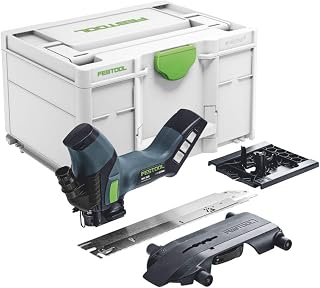

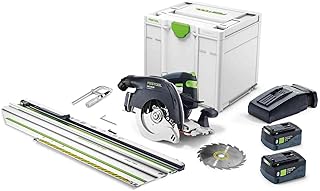
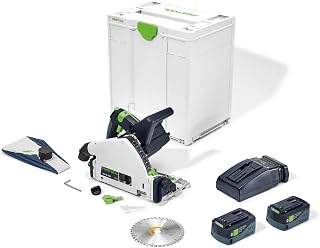


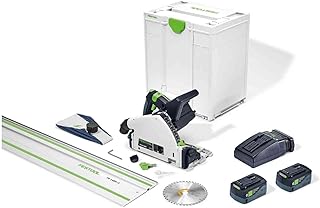
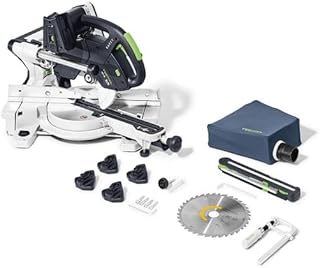
Choosing a precision Festool circular saw is less about selecting the most expensive tool and more about matching the saw architecture, cutting depth, power source, guide system, blade type and intended material to the work you actually perform. Festool's range includes track saws, cordless carpentry saws and specialised cutting systems, so two tools that both look like circular saws can serve very different purposes.
For Canadian buyers, the most useful comparison starts with the type of cut required. A plunge-cut or track saw is generally the stronger choice when straight, repeatable cuts in sheet goods are the priority. A compact cordless carpentry saw can make more sense for framing, cross-cutting and mobile jobsite work where portability matters more than maximum plunge-cut capability. The right choice should therefore be based on workflow rather than brand recognition alone.
Festool track saws are designed around guided cutting. The saw travels along a compatible guide rail, helping the operator produce long, straight cuts without relying solely on a conventional circular-saw base or straightedge. This approach is particularly useful for plywood, MDF, panels, doors, countertops and other sheet materials where a clean, controlled edge matters.
The Festool TS 60 K is a particularly relevant model for buyers seeking substantial cutting capacity in a precision-oriented system. Festool Canada specifies a cutting depth of up to 62 mm and positions the TS 60 K as a system-oriented saw capable of ripping, cross-cutting and bevel or angle work. The manufacturer also highlights its Kickback Stop system and compatibility with the wider Festool guide-rail ecosystem.
A cordless carpentry saw prioritises mobility. The Festool HKC 55 family is designed for cross-cutting and ripping at the jobsite and can be paired with FSK guide rails for repeated angled cuts. It can also work with Festool FS guide rails, making it more versatile than a conventional freehand circular saw when controlled, repeatable cuts are required.
The HKC 55 K represents a newer cordless configuration with an 18 V battery platform, a 160 mm blade and a stated no-load speed of 5,200 RPM. Festool Canada lists a 45-degree cutting-depth specification of up to 42 mm depending on the configuration and cutting direction.
For buyers working extensively with veneered panels, laminates or cabinet components, a scoring track saw can be worth considering. The purpose is not simply to cut through material, but to improve the quality of the visible surface by controlling the cut at the material face.
Festool's Canadian range includes the TSV 60 K scoring track saw. This places it in a different category from a conventional circular saw: its value comes from specialised panel-processing capability rather than simply maximum cutting speed.
Some users do not need the cutting capacity of a full-size track saw. Compact systems can be advantageous where portability, storage and manoeuvrability are more important than cutting thick stock. When comparing a compact saw with a larger model, look beyond blade diameter and consider actual maximum depth, guide-rail compatibility, dust extraction, battery requirements and the size of material you routinely process.
Blade diameter directly affects potential cutting depth, but it should never be treated as a complete measure of saw performance. A larger blade can support deeper cuts, while a smaller blade may provide a more compact and manageable package for mobile work.
One important compatibility detail is that Festool specifies the TS 60 K for 168 mm blades rather than the 160 mm blades used by several other saws. Festool's Canadian blade guidance specifically states that 160 mm blades should not be used on the TS 60 K.
Cutting depth should be compared at the angles you actually use. A saw may have a useful maximum depth at 90 degrees but substantially less capacity when set for a 45-degree bevel. If you frequently cut thick plywood, lumber or laminated panels, compare both straight and bevel capacities before deciding.
For example, the HKC 55 specification lists a 45-degree cutting depth of 42 mm or 38 mm depending on the applicable measurement/configuration.
No-load RPM indicates how quickly the blade spins without cutting material. It is useful for comparing machines, but higher RPM does not automatically mean a better saw. Cutting performance also depends on motor design, blade geometry, tooth count, kerf width, material hardness and the operator's feed rate.
The HKC 55 is listed at 4,500 RPM in one current configuration, while the HKC 55 K is listed at 5,200 RPM. These figures illustrate why buyers should compare exact model generations and configurations rather than assuming that every HKC 55 variant has identical specifications.
For cordless models, battery voltage provides only part of the picture. Runtime depends on the battery's capacity, cutting material, blade condition, feed pressure and operating conditions. A larger-capacity battery may extend working time but also increases carried weight.
Buyers should also determine whether the package includes batteries and a charger or is sold as a bare-tool configuration. Festool Canada lists both basic and battery-inclusive HKC 55 configurations, so package contents need to be checked rather than assumed.
Weight matters most when the saw is used away from a bench, when making repeated overhead cuts or when moving between work areas. The HKC 55 is listed at 3.6 kg before considering the additional load of accessories or different battery configurations.
A heavier saw is not necessarily inferior. For guided sheet cutting, additional mass can feel different from the same weight used for repeated freehand cuts. Consider how the saw will be supported, transported and positioned during a normal workday.
Dust management is an important part of precision woodworking. A clean cut is easier to inspect when dust is controlled, and indoor renovation work can benefit substantially from an appropriate dust-extraction setup.
Festool's cordless HKC 55 specifications include dust-extraction connections in 27 mm and 36 mm sizes.
For precision cutting, the guide rail is not merely an accessory. It becomes part of the cutting system. A high-quality saw paired with an unsuitable or poorly positioned guide system can produce disappointing results, while a properly configured rail can make repeatable straight cuts considerably easier.
Choose a rail long enough for the longest cuts you commonly make, while considering storage and transport. Very long rails can be useful for full-sheet materials but may be inconvenient in a small workshop or vehicle.
When longer cutting distances are required, compatible rails can be joined using appropriate connectors. The joint needs to remain accurately aligned; otherwise, the saw can encounter an unwanted change in direction as it crosses the connection.
Before cutting, verify that the rail is correctly positioned relative to the intended cut line. Account for the saw's guide offset and the material that will be removed by the blade. For high-value panels or visible finished surfaces, measure and mark carefully rather than relying on an approximate rail position.
Festool's system approach is particularly useful for buyers who perform different types of work. The HKC 55 can be used with FSK guide rails for repeated cross-cuts and angled cuts and is also compatible with existing FS guide rails.
This distinction is important because guide rails are not universally interchangeable simply because they look similar. Always confirm compatibility for the exact saw, rail and accessory combination before purchasing.
Cabinetmakers typically prioritise accuracy, clean edges, repeatability and compatibility with sheet materials. A track saw is often more relevant than a general-purpose freehand circular saw because the guide system provides controlled straight cuts across large panels.
For visible cabinet components, blade selection becomes especially important. Festool offers blades designed for different materials and cutting objectives, including fine-cut, universal, standard, laminate/HPL and aluminium/plastic configurations.
Finish carpentry places a premium on clean cuts and predictable results. Baseboard, casing, built-ins, panels and installation work can involve frequent transitions between workshop and jobsite conditions. A compact cordless saw may be attractive for mobility, while a track saw can be preferable when long, perfectly straight panel cuts are required.
Renovation projects often require a combination of demolition, trimming, fitting and finish work. A cordless saw reduces dependence on power cords and can be convenient when working throughout an occupied building.
However, cordless convenience should not be confused with universal suitability. If the majority of the work involves long sheet-goods cuts, the guide-rail ecosystem may be more important than simply having a cordless motor.
Framing applications can favour a mobile carpentry saw because cuts are often made directly at the work area. In this environment, fast setup, manageable weight, battery availability and sufficient depth can matter more than the ultra-clean finish associated with cabinetmaking.
Flooring and panel installation can involve repeated straight cuts, trimming and material-specific blade requirements. Festool's Canadian flooring range includes both the TSC 55 K cordless track saw and HKC 55 cordless carpentry saw, illustrating how different saw architectures can address overlapping but distinct workflows.
The saw is only half of the cutting equation. Blade geometry determines how aggressively the tool cuts, how the material surface is treated and how suitable the setup is for a particular application.
A fine-cut blade is appropriate when surface quality and reduced tear-out are priorities. These blades generally trade some cutting speed for a more controlled finish, making them useful for visible panels and finish-oriented work.
Universal blades are intended to cover a wider range of ordinary wood-cutting tasks. Festool describes its WOOD UNIVERSAL blade as suitable for both rip and cross cuts in wood and panel materials.
Standard blades can be a practical choice for general-purpose work where maximum finish quality is not always required. Festool's Canadian specifications show an 18-tooth WOOD STANDARD blade with a 160 mm diameter and 1.8 mm cutting width for compatible saws such as the HK 55 and HKC 55.
Laminate and high-pressure laminate can behave differently from ordinary solid wood. A dedicated blade can help control the cut and reduce the likelihood of poor surface results. Festool offers dedicated laminate/HPL blades for compatible saws and identifies them for coated panels, laminate panels, melamine-based panels and solid-surface materials.
Do not assume that a wood blade is automatically the correct choice for non-ferrous metals or hard plastics. Festool provides dedicated aluminium/plastics blades for compatible models and applications including aluminium panels, profiles, composite panels, acrylic glass and hard plastics.
Cutting direction changes the requirements of the blade. For solid wood, Festool's blade guidance recommends WOOD RIP CUT blades for longitudinal cuts with the grain and WOOD FINE CUT blades for cross cuts against the grain.
This is one of the easiest areas for buyers to overlook. A technically compatible blade is not necessarily the best blade for every task.
Kerf is the width of material removed by the blade. A thinner kerf can reduce the amount of material removed and may lower cutting resistance, but it must be compatible with the saw's design and safety components.
Festool's Canadian blade information shows that certain compatible 160 mm blades use a 1.8 mm cutting width, while the manufacturer also provides model-specific compatibility guidance. The correct blade must therefore be selected according to the exact saw rather than simply by diameter.
A useful bevel mechanism should be easy to set accurately and should remain secure once adjusted. If a project involves repeated 45-degree or compound cuts, look for clear adjustment markings and a stable locking mechanism.
Depth should be set according to the material rather than automatically using the maximum available setting. A controlled depth can reduce unnecessary blade exposure and can improve the consistency of plunge work.
Safety systems can provide additional protection but should never replace correct operating technique. Festool highlights the Kickback Stop on the TS 60 K as a feature designed to help protect the workpiece and reduce the risk associated with kickback.
Users should still follow the operating instructions, maintain stable support for the workpiece, use the correct blade and keep hands clear of the cutting path.
For freehand work, the ability to see the intended cut line matters. For guided work, visibility still helps with setup and positioning. Before purchasing, consider whether the saw's body, dust port or other components interfere with your normal sight line.
Good extraction can improve visibility around the cut, reduce airborne dust and make indoor woodworking more manageable. The benefit becomes particularly relevant when working with MDF, composite boards and other materials that generate substantial fine dust.
RPM is easy to compare, but it does not describe the entire cutting system. A lower-speed saw with the correct blade and guide setup can be more useful for a specific application than a faster machine configured incorrectly.
Before committing to a saw, check the blades available for that model. Confirm diameter, arbor specification, kerf and manufacturer-approved compatibility.
Festool's ecosystem contains different rail types and saw families. Compatibility should be checked for the exact model and intended application.
A cordless saw is part of a battery ecosystem. If you do not already own compatible batteries, include batteries and charging equipment when comparing the total purchase requirement.
Two listings with the same saw name may contain different combinations of batteries, chargers, blades, rails, storage cases and accessories. Compare the complete contents of each package rather than comparing the headline model name alone.
Maximum cutting depth is valuable only when you need it. For repeated small cuts, portability and handling can be more important than maximum capacity.
The reverse mistake is equally common. If your primary workload consists of full sheets, long rips and cabinet panels, a purpose-built track saw can be more appropriate than a compact freehand machine.
Use the following checklist when comparing models, packages or retailer listings:
Festool should not be evaluated in isolation. Buyers comparing premium power tools may also encounter brands such as Bosch, Makita, DEWALT, Milwaukee and Mafell. The useful comparison is not simply which logo is considered better; it is which system fits the user's workflow.
Compare guide-rail ecosystems, battery platforms, saw dimensions, cutting capacity, included accessories and local Canadian support options. A buyer already invested in one battery family may place greater value on platform compatibility than on small differences in saw specifications.
DEWALT offers a broad professional cordless ecosystem, so cordless-platform compatibility can be an important differentiator. Compare the actual saw configuration and accessories rather than assuming that all cordless circular saws provide the same level of guided precision.
Milwaukee's cordless ecosystem can be attractive to users who already use its battery platform. For a precision-focused woodworking workflow, however, compare the complete guide-rail and accessory system as well as motor performance.
Bosch offers professional saws across multiple categories. When comparing models, focus on the specific cutting application, rail compatibility, blade availability and handling rather than treating the brands as direct equivalents across every product category.
Mafell is another premium woodworking brand that may appear in precision-saw comparisons. This is particularly relevant for professional users whose priorities include precision, specialised woodworking applications and integrated cutting systems. The comparison should be made at the individual model level because specifications and intended applications vary considerably.
Canadian buyers should evaluate more than the advertised tool price. The actual cost of ownership can include guide rails, connectors, blades, batteries, chargers, dust-extraction accessories, storage and replacement components.
Product names can differ by market and package. Always verify the Canadian model number, voltage, included accessories and manufacturer specifications before ordering.
Canadian construction and renovation work can involve significant temperature changes. Cordless tools should be used and stored according to the manufacturer's battery and tool instructions. Avoid treating cold-weather operation as identical to indoor workshop conditions.
If the saw regularly travels between workshop and jobsite, storage becomes part of the buying decision. A compact setup can be more practical than a larger system if it reduces setup time and makes the equipment easier to protect and organise.
Resin, adhesive residue and material buildup can affect cutting behaviour. Clean blades according to the manufacturer's instructions and replace or professionally resharpen them when appropriate.
Check for damaged, missing or excessively worn teeth. Do not continue using a blade simply because it still spins. The blade is a critical cutting and safety component.
Dust and debris on a guide rail can affect smooth movement and positioning. Regularly inspect the rail and its contact surfaces before precision work.
A loose or obstructed extraction connection can reduce dust-control effectiveness. Inspect hoses, ports and adapters periodically.
For cordless models, follow the battery manufacturer's charging, storage and operating instructions. Avoid storing batteries in unsuitable conditions or using visibly damaged battery packs.
Precision equipment depends on compatibility. Replacement blades, guide components and accessories should be selected for the exact model rather than based solely on appearance or approximate dimensions.
A premium track saw can make sense when precision and repeatability have a measurable effect on the finished project. It becomes particularly compelling for users who routinely cut sheet goods, install finished panels, build cabinets, perform finish carpentry or need consistent straight cuts away from a stationary table saw.
The value proposition is weaker if the majority of work consists of rough construction cuts where ultimate edge quality and guided accuracy provide little practical benefit. In those circumstances, a simpler circular saw may provide sufficient functionality.
A cordless carpentry saw can be the more practical option when work moves constantly around a jobsite. The HKC 55 system is designed for this type of workflow, combining cordless operation with optional guided cutting through Festool's guide systems.
It can be especially useful when cuts must be made close to the installation location rather than in a dedicated workshop. The trade-off is that buyers must consider battery logistics and whether the saw's cutting capacity is sufficient for their material thickness.
The strongest setup is rarely just the saw. It is a combination of the saw, correct blade, guide rail, workpiece support, extraction system, accessories and operating technique.
If your priority is long, straight and repeatable cuts in panels, a track saw deserves serious consideration. If your work is primarily framing and mobile construction cutting, a cordless carpentry saw may be more appropriate.
Choose cordless when mobility and jobsite convenience justify the battery ecosystem. If the saw will remain in a workshop with reliable mains power, a corded system can eliminate battery-management considerations.
For visible cabinet panels, doors, furniture components and finish carpentry, blade selection and guided cutting can have a major effect on the finished result. For rough framing, the requirements may be less demanding.
If you already have Festool guide rails, batteries or extraction equipment, compatibility may substantially influence which model provides the best overall value.
If your work includes laminate, HPL, aluminium, plastics or other non-standard materials, investigate compatible application-specific blades before purchasing the saw.
There is no universal best model. A track saw such as the TS 60 K is aimed at precision guided cutting, while an HKC 55 is oriented toward mobile carpentry work with optional guide-rail use. The correct choice depends on the material, cut type, required depth and working environment.
No. Festool's Canadian blade guidance states that the TS 60 K is designed exclusively for 168 mm saw blades and that 160 mm blades should not be used on it.
Yes. Festool describes the HKC 55 as compatible with FSK guide rails and existing FS guide rails. The FSK system is particularly useful for repeated cross-cuts and angled cuts.
Festool's Canadian guidance recommends choosing according to cutting direction: WOOD RIP CUT for longitudinal cuts with the grain and WOOD FINE CUT for cross cuts against the grain.
A general-purpose blade can cover many ordinary wood applications, but specialised materials can benefit from dedicated blades. Festool offers separate blade families for wood, laminate/HPL, aluminium/plastics and other applications.
Festool's Canadian circular-saw blade guidance states that its saw blades can be resharpened up to ten times as usual. The practical decision should still account for blade condition and whether professional resharpening is economical for the particular blade.
That depends on the application. Festool's cordless HKC 55 and HKC 55 K are designed for professional-style jobsite cutting, but buyers should compare the exact model, battery configuration, material thickness and cutting requirements rather than treating cordless and corded tools as interchangeable in every application.
Compare what you already own. A basic kit can make sense when you already have compatible batteries, chargers and accessories. A complete set may be more convenient when starting a new platform, but its value depends on whether every included component will actually be used.
Yes, particularly when the model, guide system and blade are matched to sheet-goods and furniture-making requirements. Festool positions its saw systems for furniture and cabinetmaking workflows where accuracy and consistency are important.
The best precision Festool circular saw is the one that fits the complete workflow rather than the one with the most impressive specification on paper. Start by identifying the materials you cut most frequently, the maximum thickness you encounter, whether your work is primarily in a workshop or on a jobsite, and how important guided accuracy is.
For long, controlled sheet-goods cuts, investigate Festool's track-saw systems. For mobile carpentry and repeated jobsite cuts, compare the HKC 55 family and its guide-rail options. For specialised panel work, investigate the appropriate scoring and blade systems. Festool's Canadian range demonstrates how much the overall system matters: saw, blade, guide rail, extraction and accessories all contribute to the final cutting workflow.
Before purchasing in Canada, compare the exact model number, current package contents, compatible blades, guide-rail requirements, battery requirements and cutting specifications. Then compare current retailer pricing and verified customer feedback for the exact configuration you intend to buy. This approach is more reliable than choosing solely from a headline ranking because it connects the purchase to the actual work the saw needs to perform.