

♥ Wishlist
Compare 26 Makita Reciprocating Saw products in Canada. Reviews, ratings, pros, cons and buying advice updated for October 2026.


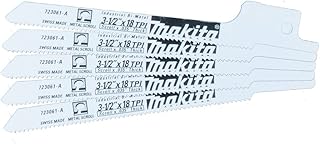


A Makita reciprocating saw can be a highly versatile addition to a Canadian workshop, renovation kit, construction setup or professional tool collection. The right model can handle demanding cutting jobs across wood, metal, plastic, demolition materials and other suitable applications, but choosing between cordless and corded platforms, different stroke lengths, variable-speed controls and battery systems requires more than simply selecting the most powerful-looking tool.
This buying guide is designed to help Canadian shoppers compare Makita reciprocating saw options according to the characteristics that matter in real purchasing decisions. Rather than treating one specification as universally superior, consider the type of material you cut, the frequency of use, access to electrical power, preferred battery platform, vibration control, tool size, blade compatibility and the total cost of ownership.
Makita is a well-established power-tool brand with extensive cordless and corded equipment. Its reciprocating saw range can include compact models for controlled cutting as well as higher-performance tools intended for heavier construction and demolition work. Exact specifications, included accessories, battery packages and model availability can vary by Canadian retailer, so shoppers should verify the current manufacturer's specifications and retailer listing before ordering.
The phrase "precision reciprocating saw" needs some context. A reciprocating saw is fundamentally a freehand cutting tool rather than a guided saw designed for the fine tolerances associated with a table saw, mitre saw or track saw. Precision in this category generally means better control, predictable blade movement, manageable vibration, useful speed control, good sightlines and the ability to make a controlled cut without excessive effort.
For trimming, plumbing work, electrical installations, renovation projects and selective demolition, controllability can be more valuable than maximum cutting speed. A tool that is easier to position and manipulate may produce a cleaner result because the operator can maintain the intended cutting path more consistently.
Before comparing individual models, establish what you actually expect the saw to do. A homeowner cutting branches occasionally has different requirements from a framing contractor, plumber, electrician or demolition professional. The best Makita reciprocating saw for one user can therefore be a poor choice for another.
Cordless reciprocating saws are particularly convenient for renovation and construction environments where an electrical outlet may not be close to the work area. They eliminate the need to manage an extension cord and can make movement around a jobsite considerably easier.
The main consideration is the battery ecosystem. If you already own compatible Makita batteries and a charger, a bare-tool model may provide a substantially different overall value proposition from purchasing a complete kit. Conversely, someone entering the battery platform for the first time needs to account for the cost and practicality of batteries and charging equipment.
Corded models can make sense when continuous operation is more important than mobility. They can be useful in workshops or fixed work areas where dependable mains power is readily available. There is no battery-runtime limitation, although the cord introduces a different set of restrictions concerning reach, routing and workspace management.
Battery capacity is only one part of cordless-saw performance. Cutting load, material thickness, blade selection, operator technique, battery condition and ambient temperature can all influence practical runtime. A larger-capacity battery may extend working time but can also increase the weight of the tool.
For Canadian users who already have a compatible Makita cordless collection, platform compatibility can be one of the strongest reasons to select a particular model. The ability to use existing batteries and chargers can simplify ownership and reduce the need for an additional charging ecosystem.
Always confirm whether a listing is for a bare tool or includes batteries. Retail listings can use similar product names while offering different package configurations.
Stroke length describes how far the blade travels during each reciprocating cycle. It is an important specification because it influences how much of the blade's cutting edge moves through the material during operation.
A longer stroke can support fast material removal in applications where aggressive cutting is desirable. A shorter stroke can be preferable when compact movement and greater control are more important. Stroke length should therefore be considered alongside speed, blade type, motor performance and the materials being cut.
Do not automatically assume that the longest stroke is the best choice. For controlled renovation cuts, trimming work or situations involving delicate surrounding materials, the ability to regulate the tool can matter more than maximum stroke distance.
Strokes per minute, commonly abbreviated as SPM, indicates the reciprocating rate of the blade. Higher speed can be useful for certain cutting applications, but speed must be matched to the material and blade.
Wood-cutting tasks may tolerate a different operating speed from metal cutting. Using excessive speed for an unsuitable material can increase heat generation, blade wear or loss of control. A variable-speed trigger gives the operator more ability to adjust cutting behaviour rather than relying on a single fixed operating rate.
A variable-speed trigger is one of the most useful features for users who want greater control. Instead of immediately operating at maximum speed, the operator can gradually increase blade movement according to the cutting situation.
This can be particularly useful when starting a cut, aligning the blade with a marked line, entering a material carefully or working near components that should not be damaged. It can also help users adapt the saw to different blade and material combinations.
Some Makita cordless reciprocating saws use brushless motor technology. Brushless motors eliminate the conventional motor brushes used in brushed designs and can provide advantages in efficiency, durability and electronic control.
For frequent professional use, brushless construction can be an appealing specification because the tool is intended to operate as part of a demanding cordless platform. However, brushless technology should not be considered in isolation. A complete purchase decision should also consider cutting performance, ergonomics, battery compatibility, size, vibration behaviour, warranty terms and current retailer pricing.
Reciprocating saws naturally generate substantial movement because the blade travels rapidly backward and forward. Effective vibration management can make a major difference to comfort and control, especially when the tool is used repeatedly throughout a working day.
When comparing models, look for manufacturer-described vibration-reduction features and consider the overall handle design. Grip shape, tool balance, trigger placement and body geometry all contribute to how the saw feels during operation.
Remember that vibration figures published by manufacturers are measured under defined conditions and may not perfectly represent every real-world cutting situation. Blade selection, material, cutting technique and operator posture can all change perceived vibration.
The saw itself is only half of the cutting system. Blade selection can have a substantial effect on cutting speed, finish, durability and suitability for a particular material.
Wood blades are generally designed with tooth configurations intended to remove wood efficiently. Coarser teeth can be useful when fast material removal is the priority, while finer configurations can provide more controlled cutting in appropriate applications.
For renovation work, a blade may need to pass through more than plain timber. Nails, screws, brackets and other embedded materials can change the requirements considerably. A blade specifically suited to mixed demolition conditions may be preferable to a blade intended only for clean wood.
Metal requires a blade designed for the material. Metal-cutting blades generally use finer tooth configurations than aggressive wood blades, and the correct blade choice depends on the type and thickness of the metal.
Cutting steel pipe, sheet metal, structural components and thin tubing can place very different demands on the blade. The correct blade can reduce unnecessary heat and improve cutting behaviour.
Bi-metal construction is common in professional reciprocating-saw blades because different materials can be combined to balance flexibility, tooth durability and resistance to breakage. These blades can be useful for demanding renovation and demolition applications where the material is not always predictable.
Specialised blades are available for applications such as pruning, thick wood, metal, plastics and mixed-material demolition. Using a specialty blade where appropriate can often make a larger practical difference than changing between two otherwise similar saw models.
A tool-free blade-change mechanism can save time when moving between wood, metal and demolition blades. It is especially convenient for professionals who frequently change cutting tasks during the same job.
When inspecting a product listing, verify the exact blade-change system and whether the mechanism is compatible with the blades you intend to use. Convenience features are most valuable when they also provide secure blade retention.
The shoe helps support the saw against the workpiece and can improve control as the blade enters the material. A shoe that can be adjusted or positioned for the application may offer additional versatility.
A stable shoe can also help the operator control the angle and pressure applied to the saw. Avoid relying on excessive force; let the appropriate blade and cutting action do the work.
An integrated LED can improve visibility around the cutting area, especially inside cabinets, beneath sinks, between framing members or in other poorly illuminated spaces. It should be considered a useful convenience rather than a replacement for adequate task lighting.
Grip design becomes increasingly important as cutting duration increases. Look for a handle that allows the trigger to be controlled without excessive hand repositioning and provides a secure grip when wearing appropriate work gloves.
A compact reciprocating saw can be advantageous in confined areas. Plumbers, electricians, remodelers and maintenance workers may encounter situations where a long tool body makes positioning difficult.
However, compactness can involve trade-offs. A smaller model may be optimised for accessibility and control rather than the highest possible heavy-duty cutting performance. Choose according to the applications you perform most often.
For renovation work, versatility is usually more important than extreme specifications. A homeowner may need to cut timber one day, remove old pipework another day and trim framing or dismantle cabinetry later.
A cordless model with variable speed, convenient blade changes and manageable ergonomics can be particularly practical. A suitable mixed-material blade can also be valuable when existing construction contains nails, screws and other fasteners.
Demolition places heavy demands on both the saw and the blade. The operator may encounter wood, nails, metal, plastics and other materials within the same structure.
For demolition, consider a robust tool body, effective vibration management, suitable stroke characteristics, battery capacity and blades designed for aggressive mixed-material cutting. Protective equipment and careful assessment of the workpiece are equally important.
Plumbers frequently work in confined spaces where access and tool size are significant considerations. A reciprocating saw can be useful for cutting pipe and removing old fixtures, but blade selection should correspond to the specific material.
Compact ergonomics, good trigger control and cordless mobility can be especially valuable when working beneath sinks, between framing or around existing services.
Electricians can use reciprocating saws for selected construction and renovation tasks, such as modifying framing or cutting access openings where appropriate. Precision and control can be more important than maximum cutting speed when working around existing installations.
Always identify and isolate potentially hazardous services before cutting. A reciprocating saw should never be treated as a substitute for verifying what is behind a surface.
For carpentry, the reciprocating saw is usually a complementary tool rather than a replacement for tools designed for straight, highly accurate cuts. It is particularly useful for rough cutting, trimming, alteration and demolition-related tasks.
When a clean, repeatable dimension is critical, a mitre saw, circular saw, track saw or another purpose-built cutting tool may be more appropriate.
Some reciprocating saws can be paired with pruning blades for suitable branches and outdoor cutting applications. Users should confirm the saw and blade manufacturer's intended application before using a tool for pruning.
For occasional outdoor work, cordless operation can be particularly convenient because it removes the need to route an extension cable through a garden or around landscaping.
When comparing a shortlist, avoid judging models solely by price or one headline specification. Instead, evaluate each model against the same set of criteria.
More aggressive cutting performance is not always more useful. If your primary requirement is controlled work in confined spaces, a lighter or more compact saw may be easier to use effectively.
A cordless tool can look inexpensive when listed as a bare tool, but the total purchase requirement changes if you do not already own the necessary battery and charger. Compare the complete system cost rather than only the advertised tool price.
A high-quality saw fitted with an inappropriate blade may perform poorly, while a correctly selected blade can significantly improve the cutting experience. Include blade cost and application suitability in the comparison.
Weight becomes especially important during overhead work, ladder work, repetitive trimming and extended demolition. A specification sheet may list the tool weight without accessories, so verify how the retailer or manufacturer defines the stated weight.
Makita offers multiple cordless tool systems and battery configurations. Never assume compatibility based only on the Makita name or the physical appearance of a battery. Confirm the battery platform specified for the exact reciprocating saw model.
Ratings can help identify purchasing patterns, but they should not replace technical comparison. A user who primarily cuts small pieces of wood may evaluate a tool differently from a contractor cutting metal and demolition materials every day.
When reading customer feedback, look for comments that match your intended application. Pay particular attention to recurring observations about battery life, ergonomics, blade changing, vibration and tool balance rather than focusing solely on the overall star rating.
Makita is not the only manufacturer worth considering. Canadian shoppers may also encounter reciprocating saws from brands such as DeWalt, Milwaukee, Bosch, Metabo HPT and Ryobi. The strongest choice depends heavily on the cordless platform and type of work.
Both brands offer broad cordless tool ecosystems. If you already own compatible batteries from one platform, staying within that ecosystem can simplify ownership. Compare exact model specifications rather than assuming one brand is universally better.
Milwaukee is particularly prominent in professional cordless tools and offers reciprocating saws across its battery platforms. When comparing Milwaukee and Makita, examine the specific model's size, performance characteristics, battery requirements, ergonomics and intended application.
Bosch offers power tools aimed at both professional and serious DIY users. Bosch may be worth considering where a particular feature set or existing battery ecosystem better matches the user's requirements.
Ryobi is widely associated with consumer and DIY-oriented cordless tools. For occasional household use, the overall platform cost and available accessories can be important considerations. For professional applications, compare the specific saw's construction, duty requirements and support arrangements rather than relying on brand positioning alone.
When purchasing one cordless tool, shoppers often focus on that tool alone. For users who expect to purchase additional cordless equipment, the battery platform can become one of the most important long-term decisions.
A compatible battery ecosystem can allow one set of batteries and chargers to support multiple tools. This can reduce duplicate charging equipment and make it easier to maintain a consistent workflow.
For a Canadian homeowner, the ecosystem might eventually include a drill, impact driver, circular saw, grinder, reciprocating saw, oscillating multi-tool and outdoor equipment. For a contractor, the ecosystem may extend across many job-specific tools.
Therefore, if you are choosing between two otherwise suitable reciprocating saws, consider which platform better fits the tools you already own or realistically expect to purchase.
Even the best-equipped reciprocating saw requires good technique. Start by marking the intended cutting area clearly and checking the workpiece before beginning. Position the shoe securely where appropriate and allow the blade to perform the cutting rather than forcing the tool aggressively.
Reciprocating saws are powerful cutting tools and should be treated accordingly. Read the manufacturer's instructions for the specific model before operation and use appropriate protective equipment for the material and environment.
Eye protection is particularly important because cutting can produce chips, dust and fragments. Hearing protection can also be appropriate because power-tool operation may create substantial noise. Gloves should be selected carefully for the work being performed and should not interfere with safe tool control.
Before cutting into walls, floors, ceilings or enclosed construction assemblies, identify potential electrical cables, plumbing, gas lines and other concealed services. When uncertainty exists, stop and investigate rather than relying on assumptions.
Keep hands away from the blade path and never attempt to guide the blade directly by hand. Disconnect or remove the battery, or unplug the tool as applicable, before performing maintenance or blade replacement according to the manufacturer's instructions.
Routine care can help preserve tool performance and identify problems before they become more serious. Maintenance requirements vary by model, so the model-specific Makita instructions should always take priority.
Dust and debris can accumulate around the tool housing, blade area and ventilation openings. Remove accumulated debris using a method appropriate for the manufacturer's instructions. Avoid introducing moisture or cleaning products into areas that could damage electrical components.
A dull or damaged blade can make the saw work harder and may encourage the operator to apply excessive force. Replace blades when they are worn, damaged or no longer appropriate for the cutting task.
The blade-retention mechanism should be kept clean and inspected regularly. If the blade does not seat or lock correctly according to the manufacturer's instructions, discontinue use until the problem has been addressed.
Store and charge compatible batteries according to the manufacturer's recommendations. Avoid using visibly damaged battery packs. Keep battery contacts and surrounding areas clean and follow the charging and storage guidance provided for the specific battery system.
For corded reciprocating saws, inspect the power cord and plug periodically for damage. Do not use a damaged cord, and follow applicable manufacturer guidance for service or replacement.
There is no single price point that represents good value for every Canadian buyer. Pricing can change according to the model, retailer, battery package, promotions and availability. Instead of selecting a fixed budget solely from the tool category, determine which specifications you actually need.
For occasional DIY work, paying substantially more for features you will rarely use may not provide meaningful value. For frequent professional use, investing in a more suitable model, compatible batteries and quality blades can make more sense because ergonomics, durability and workflow efficiency become increasingly important.
When comparing prices, check whether each listing represents a bare tool, tool-only package, battery kit or larger bundle. A seemingly cheaper listing can require additional purchases before it is ready for use.
Product listings can contain numerous technical terms, and specifications are most useful when interpreted together.
If you regularly work away from outlets, move around a construction site or perform outdoor cutting, cordless operation is likely to be highly convenient. If the tool will remain in a workshop near a reliable power source, a corded option can still be practical.
A bare tool can be attractive when you already own compatible batteries and a charger. If you do not, compare the complete system cost before deciding.
Not necessarily. Brushless technology can be particularly attractive for frequent cordless use, but the overall suitability of the tool still depends on its ergonomics, performance characteristics, battery system and intended workload.
A longer stroke can contribute to aggressive cutting behaviour, but practical cutting speed also depends on stroke rate, motor performance, blade design, material and operator technique. Do not use stroke length as the only performance indicator.
No single blade is ideal for every material and application. Wood, metal, pruning and mixed-material demolition can require different blade designs.
Generally, no. A reciprocating saw excels at access, rough cutting, demolition and irregular cutting situations, while a circular saw is usually better suited to longer, straighter cuts in appropriate sheet goods and timber applications.
Use the following checklist before committing to a purchase. It can help narrow a large selection to the models that genuinely fit your requirements.
A Makita reciprocating saw can be a strong choice for homeowners who perform regular renovation projects, tradespeople who need a versatile cutting tool, maintenance professionals, remodelers and construction users who value cordless mobility or compatibility with an existing Makita battery platform.
It may be less appropriate as a primary precision-cutting tool for someone whose work mainly involves highly accurate straight cuts. In those situations, a tool specifically engineered for guided or repeatable cuts may be a better complement.
A reciprocating saw is intentionally versatile, but its strengths come with limitations. If your main objective is producing highly accurate crosscuts in timber, a mitre saw may be more suitable. For long straight cuts, a circular saw or track saw can offer better guidance. For intricate curved cuts in sheet material, a jigsaw may provide greater control.
The smartest approach is to choose the saw according to the job rather than trying to make one tool perform every possible cutting task.
Customer reviews can be useful when they are interpreted carefully. Instead of counting positive and negative comments, look for detailed feedback that explains how the tool was used.
Customer satisfaction can vary significantly because users have different expectations. A compact saw that receives praise from a homeowner may not be the ideal choice for someone performing continuous demolition work.
Canadian shoppers should verify the exact model number before comparing offers. Product names can be similar across markets, while voltage systems, package contents, accessories and warranty arrangements may differ.
Check whether the listed price includes applicable batteries, chargers and blades. Also review the retailer's current return policy and the manufacturer's Canadian warranty terms. Prices and availability can change, so the most useful comparison is based on identical model numbers and equivalent package configurations.
For Amazon affiliate shopping, use the product page as a starting point for comparing current specifications, customer feedback and today's retailer pricing, but verify important technical information against the manufacturer's documentation before making a final decision.
If mobility is your top priority, focus first on a cordless Makita model that belongs to a battery platform you can conveniently support. If you already own compatible batteries, a bare tool may be the most straightforward configuration to compare.
If you perform demanding construction or demolition work, prioritise durability, suitable cutting performance, vibration management, battery capacity and blade compatibility. If you mainly perform occasional household repairs, ergonomics, compact dimensions, controllability and overall system cost may deserve greater emphasis.
If precision is your priority, do not simply search for the highest SPM or longest stroke. Look for controllable variable-speed operation, appropriate tool balance, a stable shoe and blades designed for the materials involved. Remember that the reciprocating-saw category is inherently more suited to access and versatility than fine-finish precision.
The best purchase is ultimately the model that matches your actual workload, existing tool ecosystem and preferred working style rather than the model with the longest specification sheet.
There is no universally best model for every Canadian buyer. The right option depends on whether you need cordless mobility, the battery platform you already use, the materials you cut, the frequency of use, desired tool weight and the importance of features such as variable speed, brushless motor technology and vibration management.
Reciprocating saws are well suited to many demolition applications because they can cut through suitable wood, metal and mixed construction materials with the appropriate blade. For demanding demolition, compare the saw's construction, cutting characteristics, ergonomics and compatible heavy-duty blades.
Makita offers cordless reciprocating saws designed for different levels of use. Whether a particular model is appropriate for professional work depends on the exact model and workload. Compare its specifications, battery platform, intended application and manufacturer guidance rather than judging all cordless saws as one category.
Use a blade designed for the material being cut. Wood, metal, pruning and mixed-material demolition can require different tooth designs and blade constructions. Follow the blade manufacturer's application guidance and select a blade appropriate for the thickness and composition of the workpiece.
For frequent cordless use, a brushless model can be appealing because of its motor design and potential efficiency and durability advantages. For occasional use, however, the additional features may not be the deciding factor. Compare the complete tool against your actual requirements.
Neither specification should be evaluated alone. Stroke length and stroke rate work together with motor characteristics, blade design and material. A balanced combination is more meaningful than selecting a model solely because one number is higher.
Yes, where the particular saw and blade are intended for the application. Use an appropriate metal-cutting blade and follow the manufacturer's instructions for the tool and blade. Metal type and thickness should be considered when selecting the blade.
Some reciprocating saw and blade combinations can be suitable for pruning applications. Use a pruning blade specifically intended for the job and verify that the tool and blade combination is appropriate before cutting branches.
Compare the specific models rather than choosing by brand alone. Existing battery ownership, tool ergonomics, cutting requirements, accessory availability and overall system cost can make one platform considerably more practical for an individual buyer.
Confirm the exact model number, power system, battery compatibility, package contents, included accessories, published specifications, applicable warranty information and current retailer return conditions. If the listing is a bare tool, confirm that you have or can obtain the compatible battery and charger required for operation.
A useful buying guide should help shoppers understand why one model may suit a particular application better than another. For this reason, comparisons should consider performance characteristics, ergonomics, power source, battery compatibility, blade requirements, intended workload and ownership considerations together.
Product specifications, retailer pricing, package contents and availability can change during 2026. Before purchasing, compare the exact current model number and configuration, review the manufacturer's latest information and check current Canadian retailer listings. This is especially important when comparing bare tools with kits or when evaluating products listed under similar names.
The goal is not to select a reciprocating saw simply because it has the highest specification in one category. The better decision is the one that gives you the right balance of cutting capability, control, portability, battery compatibility, ergonomics and value for the work you actually perform.