
♥ Wishlist
Compare 43 Milwaukee Angle Grinders for Canadian Tool Users products in Canada. Reviews, ratings, pros, cons and buying advice updated for October 2026.


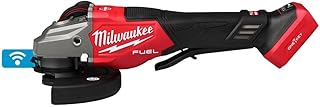
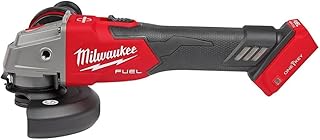


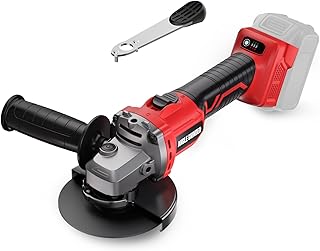


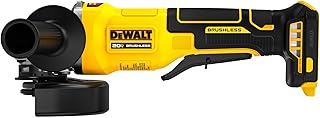


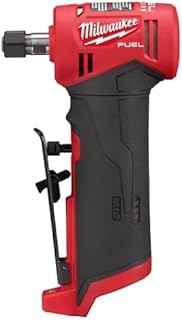


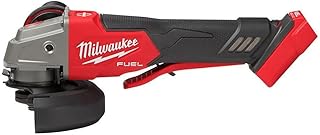

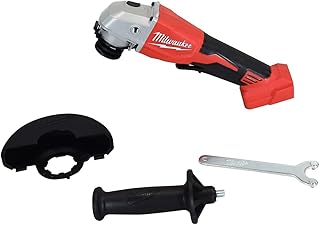

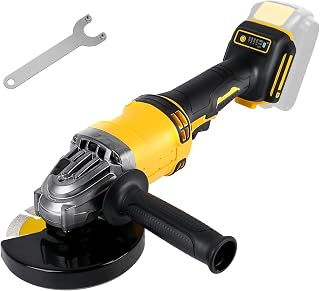
Choosing a Milwaukee angle grinder in Canada is less about finding the most powerful model and more about matching the grinder's disc size, switch design, speed control, braking system, battery platform, and intended application to the work you actually perform. Milwaukee's current cordless range includes compact 4-1/2-inch and 5-inch grinders, 6-inch-capable models, specialized flathead designs, variable-speed grinders, larger 7-inch and 9-inch machines, and models with advanced control features such as ONE-KEY and AUTOSTOP.
This guide focuses on the technical differences that matter when comparing precision Milwaukee angle grinders for metal fabrication, welding preparation, construction, automotive work, maintenance, cutting, grinding, surface preparation, and other demanding applications in Canada. Product specifications and configurations can change, so always confirm the exact model number, included accessories, battery configuration, and retailer terms before purchasing.
The Milwaukee M18 FUEL 4-1/2-inch to 6-inch Braking Grinder is a strong all-purpose choice for users who need more capacity than a basic compact grinder while still wanting a cordless format. Model 2980-20 uses a POWERSTATE brushless motor and is specified by Milwaukee at 9,000 RPM, with the manufacturer describing its output as comparable to a 13-amp corded grinder. It accepts accessories from 4-1/2 inches through 6 inches and incorporates RAPIDSTOP braking.
The model is particularly interesting for demanding metalworking because the larger accessory capacity gives the user more flexibility than a grinder restricted to smaller discs. Tool-free accessory and guard adjustments can also reduce interruption when changing between compatible grinding and cutting accessories.
Milwaukee also offers kit configurations such as the 2980-22, which packages the grinder with two M18 REDLITHIUM HIGH OUTPUT XC6.0 batteries and a charger. The kit can be worth comparing against the tool-only version when the cost of adding batteries separately would otherwise become significant.
The Milwaukee M18 FUEL 4-1/2-inch / 5-inch Dual-Trigger Braking Grinder, model 2986-20, is designed around control rather than simply maximizing conventional grinder operation. Its dual-trigger activation requires two hands, while the permanent side handle provides multiple positioning options. Milwaukee also specifies AUTOSTOP kickback control and RAPIDSTOP braking.
This model deserves attention from buyers who prioritize controlled operation, particularly when working in demanding environments where accidental activation and reaction to kickback are important considerations. It also includes four variable-speed modes from 3,500 to 8,500 RPM, making it more adaptable than a fixed-speed grinder for certain applications.
One important buying consideration is that a dual-trigger grinder is not equivalent to a conventional single-switch grinder in workflow. Some users may appreciate the additional control while others may prefer a simpler switch arrangement. The right choice depends on the work environment, operating position, and personal preference.
The Milwaukee M18 FUEL 4-1/2-inch / 5-inch Variable Speed Braking Grinder is aimed at applications where a single maximum speed is not ideal. Model 2888-20 provides five selectable speed settings between 3,500 and 8,500 RPM, along with RAPIDSTOP braking and a paddle-switch, no-lock configuration.
Variable speed can be especially useful when moving between aggressive grinding, controlled material removal, surface preparation, polishing-related accessories, or materials where excessive peripheral speed can make the operation harder to control. Buyers should always follow the accessory manufacturer's permitted RPM and application instructions.
The M18 FUEL 5-inch Flathead Braking Grinder, model 2886-20, is built for situations where grinder-head clearance is more important than conventional body geometry. Its low-profile flathead design can provide greater access in restricted spaces where a standard grinder may be difficult to position.
Milwaukee specifies an 8,500 RPM POWERSTATE brushless motor and RAPIDSTOP braking. The tool uses a paddle-switch, no-lock configuration and accepts compatible 5-inch accessories. The flathead format makes this model particularly relevant for fabrication, repair, maintenance, and other applications where access around a workpiece is limited.
There is also a 2887-20 flathead configuration with a slide switch and lock-on operation. Comparing the switch design is important because the same basic grinder format can suit different working styles depending on how the tool is held and operated.
The Milwaukee M18 FUEL 5-inch Flathead Braking Grinder model 2887-20 provides the same general flathead concept while using a slide-switch, lock-on configuration. Milwaukee specifies an 8,500 RPM POWERSTATE brushless motor and RAPIDSTOP braking for this model.
This version should be compared with the 2886-20 rather than automatically treated as a completely different class of grinder. The important distinction for buyers is the control interface and how that switch configuration fits their normal work. A grinder used for extended operations may feel very different in practice depending on whether the operator prefers paddle or slide-switch control.
Model 2889-20 is another variable-speed M18 FUEL option, but it uses a slide-switch, lock-on configuration instead of the paddle-switch arrangement found on the 2888-20. Milwaukee specifies five speed settings covering 3,500 to 8,500 RPM.
This model is worth comparing for buyers who specifically want variable-speed control but prefer the operating characteristics of a slide switch. The underlying buying decision is therefore not simply about RPM. Switch design, braking, ergonomics, battery compatibility, accessory requirements, and the type of work being performed all influence whether this configuration is appropriate.
The Milwaukee M18 FUEL 4-1/2-inch to 7-inch Variable Speed Braking Grinder, model 3674-20, occupies an interesting middle ground between conventional compact grinders and larger heavy-duty machines. It supports accessories from 4-1/2 inches through 7 inches while offering four selectable speed settings from 5,000 to 8,400 RPM.
The grinder is ONE-KEY compatible and includes electronic clutch and kickback-control features. Milwaukee also specifies compatibility with M18 batteries and highlights the use of an M18 REDLITHIUM FORGE XC8.0 battery for demanding applications.
This is an especially relevant model to investigate when the job requires more accessory capacity but a 7-inch grinder is not needed for every operation. It can also appeal to users who want a single cordless platform for several different grinding and cutting requirements.
The Milwaukee M18 FUEL 7-inch / 9-inch Large Angle Grinder, model 2785-20, is intended for substantially larger accessories and heavier applications than the compact M18 grinders. Milwaukee specifies compatibility with 7-inch to 9-inch accessories and a POWERSTATE brushless motor rated at 6,600 RPM.
The model is designed to provide the performance category of a large corded grinder while remaining within the M18 cordless platform. It also uses REDLINK PLUS intelligence, a metal housing and gearing system, and tool-free accessory and guard adjustments.
A kit version, 2785-21HD, includes the grinder together with an M18 REDLITHIUM HIGH OUTPUT HD12.0 battery and an M18/M12 Rapid Charger. When comparing packages, check the complete box contents rather than assuming that a model number automatically represents a battery-and-charger kit.
The 2980-22 kit is essentially a package-level alternative for the 2980-20 grinder and is worth considering separately when evaluating complete setups rather than tool-only purchases. It includes two M18 REDLITHIUM HIGH OUTPUT XC6.0 battery packs and an M18/M12 Rapid Charger along with the grinder and its specified accessories.
For a Canadian buyer entering or expanding the M18 platform, the value of a kit depends heavily on whether batteries and a compatible charger are already available. Someone who owns several M18 tools may prefer a tool-only configuration, while a new M18 user may need to account for the cost and convenience of a complete battery system.
Model 2981-20 provides another switch configuration within Milwaukee's 4-1/2-inch to 6-inch M18 FUEL grinder family. A corresponding kit, 2981-21, combines the grinder with an M18 REDLITHIUM HIGH OUTPUT XC6.0 battery and Rapid Charger.
The 2981 family is useful to compare against paddle-switch configurations when switch preference is a major factor. Buyers should avoid choosing purely from the product name because seemingly similar Milwaukee angle grinders can differ significantly in switch style, braking, speed, accessory capacity, and included equipment.
When comparing Milwaukee angle grinders, the specification that looks most impressive is not necessarily the specification that matters most. A grinder with a higher RPM may be less appropriate for a particular accessory or material, while a larger grinder may provide more capacity but be unnecessarily bulky for light fabrication. The best model is the one whose complete specification matches the application.
Disc diameter is one of the first specifications to check. Smaller 4-1/2-inch and 5-inch grinders are generally easier to position and are suitable for a wide range of cutting, grinding, deburring, and surface-preparation tasks. A 6-inch grinder provides additional accessory capacity, while 7-inch and 9-inch grinders are intended for substantially larger work.
Do not assume that a larger disc automatically means better performance. Larger machines can increase reach and material-removal capability, but they can also increase overall tool size, weight, and handling demands. For routine fabrication work, a compact grinder may be easier to control and more convenient to keep available.
RPM tells you how quickly the spindle rotates, but it does not by itself determine how effectively a grinder removes material under load. Motor design, electronics, battery capability, accessory diameter, disc construction, applied pressure, and the material being worked all influence actual performance.
For this reason, comparing two grinders solely by their maximum RPM can lead to a poor buying decision. A lower-RPM large grinder may be designed around a larger wheel and heavier application, while a high-RPM compact grinder may be optimized for smaller accessories.
Milwaukee's M18 FUEL grinders use POWERSTATE brushless motors. Brushless architecture is particularly relevant in cordless tools because electronic control and motor efficiency are closely connected to battery performance and thermal management.
For buyers, the practical questions are more useful than the marketing terminology: Does the grinder have enough sustained power for the work? Does it support the accessory size required? Does the battery provide an appropriate balance between runtime and tool weight? Does the control system provide the features needed for the application?
RAPIDSTOP is a major feature across several current Milwaukee M18 FUEL grinder configurations. The braking system is intended to reduce accessory coast-down after the trigger or switch is released. The exact braking performance depends on the model and accessory, so buyers should verify the manufacturer's specifications for the particular grinder they are considering.
Braking should be viewed as one part of a broader safety system rather than a substitute for correct technique, appropriate guards, compatible accessories, personal protective equipment, and compliance with the accessory manufacturer's instructions.
Some Milwaukee grinders incorporate electronic clutching, kickback-control technology, or AUTOSTOP. These systems are designed to manage certain abnormal operating conditions, but they do not eliminate the mechanical forces produced by a rotating abrasive accessory.
When comparing grinders, look at how the protection system works, what the manufacturer says it is designed to address, and whether the switch and handle configuration gives you adequate control for the intended operation.
A paddle switch can provide convenient control when the operator wants to activate or release the grinder from a hand position around the tool body. Models such as the 2980-20 and 2888-20 use paddle-switch configurations.
This design can be particularly attractive when frequent activation and release are part of the workflow. However, ergonomic preference is highly individual, so the switch should be evaluated alongside handle position and intended working angle.
A slide-switch, lock-on configuration can be useful for operations where continuous running is preferred. Milwaukee offers this type of control on models such as the 2887-20, 2889-20, and 2981 family.
The lock-on function changes the way the operator interacts with the tool, so it is important to understand the manufacturer's operating instructions and select the configuration appropriate for the application.
The 2986-20 takes a different approach with dual-trigger activation requiring two hands. This design can appeal to users who prioritize deliberate activation and additional control during demanding work.
Its two-handed operation also means that it should not be evaluated in exactly the same way as a conventional one-hand-capable switch design. Consider how you normally position the workpiece, where both hands need to be located, and whether the grinder's control arrangement complements the job.
The biggest advantage of an M18 cordless angle grinder is freedom from the power cord. This can simplify movement around a jobsite, reduce dependence on extension cords, and make temporary or remote work more convenient.
The trade-off is that cordless operation introduces battery selection, charging, runtime, and battery weight into the buying decision. Heavy grinding can consume substantially more energy than intermittent deburring or light cleanup, so the battery that feels appropriate for occasional work may not be the ideal choice for continuous high-load applications.
For Canadian jobsites, cordless operation can also be convenient when work areas are spread out or when access to electrical outlets is limited. However, cold weather can affect battery performance, so outdoor winter work should be planned with appropriate battery storage, charging, and operating practices based on the manufacturer's guidance.
Battery selection is one of the most overlooked parts of buying a cordless grinder. The grinder itself is only one part of the system. Battery capacity, discharge capability, physical size, runtime, and thermal behaviour can all influence the working experience.
Standard M18 batteries may be appropriate for lighter-duty tasks where minimum overall weight is important. They can also make sense when the grinder is used intermittently rather than continuously.
Milwaukee's REDLITHIUM HIGH OUTPUT battery range is designed for applications demanding greater power and runtime characteristics. The manufacturer positions HIGH OUTPUT packs as a performance-oriented option for demanding M18 tools.
For a grinder used heavily for cutting or grinding, comparing a compact battery against a higher-capacity HIGH OUTPUT pack is often more meaningful than comparing grinder specifications alone.
Milwaukee also offers REDLITHIUM FORGE batteries, including the XC8.0 configuration referenced with the 3674-20 grinder. Buyers considering a high-performance grinder should check the exact battery recommendations and package configuration rather than assuming every M18 battery provides identical performance under heavy loads.
A tool-only Milwaukee grinder can be financially sensible when you already own compatible M18 batteries and a charger. In that situation, purchasing another battery and charger can unnecessarily duplicate equipment.
A complete kit can be more appropriate when you are entering the M18 ecosystem or when the included battery capacity matches your expected workload. However, kit pricing and retailer promotions can change, so compare the complete contents and current Canadian pricing before making a purchase.
Metal fabrication often requires several different operations rather than one repetitive task. Cutting stock, removing weld spatter, smoothing welds, beveling edges, cleaning surfaces, and preparing material for finishing can require different accessories and operating approaches.
A versatile 4-1/2-inch to 6-inch M18 FUEL grinder can therefore be more practical than choosing solely for maximum power. Variable-speed models become more attractive when the workflow includes materials or accessories that benefit from different speeds.
For restricted access around fabricated structures, a flathead grinder may provide an advantage. For heavier material removal, a larger-capacity grinder may be appropriate. The key is to match the accessory diameter and grinder design to the actual fabrication process.
Welding preparation and cleanup frequently involve grinding, surface preparation, edge treatment, and removal of unwanted material. A grinder should provide enough sustained power without becoming unnecessarily difficult to control.
For weld preparation, buyers should consider:
Cutting applications place different demands on a grinder than simple surface cleanup. The correct cutting accessory must be matched to the grinder, material, accessory diameter, maximum permitted RPM, guard configuration, and manufacturer's instructions.
Do not select a cutting disc solely because it physically fits the spindle. The accessory must be compatible with the grinder and intended application. Always inspect abrasive discs for damage and follow the accessory manufacturer's safety requirements.
Concrete and masonry applications can generate substantial dust and place different demands on the grinder and accessory. Buyers should investigate the manufacturer's approved accessories, guards, dust-management equipment, and operating instructions before using an angle grinder for these materials.
A high-powered grinder does not automatically make a tool suitable for every masonry operation. Dust control, accessory compatibility, operator protection, and the work environment are equally important considerations.
The main reason to choose a flathead grinder is access. A conventional grinder head can become difficult to position when a workpiece has nearby flanges, brackets, welds, corners, or other obstructions. The lower-profile design of the 2886-20 and 2887-20 can provide more clearance in certain situations.
However, a flathead grinder should not be purchased simply because it looks more specialized. If most of your work is performed in open areas, a conventional grinder may provide a more familiar and versatile configuration.
Variable speed is most valuable when the job involves more than one operating condition. The ability to reduce spindle speed can provide greater control for certain accessories and materials, while higher settings remain available for applications requiring greater rotational speed.
Milwaukee's 2888-20 and 2889-20 provide five speed settings from 3,500 to 8,500 RPM, while the 3674-20 provides four settings from 5,000 to 8,400 RPM. These are not interchangeable specifications, so the precise speed range should be checked against the accessories you plan to use.
An angle grinder is a platform for accessories. Grinding wheels, cutting discs, flap discs, wire wheels, sanding accessories, and other attachments have different operating requirements and applications.
Before buying a grinder, create a short list of the accessories you expect to use and check:
A larger grinder can provide greater accessory capacity, but bigger is not automatically better. If most work involves small fabrication components, a 4-1/2-inch or 5-inch grinder may be easier to position and control.
Two grinders with similar motors can feel very different because one has a paddle switch, another has a slide switch, and another uses dual-trigger activation. Switch design should be treated as a primary buying criterion rather than a minor specification.
Heavy grinding can place much greater demand on a battery than occasional deburring. Consider expected duty cycle before deciding whether a compact battery or high-capacity HIGH OUTPUT pack is appropriate.
RPM should always be evaluated alongside accessory diameter and intended application. The maximum speed of a compact grinder should not be compared directly with that of a large grinder without considering the different wheel sizes and applications.
A tool-only package may not include a battery or charger. Always verify the box contents before ordering, particularly when comparing prices across Canadian retailers.
A compatible-looking accessory is not necessarily a safe accessory. Always verify the accessory's maximum permitted speed and application requirements against the grinder and operating conditions.
A useful comparison should begin with application requirements rather than model names. Make a simple checklist before shopping:
Milwaukee's FUEL designation is associated with its higher-performance cordless tool architecture, combining brushless motors with electronic control systems. For buyers shopping specifically for a demanding cordless angle grinder, M18 FUEL models deserve close attention because the lineup includes several specialized configurations rather than one universal grinder.
Instead of assuming that every FUEL grinder is better for every application, compare the individual model's disc capacity, speed range, braking, switch, battery requirements, ergonomics, and included accessories.
ONE-KEY can be relevant for professional users managing multiple tools, particularly where inventory tracking, tool identification, or electronic configuration provides practical value. The 2986-20 and 3674-20 are examples of Milwaukee grinders with ONE-KEY compatibility.
For a homeowner or occasional user who owns one grinder and has no need for connected tool management, ONE-KEY may be less important than the grinder's basic ergonomics, power, battery configuration, and accessory compatibility.
Angle grinders can generate substantial vibration and reaction forces, particularly during heavy material removal. Handle position, side-handle adjustability, overall tool balance, battery size, and switch location can therefore have a major effect on usability.
When comparing grinders, look beyond the motor specification. Consider whether you can maintain a stable grip, position the side handle appropriately, reach the controls without changing your grip unnecessarily, and keep the grinder properly oriented throughout the operation.
Battery-powered grinders can become significantly heavier when paired with large-capacity battery packs. A high-capacity battery may provide useful additional runtime, but that benefit has to be balanced against the added mass.
For overhead or awkward-position work, a lighter overall setup may be more useful than maximum battery capacity. For sustained grinding at a fixed workstation, additional battery capacity may be more valuable.
Routine maintenance helps preserve performance and allows problems to be identified before they become more serious. Always disconnect or remove the battery before performing maintenance or changing accessories, following the manufacturer's instructions.
Battery runtime depends heavily on workload. Continuous aggressive grinding consumes more energy than intermittent light deburring. Technique also matters: forcing the grinder excessively can increase load without necessarily improving the overall result.
Use the correct accessory for the material and task, allow the abrasive to perform the work, and avoid applying unnecessary pressure. Keep accessories sharp and appropriate for the operation, and use a battery capacity suitable for the expected workload.
If you regularly work far from a charger, carrying a second compatible battery can be more practical than choosing the largest possible battery for every task. The best configuration depends on the balance between runtime, charging access, tool weight, and work duration.
Canadian buyers should compare the exact model number rather than relying only on the product title. Retailer listings can use abbreviated names, package descriptions can differ, and tool-only and kit versions may look almost identical in photographs.
Before purchasing, check the current Canadian listing for the exact model and confirm the following:
Prices and retailer availability can change frequently in Canada. A model that appears to offer the best value at one point may not remain the best deal after comparing kit contents, battery costs, taxes, shipping, and promotions.
When comparing Milwaukee grinders on Amazon Canada, pay particular attention to the exact seller, model number, package contents, and product condition. Marketplace listings can differ even when they use similar product titles.
Read recent customer feedback for recurring issues involving packaging, incorrect kit contents, seller fulfilment, accessory compatibility, or product configuration rather than relying on the overall star rating alone. Specifications should still be verified against Milwaukee's documentation.
Customer reviews can be useful, but they are strongest when treated as supplementary evidence rather than as a substitute for specifications. Look for reviews that explain the application, material, accessory type, battery used, workload, and duration of use.
For example, a review from someone performing occasional household repairs may tell you little about how the grinder behaves during prolonged fabrication work. Conversely, a professional review involving sustained grinding may not reflect the priorities of someone who values compact size and occasional portability.
An angle grinder is a high-speed abrasive power tool, and correct operation matters regardless of the brand or model. Use the guard specified for the operation, select compatible accessories, inspect discs before use, and follow both the grinder manual and accessory manufacturer's instructions.
Appropriate eye and face protection, hearing protection, suitable work clothing, gloves where appropriate for the specific task, and effective dust control may be required depending on the operation and work environment. Sparks and hot debris can create fire hazards, so the surrounding area should be assessed before grinding or cutting.
Never treat electronic safety features such as RAPIDSTOP or AUTOSTOP as permission to operate beyond the grinder's intended use. These systems supplement safe operating practices; they do not replace them.
There is no single Milwaukee angle grinder that is objectively best for every Canadian buyer. For general-purpose cordless grinding and cutting, the M18 FUEL 4-1/2-inch to 6-inch class offers a particularly broad range of applications. For greater control, variable-speed models deserve consideration. For restricted access, the flathead models can solve a specific ergonomic problem. For larger abrasive accessories and heavy-duty work, the 7-inch to 9-inch class is a different category altogether.
The most appropriate choice is therefore determined by the combination of accessory size, application, switch design, battery platform, speed control, safety features, and expected workload rather than by a single headline specification.
A 4-1/2-inch to 5-inch M18 FUEL grinder is generally the most versatile format for a broad range of grinding, cutting, deburring, and surface-preparation work. If larger accessories are regularly required, a 6-inch-capable model may be more appropriate.
Several M18 FUEL grinders are designed for demanding professional applications, with Milwaukee specifying high-output brushless motors and corded-equivalent performance for particular models. Whether a specific model is appropriate depends on the application, accessory size, workload, and battery configuration.
The primary difference is accessory capacity. A 6-inch-capable grinder can accommodate larger compatible accessories, potentially providing greater coverage and material-removal capability. A smaller grinder is generally more compact and easier to position in restricted areas.
A flathead grinder is better when its low-profile design solves an access problem. It is not automatically better for every application. Buyers who normally work in open areas may prefer a conventional grinder configuration.
Milwaukee states that the referenced M18 grinders are compatible with the M18 battery platform. However, battery performance can vary by pack type and capacity, so compatibility does not mean every battery will provide the same runtime or performance under heavy loads.
Some models are sold as tool-only products while others are offered in kits containing batteries and chargers. Always check the exact model number and current box contents before purchasing.
RAPIDSTOP is Milwaukee's braking technology designed to stop compatible grinder accessories quickly after the tool is released. The exact stated stopping time depends on the specific grinder and accessory configuration.
AUTOSTOP is a Milwaukee control feature designed to help prevent severe kickback in certain situations. It should be regarded as an additional protective system rather than a replacement for proper technique and accessory selection.
Variable speed can be valuable when your work involves different materials or accessories that benefit from different operating speeds. If nearly all your work uses one application at the grinder's normal operating speed, a fixed-speed configuration may be sufficient.
ONE-KEY is most useful for users who benefit from connected tool management, tracking, or electronic configuration. For occasional users, basic grinder performance and ergonomics are likely to matter more.
Check the exact model number, accessory size, RPM range, switch configuration, braking and protection features, battery requirements, included accessories, kit contents, current Canadian price, retailer terms, warranty information, and compatibility with the accessories you already use.
The best Milwaukee angle grinder for Canada in 2026 is the model that fits the work rather than simply the model with the highest specification. The M18 FUEL 4-1/2-inch to 6-inch family is a strong starting point for broad-purpose grinding and cutting, variable-speed models provide additional control, flathead grinders address restricted-access applications, and the 7-inch / 9-inch Large Angle Grinder belongs to a heavier-duty accessory category.
Before buying, compare the exact Milwaukee model number, accessory capacity, speed, switch design, braking and protection features, battery requirements, included equipment, and current Canadian retailer terms. For an affiliate buying guide, the most useful recommendation is not simply to choose the highest-rated product, but to identify the grinder whose specifications and configuration genuinely match the user's material, workload, accessories, and working environment.