

♥ Wishlist
Compare 56 Ryobi Angle Grinders in Canada products in Canada. Reviews, ratings, pros, cons and buying advice updated for October 2026.
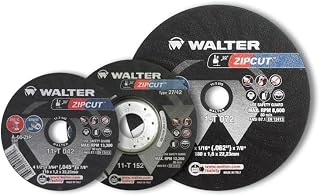


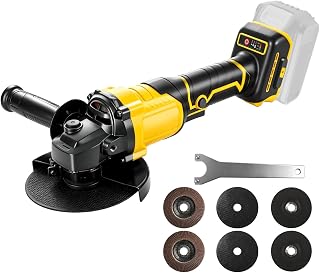


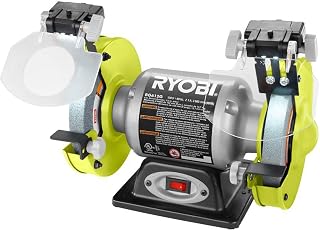


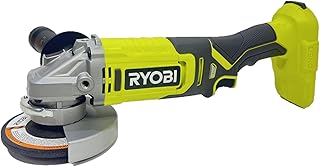


A good angle grinder is less about choosing the most powerful-looking specification and more about matching the tool to the work you actually expect to perform. For Canadian buyers, the decision typically comes down to power source, wheel size, motor design, battery compatibility, operating speed, ergonomics, accessory requirements and the amount of grinding or cutting you expect to do in a typical session.
RYOBI's current Canadian angle-grinder range includes 18V ONE+ cordless models, 18V ONE+ HP brushless models and corded grinders in several sizes. The Canadian product range also distinguishes between tool-only purchases and kits that include a battery and charger. That distinction matters because an apparently cheaper cordless grinder can become a less economical purchase if you do not already own compatible batteries and a charger.
For precision-oriented work, control is particularly important. A grinder that is easy to position, has a suitable auxiliary-handle configuration and accepts the correct wheel or accessory can be more useful than a heavier model with specifications that exceed your requirements.
RYOBI's Canadian angle-grinder category currently lists multiple cordless and corded products, so buyers should compare the exact model number rather than relying only on a retailer's shortened product title. Specifications, included accessories, batteries, chargers and package contents can differ between tool-only and kit versions.
The PCL445B and PBLAG02B occupy a similar physical category, but they are aimed at different priorities. Both are 18V ONE+ 4-1/2-inch cordless grinders and both are specified at up to 9,000 RPM. The important difference is the motor and performance platform rather than simply the advertised maximum RPM.
The PCL445B is specified with a 4-1/2-inch wheel, 5/8-inch arbor and 9,000 RPM maximum speed. RYOBI also lists a three-position auxiliary handle, tool-free adjustable guard, spindle-lock accessory changes and a die-cast metal gear case. The PBLAG02B is likewise a 4-1/2-inch, 5/8-inch-arbor grinder rated at 9,000 RPM, but uses RYOBI's ONE+ HP brushless platform and is positioned for more demanding applications.
Precision grinding is not achieved by RPM alone. It comes from controlling the relationship between the wheel, workpiece, grinder angle, applied pressure and movement speed.
For detailed work, look for characteristics that help you maintain a consistent position. A comfortable auxiliary handle, predictable trigger or switch operation, manageable tool weight, a properly adjusted guard and a suitable wheel can all influence how accurately material can be removed.
Maximum RPM is also not a target speed for every accessory. Grinding and cutting wheels have their own maximum rated operating speeds. Always match the accessory to the grinder and follow the accessory manufacturer's requirements. Never assume that an accessory is suitable simply because its diameter matches the tool.
Wheel diameter is one of the most important buying decisions because it affects the tool's intended applications, physical size and the type of accessories you can use.
If most of your work involves brackets, bolts, welded joints, metal tubing, hardware cleanup or occasional cutting, a 4-1/2-inch model is often the more versatile format to investigate. If your projects routinely involve larger surfaces or heavier material removal, a 7-inch corded grinder may deserve consideration.
For Canadian shoppers, also consider where the grinder will actually be used. A corded tool can be highly practical in a garage or workshop but less convenient for outdoor repairs, remote work or jobs where an extension cord becomes an obstruction.
One of the strongest reasons to consider a RYOBI cordless grinder is the ONE+ battery ecosystem. RYOBI states that its 18V ONE+ system covers more than 300 products. For an existing ONE+ owner, the value of a tool-only grinder can therefore be considerably different from the value of a first-time cordless-tool purchase.
Before buying, identify the exact battery family required by the grinder and check the manufacturer's compatibility information. Do not choose a battery solely because it physically resembles another RYOBI battery. Also consider battery capacity: a compact battery may improve handling, while a higher-capacity battery can be more appropriate when runtime is a priority.
ONE+ HP models add another consideration. RYOBI's HP platform combines brushless motors, electronics and HIGH PERFORMANCE lithium battery technology. When comparing an HP grinder with a standard ONE+ model, consider the complete system rather than assuming that the “HP” designation automatically makes it the best choice for every user.
Motor technology is an important differentiator when comparing cordless grinders. Brushless motors eliminate the conventional brushes used in brushed motor designs and can provide advantages in efficiency, heat management, runtime and durability depending on the tool and operating conditions.
RYOBI's ONE+ HP PBLAG02B uses a brushless motor. That makes it particularly relevant for buyers who expect demanding or repeated use. A standard ONE+ grinder such as the PCL445B can still be the more sensible choice when the workload is occasional and the lower-cost or simpler platform better matches the user's needs.
Do not select a brushless grinder simply because the motor technology sounds more advanced. The right choice depends on workload, purchase cost, battery ownership, frequency of use and the importance of sustained performance.
RPM indicates how quickly the spindle rotates without necessarily describing how effectively the grinder maintains that speed under load. Two grinders can have the same maximum RPM while behaving differently when pressure is applied to the workpiece.
RYOBI's PCL445B and PBLAG02B are both specified at up to 9,000 RPM. This makes the maximum-RPM figure a poor standalone method for deciding between them. Motor design, electronics, battery capability, heat management, ergonomics and workload suitability are all relevant.
More RPM is not automatically better. The correct accessory must be rated for the grinder's maximum speed, and the grinder should be operated according to the instructions supplied with the tool and accessory.
The arbor is the spindle interface through which a wheel or accessory mounts to the grinder. The RYOBI PCL445B and PBLAG02B are specified with a 5/8-inch arbor.
When purchasing replacement wheels, cutting discs, grinding wheels or other accessories, verify the arbor specification, wheel diameter, accessory type and maximum rated RPM. Matching only the diameter is not enough.
An angle grinder becomes a different tool depending on the accessory installed. A grinding wheel is designed for material removal and grinding, while a thin cutting wheel is intended for cutting applications. Flap discs, wire wheels and other accessories have different purposes and operating requirements.
Grinding wheels are useful for removing material, shaping metal and cleaning up suitable welded or fabricated surfaces. They are not interchangeable with every cutting or finishing accessory.
Cutting wheels are designed to make cuts rather than perform heavy side grinding. Using an accessory incorrectly can create dangerous loading conditions, so follow the accessory's intended application and manufacturer's instructions.
Flap discs combine abrasive material with a layered construction and are commonly considered when grinding and finishing need to be performed with the same accessory. Select the appropriate abrasive type and grit for the material and desired finish.
Wire wheels can be useful for suitable rust, paint and surface-cleaning applications. Wire accessories can shed wires, making correct guarding and personal protective equipment especially important.
The guard is not merely an accessory-storage component. It is an important safety feature and should be positioned according to the task and manufacturer's instructions.
The PCL445B includes a tool-free adjustable guard, while the listed HP PBLAG02B package includes a cutting guard and grinding wheel and also supports grinding and cutting applications. The correct guard configuration depends on the accessory and operation.
Never remove a required guard simply because it appears to make access easier. Better visibility should come from appropriate positioning, lighting and workpiece setup rather than defeating a safety feature.
An auxiliary handle provides a second control point and can make it easier to keep the grinder stable. The PCL445B uses a three-position auxiliary handle, giving the operator flexibility in how the grinder is held for different working orientations.
For precision work, two-handed control is particularly valuable. Instead of trying to control the tool entirely from the primary grip, position the auxiliary handle so that the grinder can be guided naturally while maintaining a stable stance.
Before beginning a cut or grinding pass, establish the intended direction of movement and make sure the workpiece is securely supported. Avoid forcing the wheel through the material simply to accelerate the operation.
Grinding and cutting can generate significant heat in both the workpiece and the tool. Extended operation can place additional stress on the motor, electronics, battery and abrasive accessory.
RYOBI specifically highlights heat management as a feature of the PBLAG02B HP grinder. This is particularly relevant for buyers comparing a standard cordless grinder with an HP brushless model for demanding work.
Battery capacity should be considered alongside grinder performance. A larger-capacity battery can provide more energy for a longer operating session, but it can also add weight to a handheld tool.
For short precision jobs, a lighter battery may make the grinder easier to position. For repeated cutting or grinding, additional capacity can reduce the frequency of battery changes. The ideal choice therefore depends on the balance between runtime and handling.
The PBLAG02K1 kit listed by RYOBI Canada includes a 4.0Ah HIGH PERFORMANCE battery and charger, while the PCL445K1 kit includes a 4.0Ah battery and charger. Buyers comparing these kits should examine exactly which battery is included rather than assuming every 4.0Ah RYOBI battery has identical specifications.
The tool-only versus kit decision is one of the easiest ways to avoid paying for equipment you do not need.
If you already have suitable RYOBI ONE+ batteries and a compatible charger, a tool-only grinder can be the logical configuration. It also avoids accumulating duplicate chargers and batteries.
If this is your first RYOBI 18V ONE+ tool, a kit can make more sense because it provides the grinder, battery and charger together. Compare the total package rather than the grinder's headline price.
Do not assume two kits with similar names contain the same accessories. Confirm the battery capacity, charger model, guards, wheels, side handle and other included components before buying.
Canadian availability can vary between online and in-store channels, and retailer listings can change. For that reason, a product that appears in a comparison today should still be checked for current stock status, current price, package configuration and retailer-specific conditions before purchase.
Also compare the Canadian model number rather than relying solely on photographs. A retailer can use a shortened description while the manufacturer identifies the product using a precise model code.
A high RPM number does not tell you how the grinder behaves under load, how comfortable it is to control or whether it is suitable for your workload.
A cordless grinder may appear inexpensive until the cost of a compatible battery and charger is added. Existing ONE+ owners have a different cost calculation from first-time buyers.
A 7-inch grinder can be excessive for light fabrication, small repairs and detailed work. Larger does not automatically mean more appropriate.
Wheel diameter alone is insufficient. Arbor size, accessory type, maximum RPM and intended application must all match.
A grinder that is difficult to position or tiring to hold can reduce control during detailed work. Handle configuration and overall balance deserve consideration before purchase.
Battery chemistry, capacity, design and platform specifications can affect practical operation. Use the manufacturer's compatibility information rather than guessing.
Angle grinders are high-speed abrasive power tools and should be treated accordingly. A buying guide should therefore evaluate safety-related design as well as performance specifications.
Always wear appropriate eye and face protection, hearing protection and other protective equipment appropriate to the material and operation. Sparks and fragments can travel beyond the immediate work area, so bystanders and nearby combustible materials also need consideration.
For metal fabrication, the best grinder depends heavily on whether the main task is cutting, weld cleanup, beveling, surface preparation or finishing.
A 4-1/2-inch grinder is generally the most versatile format to investigate for smaller fabrication work. A standard ONE+ model can suit occasional jobs, while an HP brushless model becomes more compelling when the grinder will see heavier or more frequent use.
When fabrication involves repeated cutting, consider how quickly batteries are consumed and whether having a second charged battery would improve workflow. For long sessions in a fixed workshop, a corded model may remain attractive because continuous mains power eliminates the need to rotate batteries.
Weld cleanup often requires a combination of grinding and finishing. The grinder should therefore be easy to control and compatible with the appropriate grinding and finishing accessories.
For small welded assemblies, the compact 4-1/2-inch format can provide useful access around corners and joints. The auxiliary handle can help maintain control during material removal, while a suitable flap disc can be considered when a smoother transition is required after initial grinding.
Cutting is different from grinding. A cutting wheel is intended to penetrate the material rather than remove material through side loading. The correct cutting guard and accessory are therefore essential.
If cutting is the primary reason for buying the tool, compare grinders that are explicitly designed or packaged for cutting applications. RYOBI's PBLAG02 platform is described as an angle grinder/cut-off tool and is supplied with cutting-related components in its listed Canadian configurations.
DIY users rarely need the same combination of runtime and sustained performance required by professional fabricators. For occasional repairs, hardware modification, rust removal and general metalwork, a 4-1/2-inch grinder is usually the most sensible format to investigate.
If you already own RYOBI ONE+ tools, the PCL445B can be particularly straightforward to integrate into an existing battery collection. If you expect more demanding work or want brushless technology, the ONE+ HP range is worth comparing.
Cordless convenience is not universally superior. If the grinder will spend most of its life on a workshop bench and operate for long periods, a corded model can offer a simpler workflow.
RYOBI's Canadian range includes both the 7.5 Amp 4.5-inch AG454 and the larger 10 Amp 7-inch AG701. These models should be evaluated according to the type of work rather than treated as direct substitutes for the compact 18V ONE+ grinders.
The cheapest grinder is not necessarily the lowest-cost option once ownership is considered. A useful comparison should include the grinder, batteries, charger, accessories and likely future replacement needs.
Customer reviews can provide useful ownership information, but they should be interpreted carefully. A high rating does not automatically mean a grinder is ideal for every application.
When reading verified customer feedback, look for recurring comments about battery runtime, balance, ease of changing accessories, guard adjustment, handle comfort, vibration, cutting performance and suitability for the reviewer's workload.
Give greater weight to reviews that explain the application and conditions. A homeowner using a grinder for occasional repairs has different expectations from someone cutting and grinding metal for several hours.
There is no universal best model. For many DIY users, a 4-1/2-inch grinder is the most practical format because it balances versatility and manoeuvrability. The PCL445B is a standard ONE+ option, while the PBLAG02B is the more performance-focused ONE+ HP brushless alternative.
The PCL445B belongs to RYOBI's standard 18V ONE+ 4-1/2-inch angle-grinder range. Buyers specifically seeking the ONE+ HP brushless platform should compare the PBLAG02B instead.
RYOBI lists the PCL445B at up to 9,000 RPM. The maximum speed should not be treated as a recommended operating speed for every accessory; always follow the accessory's rated limits.
RYOBI lists the PBLAG02B at up to 9,000 RPM. Its principal distinction from the standard PCL445B is the ONE+ HP brushless performance platform and associated design features rather than a higher maximum RPM number.
It depends on the exact package. Tool-only versions do not provide the same contents as battery-and-charger kits. Always check the model number and package contents before buying.
RYOBI's ONE+ system is designed around shared 18V battery compatibility across the platform, but buyers should verify compatibility for the exact tool and battery combination in the manufacturer's documentation.
Neither is universally better. A 4-1/2-inch grinder is generally more compact and versatile for smaller jobs, while a 7-inch grinder is intended for a different class of applications. Choose according to material size, workload and required accessories.
It can be, particularly when the grinder will be used frequently or under demanding conditions. If your workload is light and occasional, a standard ONE+ grinder may provide a more appropriate balance of capability and cost.
Buy tool-only when you already have the appropriate battery and charger. A kit can be more practical for someone entering the ONE+ platform because it provides the necessary battery and charging equipment.
Some RYOBI models are specifically designed and supplied for both grinding and cutting applications. However, the correct wheel, guard and operating procedure must be used for each task. Never use an accessory outside its intended application.
Very important for control. A properly positioned auxiliary handle gives the operator an additional grip point and can improve stability during grinding and cutting. The PCL445B provides a three-position auxiliary handle.
Check diameter, arbor or mounting specification, accessory type, material compatibility and maximum operating speed. The wheel must be appropriate for the specific grinder and application.
Suitability depends on the specific workload, model and operating environment. RYOBI offers both standard ONE+ and higher-performance ONE+ HP products, as well as corded grinders. Professional users should evaluate the exact tool against their duty cycle, accessory requirements, runtime needs and jobsite conditions.
There is no universal replacement interval. Replace an accessory whenever it is worn beyond its intended condition, damaged, cracked, contaminated or otherwise unsuitable according to the accessory manufacturer's instructions.
There is no single specification that determines the right choice. Start with wheel size and power source, then compare motor technology, RPM, battery requirements, ergonomics, guard configuration, accessory compatibility and workload suitability.
Before purchasing a RYOBI angle grinder in Canada, verify the exact model number and decide what you actually need the grinder to accomplish. A compact 4-1/2-inch ONE+ grinder can be a sensible choice for general-purpose work, while the ONE+ HP brushless range deserves closer consideration when sustained performance is a priority. Corded models remain relevant when continuous workshop operation matters more than cordless mobility.
The strongest purchase decision is ultimately the one that fits the work rather than the one with the longest specification list. For Canadian buyers in 2026, comparing the PCL445 platform, ONE+ HP brushless models and appropriate corded alternatives provides a useful starting point for narrowing the field while keeping battery ownership, wheel size, control, workload and total cost in view.