

♥ Wishlist
Compare 47 Garden Tillers & Cultivators products in Canada. Reviews, ratings, pros, cons and buying advice updated for October 2026.


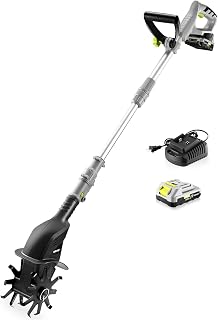


Choosing a tiller or cultivator for Canadian soil is less about finding the machine with the highest advertised power and more about matching the equipment to your soil type, working area, planting routine, storage conditions, and the depth of cultivation you actually need. A compact cultivator can be ideal for maintaining established garden beds, while a heavier rear-tine or front-tine tiller may be more appropriate for breaking new ground or working compacted soil.
This buying guide is designed for Canadian shoppers comparing power garden tools in 2026. Use the specifications, operating characteristics, ownership considerations, and selection criteria below alongside current product listings, manufacturer information, and verified customer feedback before making a purchase.
The terms tiller and cultivator are often used interchangeably, but the machines can serve different purposes. Understanding that distinction is one of the easiest ways to avoid buying equipment that is either unnecessarily large or not powerful enough for the job.
A cultivator is generally intended for lighter soil preparation and ongoing garden maintenance. It can be useful for loosening the upper layer of soil, mixing amendments into existing beds, controlling weeds between established rows, and preparing relatively soft soil for planting.
A tiller is generally built for more demanding soil preparation. Depending on the design, it can be used to break up harder ground, incorporate organic material, prepare larger planting areas, and cultivate deeper than many lightweight cultivators.
Canadian gardeners can encounter a wide range of soil and weather conditions. Soil can vary from loose and sandy to heavy clay, while spring conditions can range from relatively workable ground to soil that remains cold and damp. These differences affect how a tiller behaves and how much work the machine must perform.
Wet soil is particularly important to consider. Tilling soil when it is excessively wet can create compacted layers and large clods rather than producing a useful planting bed. The machine may also struggle as soil adheres to the tines. Allowing soil to reach a suitable working condition is often more important than simply choosing a machine with greater power.
Clay-heavy soil can become extremely firm when dry and sticky when wet. Gardeners working with this type of soil should pay close attention to tine design, machine weight, digging capability, transmission construction, and the ability to make controlled passes.
For difficult ground, a lightweight cultivator may be frustrating if it repeatedly bounces across the surface instead of penetrating the soil. A more substantial tiller can provide better mechanical engagement, although additional machine weight also means more effort when transporting and manoeuvring it.
Sandy soil is generally easier to penetrate, so maximum digging force may be less important than manoeuvrability and controlled cultivation. A compact machine can be sufficient for many established gardens, particularly when the primary task is incorporating compost or maintaining planting beds.
Rocky ground deserves additional caution. A tiller is not a substitute for removing large stones, roots, or other obstructions before cultivation. Unexpected impacts can place substantial stress on tines, shafts, gearboxes, and other components. Clearing obvious obstacles before operating the machine can reduce unnecessary wear.
The power source is one of the most important decisions when comparing garden tillers and cultivators. There is no universally best system because each approach involves different trade-offs involving runtime, noise, maintenance, mobility, storage, and operating convenience.
Corded electric models can be attractive for gardeners who have accessible outdoor electrical power and relatively compact working areas. Their operation does not depend on fuel storage, and they can be convenient for routine cultivation close to a suitable power source.
Battery equipment offers cordless mobility without requiring petrol or diesel fuel. For many homeowners, the appeal is the combination of comparatively simple operation and freedom from an electrical cable.
When comparing battery models, do not look only at the tool's advertised voltage. Consider whether a battery and charger are included, the battery capacity, the manufacturer's compatible battery ecosystem, expected workload, charging requirements, replacement battery cost, and whether you already own compatible batteries from the same platform.
Brands such as Greenworks, EGO, Ryobi, and BLACK+DECKER have established battery-powered outdoor equipment ranges, but individual models differ considerably. Always compare the specifications of the exact model rather than assuming that all tools within a brand's range have similar performance.
Gas-powered tillers remain relevant for demanding cultivation because they can provide substantial working capability without depending on a power cord or rechargeable battery. They can be particularly practical for larger areas where extended operation and mobility are priorities.
However, gas equipment introduces additional ownership considerations. Buyers should account for fuel handling, engine maintenance, starting procedures, storage requirements, oil-related maintenance where applicable, and the manufacturer's requirements for seasonal storage.
Brands including Honda, Troy-Bilt, Craftsman, and Champion have been associated with outdoor power equipment, but availability, model ranges, specifications, and support arrangements can vary. Confirm the exact Canadian model and current manufacturer documentation before purchasing.
Tine location has a major influence on how a tiller behaves. Front-tine and rear-tine machines should not be treated as interchangeable simply because both are described as tillers.
Front-tine machines generally position the digging mechanism toward the front of the unit. They can offer useful manoeuvrability for garden preparation and are often considered when working in comparatively manageable areas.
Rear-tine designs place the tines behind the main body of the machine. Heavier construction and different tine arrangements can make these machines suitable for more demanding soil preparation, although the additional size and weight can make transportation and storage more challenging.
Product specifications become much more useful when you understand what each number means in practical terms. Avoid choosing solely on one headline specification such as engine size, voltage, or advertised maximum tilling width.
Tilling width determines how much ground can be covered during each pass. A wider working width can reduce the number of passes required across a large garden, but it can also make the machine less convenient in narrow beds and confined spaces.
For small vegetable gardens, the ability to manoeuvre between beds may matter more than maximum width. For larger open areas, coverage per pass becomes increasingly important.
Maximum tilling depth describes how deeply the tines can potentially penetrate under appropriate conditions. It should not be interpreted as a promise that the machine will effortlessly achieve that depth in every soil type.
Hard, compacted, rocky, or root-filled soil can significantly change real-world performance. Controlled, gradual passes are often preferable to attempting maximum depth immediately.
The tines are the components that directly engage the soil, making their construction particularly important. Compare tine configuration, material, replaceability, and manufacturer guidance concerning wear.
Counter-rotating, forward-rotating, and other tine arrangements can produce different operating characteristics. The appropriate configuration depends on whether the primary task is breaking ground, cultivating established soil, mixing amendments, or maintaining garden beds.
Weight is a trade-off rather than a simple quality indicator. A heavier machine may provide useful stability and help the tines remain engaged with firm soil, but it can also be harder to lift, transport, turn, and store.
Consider the distance between your storage location and garden, whether stairs are involved, and whether another person will need to help move the machine.
Wheels influence transport and manoeuvrability. Some tillers use wheels primarily for moving the machine before and after operation, while other designs integrate wheel positioning into how the machine is controlled during cultivation.
Check whether the wheels can be adjusted, folded, removed, or repositioned according to the manufacturer's design. Also consider wheel diameter and the type of terrain over which the machine must be moved.
A tiller requires continuous physical control, so handle design can have a significant impact on usability. Look for controls that are logically positioned and easy to understand without repeatedly removing your hands from the main operating position.
More power is not automatically better. A machine that is substantially larger than necessary can be cumbersome for a small garden, while an undersized model may struggle in hard ground.
Start with the job rather than the specification. Ask whether you are maintaining existing beds, preparing a new vegetable plot, incorporating compost, loosening compacted soil, or repeatedly cultivating a large area. The more demanding the soil and workload, the more important it becomes to evaluate machine construction and digging capability rather than simply choosing the smallest available unit.
A compact cultivator can make sense when the working area is limited and the soil is already relatively loose. Manoeuvrability, manageable weight, storage size, and ease of starting can be more valuable than maximum digging performance.
A medium-duty tiller or cultivator provides a useful balance for homeowners who need to prepare beds seasonally while also maintaining established planting areas. Compare width and depth with the dimensions of the garden so that the machine is neither excessively large nor unnecessarily restrictive.
Larger areas and previously unworked soil generally justify closer examination of heavier-duty tillers. Machine weight, tine arrangement, transmission design, operating controls, and durability become increasingly important as the workload increases.
An adjustable width can make one machine more versatile across different garden layouts. A narrower configuration can help with rows and restricted spaces, while a wider configuration can improve coverage in open areas.
Depth control is particularly useful when moving between shallow cultivation and deeper soil preparation. Being able to control depth also helps avoid trying to accomplish too much in a single pass.
A reverse gear or reverse function can make a heavy tiller considerably easier to reposition when the machine becomes difficult to pull or manoeuvre forward. It is worth checking how the reverse mechanism operates rather than assuming every model provides the same level of control.
Counter-rotating tine arrangements can be useful when substantial soil engagement is required. They should be evaluated alongside machine weight, engine or motor characteristics, and the manufacturer's intended applications.
Forward-rotating tines are common on lighter garden cultivators and can be appropriate for routine soil preparation. Their suitability depends heavily on the soil and the condition of the garden.
Storage is especially relevant in Canada, where garden equipment may spend significant portions of the year indoors or in a protected storage area. A machine that performs well but cannot be stored conveniently may become difficult to live with over time.
Engine displacement, motor power, battery voltage, and other electrical specifications can help compare machines within the same category, but these figures should not be used as standalone indicators of overall tilling performance.
A tiller's real-world capability also depends on gearing, tine design, machine weight, working width, soil conditions, and how the operator uses the equipment. Two machines with apparently similar headline specifications can behave differently because of their mechanical design.
For battery equipment, voltage alone does not determine runtime. Battery capacity, motor efficiency, soil resistance, working width, depth, and operating technique all affect how long a battery can support the work.
If you are considering a cordless model, investigate the entire battery platform rather than treating the tool as an isolated purchase.
Popular battery ecosystems from brands such as EGO, Greenworks and Ryobi can be attractive when a homeowner already owns compatible outdoor equipment. Compatibility must still be verified at the exact product and battery-platform level.
Gas-powered equipment requires a different ownership mindset. Before purchasing, check the manufacturer's recommendations for fuel, engine oil where applicable, starting procedures, air-filter maintenance, spark-plug service, storage, and seasonal preparation.
For occasional homeowners, the maintenance requirements can be more important than the machine's maximum capability. For people cultivating substantial areas every season, the advantages of a gas-powered platform may justify the additional maintenance responsibilities.
Electric models can be appealing because their operation is comparatively straightforward. Before buying a corded unit, however, determine whether the garden's layout makes cable management practical.
Never select an extension cord or outdoor electrical setup solely on convenience. Follow the equipment manufacturer's requirements and applicable Canadian electrical safety guidance, particularly for outdoor operation around damp conditions.
Power ratings are useful comparison points, but they do not describe the entire machine. Tine geometry, transmission, weight, working width, depth adjustment, and intended application all matter.
A large machine can be unnecessary when most work takes place between established rows or in compact beds. Manoeuvrability can matter more than raw digging capability.
A compact cultivator can perform very well in suitable soil but may be a poor choice for repeatedly breaking heavily compacted ground. Match the machine to the hardest regular task rather than the easiest one.
Measure your available storage area before purchasing. Include handle width, machine height, wheel position, and any attachments that need to remain with the unit.
Deep cultivation is not automatically beneficial. Gardeners should consider the requirements of the crop, soil structure, existing roots, and intended preparation method. Working soil unnecessarily deep can be counterproductive.
Wear components eventually require attention. Before buying, investigate whether the manufacturer provides replacement tines and other service parts for the specific model, and determine how those parts are identified in the product documentation.
A small battery cultivator, a compact front-tine tiller, and a heavy rear-tine tiller can all appear in search results for the same basic query. They are not necessarily direct competitors. Always compare machines within an appropriate workload category.
Customer reviews can provide useful information, but they should be interpreted carefully. Look for repeated observations rather than relying on a single highly positive or negative comment.
Review volume alone does not establish that a product is the best choice. A machine with many reviews can still be unsuitable for a particular garden.
A useful comparison should begin with the characteristics that directly affect your workload.
Brand recognition can help narrow a search, but the exact model should always be evaluated independently. Product lines change, specifications differ between generations, and availability can vary across Canada.
Honda is a well-known name in power equipment and is worth considering when comparing engine-powered garden machinery. Focus on the exact tiller model, engine configuration, tine arrangement, maintenance requirements, and current Canadian support information rather than relying on the brand name alone.
Troy-Bilt is another established name associated with lawn and garden equipment. When comparing its tillers, examine machine class, tine configuration, working dimensions, controls, and intended workload.
Craftsman offers a broad range of tools and outdoor equipment. Model-specific specifications are particularly important because product characteristics can vary substantially between different machines carrying the same brand.
Greenworks is particularly relevant when researching cordless outdoor equipment. Battery-platform compatibility can be a major factor for shoppers who already use compatible Greenworks equipment.
EGO is another prominent battery outdoor-equipment brand. Buyers considering cordless equipment should compare battery requirements, included accessories, runtime considerations, machine dimensions, and the specifications of the exact model.
Ryobi's broad cordless ecosystem can make platform compatibility an important consideration. If you already own compatible batteries, determine whether the particular tiller or cultivator uses the same platform before treating battery compatibility as a benefit.
BLACK+DECKER is widely known for consumer power tools and outdoor equipment. When considering a compact cultivator, pay particular attention to working width, depth, power source, included equipment, and the type of soil for which the model is intended.
Routine maintenance can help preserve performance and identify problems before the next major gardening session. Always follow the manufacturer's instructions for the exact model because service requirements differ between electric, battery, and gas equipment.
Good preparation reduces unnecessary stress on the equipment. Remove large stones, thick roots, branches, wire, plastic, and other debris that could become caught in rotating components.
Mark irrigation lines, buried utilities, edging, and other features that could be damaged by deep cultivation. If you are uncertain about buried infrastructure, verify its location before operating powered digging equipment.
Work soil only when conditions are appropriate. Extremely wet soil can smear and compact, while very dry hard ground may require preliminary preparation rather than repeated aggressive passes.
Start with a manageable depth rather than immediately attempting the deepest possible setting. Make controlled passes and allow the machine to work through the soil rather than forcing it forward aggressively.
When preparing new ground, multiple progressive passes can be more practical than attempting to break deeply compacted soil in one operation. Adjust your approach based on soil resistance and the manufacturer's operating instructions.
Keep the machine under control at all times. Rotating tines can throw stones and other debris, so maintain an appropriate operating area and use the protective equipment recommended by the manufacturer.
Powered tillers contain rapidly rotating components capable of causing serious injury. Read the manufacturer's manual before first use and follow the stated operating, maintenance, and safety procedures.
Vegetable gardeners often need different capabilities at different points in the season. Initial bed preparation may require more aggressive cultivation, while ongoing maintenance can favour a smaller and more manoeuvrable cultivator.
Consider row spacing before selecting the machine. A wide tiller may cover ground quickly but can be difficult to use between closely spaced crops. A compact cultivator can be easier to control around established plants, provided the soil is within its intended operating range.
Flower beds typically place a greater emphasis on precision and control. A machine that is too aggressive can disturb established plants or damage roots. Compact dimensions, controllable depth, and manoeuvrability may therefore be more important than maximum power.
Always account for ornamental plants, irrigation systems, edging, and shallow-rooted vegetation before cultivating.
Shared garden spaces can benefit from equipment that is straightforward to transport, simple to operate, and appropriate for multiple users. Battery-powered equipment may be appealing where fuel handling or long-term storage is inconvenient, while heavier equipment can make sense when multiple users regularly prepare larger plots.
For shared equipment, clear operating procedures and regular inspection are particularly important. Every user should understand the manufacturer's controls and safety requirements.
The lowest purchase price is not necessarily the lowest total cost of ownership. Consider the complete ownership picture, including batteries, chargers, fuel, maintenance items, replacement tines, accessories, storage requirements, and the expected workload.
A machine that is correctly sized for your garden can also provide better value than an oversized model. Paying for capability that is rarely used may add cost and complexity without improving the results you need.
Choose a cultivator when your primary work involves maintaining already-prepared garden beds, loosening the upper soil layer, mixing compost into existing soil, and controlling weeds in manageable areas. A compact cultivator can be easier to handle and store when deep ground-breaking capability is unnecessary.
A full-size tiller becomes more compelling when you regularly prepare larger areas, encounter substantial soil resistance, or need more aggressive soil preparation. In these circumstances, machine stability, tine design, working depth, transmission construction, and overall durability deserve greater attention.
There is no single best tiller for every Canadian garden. The right choice depends on soil type, garden size, desired working depth, power source, storage, and how frequently the machine will be used. Compare the exact specifications and intended application of each shortlisted model.
A battery-powered tiller can be suitable for many residential gardening tasks, particularly where portability and convenient operation are priorities. Suitability depends on the exact model, battery capacity, soil conditions, working depth, and workload. Do not judge capability from battery voltage alone.
Not universally. Gas models can be advantageous for demanding work and larger areas, while electric and battery machines can offer simpler operation and reduced dependence on fuel. The better choice depends on the garden and the user's priorities.
The appropriate depth depends on the crop, soil condition, and purpose of cultivation. Maximum machine depth should not automatically be treated as the recommended gardening depth. Follow suitable horticultural practices and the equipment manufacturer's operating guidance.
Some heavier tillers are designed for more demanding ground preparation, but performance depends heavily on soil condition, roots, rocks, moisture, and machine design. Clear large obstacles and use progressive passes rather than assuming any tiller will immediately handle untouched ground at maximum depth.
It is generally better to avoid cultivating excessively wet soil. Wet soil can stick to tines and become compacted or smeared. Wait until the soil reaches a workable condition appropriate for the type of ground and cultivation being performed.
Working width affects both productivity and manoeuvrability. Wider machines can cover open ground more quickly, while narrower configurations can be easier to use in small gardens and between rows.
Rear-tine designs can be well suited to demanding cultivation, but the exact tine arrangement, machine weight, transmission, and power system matter. Compare the complete specification rather than choosing solely because a machine is rear-tine.
Adjustable depth can be useful because different garden tasks require different levels of soil disturbance. It can also make it easier to begin with shallow passes before progressing deeper when conditions permit.
Not necessarily. Many raised beds can be prepared and maintained with hand tools or compact cultivators. A powered tiller may be unnecessary if the beds are small and the soil is already loose.
Inspect the tines, shaft areas, wheels, handles, controls, guards, engine or motor, transmission, and visible fasteners. For gas models, ask about maintenance history where information is available. Confirm that replacement parts and documentation exist for the exact model before committing to a used machine.
Before purchasing one of the products considered in a Canadian tiller or cultivator comparison, verify the exact model number and compare specifications from reliable sources. Check the current Canadian listing because product names, configurations, included accessories, and availability can change.
The best precision tiller or cultivator is the one that matches the actual conditions of your garden rather than the machine with the most impressive headline specification. Small, established gardens often benefit from compact and manoeuvrable cultivators, while larger plots and demanding soil can justify a heavier tiller with stronger soil engagement.
For Canadian buyers in 2026, the most useful comparison starts with soil type, garden size, working depth, tine configuration, power source, storage, and maintenance requirements. Brands such as Honda, Troy-Bilt, Craftsman, Greenworks, EGO, Ryobi, and BLACK+DECKER can all be worth investigating depending on the product category, but the exact model specification should always take priority over brand recognition.
Use current product specifications, verified customer reviews, manufacturer documentation, and Canadian retailer information to make the final comparison. Taking a few minutes to match the machine to your soil and workload can prevent the two most common purchasing problems: buying a machine that is unnecessarily difficult to handle or choosing one that is not capable of the work you actually need it to perform.