
♥ Wishlist
Compare 60 Clamp Hand Tools for Woodworking, DIY & Workshop Projects products in Canada. Reviews, ratings, pros, cons and buying advice updated for October 2026.






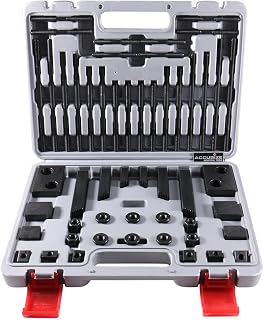


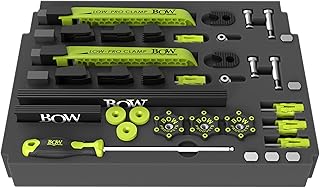


Choosing a precision clamp hand tool is less about finding the largest or strongest clamp and more about matching the tool's construction, clamping range, pressure control, jaw design and intended application. A clamp used for delicate woodworking, model making or electronics-related work has different requirements from one used for cabinet assembly, metalworking, fabrication or general workshop projects.
For Canadian buyers, it is also sensible to consider the type of projects the tool will handle throughout the year, the availability of replacement components, the manufacturer's specifications and whether the clamp is intended for occasional household use or repeated workshop use. Brands such as Bessey, Irwin, Kreg, Jorgensen, DEWALT, Stanley and Milwaukee offer different approaches to clamping and hand-tool design, so comparing the underlying specifications is more useful than choosing solely by brand recognition.
A precision clamp is designed to provide controlled positioning and holding force rather than simply applying as much pressure as possible. The useful combination is controlled movement, stable jaws, predictable adjustment and enough rigidity to keep a workpiece in position.
For precision work, excessive force can be just as problematic as insufficient force. Thin wood, finished surfaces, plastic, small components and delicate assemblies can be marked, distorted or damaged when a clamp is tightened too aggressively. A well-designed hand clamp should therefore make it reasonably easy to apply the amount of pressure appropriate for the job.
Clamping capacity describes how far the jaws can open to accommodate a workpiece. It is one of the first specifications to check because a beautifully constructed clamp is of limited value if it cannot reach across the material you need to secure.
Think beyond the thickness of a single board. When assembling a cabinet, picture frame or laminated component, the required opening can include several layers, temporary spacers and other components. Leaving some additional capacity can make a clamp more versatile, but buying an unnecessarily large tool can add weight and reduce convenience for small jobs.
Throat depth determines how far the clamp can reach inward from the edge of the workpiece. Two clamps may have similar maximum openings but behave very differently when pressure must be applied away from an edge.
For woodworking and fabrication, compare throat depth alongside maximum opening rather than evaluating clamping capacity in isolation. A deeper throat can be useful for assemblies where the pressure point is located farther from the outside edge.
Clamping force matters when joints must remain securely positioned, but the highest stated force is not automatically the best choice for precision work. Excessive pressure may damage soft materials, compress wood fibres or leave marks on finished surfaces.
Consider whether you need light, moderate or heavy-duty pressure. For delicate assembly, controllability may matter more than maximum force. For structural woodworking or fabrication, rigidity and adequate force become more important.
Inspect the shape and contact area of the jaws. Fixed, swivel, pivoting or padded jaw designs can behave differently depending on the shape of the workpiece.
The adjustment system determines how quickly and accurately the clamp can be positioned. Screw-based systems generally provide controlled tightening, while trigger-style mechanisms can make repeated positioning faster.
For precision work, pay attention to how easily the mechanism allows small changes. A clamp that moves quickly but is difficult to fine-tune may be less useful than one that takes slightly longer to position but offers better control.
Steel is widely used for clamp frames because it can provide substantial rigidity and resistance to deformation. The exact grade, thickness and construction method still matter, however. A steel frame should be evaluated together with the jaw assembly, spindle and other load-bearing components.
Aluminium can reduce weight while maintaining useful rigidity for many applications. Lightweight clamps can be particularly convenient when a project requires frequent repositioning or when several clamps need to be handled simultaneously.
Engineered polymers can be practical for trigger clamps and other hand-operated designs where low weight and comfortable handling are priorities. Their suitability depends on the intended workload, clamping force and construction quality.
On screw-operated clamps, the spindle and thread deserve close attention. Smooth adjustment, consistent engagement and a robust handle can make repeated use much easier. A clamp that feels difficult to tighten or loosen can become frustrating when several adjustments are required during assembly.
Quick-release clamps are designed for speed. They can be useful when a project involves repeatedly opening, positioning and removing clamps. Their main advantage is workflow efficiency rather than necessarily providing the highest possible clamping force.
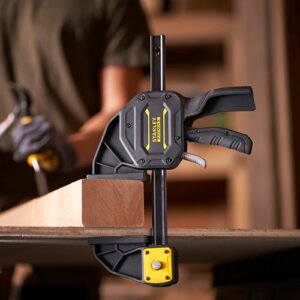
Trigger-operated clamps are convenient for one-handed positioning. They are often useful when the other hand needs to hold a workpiece in alignment. Look for a trigger mechanism that advances predictably and a release system that does not require awkward manipulation.
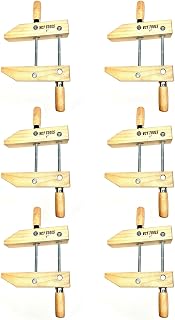
Screw clamps are valued for controlled adjustment and the ability to apply substantial pressure. They are particularly relevant to woodworking, furniture assembly and workshop applications where precise tightening is more important than rapid repositioning.
Parallel clamps are designed to keep their jaws aligned while applying pressure. They can be especially useful for cabinet construction, panel glue-ups and other assemblies where maintaining consistent alignment is important.
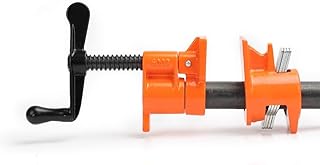
Bar clamps provide a combination of substantial reach and adjustable jaw positioning. They are useful for larger assemblies, although the size and weight of a bar clamp can make it less convenient for small precision tasks.
Spring clamps are simple and quick to operate. They are appropriate for light-duty holding, temporary positioning and tasks where rapid application is more important than fine pressure adjustment.
Small clamps can be valuable for model making, small woodworking projects, electronics-related assembly and other applications where conventional workshop clamps are physically too large. Their usefulness depends heavily on the required opening, jaw profile and available working space.
Woodworkers should evaluate clamps according to the type of joinery and assembly being performed. A frame assembly may benefit from compact clamps with controllable pressure, while cabinet panels and large glue-ups may require longer bars, deeper throats and multiple clamps.
Cabinet and furniture projects often require several pieces to remain aligned simultaneously. In these situations, the best clamp is not necessarily the strongest individual tool. A coordinated collection of clamps with appropriate capacities can provide better control across the entire assembly.
Parallel-style clamps can be useful where maintaining square and consistent pressure is important. Smaller quick clamps can complement larger clamps by holding trim, edging or secondary components in place while the primary assembly is secured.
Before buying, consider the largest cabinet or furniture components you routinely work with. Buying clamps only for today's project can lead to unnecessary limitations later, while purchasing very large clamps for occasional small projects can make everyday handling unnecessarily cumbersome.
Metalworking places different demands on hand clamps. Heat, sharp edges, heavy components and greater resistance to movement can require more robust construction than light-duty craft applications.
When evaluating a clamp for fabrication, examine frame rigidity, jaw strength, adjustment mechanism and the manufacturer's stated application. Do not assume that a woodworking clamp is appropriate for welding or other high-temperature work simply because it has a large clamping capacity.
When clamping plastic, thin wood, painted surfaces, laminates or finished components, pressure control becomes especially important. A powerful clamp can cause damage if the force is concentrated on a small contact point.
Protective pads or soft jaw covers can help distribute pressure, but they should not be treated as a substitute for sensible tightening. Always consider whether the pad material is compatible with the surface and adhesive being used.
A useful comparison should look beyond star ratings or a single headline specification. When evaluating the top options in a 2026 buying guide, compare each product across the same criteria so that differences are easier to understand.
Customer reviews can provide useful information, but they are most valuable when interpreted alongside technical specifications. A high rating alone does not establish that a particular clamp is appropriate for your project.
Look for recurring comments about the mechanism, jaw alignment, ease of adjustment, durability, comfort and suitability for the stated application. Pay particular attention to reviews that describe the material thickness, project type and frequency of use because these details make a review more relevant to your own requirements.
Maximum force is an incomplete measure of usefulness. Precision assembly often benefits from controlled, repeatable pressure rather than simply the highest possible load.
A clamp may have enough opening capacity but still fail to reach the location where pressure is needed. Always compare both dimensions.
Some assemblies require several pressure points to remain aligned. One exceptionally large clamp may not provide the same control as several appropriately sized clamps.
A single clamp size can restrict what projects you can tackle comfortably. A small and medium clamp can often complement larger workshop clamps for greater flexibility.
Unprotected contact surfaces can mark finished wood, painted materials and other delicate surfaces. Check whether protective pads are included or available separately when this matters.
Not every clamp is suitable for every environment. Welding, high-temperature fabrication, precision electronics work and heavy structural applications may require purpose-specific designs.
Price should be considered in relation to construction, capacity, frequency of use and the cost of replacing a tool that does not meet your needs. A homeowner who occasionally assembles small projects may have very different requirements from a professional woodworker using clamps every working day.
Rather than choosing a budget based solely on the lowest purchase price, compare the specifications and construction of products within your intended category. A more expensive clamp can make sense when its design provides a meaningful improvement in control, durability, capacity or workflow. Conversely, paying for heavy-duty capacity that you will rarely use may not provide good value.
Budget clamps can be suitable for occasional DIY and light-duty tasks when their specifications match the job. The main consideration is whether the mechanism and frame provide sufficient stability for the intended application.
Mid-range models can offer a balance between operating convenience, construction quality and versatility. This category is often worth examining for frequent home workshop use.
Professional-grade clamps are generally evaluated more heavily on repeatability, durability, capacity and long-term workflow efficiency. For demanding users, small improvements in adjustment speed and control can become significant over many projects.
Brand selection can help narrow the field, but it should not replace specification-based comparison. Bessey is widely associated with clamping tools, while Irwin, Jorgensen and Kreg offer products across different workshop and woodworking applications. DEWALT, Stanley and Milwaukee also have established hand-tool and workshop-tool ranges worth comparing where their specifications match the intended task.
Because product ranges, configurations and availability can change, verify the exact model specifications before purchasing rather than assuming every product from a particular brand has the same construction or performance characteristics.
Canadian shoppers should compare the exact product configuration available for the Canadian market. Product names can sometimes cover multiple sizes or variants, and the included accessories may differ between listings.
If you are starting a workshop, buying several complementary clamps is often more useful than purchasing a large quantity of identical tools. Begin with the sizes that correspond to your most common projects and expand as your work becomes more specialized.
A practical collection might combine smaller quick clamps for temporary positioning, medium-capacity clamps for general assembly and longer or deeper clamps for larger projects. The precise combination should depend on the dimensions of the work you actually perform.
Proper care can help maintain smooth operation and reduce premature wear. After use, remove dust, wood chips, adhesive residue and other contaminants from the moving parts and contact surfaces.
For screw-operated clamps, inspect the spindle and threaded components periodically. Follow the manufacturer's instructions regarding lubrication because the appropriate maintenance procedure can vary by design.
Clamps are holding tools, not substitutes for appropriate workholding systems in every situation. Make sure the workpiece is stable and that the clamp is positioned so it cannot unexpectedly slip or release.
Before selecting a product from a 2026 shortlist, use the following checklist to make the comparison more objective.
There is no single best precision clamp for every Canadian buyer. The right choice depends on the workpiece size, required clamping pressure, jaw design, adjustment mechanism, frequency of use and budget. A compact precision clamp can be preferable for small projects, while larger assemblies may require bar or parallel clamps.
They can be worthwhile for users who clamp frequently or need better control, durability and repeatability. Occasional users may find that a simpler clamp provides better value when its specifications already meet the requirements of the job.
Choose a size based on the maximum thickness and reach required by your projects, not simply the overall physical size of the tool. Compare both jaw opening and throat depth before deciding.
Quick clamps can be very useful when fast positioning is important. For applications requiring particularly fine pressure adjustment, a screw-operated or otherwise finely adjustable design may provide better control.
Neither specification is universally more important. Capacity determines whether the clamp physically fits the job, while clamping force determines how securely it can hold the workpiece. For precision applications, controllability and jaw stability should also be considered.
Only when the manufacturer indicates that the clamp is suitable for the application. Metalworking and especially welding can introduce heat, sparks and loads that ordinary woodworking clamps may not be designed to handle.
The number depends on project size and assembly method. Large glue-ups may require several clamps distributed along the workpiece, while small repairs may need only one or two. Balanced pressure is often more useful than relying on a single very large clamp.
Pads can be useful when protecting finished or easily marked surfaces. However, they should be compatible with the material and should not interfere with secure positioning.
Confirm the exact model number, jaw opening, throat depth, stated clamping force, dimensions, materials, operating mechanism, included accessories and intended application. Then compare current retailer information and verified customer feedback for that exact configuration.
The appropriate product depends on the professional application. A professional user should pay particular attention to manufacturer specifications, duty requirements, construction, replacement components, ergonomics and repeatability rather than relying solely on general-purpose ratings.
Inspect clamps regularly, especially when they are used frequently. Clean them after demanding projects and follow the manufacturer's maintenance guidance for threads, moving components and replaceable parts.
The best precision clamp is the one that fits the job accurately, applies appropriate pressure, remains stable during use and can be handled comfortably throughout the project. Start by identifying the material, workpiece dimensions and required reach. Then compare clamping force, jaw design, adjustment mechanism, construction materials and overall ergonomics.
For Canadian buyers, verify the exact model and current specifications before making a purchase because product configurations and retailer information can change. Customer reviews are most useful when they describe an application similar to yours, while manufacturer documentation should remain the primary reference for dimensions, intended use and operating limitations.
Whether your priority is woodworking, cabinet assembly, DIY repairs, crafts, model making or workshop fabrication, a careful specification-by-specification comparison can help prevent the most common buying mistakes. The goal is not simply to find the strongest clamp, but to find a dependable workholding tool with the right balance of precision, capacity, pressure control, durability and value for the work you actually do.