

♥ Wishlist
Compare 24 Best Corded Nail Guns for Canadian DIY & Workshop Projects products in Canada. Reviews, ratings, pros, cons and buying advice updated for October 2026.

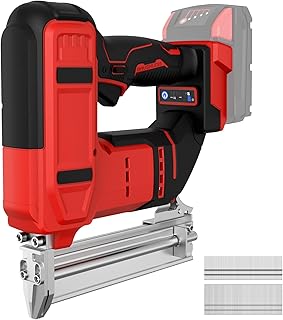
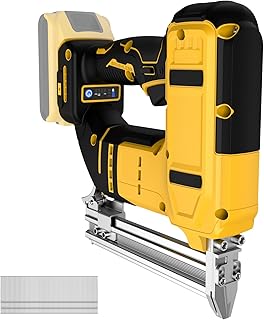

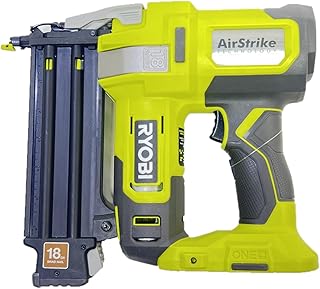


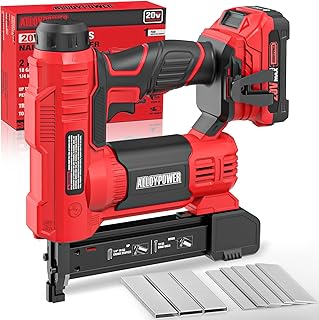


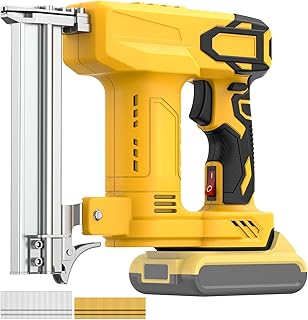
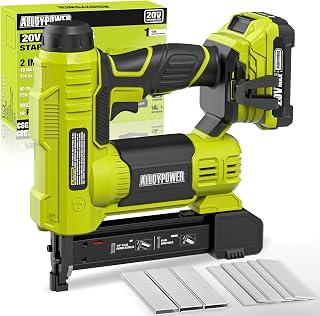


Choosing a precision corded nail gun requires more than comparing advertised power. For Canadian buyers, the useful comparison is how accurately a tool drives the required fastener, how consistently it performs across different materials, how easy it is to control, and whether its electrical and fastener requirements fit the intended workshop or job site.
The phrase “corded nail gun” can describe several types of electrically powered fastening tools. Some are designed specifically for finish or brad nailing, while others may be marketed as electric nailers or stapler-and-nailer combinations. Pneumatic nail guns are different because they require an air compressor rather than a power cord. Before comparing models, confirm the exact operating mechanism and fastener type.
A good buying decision starts with the work rather than the brand name. Consider the material, nail diameter, nail length, required firing frequency, desired finish quality, available power, and the amount of control needed for each fastening application.
The first specification to check is the fastener range. A tool designed for 18-gauge brad nails should not be treated as a general-purpose replacement for a finish nailer capable of handling substantially larger fasteners.
Always compare the supported gauge, nail length range and fastener type with the manufacturer's specifications. Buying a tool first and attempting to adapt the fasteners later can lead to poor results or an incompatible setup.
Precision is not simply a high advertised driving force. For finish work, control can be more important than maximum power. A useful precision-oriented tool should allow the operator to position the nose accurately, maintain consistent firing behaviour and reduce the likelihood of unnecessarily deep or proud fasteners.
Important factors include nose design, trigger characteristics, depth adjustment, contact with the workpiece, firing consistency and overall balance. A nailer that is technically powerful but difficult to position may be less suitable for delicate trim than a tool offering better control.
Depth adjustment is particularly important when working with visible trim, mouldings, cabinetry or softer materials. The objective is normally to seat the fastener appropriately without leaving it excessively proud or driving it unnecessarily deep.
A tool with an adjustable depth mechanism can provide greater flexibility when material density, fastener length or application changes. Buyers should determine whether adjustment is tool-based, tool-free, or dependent on other settings and follow the manufacturer's instructions.
Different applications can benefit from different firing modes. Sequential operation generally emphasizes controlled placement because the operator positions the tool before each firing cycle. Contact-style operation can be useful for faster repetitive work when supported and appropriate, but it requires greater attention to tool handling and workpiece positioning.
Do not assume that every electric nailer provides the same firing options. Check the exact model specifications before buying, especially if the intended project involves repetitive fastening.
Specifications are most useful when interpreted in the context of the job. A longer nail range is not automatically better, and a higher power rating does not necessarily translate into better finish quality.
Gauge describes the approximate thickness classification of compatible nails. Common finish and trim applications may use smaller-gauge fasteners, while heavier construction applications require different nailer categories.
When comparing products, confirm the complete supported gauge and nail-length range rather than relying on a product title alone.
The minimum and maximum supported nail lengths determine which materials and joints can be fastened appropriately. For example, a tool intended primarily for light trim may not be suitable for thicker stock requiring longer fasteners.
Consider the thickness of the material being joined, the required penetration and the manufacturer's recommended application limits.
Magazine capacity affects how frequently the tool must be reloaded. A larger magazine can be convenient for repetitive projects, while a compact magazine may contribute to a smaller overall tool profile.
Magazine design also matters. Look for straightforward loading, a clear indication of remaining fasteners and a mechanism that securely retains the nail strip.
For corded electric nailers, driving performance depends on the tool's motor and internal mechanism as well as the material and fastener being used. Buyers should be cautious about comparing power numbers between manufacturers because specifications may be presented differently.
Instead of selecting the largest advertised figure, verify whether the manufacturer specifically lists the tool for the materials and fastener sizes required for your project.
A nailer can become tiring during extended overhead or repetitive work. Weight is therefore a practical specification, not merely a comfort feature.
Balance is equally important. A tool that feels nose-heavy may be more difficult to hold precisely against narrow trim. When comparing models from brands such as DEWALT, Makita, Bostitch, Metabo HPT and RYOBI, examine the complete specifications and design rather than assuming that a familiar brand will automatically suit your application.
Because a corded tool must remain connected to an electrical supply, cord length can influence where the tool can be used comfortably. A longer cord may reduce the need for an extension cord, while a shorter cord can be easier to manage in a compact workshop.
Canadian buyers should also verify the manufacturer's stated electrical requirements and use an appropriate power source. If an extension cord is required, select one suitable for the tool and working conditions rather than using an undersized household extension cord.
One of the most important buying decisions is whether a corded electric nailer is actually the right tool category. Pneumatic nailers use compressed air and therefore require an air compressor, hose and compatible fittings. Corded electric models avoid the compressor requirement but still require access to an electrical outlet or suitable extension setup.
There is no universal winner. The right choice depends on how frequently the tool is moved, whether compressed air is already available, how long the tool will be used continuously and whether portability matters.
Cordless models can be convenient for renovation work, remote areas and projects where routing a power cord would be inconvenient. Corded models can make more sense for a stationary workshop where continuous access to electricity is already available.
With cordless tools, buyers should consider battery platform compatibility, battery cost, runtime, charging time and the availability of replacement batteries. With corded tools, the primary considerations include electrical access, cord management and whether an extension cord is necessary.
A tool-free adjustment can make it faster to fine-tune nail depth between materials or applications. However, ease of adjustment should not replace careful testing on scrap material before beginning visible finish work.
A nose designed to reduce marking can be valuable when working with finished wood. The protective surface should remain clean and intact because damaged or contaminated contact surfaces can affect the way the tool contacts the workpiece.
An integrated light can improve visibility around the fastening point, particularly inside cabinets or in areas with limited illumination. It should be considered a convenience feature rather than a substitute for adequate workshop lighting.
Nail jams are an important practical consideration. A clearly designed jam-release system can make clearing an obstruction easier. Before attempting to clear a jam, follow the manufacturer's safety and disconnection procedure.
A low-fastener indicator can help prevent unnecessary dry firing and interruptions. The exact implementation differs between models, so buyers should inspect the manufacturer's description rather than assuming all nailers provide the same warning system.
Precision nailers are commonly considered for woodworking and finishing tasks, but the suitability of a particular model depends on its specifications and the material involved.
Trim installation generally places a premium on controlled placement and an acceptable finished appearance. Small-gauge finish fasteners can be appropriate for certain trim applications when the tool, nail length and material are compatible.
Cabinet components and furniture parts often require accurate positioning. A compact, well-balanced nailer can be easier to control around edges and corners, but the fastener must still be appropriate for the joint and material.
For occasional DIY work, ease of setup and handling may matter more than maximum firing speed. A simpler tool that matches the required fasteners can be more practical than purchasing a professional-oriented model with capabilities that will rarely be used.
Dense materials can require more driving capability than softer wood. Do not assume that an electric nailer will handle every hardwood simply because it accepts the required nail gauge. Check the manufacturer's stated applications and test the setup on scrap material whenever possible.
Established names such as DEWALT, Makita, Bostitch and Metabo HPT offer broad power-tool ranges, but brand recognition should not replace specification matching. The exact model matters more than the logo on the housing.
Buying a nailer before checking nail gauge and length is one of the easiest ways to end up with an unsuitable tool. Confirm the complete fastener specification first.
Excessive driving force can be undesirable for delicate finishing work. Precision applications require controlled fastening, not simply maximum penetration.
A corded tool is only convenient when suitable electrical access is available. Consider the location of outlets, cord routing and whether an extension cord will be needed before choosing a corded model.
Specifications rarely communicate how a tool will feel during repeated use. Pay attention to total weight, grip design, balance and the position of the trigger and magazine.
Combination tools can accept both nails and staples, but that does not mean every nail or staple is compatible. Verify the supported fastener specifications for the exact model.
Customer feedback can be useful, but it should be evaluated alongside technical specifications. A review describing excellent performance for light trim does not necessarily establish suitability for heavier construction.
Canadian shoppers should verify the exact model configuration before purchasing because product names, included accessories, electrical specifications, packaging and available fastener assortments can vary by market or retailer.
Before completing a purchase, compare the manufacturer's specification sheet with the retailer's current listing. Check the model number, included accessories, compatible fasteners, electrical requirements and applicable warranty information. Prices and availability can change, so current retailer information should be checked at the time of purchase.
For a permanent workshop, a corded nailer can be a practical choice when an appropriate electrical supply is conveniently located near the workbench. Cable management becomes part of the workspace setup, especially when several tools are being used in the same area.
Renovation projects can involve moving between rooms and working around unfinished surfaces. In these situations, compare corded, cordless and pneumatic options based on mobility rather than assuming that one technology is universally superior.
If the tool will only be used a few times per year, prioritize compatibility, ease of operation and storage over professional features that may add unnecessary complexity. Also consider the ongoing cost and availability of the correct nails.
When comparing established power-tool brands, concentrate on the specifications and service information for the exact product rather than relying on general perceptions about a brand.
These brands should be treated as comparison points rather than automatic recommendations. The best model is the one whose specifications align with the material, fastener and working conditions involved in the project.
Proper maintenance can help preserve consistent operation and reduce avoidable problems. Always follow the maintenance instructions supplied with the specific nailer because electric fastening mechanisms differ between models.
A nail gun should be treated as a serious power tool regardless of whether it is designed for DIY or professional use. Read the manufacturer's instructions before operation and use appropriate eye protection.
Use this checklist when comparing the top options on a Canadian retailer or marketplace:
There is no single best precision corded nail gun for every Canadian buyer. A practical shortlist can instead be organized around the intended application.
Even a well-specified nailer can produce poor results if the technique is inconsistent. Position the nose squarely against the workpiece, maintain stable pressure and use the manufacturer's recommended settings. When working with a new material or fastener size, test on an offcut first.
For visible finish work, examine the test fastener before continuing. If it sits too proud, too deep or causes unwanted damage, adjust the tool according to its instructions or reconsider the fastener selection. Small changes in material density can affect the finished result.
The best option depends on the intended application, fastener gauge, nail length, material and budget. Rather than selecting a universal winner, compare models that specifically support the fasteners and materials required for your project.
Neither is universally better. Corded electric models can avoid the need for an air compressor, while pneumatic models can be attractive when a suitable compressor system is already available. Compare setup requirements, mobility and intended workload.
Only if the exact model is specifically designed and rated for framing applications. A finish or brad nailer should not be treated as a framing nailer simply because it is electrically powered.
Choose the gauge specified for the application and supported by the nailer. Smaller-gauge finish fasteners are commonly associated with delicate finishing applications, while heavier applications require different fastening systems.
Yes, particularly for visible finishing work. Depth adjustment can help accommodate differences in material and fastener selection, although the correct setting should be established through testing and the manufacturer's guidance.
Choose corded when continuous electrical access is convenient and mobility is less important. Choose cordless when freedom from a power cable is a major advantage and the battery platform fits your needs.
A genuinely electric corded nailer does not require an air compressor. Pneumatic nailers do. Always confirm the operating mechanism for the exact model because product categories can look similar in online listings.
They are established power-tool brands worth including in a broader comparison, but the exact model remains the deciding factor. Check fastener compatibility, power source, specifications, safety features and intended application before purchasing.
Follow the maintenance schedule and procedures specified by the manufacturer. Basic inspection and cleaning should be performed as appropriate for the tool and its working environment, with particular attention to the cord, magazine, nose and safety mechanisms.
Confirm the exact model number, power source, electrical requirements, fastener specifications, included accessories, current price, availability, warranty terms and return conditions. Retail listings can change, so verify these details immediately before purchase.
A precision corded nail gun should be selected as a complete fastening system rather than as an isolated power tool. Start with the work, identify the correct fastener, determine the required nail length and gauge, then compare driving control, adjustment features, ergonomics, electrical requirements and safety features.
For Canadian buyers, also verify the exact market configuration and current retailer information before ordering. Comparing specifications from multiple established brands, including DEWALT, Makita, Bostitch, Metabo HPT and RYOBI, can make it easier to identify meaningful differences between models without relying solely on brand reputation.
The strongest buying decision is ultimately the one that matches the nailer to the job. A compact and controllable finishing tool can be more useful for precision trim than a more powerful model designed for a different application, while a heavy-duty construction project may require an entirely different nailer category.