

♥ Wishlist
Compare 8 Best Cordless Band Saws for Portable Cutting products in Canada. Reviews, ratings, pros, cons and buying advice updated for October 2026.
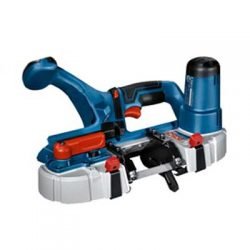
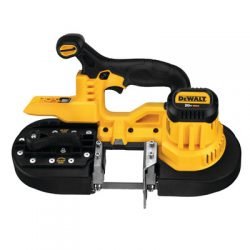
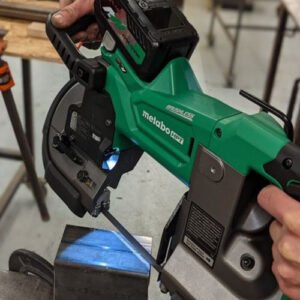
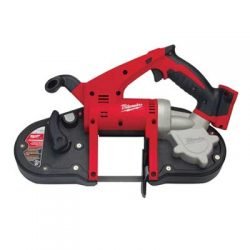
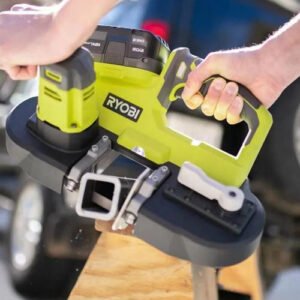


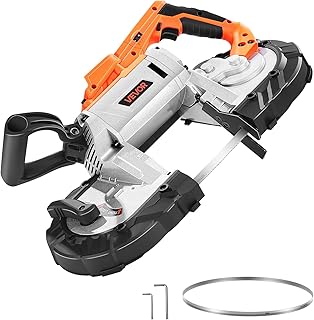


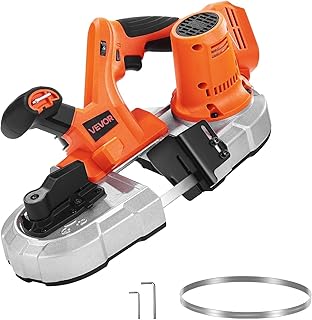
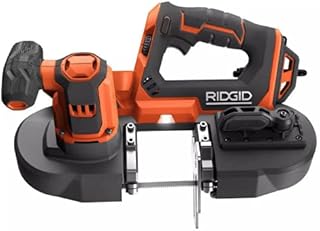
A precision cordless band saw is useful when you need controlled, portable cutting without being tied to a wall outlet. For Canadian workshops, construction sites, maintenance crews, fabricators, plumbers, electricians and serious DIY users, the right model should balance cutting accuracy, portability, battery runtime, blade performance, ergonomics and long-term durability.
Rather than choosing solely by advertised cutting capacity, compare the complete tool system. A saw with a large throat or impressive maximum diameter may not be the best choice if it is difficult to control, excessively heavy, poorly balanced or incompatible with the batteries you already own.
The term precision is not necessarily a standardized product specification. In practical buying terms, it refers to how consistently a band saw allows the operator to establish and maintain a controlled cut. Several design characteristics contribute to this.
For commercial buyers, precision should therefore be evaluated as a combination of tool design, blade quality and operator control rather than as a single marketing specification.
The biggest advantage of a cordless band saw is freedom of movement. A cordless model can be taken to a roof, jobsite, vehicle, utility area or remote workshop without locating a suitable electrical outlet or managing an extension cord.
A corded band saw can still make more sense for stationary workshop use where continuous electrical power is readily available. The best choice depends on whether portability or uninterrupted operation is more important.
One of the most important buying decisions is the battery ecosystem. Many professional cordless band saws are sold as tool-only versions, meaning the battery and charger may need to be purchased separately. This can make an apparently inexpensive saw considerably more expensive if you do not already own compatible batteries.
Before purchasing, identify the exact battery platform required by the model. Common professional ecosystems include Milwaukee M18, DeWalt 20V MAX, Makita 18V LXT, Bosch 18V, RIDGID 18V and Metabo HPT MultiVolt systems, while Ryobi offers a broad 18V ONE+ ecosystem aimed at homeowners and DIY users.
Battery voltage alone should not be used as a direct measure of cutting performance. Motor design, electronic controls, battery capacity, blade condition, material thickness and cutting technique all influence real-world operation.
Battery capacity is normally expressed in amp-hours, but a larger amp-hour rating does not automatically mean that every cordless band saw will cut for a predictable amount of time. Runtime varies with material, blade condition, cutting diameter, pressure applied by the operator, motor efficiency and the battery's condition.
For frequent jobsite use, consider purchasing a saw that fits into a battery system with multiple capacity options. A compact battery may reduce overall weight for occasional cuts, while a higher-capacity pack can be more suitable for demanding work where longer runtime is valuable.
Maximum cutting capacity tells you how large a workpiece the saw is designed to accommodate under specified conditions. It should not be interpreted as a guarantee that every material of that size will cut equally quickly or comfortably.
When comparing models, examine the maximum round and rectangular cutting capacities separately. A saw might accommodate a substantial round pipe but provide a different practical limit for rectangular stock because the geometry changes how the workpiece enters the blade path.
Think about the materials you actually cut rather than buying the largest capacity available. A compact band saw can be easier to control and carry if most projects involve smaller tubing, conduit, threaded rod, angle stock or similar workpieces.
Blade speed is particularly important for a saw intended to cut multiple materials. Metal-cutting applications often require a different approach from cutting wood, and the appropriate speed also depends on the alloy, section size and blade tooth configuration.
Variable-speed control provides additional flexibility, particularly when you frequently change materials. A model with a broad usable speed range may be more versatile than one optimized for a narrower application.
Do not select a saw solely because its advertised maximum speed is higher. Faster is not automatically better. The ability to select an appropriate speed and maintain controlled blade engagement is generally more useful than chasing the highest number.
The blade is effectively the cutting interface between the tool and the workpiece. Blade selection can influence cutting speed, finish, longevity and the likelihood of premature tooth damage.
When choosing replacement blades, consider the material being cut, its thickness and the cross-sectional shape. Fine-tooth blades can be appropriate for thinner sections, while coarser tooth configurations may be better suited to thicker material when the application permits.
Always match replacement blades to the saw's specified blade dimensions and application requirements. Installing an incompatible blade can compromise performance and safety.
Blade guides deserve more attention than they typically receive in basic buying comparisons. Their job is to support the blade as it approaches the cutting area and help maintain its intended path.
Inspect how the guides are constructed, how they are adjusted and whether replacement components are available through the manufacturer's support channels. A well-designed guide arrangement can contribute to predictable cuts, while worn or incorrectly adjusted guides can make precision work more difficult.
Modern cordless band saws use electronic motor controls to regulate power delivery and manage the relationship between the battery, motor and cutting load. Some platforms also incorporate electronic protection systems designed to help manage overload, overheating or excessive battery discharge.
Do not compare motors solely by a single power figure. Cordless tools can use different motor architectures and electronic control strategies, making direct comparisons from isolated specifications unreliable.
Instead, look for a combination of suitable cutting capacity, useful blade-speed control, thermal management, battery compatibility and a design appropriate for the work you intend to perform.
Brushless motors are common in current professional cordless power tools. They can offer advantages in efficiency, electronic control and motor design, although the exact benefits depend on the complete tool system.
A brushed motor does not automatically make a band saw unsuitable. For occasional DIY work, a lower-cost brushed model may provide adequate capability. For frequent professional use, however, a brushless platform may be worth considering when its other characteristics also match the application.
Portable band saws are often used in locations where a stationary machine is impractical. Ergonomics therefore have a direct effect on productivity and cutting control.
Pay attention to handle shape, trigger position, grip texture, tool balance and the location of the battery. A large battery positioned far behind the handle can change the balance of the saw compared with a compact pack.
Also consider whether the design allows you to maintain a secure grip while keeping the blade aligned with the intended cutting line. A slightly heavier saw can sometimes feel more stable, while a lighter model may be preferable when the work involves repeated overhead positioning.
Weight should be considered alongside balance rather than independently. A very light saw may be easier to carry, but if the design becomes difficult to control under load, the practical advantage can disappear.
For repetitive cutting, evaluate total working weight with the battery installed. Tool-only specifications do not necessarily represent the weight you will hold during actual use.
An integrated LED can be useful when cutting in equipment rooms, utility areas, basements, vehicles or poorly illuminated sections of a jobsite. It is a convenience feature rather than a substitute for proper workplace lighting.
If visibility is important to your application, consider the LED's location and whether the blade and cutting line remain illuminated when the tool is positioned against the workpiece.
Portable band saws are frequently moved between work areas, so storage and handling features can have practical value. A securely designed hanging hook can make temporary storage easier, while an appropriate stand or accessory can be useful for repeated cutting applications where the manufacturer supports that configuration.
Check what is actually included with the specific model. Accessories shown in product photographs are not necessarily part of every package.
Band saws used for metal cutting produce chips and debris that can accumulate around the blade path, wheels and guides. Regular cleaning helps you inspect the tool and identify problems before they become more serious.
Never assume a band saw is suitable for a material simply because it can physically contact it. Follow the manufacturer's intended applications and blade recommendations, especially when working with unfamiliar materials.
Several established power-tool brands offer cordless band saws or related portable cutting systems. The right brand is usually the one that best matches your existing batteries, service expectations, application and budget rather than the one with the longest feature list.
There is no universal best cordless band saw because professional and homeowner requirements can be very different.
Portable cordless band saws are commonly considered for applications involving metal stock, tubing, pipe and similar workpieces. They can be useful where a compact cutting tool is easier to position than a stationary machine.
For metal cutting, blade selection becomes particularly important. Stainless steel, carbon steel, aluminium and other materials do not necessarily respond identically to the same blade configuration or operating speed.
Use the manufacturer's guidance for the material in question and avoid forcing the blade through the workpiece. Excessive feed pressure can increase heat, vibration and blade wear while making it harder to maintain a clean cut.
Tradespeople may find a cordless band saw useful when preparing pipe, conduit, threaded material and other stock. The absence of a power cord can be especially convenient in partially completed buildings, mechanical rooms and areas where electrical access is inconvenient.
For repetitive trade work, the most important factors may be a manageable weight, fast blade changes, adequate cutting capacity, dependable battery availability and an ergonomic grip rather than maximum theoretical power.
In fabrication environments, consistency is often more important than maximum cutting speed. Consider how easily the saw can be held perpendicular to the workpiece and whether the blade can be replaced or adjusted without unnecessary downtime.
If your workshop requires highly repeatable angles or production-level accuracy, compare a portable cordless band saw against a stationary band saw or dedicated metal-cutting machine. Portability is an advantage, but it does not automatically provide the same repeatability as a purpose-built stationary setup with suitable fixtures.
A clean, controlled cut depends on more than the saw itself. Blade sharpness, tooth geometry, blade speed, material type, workpiece support and operator technique all matter.
If accuracy matters, mark the cutting line clearly and position the workpiece so it cannot move unexpectedly. Where appropriate, use a suitable clamp or fixture rather than attempting to stabilize a large workpiece by hand.
Start slowly when establishing the cut, especially when precision matters. Once the blade is properly engaged, maintain steady pressure rather than repeatedly increasing and decreasing force.
For repeated cuts, a dedicated fixture, stop or stationary cutting arrangement may provide better consistency than relying entirely on freehand technique.
A larger capacity is useful only when you regularly work with larger stock. Otherwise, the additional size and weight may make the tool less convenient.
A tool-only price can look attractive until the required battery and charger are added. Compare complete system costs before deciding which model offers the better value.
Maximum speed is not the same as optimal cutting speed. Match the tool and blade to the materials you actually cut.
The included blade may not be the ideal configuration for every material. Replacement blades are part of the long-term ownership equation.
A specification sheet cannot fully communicate how a saw feels with a battery attached. Pay attention to overall design and working weight.
Battery packs are platform-specific. Confirm exact compatibility rather than assuming that similar voltage ratings mean the batteries can be shared.
A good saw becomes much less useful if finding the correct replacement blades is inconvenient. Check blade dimensions and availability before committing to a model.
Not every premium feature provides equal value. If your work involves frequent cutting, spending more on features that improve control and durability can make sense.
For occasional DIY projects, some professional features may provide little practical benefit. If you only make a few cuts each month, paying substantially more for maximum capacity, advanced electronics or a premium battery system may not be necessary.
A smaller, simpler saw can be a better purchase when its cutting capacity and battery platform meet your needs. The objective is not to buy the most sophisticated tool; it is to buy the tool that performs the required work comfortably and reliably.
Regular maintenance can help preserve cutting performance and make it easier to identify developing problems.
A sudden change in cutting performance can indicate a blade problem rather than a motor problem. Increased cutting time, excessive heat, wandering cuts, unusual vibration and visible tooth damage are reasons to stop and inspect the blade and guide system.
Continuing to force a dull blade can place unnecessary load on the tool and make accurate cutting more difficult. Blade replacement is often a more sensible solution than compensating for poor cutting performance by applying additional pressure.
Canadian users may encounter substantial temperature differences depending on season and region. Battery-powered tools can behave differently in very cold conditions, so battery storage, charging and operating practices should follow the battery manufacturer's instructions.
When moving a tool between heated and cold environments, allow components to acclimate appropriately where condensation could become an issue. Keep batteries protected from moisture and avoid exposing them to conditions outside their specified operating range.
For winter jobsites, carrying a spare compatible battery can be more practical than relying on a single pack, particularly when the tool is being used intermittently throughout the day.
When two models appear similar, compare them in a consistent order rather than focusing on one headline specification.
Customer reviews can provide useful information, but they should be interpreted alongside specifications and application requirements. A reviewer using a band saw occasionally on small tubing has different priorities from a contractor making repeated cuts throughout a workday.
Look for recurring observations about battery compatibility, balance, blade changes, cutting capacity, durability and ease of use rather than relying on isolated comments. Pay particular attention to reviews that explain what material was cut and how frequently the tool was used.
Before purchasing through a Canadian retailer or marketplace, verify the exact model number. Closely related models can have different battery configurations, accessories, capacities or included components.
The lowest upfront price is not necessarily the lowest total cost. A useful value comparison considers the tool, battery, charger, replacement blades and expected frequency of use.
If you already own several compatible cordless tools, staying within the same ecosystem can be financially sensible because batteries and chargers may already be available. Conversely, if you are starting from scratch, compare the cost of entering each platform rather than comparing bare-tool prices alone.
Focus on manageable size, sufficient cutting capacity, easy blade replacement and compatibility with an affordable battery ecosystem. Avoid paying for capacity you will rarely use.
Prioritize durability, balance, battery availability, cutting speed control and replacement blade availability. A tool that fits an existing professional battery platform may provide greater practical value than a superficially cheaper alternative.
Prioritize blade control, appropriate speed selection, cutting capacity and repeatability. If high-volume precision cutting is required, compare a portable cordless band saw with a stationary solution before buying.
Weight, portability, battery runtime and ease of access become particularly important. A compact saw that can be carried easily between work locations may be more useful than a larger high-capacity model.
There is no single best model for every Canadian buyer. The best choice depends on material, cutting capacity, frequency of use, battery platform, ergonomics and budget. For professional users, compatibility with an existing battery ecosystem can be one of the most important factors.
Many cordless band saws are designed for portable metal-cutting applications, but suitability depends on the specific model and blade. Always verify the manufacturer's approved materials and recommended blade configuration before cutting a particular metal.
A brushless motor can offer advantages in efficiency and electronic control, particularly for frequent cordless use. However, motor type should be evaluated alongside battery compatibility, cutting capacity, ergonomics, blade performance and overall build quality.
Not necessarily. Amp-hours primarily describe battery capacity. Actual cutting performance depends on the complete electrical and mechanical system, including the motor, electronics, battery characteristics, blade and material being cut.
No. Cordless batteries are generally designed for specific manufacturer platforms. Check the exact compatibility requirements before purchasing a tool or battery.
The correct blade depends on the material, thickness and cross-sectional shape. Bi-metal blades are commonly considered for many metal-cutting applications, but tooth pitch and blade dimensions must also match the tool and workpiece.
There is no universal replacement interval. Blade life depends on material, cutting volume, blade quality, speed, technique and maintenance. Replace the blade when it becomes dull, damaged or unable to produce controlled cuts despite correct setup.
It can be, particularly if you frequently make controlled cuts through suitable metal stock. A band saw can provide a different cutting experience and may be preferable for applications where maintaining a continuous, guided blade path is useful.
Inspect the blade wheels, guides, housing, trigger, battery interface and overall condition. Check whether the blade tracks correctly and determine whether compatible batteries and replacement blades remain readily available. For older models, verify that required replacement components are still supported.
If you already own compatible batteries and a charger, a tool-only version may be sufficient. If you are entering a new battery ecosystem, compare the complete kit cost against the cost of purchasing batteries and a charger separately.
The strongest cordless band saw choice is the one that fits the work rather than simply the one with the most impressive specification sheet. Start with your materials and required cutting capacity, then narrow the options by battery platform, blade system, speed control, ergonomics and total ownership cost.
For Canadian buyers, also consider how the tool will be transported, stored and used across changing seasonal conditions. Existing battery ownership can materially change the value equation, while replacement blade availability can influence the long-term practicality of a particular model.
Before making a final purchase decision, compare the exact model number, current specifications, included accessories, compatible batteries, blade requirements and current customer feedback. Retailer prices and package configurations can change, so verify the current listing immediately before purchasing.
A well-chosen cordless band saw can be an extremely useful addition to a portable workshop or professional jobsite. The most important characteristics are not limited to raw power. Cutting capacity, blade compatibility, tracking, speed control, balance, battery ecosystem, maintenance requirements and intended application all contribute to whether a particular saw is genuinely useful.
Compare established options from brands such as Milwaukee, DeWalt, Makita, Bosch, RIDGID, Metabo HPT and Ryobi according to your own workload. Check verified customer feedback, compare specifications carefully and evaluate the complete battery-and-accessory cost before deciding which model belongs on your shortlist.