

♥ Wishlist
Compare 48 Corded Drilling Presses for Precise Workshop Drilling products in Canada. Reviews, ratings, pros, cons and buying advice updated for October 2026.
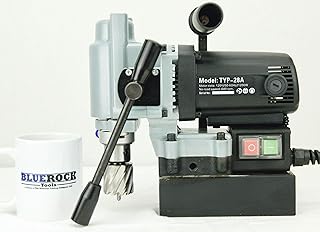


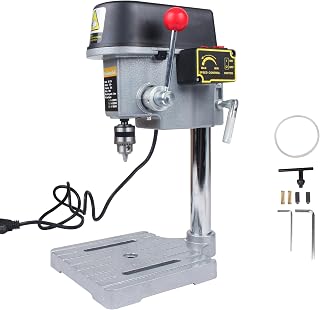


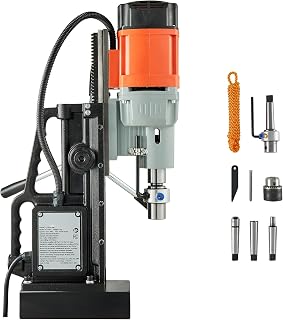


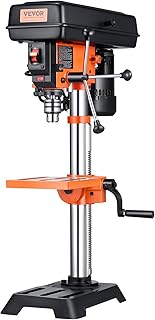


A precision corded drilling press is designed for controlled, repeatable drilling where accuracy, stability and consistent spindle movement matter more than the portability of a handheld drill. For Canadian workshops, garages, woodworking spaces, metalworking areas and DIY benches, the right machine should be evaluated as a complete system rather than by motor power alone.
When comparing the best precision corded drilling press options for 2026, look beyond headline specifications. Chuck capacity, spindle travel, speed adjustment, table construction, column rigidity, runout, workpiece clearance, depth-stop design and the availability of suitable accessories can have a greater effect on practical drilling performance than a single advertised power figure.
Canadian buyers should also confirm electrical requirements, plug configuration, warranty terms, replacement-part support and retailer-specific return policies before ordering. A model that appears attractive on specifications may not be the best choice if its configuration is unsuitable for the intended workshop or the accessories required for the job.
Precision is not determined by one feature. It comes from how accurately the spindle, chuck, quill, table and column work together under load. A useful precision-oriented machine should allow the operator to position a workpiece consistently and lower the cutting tool in a controlled, repeatable manner.
Important characteristics include low spindle runout, a rigid column, a stable base, controlled quill movement, a properly aligned table and an effective depth stop. These features help reduce unwanted movement and make repeated holes easier to produce at consistent locations and depths.
Precision also depends on setup. Even a well-built drill press can produce inaccurate results if the table is misaligned, the workpiece is allowed to move, the chuck is contaminated or the machine is mounted on an unstable surface.
Spindle runout describes unwanted radial movement of the rotating spindle or tooling. Lower runout is generally desirable for precision drilling because excessive movement can affect hole size, finish and tool life.
Buyers should distinguish between manufacturer-stated runout specifications and independent measurements. A specification supplied by a manufacturer is useful for comparison, but it should not automatically be treated as evidence of real-world performance under every operating condition.
The quill is the moving portion that carries the spindle and chuck. Smooth, controlled travel makes it easier to start holes accurately and achieve repeatable drilling depths. Excessive play or inconsistent movement can make precision work more difficult.
A depth stop is particularly useful when several holes must be drilled to the same depth. It can reduce reliance on visual estimation and make repetitive workshop tasks more consistent.
The column supports the drilling head and table assembly. A rigid column helps keep the spindle position stable when pressure is applied to the cutting tool. This is particularly important when drilling harder materials or using larger drill bits.
When comparing machines, consider the overall construction rather than simply looking at the diameter of the column. The connection between the column, base, head and table also contributes to rigidity.
Specifications are most useful when they are considered in relation to the work you actually intend to perform. The following measurements should be compared across shortlisted models instead of focusing exclusively on motor wattage or advertised speed.
The chuck is one of the most important interfaces between the machine and the cutting tool. Before buying, identify the drill-bit sizes and shank styles you expect to use and compare them with the machine's stated chuck capacity.
A machine intended mainly for small woodworking holes has different requirements from one intended for larger metalworking operations. Choosing a very large chuck does not automatically make a machine more precise or more capable in every application.
Also consider whether the machine uses a keyed or keyless chuck and whether replacement chucks or compatible tooling are readily available through Canadian retailers. A keyed chuck can provide strong clamping when properly tightened, while a keyless design can make tool changes more convenient.
Some users may eventually consider replacing a factory chuck with a higher-quality compatible unit. This can be worthwhile when precision and repeatability are priorities, but compatibility must be checked carefully. The spindle interface, taper, capacity and physical dimensions all need to match.
Do not assume that any aftermarket chuck will fit a particular drilling press simply because the advertised capacity appears suitable.
Drill speed should be selected according to the material, drill diameter and tooling. Smaller drill bits generally operate at higher speeds than larger bits, while many harder materials require more conservative cutting conditions than softer materials.
Variable-speed capability can make a drill press more versatile because the operator can adjust the machine to suit different jobs. However, the useful range and adjustment method matter more than the words “variable speed” alone.
Traditional belt-and-pulley systems can provide dependable mechanical speed selection, while electronic systems may offer easier adjustment. Buyers should consider convenience, maintenance, operating range and the type of work planned for the machine.
A precision drill press can be used with a variety of materials, but the correct setup changes significantly between applications. Drill selection, speed, feed pressure, lubrication and workholding should all be appropriate for the material.
For woodworking, table stability and accurate depth control are particularly useful. A drill press can make repeated holes, dowel holes, hardware holes and other operations easier to perform consistently than a handheld drill.
Forstner bits, brad-point bits and other woodworking cutters can place different demands on the machine. Larger-diameter cutters may require slower operating speeds and a stable workpiece setup.
Metal drilling generally places greater demands on rigidity and controlled cutting conditions. The workpiece should be secured rather than held by hand, particularly when using larger bits or when there is a possibility of the material catching the cutter.
Cutting fluid may be appropriate for certain metalworking applications, depending on the material and tooling manufacturer's recommendations. Users should also consider chip management and eye protection.
Plastic and composite materials can behave differently from both wood and metal. Excessive speed or pressure may produce melting, chipping or other unwanted results. A controllable drill press can make it easier to adjust operating conditions, but the correct setup still depends on the specific material.
The table is often overlooked during product comparisons, even though it directly supports the workpiece. A stable, accurately adjustable table can make positioning easier and improve repeatability.
Look at the table's dimensions, adjustment mechanism, locking system and compatibility with clamps or workshop fixtures. Slots or other provisions for workholding can be particularly useful when drilling metal or irregularly shaped parts.
A tilting table can expand the range of possible operations, but buyers should consider whether they actually need angled drilling. Additional adjustment capability is useful only when it remains practical to set and lock accurately.
For repetitive drilling, a good depth-stop system can be more valuable than additional motor power. It allows the operator to establish a defined stopping point and repeat the same drilling depth across multiple workpieces.
When assessing a depth stop, examine how it is locked and adjusted and whether the mechanism is convenient to reset. A system that is difficult to adjust may discourage precise setup during routine work.
A drilling press should be installed on an appropriately strong and stable surface. A machine that moves or vibrates during operation can compromise drilling accuracy and create unnecessary safety risks.
Before purchase, measure the available bench or stand area. Account for the machine's footprint, the movement of the table, the position of the operating handles and the clearance required for the workpiece.
For larger machines, a dedicated stand or properly engineered mounting arrangement may be preferable to placing the machine on an improvised surface. Follow the manufacturer's installation and mounting instructions.
Because this guide focuses on corded drilling presses, electrical compatibility deserves attention before ordering. Canadian household electrical systems commonly use 120-volt power, but buyers should always verify the exact voltage, frequency, plug configuration and electrical requirements of the specific model.
Do not rely solely on photographs of the plug or assumptions based on the product's country of manufacture. Check the manufacturer's specification information for the exact Canadian configuration being offered by the retailer.
If a machine requires a different electrical arrangement, do not improvise with unsuitable adapters or wiring. Electrical installation should follow applicable Canadian requirements and manufacturer instructions, with qualified assistance where necessary.
Bench-top and floor-standing drill presses serve different workshop requirements. Neither is automatically better for every buyer.
For most buyers, the correct choice should be based on workpiece dimensions, available space, desired drilling capacity and the level of precision required rather than on the physical size of the machine alone.
Brand reputation can be useful when creating a shortlist, but it should not replace specification-level comparison. Depending on the Canadian market and the particular model, buyers may encounter established tool brands such as WEN, DEWALT, Delta, JET, RIKON, Shop Fox and Grizzly.
Different brands and model families can target different workshop segments. A buyer should compare the specific machine rather than assuming every product from a familiar brand offers the same construction, capacity or precision.
WEN is a brand frequently considered by DIY users and workshop buyers looking for a broad selection of power tools. When evaluating a WEN drill press, compare the exact model's capacity, speed system, table design, chuck specification and included accessories.
DEWALT is a widely recognized power-tool brand with a broad product range. Buyers considering a DEWALT drilling solution should distinguish between products designed for different applications and compare the actual specifications rather than relying on brand familiarity.
Delta has a long association with workshop machinery and woodworking equipment. When comparing a Delta drill press, pay particular attention to the machine's construction, adjustment mechanisms, spindle specifications and suitability for the intended material.
JET is another established name in workshop machinery. Models can differ substantially in size and intended use, so commercial buyers and serious hobbyists should compare table capacity, spindle travel, speed adjustment and installation requirements for the exact model.
RIKON is commonly associated with woodworking and workshop machinery. Its products should be evaluated according to the specific requirements of the project, particularly where repeatability, table adjustment and compatibility with woodworking accessories are important.
Shop Fox and Grizzly are also familiar names among workshop machinery buyers. When considering either brand, examine the exact specifications, electrical configuration, replacement-part considerations and Canadian purchasing terms associated with the individual model.
Customer reviews can be useful during commercial research, particularly when looking for recurring comments about setup, usability, packaging, adjustment mechanisms or long-term ownership. However, reviews should be interpreted alongside the manufacturer's specifications.
Look for patterns rather than isolated comments. A single complaint may reflect an individual setup or shipping issue, while repeated observations across multiple reviews may identify a characteristic worth investigating.
Also pay attention to the date and context of reviews. A review for a different model year, regional configuration or similarly named product may not accurately represent the machine being considered.
If your projects involve producing multiple identical holes, prioritize repeatability. Useful features include a dependable depth stop, rigid table locking, smooth quill movement, stable workholding and straightforward speed adjustment.
For repeated production-style tasks, consider how quickly the machine can be set up and reset. A feature is more valuable when it can be adjusted consistently without requiring extensive recalibration.
For advanced users, a measuring system or suitable workshop accessories may further improve repeatability, but these should be considered as part of the entire setup rather than as substitutes for a rigid and properly aligned machine.
The right accessories can significantly expand the usefulness of a corded drilling press. However, compatibility should always be confirmed before purchase.
A drill press is a stationary machine, but its rotating spindle and cutting tools can still create significant hazards. Read the manufacturer's operating instructions before use and follow the safety requirements supplied with the specific machine.
Maintaining a drill press is not only about extending service life. Proper maintenance can also help preserve consistent operation and accuracy.
Keep the table, base and working surfaces clean. Remove chips and debris that could prevent a workpiece or fixture from sitting flat. Inspect the chuck and tooling interfaces regularly and follow the manufacturer's instructions for lubrication and adjustment.
Periodically inspect the machine for unusual vibration, looseness, damaged components or abnormal noise. If accuracy appears to change, investigate the setup, tooling, chuck condition, table alignment and workholding before assuming the motor is responsible.
Table alignment matters when accurate holes are required relative to the workpiece surface. If the table has been tilted or repositioned, verify its position before starting precision work.
For demanding applications, users may employ appropriate measuring equipment to verify alignment and repeatability. The manufacturer's adjustment procedure should take precedence over generic workshop techniques.
A damaged, contaminated or improperly seated chuck can affect drilling accuracy. Drill bits should also be inspected for damage and excessive wear. A precision machine cannot compensate for unsuitable or damaged tooling.
The best machine is the one whose capacity matches the work you actually perform. Start by listing the largest hole diameter you expect to drill, the thickest material you normally work with, the materials involved and the approximate frequency of use.
For a buyer specifically searching for a precision corded drilling press, accuracy and stability should normally be evaluated before raw motor power. Excess power does not correct spindle play, poor table alignment or an unstable base.
Power still matters because the machine must be capable of maintaining appropriate cutting conditions for the materials and drill sizes involved. The goal is to find a balanced specification rather than maximizing a single number.
For many workshop users, a rigid machine with a sensible speed range, accurate depth control and good workholding capability will be more useful than a more powerful machine that lacks the features needed for controlled drilling.
When comparing precision corded drilling presses during 2026, use a consistent checklist. This prevents attractive marketing language from overshadowing the specifications that actually affect suitability.
Value should be assessed by how well a machine satisfies the intended workload over time. A lower-priced machine may be appropriate for occasional drilling, while a more substantial model may make more sense for frequent workshop use.
Consider the total ownership equation: machine cost, required accessories, tooling, suitable mounting, maintenance needs and the likelihood that the machine will need to be replaced if your projects grow beyond its capacity.
At the same time, avoid paying for capabilities you will never use. Oversized machinery can consume workspace and budget without delivering meaningful benefits for straightforward DIY tasks.
When two models appear similar, create a specification comparison rather than relying on brand reputation or appearance. Start with the measurements most important to your work and then consider convenience features.
Before placing an order for a precision corded drilling press, run through the following checklist:
There is no single best machine for every Canadian buyer. The right choice depends on the required drilling capacity, materials, workspace, accuracy requirements, budget and frequency of use. Compare the exact specifications and current purchasing terms for the models that fit your intended applications.
A corded drill press is generally chosen when the user wants a stationary machine with controlled spindle movement and continuous access to mains power. A cordless drill is more portable and flexible, but it does not provide the same stationary drill-press setup.
Spindle runout is important when drilling accuracy is a priority. Lower runout generally supports more consistent tool rotation, but the final result also depends on chuck condition, tooling quality, workholding, alignment and operating technique.
No. Motor power is only one part of the specification. For precision applications, rigidity, spindle stability, speed control, table design and depth control can be equally or more important depending on the work.
Choose based on your typical workpieces rather than the largest job you might perform someday. Consider swing, spindle travel, chuck capacity, table dimensions and available workspace together.
Many drill presses can be used for metalworking when the machine, tooling and operating conditions are appropriate. The workpiece should be securely supported, and the correct drill, speed, feed and lubrication should be selected for the material.
Yes. Drill presses are commonly useful for woodworking tasks that benefit from controlled vertical drilling, repeatable depth and stable workpiece positioning. The appropriate bit and speed should be selected for each operation.
Not necessarily. A larger table can improve workpiece support and positioning, but precision depends on the entire machine's rigidity, alignment, spindle system and setup.
Variable speed can be valuable when you work with different materials and drill sizes because it provides greater control over operating conditions. Whether it is worth prioritizing depends on your actual projects and the range of speeds offered by the machine.
Confirm the exact model, Canadian electrical configuration, specifications, included accessories, retailer return policy, applicable warranty information and current customer feedback. Do not assume that a listing intended for another market has the same electrical or accessory configuration.
No. Price can reflect construction, capacity, features and other factors, but accuracy should be evaluated through the specifications and design characteristics relevant to your application.
A useful independent buying guide should evaluate machines against the needs of real users rather than simply ranking products by price or popularity. For this category, the most meaningful comparison areas include precision-related specifications, mechanical stability, drilling capacity, speed flexibility, workpiece support, usability, electrical compatibility and overall suitability for Canadian workshops.
Because retailer pricing, inventory, promotions and customer feedback can change, shoppers should verify the latest information for the exact model before making a purchase. Product specifications should also be checked against the manufacturer's current documentation wherever possible.
The goal is not to choose the machine with the longest feature list. It is to identify the drilling press that provides the right combination of accuracy, capacity, control, stability and practical ownership characteristics for the work you expect to perform.
The best precision corded drilling press for your Canadian workshop should match your materials, hole sizes, workpiece dimensions and frequency of use while providing the stability and control required for accurate drilling. Start with chuck capacity, spindle travel, swing, speed range, table design, depth control and rigidity, then evaluate electrical compatibility and ownership considerations.
For occasional DIY projects, a compact bench-top machine with straightforward controls may provide the right balance. Woodworkers may place greater emphasis on table support and repeatable depth, while metalworking users may prioritize rigidity, speed control, workholding and suitable tooling capacity. More demanding users should examine precision specifications and construction details particularly carefully.
Before buying, compare the exact models available to you, review current specifications and customer feedback, confirm Canadian electrical compatibility, and check today's pricing and retailer terms. A careful specification-based comparison is the most reliable way to narrow a large selection down to the precision corded drilling press that genuinely fits your workshop.