

♥ Wishlist
Compare 35 Cordless Drilling Press for Portable Precision Drilling products in Canada. Reviews, ratings, pros, cons and buying advice updated for October 2026.






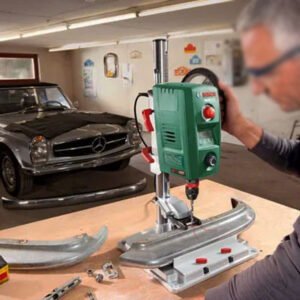
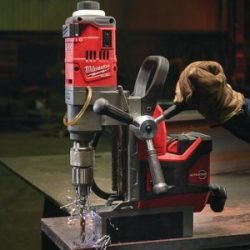
A cordless drilling press can occupy an unusual position between a conventional handheld drill and a full-size benchtop drill press. The attraction is straightforward: you get more controlled drilling than freehand work while retaining the portability and convenience associated with battery-powered tools. For Canadian hobbyists, DIY users, makers and tradespeople, the right choice depends less on a single headline specification and more on how the machine handles accuracy, material compatibility, battery demands, workpiece size and available workspace.
When comparing the best precision cordless drilling press options for 2026, look beyond motor speed and battery voltage. Important considerations include spindle control, chuck capacity, quill travel, drilling depth, column rigidity, table adjustment, runout, speed control, battery platform, ergonomics and the type of material you expect to drill. A compact machine that is exceptionally convenient for small woodworking projects may not be appropriate for repetitive metalworking, while a heavier unit may be unnecessary for occasional household repairs.
A drilling press is designed to guide a drill bit along a controlled vertical path. Unlike a handheld cordless drill, the drill is supported by a structure that helps maintain a more consistent angle and drilling position. This can be particularly useful when making repeated holes, working with small components or trying to produce cleaner, more predictable results.
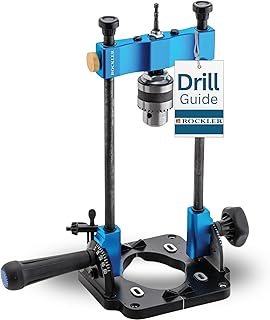
The term “cordless drilling press” can describe several different designs. Some are purpose-built battery-powered drill presses, while others use a cordless drill with a compatible drill-press stand or guided mounting system. These arrangements are not interchangeable, so buyers should examine the actual configuration rather than assuming that every product described as a cordless drill press provides the same level of mechanical stability.
Precision begins at the spindle. Runout describes how much the rotating spindle or chuck deviates from a perfectly concentric path. Lower runout is generally desirable when accurate hole placement and consistent drilling are priorities.
Do not evaluate precision solely by reading a marketing description. Look for clearly stated manufacturer specifications and understand whether a quoted accuracy figure applies to the spindle, chuck or complete drilling system. Chuck quality, arbor design, bearings and the way the tool is mounted can all affect the final result.
Chuck capacity determines the range of drill-bit shank sizes the machine can accept. A common compact-tool configuration may accommodate small and medium bits, but the exact range varies considerably.
A larger chuck does not automatically mean a more precise drill press. The useful combination is a chuck that matches your applications with a spindle and support structure capable of maintaining alignment.
Different materials and drill-bit types benefit from different rotational speeds. Wood, plastics, aluminium, mild steel and other metals should not automatically be drilled at the same speed. A machine with adjustable speed gives you greater flexibility than a single-speed design.
When comparing models, distinguish between variable-speed control and a simple selection of preset speeds. A broader useful speed range can be valuable, but only if the motor maintains appropriate control under load. Electronic speed adjustment may be convenient, while mechanical speed changes can provide a different approach to torque and rotational speed.
Quill travel determines how far the spindle can move downward. This is particularly important when drilling through thicker stock or when a project requires repeated holes at a consistent depth.
Also examine the depth-stop mechanism. A clearly adjustable depth stop can be more useful for repetitive work than simply having a long quill stroke. For production-style DIY tasks, the ability to set and repeat drilling depth can significantly improve consistency.
The worktable supports the material and affects how easily you can position a workpiece. A larger table generally provides more room for clamps and larger components, while a compact table can make a portable machine easier to store and transport.
Rigidity is one of the most important characteristics of any drilling press. If the column, base or head assembly flexes under pressure, the drill bit can wander and the resulting hole may be less accurate.
Compact cordless designs naturally place greater emphasis on portability, so buyers should pay particular attention to construction. A lightweight unit can be convenient for transportation, but weight alone should not be used as a quality indicator. The important question is whether the structure provides sufficient support for the materials and drill sizes involved.
Battery compatibility can be one of the most practical factors when choosing a cordless drilling system. If you already own compatible batteries and a charger from a major tool platform, staying within that ecosystem may reduce the need to maintain another battery and charging system.
Brands such as DeWalt, Makita, Milwaukee, Bosch and Ryobi have established cordless tool ecosystems, but compatibility is model-specific. Never assume that batteries from different voltage classes or generations will interchange simply because they carry the same brand name.
Higher nominal battery voltage can indicate a platform designed for greater power, but it does not by itself establish drilling accuracy, useful torque, runtime or overall machine quality. Motor design, gearing, electronics, battery capacity, spindle efficiency and mechanical construction all influence performance.
For precision drilling, mechanical stability can be more important than choosing the highest-voltage battery system available. A well-supported spindle with appropriate speed control may be preferable to a more powerful machine that introduces excessive movement or vibration for the application.
The cordless format makes the most sense when portability, access to remote work areas or an existing battery ecosystem are important. A corded benchtop drill press can remain the better choice when maximum stability, extended operation and a permanently installed workshop setup are priorities.
For woodworking, precision drilling can be useful for dowel joints, hardware installation, cabinet components, furniture parts, repetitive hole patterns and small workshop projects. A stable table and reliable depth stop can be especially valuable when several holes must match.
Woodworkers should also consider compatibility with brad-point bits, Forstner bits, countersinks and other accessories used for clean hole preparation. The chuck must accommodate the relevant shank sizes, and the machine should provide enough clearance for the stock and bit combination.
Metal drilling places different demands on a machine. Rigidity, speed control and appropriate cutting tools become increasingly important as material thickness and drill diameter increase.
Do not treat a compact cordless drilling press as automatically equivalent to a heavy stationary metalworking drill press. Check the manufacturer's stated material and capacity guidance before using a machine on steel or other hard materials. Workholding is also critical because a rotating drill bit can grab a metal workpiece with considerable force.
Plastics and composites can require careful speed and pressure control. Excessive heat may damage some materials, while aggressive feeding can cause cracking, melting or poor hole quality.
A precision-guided machine can help maintain a controlled feed, but the correct drill-bit geometry and operating conditions remain important. Always follow the material and bit manufacturer's recommendations where available.
Torque and rotational speed serve different purposes. High rotational speed can be useful for certain small-diameter applications, while larger bits and tougher materials can require lower speeds and greater torque.
A useful buying comparison therefore considers the complete operating range rather than one maximum figure. A machine that offers controllable speed and sufficient torque throughout the range may be more versatile than one marketed primarily around maximum RPM.
Brushless motors are common in modern cordless power tools because they eliminate conventional carbon brushes and can support electronic control systems. Brushed motors remain available and can be appropriate for less demanding applications. Motor type should be evaluated alongside the machine's construction, controls, battery platform and intended workload rather than in isolation.
Some cordless tools incorporate electronic systems intended to manage overload, overheating or battery conditions. The exact functions vary by manufacturer and model, so buyers should consult the specifications for the individual machine instead of assuming that all cordless tools provide identical protection.
The chuck is the connection between the spindle and the drill bit, making it a critical part of the system. Keyless chucks offer convenience because the bit can generally be changed without a separate chuck key. Keyed chucks can provide a different clamping method and may be preferred for particular applications.
Before purchasing, compare the chuck specification with the accessories you intend to use. Specialty tools may require adapters, and an adapter can change the effective reach and alignment of the drilling setup.
Not every feature deserves the same weight in a buying decision. For precision-focused work, prioritize features that directly influence positioning and repeatability.
Even a well-built drill press cannot compensate for a poorly secured workpiece. Clamps, vises and suitable fixtures help prevent material movement and improve repeatability.
Never rely on your hand alone to hold a small or awkward workpiece while drilling. The appropriate workholding method depends on the material, shape and drilling operation. A machine with a convenient table should also have enough room for safe clamping.
Portability is one of the principal reasons to consider a cordless system, but portability and stability naturally pull in opposite directions. A compact tool is easier to move and store, while a heavier base and more substantial column can provide greater resistance to movement.
Think about where the machine will actually be used. If it will spend most of its life on a workbench, a slightly heavier design may be more practical. If it needs to move between a garage, shed, jobsite or remote work area, compact dimensions and battery operation may provide greater value.
Canadian buyers should evaluate more than the tool specification sheet. Workshop conditions, seasonal temperatures, storage arrangements and local purchasing considerations can all affect the practical ownership experience.
A useful comparison should not simply rank products by their number of features. Start by identifying the type of drilling you expect to perform and then evaluate each model against the same criteria.
Power-tool specifications are useful only when you understand what each figure represents. Maximum RPM, for example, does not describe how effectively a machine drills under load. Battery voltage does not directly tell you the machine's precision. Chuck capacity does not establish overall drilling capacity.
For a more meaningful comparison, build a specification checklist containing the same fields for every candidate. This makes it easier to identify missing information and prevents a single impressive number from dominating the buying decision.
More power is not automatically more useful for precision drilling. If the machine is too large, heavy or difficult to control for your projects, its additional capability may provide little practical benefit.
A bare cordless tool can appear attractive until the cost of a compatible battery and charger is considered. If you do not already own the required battery platform, compare the complete setup.
A handheld drill and a drill press stand have to be mechanically compatible. The stand must securely support the drill, and the drill's chuck and body must work correctly within the mounting system.
Customer reviews can reveal useful information about setup, usability and common complaints, but review scores should be considered alongside specifications and your own requirements. A tool that works well for light woodworking may not be suitable for heavier drilling simply because it has a strong overall rating.
The machine is only one part of a drilling setup. Bits, clamps, vises, batteries, chargers and replacement components can influence the total cost and convenience of ownership.
Precision equipment still involves rotating machinery and should be used with appropriate precautions. Read the manufacturer's instructions before operating the machine and follow the recommended procedures for the specific model and material.
Routine maintenance helps preserve consistent operation. The exact maintenance schedule varies by machine, so the manufacturer's instructions should take priority.
A compact precision drill press may not be the right tool when your work consistently exceeds its mechanical limits. Consider stepping up to a larger stationary drill press when you need substantially greater throat depth, larger drill-bit capacity, heavier workholding or prolonged drilling in demanding materials.
Similarly, if portability is your primary requirement and precision drilling is only occasional, a guided drill stand may offer a simpler solution than purchasing a dedicated drilling press.
Prioritize ease of setup, compact storage, straightforward controls and compatibility with a battery platform you already own. A moderate-capacity machine can be more practical than an oversized workshop model.
Focus on repeatability, depth control, table flexibility, chuck compatibility and support for common woodworking bits. Stability is particularly important when creating repeated holes for hardware or joinery.
A versatile speed range and good accessory compatibility can be more valuable than maximum drilling capacity. Makers should consider the range of materials they work with rather than optimizing for a single project.
Battery availability, compact dimensions, weight and quick setup become major factors. An existing cordless ecosystem can be particularly convenient when several compatible tools are already in use.
Place greater emphasis on rigidity, controlled speed, appropriate torque, workholding and manufacturer-specified drilling capacity. A stationary drill press may ultimately be a better fit if the work regularly demands substantial material removal.
Good value is not necessarily the lowest purchase price. The better comparison is the complete cost and capability of the setup. Consider the tool, required battery, charger, compatible accessories and likely replacement components together.
A less expensive machine can become less economical if it requires a separate battery platform or lacks the table adjustment, chuck capacity or depth control needed for your projects. Conversely, paying for professional-level capacity that you rarely use may not represent good value for a casual DIY user.
When reading verified customer reviews, focus on recurring patterns rather than isolated comments. Look for consistent observations about assembly, alignment, vibration, battery compatibility, control layout and long-term usability.
Pay particular attention to reviews from people performing work similar to yours. A reviewer drilling small wooden components is evaluating the product under very different conditions from someone repeatedly drilling metal.
Established cordless-tool manufacturers can be useful starting points when researching a precision drilling setup. Depending on the product category and battery ecosystem, names such as DeWalt, Makita, Milwaukee, Bosch and Ryobi may appear among the options Canadian buyers encounter.
Brand familiarity should not replace model-level comparison. A respected manufacturer can produce tools aimed at very different users, so always verify the exact model number, specifications, battery platform and included accessories.
There is no single best model for every Canadian buyer. The right choice depends on the required drilling capacity, material, precision, portability, battery platform and budget. Compare these factors against your intended applications before selecting a model.
A suitable cordless drilling system can provide more controlled positioning than freehand drilling, but accuracy depends on the complete mechanical design, spindle alignment, chuck, workholding, drill bit and operating technique. Check manufacturer specifications rather than assuming that every cordless model provides the same precision.
For repeated or vertically aligned drilling, a guided drill press can provide useful advantages in consistency and control. A regular cordless drill is generally more versatile for drilling and fastening in locations where portability matters more than repeatable positioning.
Some stands are designed specifically to accept compatible handheld drills, but compatibility must be verified for the individual drill and stand. The mounting dimensions, body shape, chuck clearance and operating mechanism all matter.
Choose a battery platform that provides appropriate performance for the intended workload and fits your existing cordless-tool ecosystem when possible. Battery voltage alone does not determine precision or overall tool quality.
Brushless motors can offer advantages in modern cordless-tool designs, including electronic control and the absence of conventional carbon brushes. Whether the additional cost is worthwhile depends on usage frequency, workload, battery ecosystem and the complete specification of the machine.
Some models are suitable for metal drilling within their stated specifications, but buyers should verify the manufacturer's recommended materials, drilling capacities, speed range and accessories. Metal drilling also requires appropriate workholding and cutting practices.
Look for adequate dimensions, rigidity, useful adjustment, secure positioning and provisions for clamping or workholding. The ideal table depends on the size and shape of the materials you regularly drill.
Not necessarily. Chuck capacity primarily indicates the range of compatible bit shank sizes. Overall performance also depends on spindle quality, runout, rigidity, motor characteristics, speed control and the quality of the chuck itself.
Choose cordless when mobility and battery compatibility are important. Choose corded when the machine will remain in a workshop and you prioritize continuous operation, stationary stability and potentially greater capacity.
Runout can be important for precision work because excessive deviation can affect hole quality and concentricity. When comparing products, look for a clearly defined manufacturer specification and understand exactly which component the measurement describes.
Depending on the application, you may need drill bits, clamps, a vise, spare batteries, a charger, adapters or specialty accessories. Include these items when comparing the total cost of different systems.
The best precision cordless drilling press is the one whose mechanical capability matches the work you actually intend to perform. For occasional DIY drilling, portability and simplicity may deserve the greatest weight. For woodworking, repeatable depth and stable workholding can be more important. For metalworking, rigidity, speed control and appropriate capacity become increasingly significant.
Before buying, compare the exact specifications, battery requirements, included accessories and verified customer feedback for each shortlisted model. Check current Canadian retailer listings for the latest package configuration and price, and confirm that the model you select is appropriate for your intended materials and drill sizes.
A disciplined comparison is more useful than choosing a product based on a single specification or headline ranking. Start with your projects, establish the capacity you genuinely need, eliminate unsuitable designs and then compare precision, control, portability, compatibility and overall value. That approach makes it much easier to identify the cordless drilling solution that fits your Canadian workshop in 2026.