

♥ Wishlist
Compare 13 Makita Nail Guns for Canadian Construction & Woodworking products in Canada. Reviews, ratings, pros, cons and buying advice updated for October 2026.


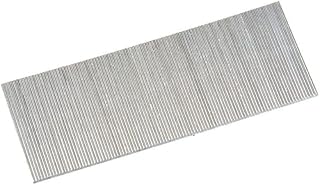


Choosing a precision nail gun is less about finding the most powerful tool and more about matching the nailer to the fastener, material, application and working environment. For Canadian homeowners, finish carpenters, renovators, cabinetmakers and contractors, Makita offers several pneumatic and cordless nailers designed around different fastening requirements. The right choice can improve placement accuracy, reduce surface damage and make repetitive installation work considerably easier.
This guide focuses specifically on Makita nail guns suitable for precision-oriented fastening, including brad nailers, finish nailers, pin nailers and specialist roofing or construction nailers. Rather than treating every nail gun as interchangeable, compare gauge, nail length, firing mode, depth adjustment, magazine design, power source, ergonomics and the type of material being fastened.
Makita's Canadian range includes both compressed-air models and cordless LXT nailers. Pneumatic models can be attractive for workshop and high-volume applications where a compressor is already available, while cordless models eliminate the hose and compressor and can be more convenient for renovation work and mobile job sites.
Precision in a nail gun comes from the interaction of several design elements. A narrow contact tip helps the operator position the fastener accurately, while controlled firing and depth adjustment help keep nail heads consistently below, flush with or appropriately seated in the workpiece.
A precise nailer should also provide predictable trigger behaviour. Sequential firing is particularly useful when each nail must be deliberately positioned. Bump-fire operation can increase productivity for repetitive work, but it generally requires greater attention to tool positioning and workpiece control.
Depth adjustment is another important factor. Wood density, nail length, material thickness and air pressure can all influence how deeply a fastener is driven. A good adjustment system lets the operator tune the result without relying solely on changes to compressor pressure or repeatedly altering technique.
Nail gauge is one of the most important specifications to understand before buying. The gauge number does not simply indicate quality or power; it describes the approximate thickness of the nail. Lower gauge numbers generally correspond to thicker finish nails.
23-gauge pins are extremely small and leave very small entry holes. They are useful when visual appearance is critical and the fastener's primary purpose is to hold a component while adhesive cures or to secure very delicate trim.
A pin nailer is not normally the first choice for structural fastening or applications where the nail itself must provide substantial holding strength.
18-gauge brad nailers are among the most versatile choices for detailed interior woodworking. They are commonly used for trim, small mouldings, cabinet components, light assembly and other applications where a relatively small hole and good holding ability are desirable.
The Makita AF506 is a notable pneumatic example. Makita specifies compatibility with 18-gauge brad nails from 5/8 inch to 2 inches, with a 100-nail magazine. Its slim contact-tip design is intended for precise fastening in applications such as trim, crown moulding, baseboard, casing, cabinetry and woodworking.
16-gauge finish nails provide more holding strength than 18-gauge brads and are useful when attaching thicker or heavier interior trim. They can be suitable for applications where a brad nailer would not provide the desired fastening strength.
Makita's cordless 16-gauge range includes models such as the DBN601Z, while other Makita configurations and regional product ranges may differ. Always confirm the exact Canadian model designation and nail specification before purchasing.
15-gauge finish nails are larger again and are commonly associated with substantial trim and finish carpentry. They can provide stronger holding power but leave a larger hole that may require filling before finishing.
The Makita AF635 is a pneumatic 15-gauge angled finish nailer designed for 1-1/4-inch to 2-1/2-inch finish nails. Its angled configuration can be particularly useful for reaching corners and other restricted areas.
The AF506 is a strong candidate for precision-oriented interior woodworking when a pneumatic tool is appropriate. Makita specifies a 5/8-inch to 2-inch 18-gauge nail range and a 100-nail magazine. Its narrow contact-tip design is intended to help with accurate placement around trim, cabinetry and woodworking projects.
Other useful features include a quick-release nose for clearing jams, a tool-free or adjustable depth-control arrangement, an air-blower function and protective bumpers. Its relatively compact pneumatic format can be particularly appealing for workshop users who already have suitable compressed-air equipment.
Best suited to: trim, cabinetry, moulding, furniture and general fine woodworking.
Key consideration: the AF506 requires an appropriate compressor and air supply, so the nailer itself should not be evaluated separately from the pneumatic equipment required to operate it.
The DBN601Z is a cordless 16-gauge straight finish nailer intended for users who want finish-nailer capability without a compressor hose. Makita specifies 3/4-inch to 2-1/2-inch nail compatibility and a 110-nail magazine.
Its cordless design is particularly relevant for renovation work where moving a compressor and hose between rooms would be inconvenient. Makita describes its pneumatic spring mechanism as providing lighter recoil and a feel similar to pneumatic nailer operation.
Best suited to: heavier interior trim, finish carpentry and users already invested in the 18V LXT platform.
Key consideration: remember that a tool-only configuration does not necessarily include a battery or charger. Check the exact package contents before comparing prices.
The AF635 is designed for applications where a larger finish nail is appropriate. Makita lists a 15-gauge nail range from 1-1/4 inches to 2-1/2 inches, along with a 100-nail magazine.
The angled nose is useful when fastening in corners or locations where a straight tool is awkward to position. The model also includes sequential and bump-fire operation, depth adjustment, a slim nose and an anti-dry-fire mechanism.
Best suited to: substantial trim and finish carpentry where 15-gauge nails are appropriate.
Key consideration: a 15-gauge nailer is not a substitute for an 18-gauge brad nailer. The larger fastener is better suited to heavier work but may be excessive for delicate mouldings and small components.
The AF601 sits between the lighter brad-nailer category and larger 15-gauge finish nailers. A 16-gauge straight finish nailer can be a practical choice when stronger fastening is required without moving all the way to a 15-gauge system.
It is worth considering for users who work with baseboards, casing, heavier mouldings and general finish carpentry. As with other pneumatic models, the compressor, regulator, hose and fittings should be considered as part of the complete setup.
Best suited to: general finish carpentry and heavier interior trim.
A 23-gauge pin nailer occupies a very different role from an 18-gauge or 16-gauge finish nailer. The Makita AF353 is designed around very small 23-gauge pins and is intended for precision fastening where minimizing the visible hole is important.
Pin nailers are particularly useful for delicate mouldings, small decorative pieces and situations where adhesive is combined with temporary or supplemental mechanical fastening.
Best suited to: fine woodworking, delicate trim and invisible-looking fastening.
Key consideration: the very small fastener is not intended to replace larger finish nails when substantial mechanical holding strength is required.
The AN454 is a specialist roofing nailer rather than a general-purpose finish nailer. Makita specifies compatibility with 3/4-inch to 1-3/4-inch, 15-degree round-head roofing nails and a 120-nail magazine.
It includes features intended specifically for roofing work, including a shingle guide, multiple depth settings, bump and sequential firing modes and a magazine designed for coil nails.
Best suited to: roofing applications requiring the correct roofing fastener and tool configuration.
Key consideration: do not select a roofing nailer simply because it offers a high firing rate. The fastener type, nail head, shingle positioning and roofing application determine whether the tool is appropriate.
The DBN600 platform is another cordless 16-gauge finish-nailing option. Makita documentation specifies nail lengths from 1 inch through 2-1/2 inches and a 100-nail magazine for the DBN600 configuration.
Cordless operation can be especially useful for renovation projects, punch-list work and installations where access to compressed air is limited. Before buying, verify the exact suffix and package because Makita model configurations can vary by market.
Best suited to: mobile finish work and users who prefer cordless operation.
The DBN610Z belongs to Makita's cordless 16-gauge angled finish-nailer category. An angled magazine can provide an advantage when accessing corners and tight installation areas, particularly around trim profiles.
For professionals already using Makita 18V LXT batteries, the platform compatibility can be an important part of the buying decision. For a first-time cordless buyer, however, the cost of the complete battery-and-charger ecosystem should be considered rather than comparing tool-only prices.
Best suited to: cordless finish carpentry where an angled tool provides useful access.
The DBN620Z represents the heavier cordless finish-nailer category. Makita lists it as an 18V LXT brushless 15-gauge, 34-degree angled finish nailer with a 2-1/2-inch maximum nail length.
This type of tool is aimed at users who need the holding characteristics associated with larger finish nails but want to avoid the hose and compressor associated with a pneumatic nailer.
Best suited to: heavier finish carpentry and mobile applications where 15-gauge cordless performance is desirable.
Makita's broader pneumatic nailer range also includes specialist construction nailers such as framing and siding models. These are important to distinguish from precision trim nailers because their intended applications, fastener dimensions and driving requirements are different.
A framing nailer can be highly effective for structural framing while being completely inappropriate for delicate cabinet trim. Likewise, a roofing nailer should not be substituted for a finish nailer merely because both use compressed air.
Best suited to: users whose projects extend beyond fine finish carpentry into framing, siding or other dedicated construction applications.
The cordless-versus-pneumatic decision is one of the most important choices when comparing Makita nail guns.
Neither system is automatically better. A trim carpenter working in a workshop with an established compressed-air system may prefer pneumatic equipment, while a renovator working throughout an occupied home may place much greater value on cordless mobility.
Nail length should be selected according to the combined thickness and fastening requirements of the materials. A nail that is too short may provide inadequate holding power, while an excessively long nail can penetrate the workpiece or create an unnecessary risk of damage.
For trim installation, consider the thickness of the trim, the substrate behind it and the amount of penetration required. Always remain within the nail-length range specified for the particular Makita nailer.
Do not assume that two nailers accepting the same gauge will accept the same nail lengths. Magazine geometry, firing mechanism and manufacturer specifications can vary substantially between models.
Buyers sometimes focus too heavily on driving force when choosing a nail gun. For precision work, the more important question is whether the tool is designed for the correct fastener and material.
A powerful 15-gauge finish nailer may be a poor choice for delicate cabinet trim if an 18-gauge brad nail provides the appropriate balance of holding strength and minimal surface damage. Conversely, using an undersized brad nail where a heavier finish nail is required can compromise the fastening job.
The ideal tool is therefore determined by the complete fastening system: gauge, nail length, nail head, material, depth, grain direction and intended load.
Sequential firing requires deliberate placement before each nail is driven. It is generally the better choice when accuracy is more important than maximum firing speed.
Bump-fire operation is designed for repetitive fastening. Once the operator has established the correct technique and safety controls, it can accelerate applications involving numerous fasteners.
For precision-oriented buying, sequential operation should generally be treated as an important feature rather than an optional extra.
Depth adjustment allows the operator to tune how deeply the fastener is driven. This matters because the same nailer can produce different results in softwood, hardwood, engineered wood and dense trim.
For finished surfaces, the goal is normally consistent seating without excessive penetration. A nail driven too deeply can leave a larger depression that requires filling, while a nail left proud can interfere with finishing and produce a visibly poor result.
When setting up a new nailer, test the depth on a piece of scrap material that matches the actual workpiece. Make small adjustments and inspect the result before moving to finished material.
Magazine capacity matters most when a nailer will be used continuously. A larger magazine can reduce interruptions, but capacity should not override more important considerations such as fastener compatibility, tool balance and precision.
For occasional home projects, a modest magazine may be perfectly adequate. For repetitive trim installation, a higher-capacity magazine can reduce the number of reloads and help maintain workflow.
Always confirm the magazine capacity for the exact model and configuration rather than assuming every version of a product family has identical specifications.
Precision fastening often involves holding a tool at arm's length or working in awkward positions. A nailer that feels manageable during a five-minute test can become tiring during several hours of installation.
Look for a comfortable grip, logical trigger placement, balanced weight distribution and a nose design that allows clear visibility of the fastening point. Belt hooks can also be useful for professional users who frequently climb ladders or move around a job site.
For cordless models, remember that the advertised tool weight may not represent the complete working weight once a battery is installed. Compare the practical configuration you expect to use.
For interior trim, the choice usually comes down to 18-gauge, 16-gauge or 15-gauge fastening. The correct choice depends on the thickness and weight of the trim as well as the substrate.
An 18-gauge brad nailer such as the AF506 is often more suitable for lighter trim and detailed woodworking. A 16-gauge finish nailer can provide greater holding power for larger pieces, while a 15-gauge model is appropriate when still stronger fastening is required.
Before buying, identify the largest and smallest trim components you expect to install. If one nailer cannot appropriately cover the entire range, buying the wrong single tool can be less economical than selecting a model specifically matched to your most common work.
Cabinetmaking places a particularly high emphasis on clean entry points, controlled depth and accurate placement. Large framing-style nailers are generally unsuitable for visible cabinet work.
An 18-gauge brad nailer can be useful for many cabinet assembly and trim tasks, while a 23-gauge pin nailer can be valuable for delicate components and situations where minimizing the visible fastener hole is important.
For cabinet work, the ability to position the nose accurately can matter more than raw firing speed. Test the nailer on scrap material from the same stock before working on finished cabinet parts.
Furniture work often combines hardwoods, softwoods, plywood, veneers and decorative components. This makes fastener selection especially important.
Small-gauge nailers can be useful for holding decorative elements, while larger finish nails may be appropriate where additional mechanical strength is needed. However, nail placement should always account for grain direction and the risk of splitting narrow components.
A precision nose, controlled depth adjustment and an appropriate firing mode can make a greater practical difference than a high maximum pressure specification.
Renovation work often rewards cordless equipment because the operator may work in several rooms, basements, garages or unfinished spaces without wanting to set up a compressor and hose.
Makita 18V LXT nailers can be attractive for existing LXT users because battery compatibility can simplify tool ownership. However, first-time buyers should evaluate the total system cost, including battery and charger requirements, rather than focusing only on the tool-only price.
Canadian buyers should pay attention to the exact model number, package configuration and regional specification. Product names can look nearly identical while the included battery, charger, case or accessories differ.
It is also sensible to check the manufacturer's Canadian documentation before purchase. Specifications can vary by market, and Makita itself notes that product specifications may differ between countries.
For buyers in Canada, also consider the environment in which the tool will be used. A workshop, heated renovation site and outdoor construction environment impose different practical demands. Dust, moisture, cold temperatures and transportation can all affect tool handling and battery performance.
If you already own compatible Makita 18V LXT equipment, staying within the same battery platform can reduce duplication. A shared battery ecosystem can be particularly convenient for contractors who move between drills, impact drivers, saws and nailers during the same project.
However, platform compatibility should never override the fastening requirements. A convenient battery ecosystem does not make an unsuitable gauge or nail length appropriate for the job.
When comparing cordless models, check whether the listing is tool-only or a complete kit. Also check the stated battery requirements and the exact model suffix.
With pneumatic nailers, the compressor is part of the performance equation. The nailer may specify a particular operating-pressure range, but the compressor must also be capable of delivering suitable airflow for the intended usage.
Makita's AF506, for example, is specified for an operating air-pressure range of 70 to 120 PSIG. The manufacturer's Canadian specifications also identify its 18-gauge nail range and 100-nail magazine capacity.
Do not select a compressor solely by tank size. Consider delivered airflow, pressure capability, duty cycle and the number of pneumatic tools that may be used simultaneously.
Makita makes nailers for very different applications. Selecting a Makita tool simply because the brand is trusted does not guarantee that it is suitable for your project.
Gauge determines the type of fastening the tool is designed to perform. Confirm the required gauge before comparing models.
A nailer may accept a particular gauge but only within a defined length range. Verify both dimensions before purchasing a box of nails.
Many cordless listings use tool-only configurations. Make sure you know whether the battery and charger are included.
A pneumatic nailer is not a complete working system without suitable compressed air equipment, hose, fittings and regulation.
More power is not automatically better for precision work. A larger nail and heavier tool can be unnecessary for delicate trim.
A nailer can have excellent specifications yet be awkward for a particular application. Nose visibility and access around corners can make a substantial difference.
Always compare the complete package. A lower apparent price may reflect a tool-only configuration, while another listing may include batteries, charger, case or accessories.
Makita is not the only established manufacturer worth considering. Buyers may also encounter nailers from DEWALT, Milwaukee, Bostitch, Metabo HPT, Senco, Paslode and RIDGID.
The best brand depends heavily on the tool category and existing equipment. For cordless users, battery-platform compatibility can be a major factor. For pneumatic users, compressor compatibility and the availability of suitable fasteners may matter more.
Instead of selecting a brand solely from reputation, compare the individual nailer against the specifications required for your application.
Even the best nail gun cannot compensate for poor setup. Start by testing nail depth on scrap material. Confirm that the fastener is seated correctly without excessive penetration.
Keep the nose square to the intended fastening surface unless the application specifically calls for an angled approach. Avoid forcing the tool into position because excessive pressure can affect placement and may damage softer materials.
For narrow trim, pay attention to grain direction. Driving a relatively large finish nail close to an edge can increase the risk of splitting, particularly in hardwoods or narrow mouldings.
Use the correct fastener for the material. Do not substitute an incompatible nail simply because its gauge appears similar.
Routine maintenance helps preserve consistent operation. Follow the specific maintenance instructions supplied with the model because lubrication requirements and service procedures can vary.
Cordless nailers eliminate the compressor and hose but still require sensible care. Keep the magazine and contact area free of accumulated debris, inspect the tool before use and follow the manufacturer's battery-storage and charging guidance.
Battery-powered equipment should also be protected from unnecessary moisture, excessive heat and physical damage. When a tool is not being used for an extended period, follow the battery manufacturer's storage recommendations rather than treating the battery like a disposable accessory.
A nail gun is a high-energy fastening tool and should be treated accordingly. Read the model-specific instruction manual before operation and use appropriate eye protection.
Customer reviews can be useful, but they should be interpreted carefully. Look for feedback from people performing the same type of work rather than relying solely on overall star ratings.
For precision nailers, useful review themes include depth consistency, jam frequency, ease of loading, nose visibility, balance, trigger feel, battery runtime for cordless tools and compatibility with commonly available fasteners.
Reviews that discuss a nailer in the context of trim installation, cabinetry or professional finish carpentry can provide more useful buying information than comments from users performing unrelated tasks.
Prices for power tools can change with promotions, kit configurations and retailer inventory. For that reason, a useful price comparison should always identify whether the listing is tool-only or a complete kit.
When comparing prices in Canada, check the complete purchase requirement: nailer, battery, charger, compressor if required, hose, fittings and compatible fasteners. A cheaper tool can become more expensive once missing equipment is added.
There is no universal best model because trim varies considerably. An 18-gauge brad nailer such as the AF506 can be a strong fit for lighter trim and detailed woodworking, while 16-gauge and 15-gauge finish nailers are better suited to heavier trim where greater holding power is required.
It can be suitable for some baseboard installations, depending on the baseboard thickness, substrate and fastening requirements. For heavier baseboard or applications requiring stronger mechanical fastening, a 16-gauge or 15-gauge finish nailer may be more appropriate.
A 23-gauge pin nailer is best for delicate trim and small components where minimizing the visible hole is important. It should not automatically be used as a replacement for an 18-gauge, 16-gauge or 15-gauge finish nailer when substantial holding strength is required.
They can be especially attractive for users who value portability or already own compatible Makita 18V LXT batteries. The main advantage is avoiding a compressor and hose, although battery and charger requirements should be included when evaluating the total cost.
Neither is universally better. Pneumatic models can be excellent for workshops and repetitive professional use where compressed air is already available. Cordless models can be more convenient for mobile renovation and installation work.
A beginner should start with the tool that matches the most common project rather than automatically buying the largest or most powerful model. For general light woodworking and trim, an 18-gauge brad nailer is often a more versatile starting category than a specialist roofing or framing nailer.
No. Nail guns are designed around specific gauges, lengths and fastener types. A brad nailer, finish nailer, roofing nailer and framing nailer serve different purposes.
No. Cordless Makita nailers are designed to operate from their specified battery platform. Pneumatic Makita nailers, by contrast, require a suitable compressed-air system.
No. The correct nail depends on the material, joint, thickness and required holding strength. An unnecessarily large nail can create larger holes and increase the risk of damaging delicate material.
Check the exact model number, nail gauge, compatible nail lengths, firing modes, power source, magazine capacity, dimensions, weight, battery requirements if applicable, included accessories and current Canadian specifications.
The best precision Makita nail gun is the one that fits the fastening job rather than the one with the most impressive headline specification. For detailed woodworking and lighter trim, the 18-gauge AF506 is an important model to compare. For stronger finish applications, Makita's 16-gauge and 15-gauge nailers offer different levels of fastening capability. For mobility, the 18V LXT cordless range removes the compressor and hose from the equation.
Before making a purchase in Canada, compare the exact model specification, fastener compatibility, power source, included equipment and current retailer pricing. Most importantly, select the gauge and nail length based on the material and application. That approach is more likely to produce clean, consistent fastening than choosing a nailer based solely on brand, firing speed or maximum power.
Product specifications, model availability and package contents can change, so confirm the current Canadian specification and exact configuration at the time of purchase. This is particularly important when comparing tool-only cordless products with complete kits or when considering older pneumatic models alongside newer cordless alternatives.