

♥ Wishlist
Compare 17 Cordless Nail Guns for Fast, Portable Nailing products in Canada. Reviews, ratings, pros, cons and buying advice updated for October 2026.
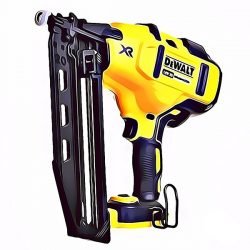
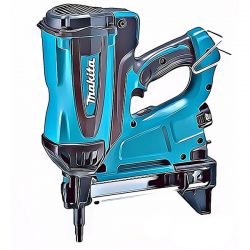
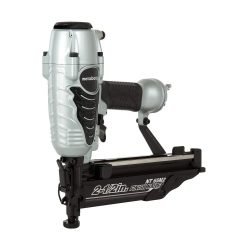

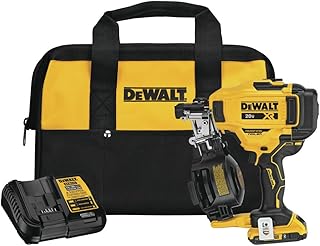
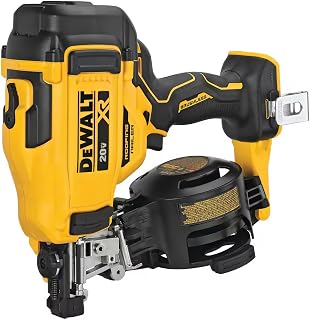
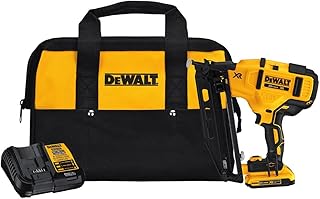

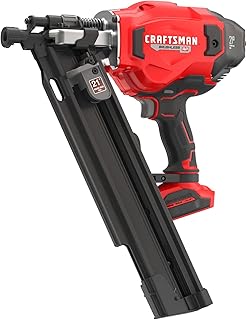
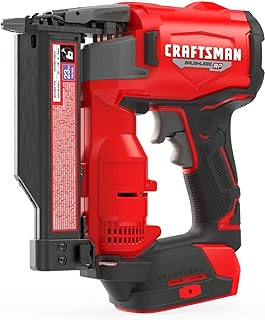


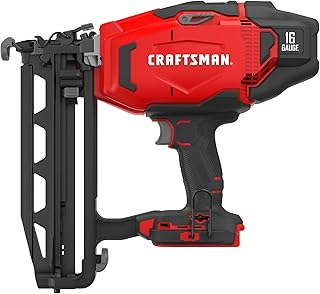

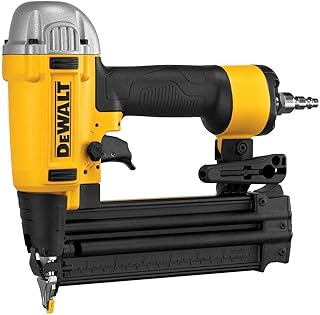

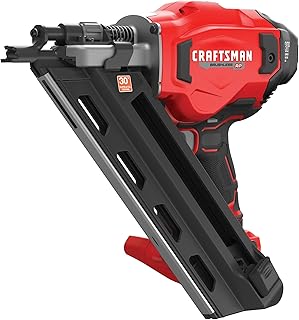


A precision cordless nail gun can make trim installation, cabinetry, furniture work, framing, renovation projects, and general woodworking considerably faster than manual fastening. However, cordless nailers are not interchangeable. The right tool depends on the nail or brad size required, material thickness, firing method, magazine capacity, available battery platform, and the level of finish expected after installation.
For Canadian buyers, the most useful comparison is not simply which nail gun has the highest advertised power. A better approach is to match the tool's fastening range and design to the job. A compact 18-gauge brad nailer may be excellent for delicate trim but unsuitable for structural framing, while a cordless framing nailer can deliver considerably more driving force but is unnecessarily large for fine finish work.
The gauge and length of fastener should be among the first specifications you compare. Common cordless nailer categories include 15-gauge and 16-gauge finish nailers, 18-gauge brad nailers, and 23-gauge pin nailers. Framing nailers use substantially larger fasteners designed for construction applications.
A common buying mistake is choosing a nailer because it looks powerful without checking whether it accepts the exact fasteners required for the project. Before comparing prices or customer feedback, identify the fastener type, diameter or gauge, minimum and maximum supported length, and the nailer's compatibility requirements.
The correct nail length also depends on the materials being joined. A fastener needs enough penetration into the supporting material to hold securely without being unnecessarily long. Manufacturer guidance should take priority when fastening into specific materials, especially hardwoods, engineered panels, structural members, or materials with known thickness limitations.
Cordless nailers generally fall into different mechanical and battery-system approaches. Understanding the technology helps explain why two tools with similar stated specifications can feel very different in practical use.
Many cordless nailers use a rechargeable battery to power an internal motor and firing mechanism. Depending on the design, the tool may use a flywheel, pneumatic-style compression system, or another mechanically controlled drive system. The exact mechanism affects trigger response, noise, vibration, weight, and consistency.
When comparing models, look beyond battery voltage alone. Voltage is not a complete measure of driving performance. Motor design, mechanical architecture, battery capacity, electronics, and the manufacturer's control system all influence how a cordless nailer performs.
Battery voltage is useful when comparing tools within the same manufacturer's ecosystem, but it should not be treated as a universal performance ranking. Battery capacity, usually expressed in amp-hours, is more directly relevant to potential runtime, although actual runtime varies with nail size, material, firing frequency, temperature, battery condition, and tool design.
One of the most important long-term purchasing decisions is the battery ecosystem. If you already own compatible cordless tools, staying within that platform can reduce the need to purchase another charger and separate battery collection.
Major power-tool ecosystems include brands such as DeWalt, Milwaukee, Makita, Bosch, Ryobi, Metabo HPT, and other established manufacturers. Battery compatibility should always be confirmed for the exact model because a brand may have several generations or incompatible voltage platforms.
For a first cordless power-tool purchase, consider the wider ecosystem rather than evaluating the nailer in isolation. A slightly more expensive nailer can make more sense if its battery platform also supports drills, impact drivers, saws, lights, sanders, and other tools you expect to purchase later.
The word “precision” should mean more than simply a compact housing. For finish work, several small design features can have a major effect on the quality of the finished surface.
Adjustable drive depth allows the user to fine-tune how deeply the fastener enters the workpiece. This is particularly important with trim and cabinetry because an overly deep drive can leave a noticeable divot, while insufficient penetration can leave the fastener proud of the surface.
A useful depth-adjustment system should be straightforward to access and predictable when moved between settings. Always test the adjustment on scrap material before beginning visible work.
Tool-free controls can make repeated adjustments easier during installation. Look for clearly marked controls and a mechanism that can be changed without requiring additional tools where the manufacturer specifies tool-free operation.
Some nailers provide different firing modes. Sequential firing generally requires the user to activate the contact element and trigger in a controlled sequence, while contact or bump firing can permit faster repetitive fastening on compatible tools.
For detailed trim work, controlled sequential firing is often more useful than maximizing firing speed. For repetitive construction tasks, a faster firing mode may be valuable when the application and tool instructions permit it.
A dry-fire lockout can prevent the tool from firing when the magazine is nearly empty. This feature can reduce wasted trigger pulls and may help prevent unnecessary wear. It is particularly convenient when working quickly across a long installation.
Integrated lighting can improve visibility around corners, inside cabinets, and in dim renovation areas. A light is useful, but it should not outweigh more important considerations such as weight, balance, fastener compatibility, and driving consistency.
Nail jams are an occasional reality of fastening work. A tool with an accessible jam-release mechanism can save time when a fastener becomes misaligned. Check how the manufacturer instructs users to clear jams and whether the process requires tools.
A cordless nailer can have impressive specifications and still be uncomfortable if its weight is concentrated too far forward or if the grip does not suit your hand. This becomes particularly noticeable during trim installation, overhead work, ladder work, and long sessions.
When comparing precision nailers, consider total operating weight rather than bare-tool weight alone. A manufacturer's bare-tool specification may exclude the battery, while the actual tool in use includes the battery and loaded magazine.
Magazine capacity affects productivity more than many buyers expect. A larger magazine means fewer interruptions during repetitive fastening, while a compact magazine can help keep the tool smaller and easier to maneuver.
Do not compare capacity without checking the fastener range. A magazine that holds a large number of nails is not especially useful if it does not accept the particular fasteners required for your project.
A clear loading indicator can also be useful because it provides a quick visual check before pulling the trigger. When evaluating a nailer, examine how easily the magazine opens, loads, closes, and indicates the remaining fasteners.
Cordless nailers eliminate the compressor and air hose associated with traditional pneumatic systems, but they are not silent. Mechanical noise varies by tool design, and repeated firing can still be disruptive in enclosed rooms.
For residential renovation, cabinetry, and interior trim work, consider the overall work environment rather than assuming cordless automatically means quiet. Hearing protection is appropriate when required by the operating conditions and manufacturer's safety instructions.
Vibration and recoil also influence comfort. A nailer that is easier to control can help with consistent placement, particularly when fastening small trim pieces where every hole is visible.
The traditional alternative to a cordless nailer is a pneumatic system powered by an air compressor. Each approach has advantages.
The best choice depends on the type and frequency of work. A homeowner completing occasional trim projects may value cordless convenience, while a professional workshop with existing compressed-air infrastructure may have different priorities.
Instead of comparing models based on one headline specification, use a consistent checklist. This makes it easier to identify which tool offers the best fit rather than simply the longest feature list.
A 15-gauge or 16-gauge finish nailer can be appropriate depending on the trim material, dimensions, fastening requirements, and manufacturer's recommendations. Compare the required fastener length carefully before choosing the tool.
An 18-gauge brad nailer is often considered when smaller fastener holes are desirable. The appropriate gauge still depends on the material and the strength of the joint required.
Precision, depth control, compact dimensions, and careful trigger control can matter more than maximum driving power. An 18-gauge brad nailer or 23-gauge pin nailer may be useful for particular tasks, but the joint design should determine the fastening method rather than the other way around.
Use a framing nailer designed for the required construction fasteners when the application calls for structural or heavy-duty fastening. A finish nailer should not be substituted for a framing nailer simply because both are cordless.
Canadian buyers should consider more than the initial purchase price. A cordless nailer can become part of a larger tool ecosystem, so the long-term cost may include batteries, chargers, compatible fasteners, storage, and replacement components.
Check whether the battery platform is readily obtainable through Canadian retailers and whether compatible batteries are sold separately. If the nailer is sold as a bare tool, calculate the cost of the battery and charger before comparing it with kits that include them.
Confirm that compatible nails or brads are easy to source in the required gauge and length. A tool is less convenient if the correct fasteners are difficult to obtain locally.
Canadian working conditions can include substantial temperature variation. Follow the manufacturer's instructions for operating, charging, and storing lithium-ion batteries. Battery performance can be affected by temperature, and batteries should not be treated as interchangeable with unrelated platforms simply because the physical dimensions appear similar.
Higher voltage does not automatically mean a better finish nailer. Mechanical design, fastener compatibility, depth control, ergonomics, and the intended application are more useful comparison points.
A compact bare tool can feel very different after a large battery is attached. Always consider the complete operating setup.
Not every finish nailer accepts the same fasteners. Confirm the exact gauge and length range before purchase.
The purchase price does not necessarily represent the total cost. Include the battery, charger, fasteners, and existing ecosystem when calculating value.
Finish and brad nailers are not substitutes for purpose-built framing equipment. Always follow the intended-use information and fastening requirements for the job.
If you already own several cordless tools from DeWalt, Milwaukee, Makita, Bosch, Ryobi, or another platform, compatibility may be one of the most financially important factors in the decision.
Product specification tables can contain a large amount of information, but several fields deserve priority.
Proper maintenance can help keep a cordless nailer reliable and easier to operate. Always disconnect or remove the battery according to the manufacturer's instructions before performing maintenance or clearing a jam.
A cordless nailer is a powered fastening tool and should be treated accordingly. Keep hands away from the firing area, never point the tool at yourself or another person, and follow the manufacturer's operating instructions.
Eye protection is particularly important because fasteners, fragments, or material particles can become airborne. Hearing protection may also be appropriate depending on the environment and frequency of use.
Before fastening, check the material and surrounding area for hidden electrical wiring, plumbing, metal components, or other hazards. Never assume a surface is clear simply because the fastening location appears unobstructed.
Even an advanced nailer cannot compensate for poor setup. For visible trim work, begin by practicing on scrap material made from the same or similar material as the finished project.
Long-term value comes from a combination of capability, reliability, ergonomics, battery compatibility, and consumable availability. A tool that performs the required task but uses an inconvenient battery ecosystem may be less attractive over several years. Likewise, a premium nailer with features you never use may not represent good value for occasional DIY work.
For frequent users, durability, serviceability, battery availability, and consistent operation may justify spending more. For occasional users, a simpler model that accepts commonly available fasteners and fits an existing battery platform can be the more practical choice.
Budget, mid-range, and premium nailers can serve different buyers. The objective should not be to identify the most expensive tool, but to determine which features materially improve the intended application.
When reviewing the products in a ranked list, compare them using the same criteria rather than relying solely on their position in the ranking. Product rankings can change as models, specifications, customer feedback, and market availability change.
For each candidate, verify the current manufacturer specifications, compatible fasteners, battery requirements, included accessories, and current retailer information before purchasing. Customer reviews can provide useful information about recurring usability concerns, but they should be considered alongside specifications and manufacturer documentation.
The best option depends on the type of precision work. For small trim and woodworking tasks, a suitable brad or pin nailer may be preferable to a larger finish or framing nailer. The correct choice should be based on fastener requirements, material, depth control, ergonomics, and battery compatibility rather than a single universal ranking.
An 18-gauge nailer can be well suited to many trim and woodworking applications, particularly where relatively small fastener holes are desirable. However, heavier trim or applications requiring greater holding strength may call for a different gauge. Always match the fastener to the joint and material.
Many cordless nailers are designed for demanding professional applications, but suitability depends on the specific tool and task. Professional users should evaluate the manufacturer's intended use, supported fasteners, operating conditions, battery system, ergonomics, and expected workload.
If you already own a compatible battery and charger, a bare tool can sometimes be the more economical option. If you are entering a new battery ecosystem, compare the complete cost of the nailer, battery, and charger rather than comparing bare-tool prices with complete kits.
Not necessarily. Battery voltage is only one part of a cordless tool's design. Motor efficiency, mechanical drive system, electronics, battery capacity, and fastener specifications also affect performance.
No. Fasteners must meet the nailer's specified gauge, length, type, collation, and other compatibility requirements. Using unsuitable fasteners can cause feeding problems, jams, poor results, or unsafe operation.
Depth adjustment is particularly important for visible finish work. It allows the user to tune the fastener depth for the material and application, helping avoid fasteners that remain proud of the surface or are driven unnecessarily deep.
Neither technology is universally better. Cordless models offer portability and eliminate the need for an air hose and compressor at the work location, while pneumatic systems can remain attractive for users with existing compressed-air equipment and high-volume workflows.
Confirm the exact model, fastener compatibility, battery requirements, included accessories, manufacturer specifications, retailer availability, shipping details, applicable warranty terms, and current price. These details can change, so verify them at the time of purchase.
Operating temperature limits vary by manufacturer and battery system. Follow the specific instructions supplied with the tool and battery, particularly for charging and storage. Avoid assuming that a battery can be charged or operated safely outside the manufacturer's stated conditions.
Before selecting a precision cordless nail gun in Canada, use this final checklist to narrow the field to tools that genuinely fit your requirements.
The strongest buying decision is the one that matches the tool to the fastening job. For precision finish work, fastener compatibility, depth control, balance, trigger control, and manageable weight can matter more than maximum advertised power. For construction applications, the appropriate framing or heavy-duty nailer category should take precedence over compactness.
For Canadian shoppers comparing cordless nail guns in 2026, also consider the battery ecosystem and the ongoing availability of compatible fasteners. Established platforms from manufacturers such as DeWalt, Milwaukee, Makita, Bosch, Ryobi, and Metabo HPT can be worth examining when their specifications match the requirements of the project.
Before making a final decision, compare the current specifications for the exact model, confirm what is included in the package, check compatible batteries and fasteners, review recent customer feedback, and verify today's Canadian pricing with trusted retailers. That process provides a more reliable basis for choosing a precision cordless nail gun than relying on a ranking alone.