

♥ Wishlist
Compare 48 Dewalt Torches & Lighting products in Canada. Reviews, ratings, pros, cons and buying advice updated for October 2026.


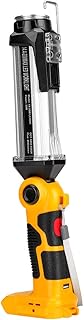


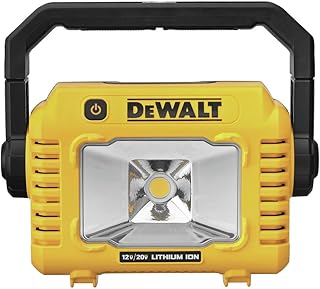


Choosing a precision DEWALT torch is about more than selecting the brightest light. The right model depends on where you intend to use it, how much illumination you need, whether you work in confined areas, how long the light needs to operate between charges or battery changes, and which power system fits the tools you already own.
For Canadian buyers, practical considerations also include cold-weather use, indoor versus outdoor work, portability, battery compatibility, charging arrangements, and the availability of replacement batteries or other accessories. A compact inspection light can be a better choice for detailed mechanical work, while a high-output work light may be more suitable for construction, renovation, automotive work, garages, workshops, and job sites.
This guide focuses on the criteria that matter when comparing DEWALT lighting products in 2026. Product specifications, included accessories, battery configuration, retailer pricing, customer feedback, and availability can change, so it is important to verify the current listing before purchasing.
A precision torch is generally designed to deliver controlled illumination where a conventional flashlight may be too large, too broad, or difficult to position. Depending on the model, this can mean a narrow beam for inspection, an adjustable head for directing light into awkward spaces, a compact body for carrying in a tool bag, or a work-light design that can be positioned hands-free.
DEWALT has a broad cordless tool ecosystem, so battery compatibility can be an important consideration. Buyers who already use compatible DEWALT cordless tools may find it useful to compare lighting products that fit their existing battery platform rather than introducing another charging system.
One of the most common buying mistakes is comparing every lighting product as though maximum brightness were the only important specification. A precision torch and a broad-area work light solve different problems.
A precision torch is better suited to situations where the light needs to reach a particular location. Automotive technicians, electricians, maintenance workers, tradespeople, and DIY users may benefit from a directional beam when inspecting wiring, fasteners, engine components, cabinets, machinery, or other difficult-to-see areas.
An area light is intended to illuminate a larger workspace rather than a single point. These lights can be useful for renovations, drywall work, painting, carpentry, workshops, garages, basements, and temporary work areas.
Inspection-oriented lighting typically prioritises portability and controlled illumination. A smaller light can be easier to move around machinery or underneath vehicles, particularly when a larger work light cannot be positioned close enough to the area being examined.
A very bright light is not automatically the best inspection light. Excessive output at close range can produce glare and harsh reflections, especially on polished metal, painted surfaces, glass, or automotive components. Beam shape, positioning, runtime, and ergonomics can therefore matter as much as raw output.
Light output is commonly expressed in lumens. A higher lumen figure generally indicates greater total visible light output, but lumen ratings should not be considered in isolation.
For precision applications, beam concentration can have a major effect on how useful the light feels at the work surface. A focused beam can place more illumination where you need it, while a flood-style beam can make a larger nearby area easier to see.
When comparing DEWALT torches, consider both the stated output and the intended working distance. A light designed for close inspection does not necessarily need the same output characteristics as a light intended to illuminate an entire work zone.
The beam pattern determines how illumination is distributed. A narrow beam can help highlight a specific object, while a wider beam can provide more comfortable general visibility.
Runtime is particularly important for tradespeople who use lighting throughout a working day. Manufacturer runtime figures can vary according to the selected output level, battery capacity, operating conditions, and product configuration.
Do not automatically assume that the highest output setting will provide the longest usable runtime. If a torch offers multiple output levels, a lower setting may be preferable for routine inspection work, allowing the available battery capacity to be used more efficiently.
Battery configuration deserves close attention when comparing cordless DEWALT lighting. Some products may be sold as bare tools, while others may be packaged with batteries and chargers. The distinction can substantially affect the total cost of ownership.
Before purchasing a bare tool, check whether you already have a compatible battery. If you are new to the relevant DEWALT battery platform, compare the cost of the complete lighting setup rather than looking only at the advertised tool price.
Consider how the light will be charged between jobs. A tradesperson who already carries several compatible batteries may not need a dedicated charging solution for every light. A homeowner who owns no compatible cordless tools may place greater value on a complete kit or a simpler charging arrangement.
Canada's climate introduces an additional consideration for cordless tools: temperature. Lithium-ion batteries can behave differently in very cold conditions, and extremely low temperatures can affect available performance and charging behaviour.
If you regularly work outdoors during Canadian winters, avoid assuming that a published indoor or moderate-temperature runtime will represent real-world performance in freezing conditions. Keep batteries within the temperature ranges specified by the manufacturer and follow the applicable charging and storage instructions.
For mobile professionals, carrying a second charged compatible battery can be more useful than relying on a single battery throughout a long workday. The exact battery capacity should be matched to the lighting product and your expected workload.
A work light can experience considerably more abuse than a household flashlight. It may be dropped, placed on unfinished surfaces, exposed to dust, transported in a tool box, or repeatedly handled while wearing work gloves.
When assessing durability, look beyond the brand name and examine the actual product design and manufacturer specifications. Housing materials, protective features, switch placement, lens protection, mounting components, and the stated environmental ratings can all provide useful information.
Impact resistance can be particularly valuable for construction and service environments. However, a stated impact rating should not be interpreted as permission to treat the light as indestructible. Repeated drops, crushing forces, water exposure, or misuse can eventually damage any electronic tool.
If you intend to use a torch outdoors or around construction dust, check the product's published ingress-protection information where available. A light intended for general indoor use should not automatically be assumed to be suitable for rain, wet environments, or heavy dust.
The lens is one of the most important components of a torch because scratches, cracks, and contamination can affect light quality. A recessed or protected lens may be advantageous in environments where the light is frequently placed on rough surfaces.
Two lights with similar output can feel completely different during actual use. Weight distribution, grip shape, switch placement, head movement, and the ability to operate the controls while wearing gloves all influence usability.
For technicians who repeatedly use a light during inspections, a compact and balanced design may be more valuable than a larger model with greater maximum output. If the light will be held for several minutes at a time, unnecessary weight can become an annoyance.
Hands-free operation can be one of the most valuable features of a job-site light. When both hands are needed for a repair or installation, the ability to position the light independently can improve convenience and reduce interruptions.
An adjustable head can help direct illumination into cabinets, engine compartments, ceiling spaces, wall cavities, and other locations where a fixed beam would be inconvenient.
A built-in hook can allow the light to be suspended from a suitable support. This is useful when placing a light on the floor would create shadows or when there is no convenient flat surface nearby.
Magnetic mounting can be particularly convenient for metal equipment and vehicle repair. Before relying on a magnetic mount, verify the strength and intended use described by the manufacturer and make sure the mounting surface is appropriate.
A stable base can turn a handheld torch into a temporary work light. This can be useful for tasks where illumination needs to remain fixed while both hands are occupied.
Not all white light looks identical. Colour temperature can affect how surfaces, markings, wires, finishes, and components appear under artificial illumination.
For detailed inspection, consistent and comfortable illumination can be more useful than simply choosing the highest-output setting. Users who frequently inspect wiring colours, labels, paint finishes, mechanical parts, or electrical components should consider how the light renders the details they need to see.
Automotive work often involves confined areas, reflective metal surfaces, dark engine compartments, and locations where a conventional flashlight can be difficult to position. A compact directional light or adjustable inspection light can be useful for examining components without taking up valuable workspace.
For under-vehicle work, consider mounting options and beam coverage. A light that can be positioned independently may be preferable to one that must be held continuously.
Electricians frequently need controlled illumination in panels, ceilings, wall cavities, utility areas, and other locations where both hands may be occupied. A focused beam can help identify individual components, while a hands-free mounting feature can improve convenience.
Lighting should never be treated as a substitute for appropriate electrical safety procedures. Follow applicable safety requirements and the instructions for the equipment being serviced.
Construction work can favour broader illumination and rugged positioning options. If the light will be used to illuminate an entire work zone, compare area coverage and mounting flexibility rather than choosing a compact inspection torch simply because it is easier to carry.
For a permanent or semi-permanent workshop, a combination of lighting types can be more practical than expecting one torch to perform every task. General overhead lighting can provide overall visibility, while a portable DEWALT inspection light can illuminate areas hidden by machinery or the user's body.
Home users may not need the maximum-output model available. A compact torch with a convenient battery arrangement and useful positioning options can be more practical for plumbing checks, furniture assembly, appliance maintenance, basement work, garage projects, and occasional repairs.
For outdoor use, examine durability, weather resistance, battery logistics, and runtime. If the light is intended as part of an emergency kit, consider how often the battery will need inspection or charging and whether the selected battery system fits the rest of your equipment.
One of the strongest reasons to consider a DEWALT lighting product is compatibility with an existing DEWALT cordless tool collection. Sharing batteries across tools can simplify storage and reduce the number of battery types that need to be maintained.
However, compatibility should always be confirmed at the individual product level. DEWALT has produced multiple battery systems and product generations, so never assume that two tools are compatible solely because both carry the DEWALT name.
When evaluating a top-10 shortlist, avoid ranking products based on a single specification. A more useful comparison considers the complete balance of illumination, portability, battery requirements, durability, controls, positioning, and intended application.
Start by identifying the task you perform most often. A mechanic may prioritise directional inspection, while a contractor may need broad workspace illumination. A homeowner may value compact storage and simple operation above maximum output.
Determine whether each candidate is a traditional handheld torch, inspection light, pivoting work light, area light, or another specialised format. Products should be compared against alternatives that solve the same problem.
Look at battery type, included battery status, expected runtime, charging requirements, and compatibility with batteries you already own.
Compare hooks, magnets, stands, clips, pivoting heads, and other mounting features. A slightly less powerful light may be considerably more useful if it can be positioned exactly where illumination is needed.
Consider whether the light will spend most of its time in a tool bag, vehicle, workshop, or pocket. Larger models can provide broader illumination but may be less convenient for detailed inspection.
Before purchasing, verify the current technical specifications from the manufacturer or retailer listing. Product generations can change, and package contents may differ between listings or markets.
Verified customer feedback can reveal practical considerations that are difficult to judge from a specification table, such as switch usability, balance, mounting convenience, or perceived runtime. Look for recurring themes across multiple reviews rather than relying on one unusually positive or negative comment.
Maximum brightness does not guarantee useful illumination. For close inspection, a well-directed beam can be more valuable than excessive output that creates glare.
A bare tool may appear inexpensive compared with a complete kit, but the total cost can be different if you need to purchase a battery and charger separately.
Always verify the exact battery system and product requirements. Brand-level compatibility is not enough.
A powerful area light can be awkward inside engine compartments, cabinets, crawl spaces, and other restricted locations. Match physical dimensions to the environment where the light will be used.
If your work frequently requires both hands, mounting capability can have a larger practical impact than small differences in maximum light output.
A light that performs well for short inspections may not be the right choice for extended jobs. Compare the expected operating period with the battery capacity and available charging options.
Outdoor use does not automatically mean a product is designed for wet conditions. Check the manufacturer's published environmental specifications before exposing a light to rain or moisture.
Product pages can contain numerous technical terms, and not all specifications carry equal importance for every buyer. The most useful approach is to connect each specification to an actual use case.
The lowest purchase price is not necessarily the lowest-cost option over the life of the product. A better value assessment considers the complete setup required to use the light effectively.
For example, an inexpensive bare light may require an additional battery and charger, whereas a higher-priced kit could include components you would otherwise need to purchase. Conversely, an existing DEWALT tool owner may already have compatible batteries, making a bare tool more attractive.
Value should therefore be assessed according to your existing equipment, expected frequency of use, required features, battery needs, and the product's suitability for the work.
A more advanced lighting product can make sense when it solves a problem you encounter repeatedly. Professional users may place greater value on durability, battery compatibility, mounting flexibility, runtime, and ergonomic design because a lighting tool can become part of the daily workflow.
For occasional household use, however, paying for features that will rarely be used may not provide meaningful benefits. The best product is the one whose capabilities match the work rather than the one with the longest feature list.
Compact lighting can be particularly useful when portability is the primary concern. A small torch is easy to keep in a vehicle, tool pouch, drawer, or emergency kit and can be quickly deployed for inspection tasks.
Compact models can also work well as a secondary light even when a larger work light is available. Keeping a small directional torch alongside a larger area light provides flexibility without requiring the larger unit for every minor task.
If the objective is to illuminate a room, workbench, garage, renovation zone, or larger job site, an area light is usually more appropriate than a narrow precision beam.
Consider how evenly the light covers the workspace, whether it can be positioned at a useful height, whether it can operate independently of mains electricity, and how its battery requirements fit your existing equipment.
Customer reviews can be useful, but they should be interpreted carefully. A single review may reflect a specific use case, expectations, battery configuration, or product-generation issue that does not apply universally.
When reading reviews for a DEWALT torch, look for repeated comments about:
Pay particular attention to recent reviews when evaluating products that may have received packaging, accessory, or specification changes. Always compare the current listing details with the manufacturer's information.
Basic maintenance can help keep a cordless lighting tool in useful condition. The exact maintenance requirements vary by product, so the manufacturer's instructions should take priority.
Dust, grease, fingerprints, and workshop residue can reduce the quality of illumination. Clean the lens using a method appropriate for the material and manufacturer instructions rather than using abrasive substances.
Check periodically for cracks, loose components, damaged switches, or other visible signs of damage. If a product has suffered a significant impact, inspect it before returning it to service.
Use and store batteries according to the manufacturer's recommendations. Avoid exposing batteries to unsuitable temperatures, moisture, impact, or other conditions that could damage them.
If the light uses a magnet, hook, clip, or stand, keep the relevant surfaces free from excessive dust and debris. This can help maintain reliable positioning during use.
If a cordless torch spends part of the year in an unheated garage, truck, or workshop, consider the environmental conditions before long-term storage. Batteries and electronic tools should be stored according to the manufacturer's temperature and charging guidance.
For equipment that is not used frequently, periodically check the battery condition and avoid leaving a rechargeable battery completely depleted for extended periods unless the manufacturer specifically recommends otherwise.
Powerful lighting can improve visibility, but it can also create glare. Avoid directing a high-output beam toward another person's eyes or into traffic. Reflective materials can also produce unexpectedly intense glare at close range.
Lighting products should be used according to their intended application. A torch is not a replacement for appropriate electrical, automotive, construction, or workplace safety equipment.
DEWALT is not the only established manufacturer offering cordless work lights and inspection lighting. Buyers may also encounter lighting products from brands such as Milwaukee, Makita, Bosch, Ryobi, and other established tool manufacturers.
The most meaningful comparison is usually the ecosystem rather than the logo. If you already own several cordless tools from one platform, staying within that platform may simplify batteries, chargers, storage, and job-site logistics.
Cross-brand comparisons should focus on actual battery compatibility, light output, beam characteristics, ergonomics, mounting options, durability, and total setup cost rather than brand reputation alone.
Prioritise a compact body, directional illumination, adjustable positioning, useful close-range visibility, and a battery system that fits your existing cordless tools. Hands-free mounting can be especially valuable when working underneath a vehicle or inside an engine compartment.
Prioritise durability, stable positioning, broad illumination, battery capacity, and flexibility. A larger work light may be preferable when the objective is to illuminate a complete work area rather than inspect a single component.
Look for controlled illumination, compact dimensions, convenient positioning, and easy operation. A light that can be placed or mounted without occupying either hand can be particularly useful during installation and inspection work.
A workshop may benefit from multiple lighting formats. Consider pairing general workspace illumination with a portable precision torch for close inspections and areas hidden behind equipment.
Focus on simplicity, portability, battery convenience, and practical runtime. There is little benefit in paying for professional-oriented features that do not correspond to your normal projects.
Instead of searching for one universal torch, consider building a small lighting system around the tasks you actually perform. A general work light can handle larger areas, while a compact precision torch can handle inspections and confined spaces.
If you already own DEWALT cordless tools, compatible lighting can reduce battery-management complexity. Keeping charged batteries available can also make cordless lighting more convenient during longer projects.
Positioning can have a major effect on perceived lighting quality. Instead of pointing the beam directly at a reflective surface, try directing it from an angle where practical. This can reduce harsh reflections and make surface details easier to distinguish.
For close work, avoid using more output than necessary. A lower setting may provide comfortable visibility while reducing glare and conserving battery capacity. For larger spaces, position the light high enough and far enough from the work surface to provide useful coverage without creating distracting shadows.
The best option depends on the type of precision work involved. For close inspection, prioritise a compact design, controlled beam, comfortable handling, and useful positioning. For confined work, an adjustable head or hands-free mounting system may be more important than maximum light output.
Many DEWALT lighting products are designed for use alongside cordless tools and can be suitable for professional working environments when the individual model's specifications match the application. Check the specific product's construction, environmental ratings, battery requirements, and intended use rather than assuming every model has identical capabilities.
Some DEWALT lighting products can share batteries with compatible DEWALT cordless tools, but compatibility depends on the specific battery platform and product. Always verify compatibility for the exact model before purchasing.
No. Higher output can be useful when illuminating large or distant areas, but excessive brightness can create glare during close inspection. Beam shape, positioning, runtime, and the intended working distance should also be considered.
A bare tool can be attractive if you already own compatible batteries and a charger. A kit may be more convenient for someone entering the relevant battery platform. Compare the complete cost of the setup rather than the torch alone.
A pivoting head allows the beam to be directed without moving the user's hand or entire body. This can be especially helpful in engine compartments, cabinets, wall cavities, workshops, and other awkward locations.
They can be useful for outdoor and mobile work, but cold temperatures can affect battery performance and charging behaviour. Follow the manufacturer's guidance for operating, charging, transporting, and storing batteries in cold conditions.
Look for compact dimensions, directional illumination, useful close-range visibility, convenient positioning, and compatibility with batteries you already use. Hands-free mounting can also be valuable for repairs requiring both hands.
Construction users should generally consider broad illumination, stability, durability, battery runtime, portability, and mounting flexibility. The ideal format depends on whether you need to illuminate an entire work zone or inspect specific details.
Routine inspection is useful whenever the light is used regularly. Keep the lens and controls clean, inspect the housing and mounting components, and maintain batteries according to the manufacturer's instructions.
They can be, provided the specific lighting product meets your requirements. However, buyers starting from scratch should compare the complete battery and charging costs and consider whether another cordless ecosystem better matches their existing equipment.
This buying guide is intended for the 2026 Canadian market, with the page context specified for August 2026. Because product specifications, retailer listings, package contents, customer feedback, prices, and availability can change, verify current details before making a purchase.
The best precision DEWALT torch is not necessarily the brightest, largest, or most expensive model. The strongest choice is the one that fits the job, provides useful illumination at the required distance, works with an appropriate battery setup, and can be positioned comfortably in the environments where you actually work.
For Canadian buyers in 2026, start by identifying the primary application, then compare beam characteristics, output, runtime, battery compatibility, dimensions, durability, mounting options, and total ownership cost. If you already use DEWALT cordless tools, battery-platform compatibility may simplify your decision. If you are starting from scratch, compare the complete lighting setup rather than focusing solely on the advertised tool price.
Before buying, review the latest specifications and package contents, compare current Canadian listings, and read verified customer feedback alongside manufacturer information. This approach makes it easier to distinguish between a torch that looks impressive on paper and one that is genuinely well suited to your workshop, job site, vehicle, home projects, or professional workflow.