

♥ Wishlist
Compare 11 Makita Impact Drivers for Canadian Jobs products in Canada. Reviews, ratings, pros, cons and buying advice updated for October 2026.


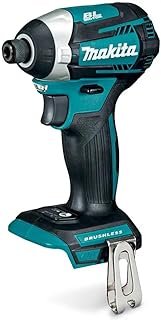


A precision impact driver is not simply a compact power tool with high torque. For Canadian buyers, the better choice depends on how accurately the tool can control fastening force, how comfortably it can be used for repetitive work, which battery platform it belongs to, and whether its size and speed range suit the materials being fastened. Makita offers impact drivers across several generations and configurations, so comparing torque alone can lead to the wrong purchase.
When evaluating the best Makita impact drivers for 2026, consider the complete tool system rather than one headline specification. Speed control, electronic settings, impact mechanism behaviour, chuck design, ergonomics, lighting, battery compatibility and serviceability can all affect real-world results. A model that is excellent for structural fastening may be unnecessarily aggressive for cabinetry, while an ultra-compact driver can be much easier to control in confined spaces.
For Canadian shoppers, battery availability is particularly important. Makita's cordless ecosystem includes multiple battery platforms, and a tool's advertised configuration may differ depending on whether it is sold as a bare tool or as a kit with batteries and a charger. Always confirm the exact model number, included accessories, voltage platform and Canadian listing before purchasing.
Precision fastening means achieving repeatable results without unnecessarily damaging the fastener, workpiece or driver bit. An impact driver produces rotational force through an impact mechanism, making it especially effective when a conventional drill/driver begins to struggle with resistance. The same mechanism that makes an impact driver powerful, however, can make uncontrolled fastening too aggressive for delicate applications.
The most useful precision-oriented characteristics include adjustable speed, multiple operating modes, a responsive variable-speed trigger and electronic control. These features give the user more opportunity to begin slowly, align the fastener and increase power only when necessary.
Torque is one of the most visible specifications in an impact-driver comparison, but maximum torque should not be treated as a universal measure of quality. More torque can be useful for long screws, larger fasteners and demanding construction work, but excessive power can make delicate fastening harder to control.
A better comparison considers the relationship between torque, speed, impact rate, trigger control and electronic modes. Two drivers with similar maximum torque can feel very different during actual fastening because their control systems and operating characteristics are not identical.
Higher torque becomes more valuable when driving long structural screws, large wood screws, lag-style fasteners and other applications where resistance increases substantially. Construction professionals who regularly work with heavy timber or demanding fastening tasks may benefit from a more powerful model.
For cabinet installation, furniture assembly, electrical work, light-duty maintenance and finish-oriented applications, controllability may matter more than maximum output. A driver with useful low-speed behaviour can help prevent stripped screw heads, overdriven fasteners and damaged surfaces.
Never assume that an impact driver's maximum torque represents a safe tightening value for a particular fastener. Fastener manufacturers, equipment manufacturers and engineering specifications should take precedence whenever a specific torque requirement exists.
Speed and impact rate are related but distinct specifications. Rotational speed describes how quickly the driver turns, while impact rate describes how frequently the impact mechanism operates under appropriate conditions. A high-speed driver can complete repetitive fastening quickly, but precision work often benefits from having multiple speed or power selections.
For general-purpose use, a useful range of control is often more valuable than simply choosing the fastest model. Slow initial rotation helps seat the bit and start the fastener cleanly. Greater speed can then be applied once the fastener is properly aligned.
Brushless motor technology is an important consideration when comparing modern cordless impact drivers. Brushless motors eliminate the conventional brushes used in brushed motor designs and use electronic control to operate the motor.
For many buyers, the practical benefits include efficient operation, reduced mechanical wear associated with brushes and the ability to build sophisticated electronic control into the tool. These advantages can be particularly useful for people who use their impact driver frequently.
However, brushless does not automatically mean that every model is the best choice. Tool ergonomics, battery platform, control system, dimensions, included features and price should still be evaluated. A less expensive model can make more sense for occasional household use, while a feature-rich brushless model may be more appropriate for demanding professional workloads.
Battery compatibility should be one of the first specifications checked before ordering a cordless impact driver. Makita has developed cordless tools around different battery systems, and similar-looking products can belong to different platforms.
Before purchasing, identify the exact battery family required by the tool. Do not rely only on the Makita brand name or the general voltage description. Check the manufacturer's model information and the exact Canadian retailer listing.
A bare tool can be the better value when you already own compatible Makita batteries and a charger. Buying another battery and charger in that situation can unnecessarily increase the total cost and duplicate equipment you already have.
A kit can make more sense for someone entering the battery platform for the first time. It may provide the essential battery and charging equipment required to start using the driver, although the contents vary by product package.
Tool length can matter as much as power when working in restricted spaces. A compact impact driver can provide easier access between studs, inside cabinets, behind equipment and around mechanical components.
A shorter head does not necessarily make a tool universally superior. Users performing heavy fastening may prefer a larger model if its ergonomics, cooling, power delivery or battery arrangement better suit extended work. The ideal balance depends on the applications you perform most frequently.
When comparing compact models, look beyond published length. Consider total tool weight with the battery installed, grip shape, trigger position, forward/reverse control and how easily the tool can be positioned around the workpiece.
An impact driver can be technically impressive while still being uncomfortable to use repeatedly. Grip geometry and balance affect fatigue, particularly during overhead installation or long fastening sessions.
Most impact drivers use a quick-change 1/4-inch hex interface. This makes bit changes considerably faster than changing a conventional drill chuck, but the quality and condition of the bit still have a major influence on results.
Impact-rated bits are particularly important for impact-driver applications because the tool's repeated impact action can place substantial stress on ordinary drill-driver accessories. Using the correct bit for the fastener head reduces the likelihood of premature bit damage and poor engagement.
Even an excellent impact driver cannot compensate for a poor-quality or incorrectly matched bit. Bit geometry, hardness, fit and wear all influence how efficiently torque is transferred to the fastener.
For demanding work, established accessory brands such as Makita, Bosch, DEWALT and Milwaukee offer impact-rated fastening accessories in different configurations. The important consideration is not simply brand recognition but whether the specific accessory is designed for impact-driver use and matches the fastener being installed.
For occasional household projects, prioritize manageable size, simple controls, good ergonomics and compatibility with a battery system you can realistically use for future tools. Extreme torque may provide little practical advantage for ordinary furniture, shelving, fixtures and home repairs.
Controlled operation is especially important when working with finished surfaces, thin materials and smaller screws. Compact dimensions and low-speed control can be more useful than maximum fastening power.
Deck construction can involve a large number of repeated fasteners, making battery capacity, ergonomics and sustained productivity important. Choose a driver and battery combination appropriate for the fastener size and material requirements rather than selecting solely by advertised torque.
Construction applications can justify a higher-output impact driver, especially when driving longer fasteners repeatedly. Durability, cooling, battery capacity, tool balance and fastener control should all be considered alongside power.
Access and controllability are often more important than maximum output. A compact driver with precise trigger control can be easier to position around panels, equipment and mounting hardware.
When comparing several models, use the same criteria for every candidate. This prevents one impressive specification from dominating the decision.
Maximum torque is easy to compare but does not tell the whole story. A highly powerful driver may be unnecessarily difficult to control for delicate fastening.
Buying a driver that requires a battery platform you do not already use can significantly change the overall cost. Compare the complete system rather than the bare-tool price alone.
Some listings may show the same basic tool in different configurations. Confirm whether the listing includes a battery, charger, case or accessories before comparing prices.
Ordinary bits are not automatically suitable for repeated impact loading. Check that the accessory is intended for impact-driver applications.
A powerful driver can still be frustrating if its dimensions prevent access to the locations where you regularly work.
Makita impact drivers can differ significantly in electronic control, modes, dimensions and other features. Always compare the exact model rather than assuming that all drivers in the brand's range operate identically.
Product specification tables can look similar while describing very different aspects of performance. Understanding the terminology makes it easier to compare models accurately.
Specifications should always be interpreted according to the manufacturer's stated test conditions. Do not compare figures from unrelated tools as though every manufacturer measures them under identical circumstances.
Good technique can make a substantial difference even when using a high-quality tool. Start the fastener at low trigger speed and keep the driver aligned with the screw. Once the threads have engaged correctly, increase speed as the material and fastener require.
Keep the bit square with the fastener head. Angled pressure increases the risk of cam-out and can damage both the bit and fastener. When installing into sensitive materials, use the lowest practical setting and stop when the required seating depth has been reached.
An impact driver and drill/driver serve overlapping but different roles. A drill/driver generally provides a chuck and a clutch designed for controlled fastening and drilling. An impact driver uses a hex bit interface and an impact mechanism that is particularly effective when greater rotational resistance is encountered.
For delicate fastening where a clutch setting provides the desired level of control, a drill/driver may be the more appropriate tool. For long screws, repetitive construction fastening and situations where conventional drilling torque becomes difficult to manage, an impact driver can be considerably more effective.
Many tool users keep both because their strengths complement each other. The best choice is therefore not always one tool replacing another; it can be a matter of selecting the right tool for each task.
Makita is one of several established cordless power-tool manufacturers competing in the professional and consumer markets. Depending on the battery ecosystem already owned, buyers may also compare equivalent impact drivers from DEWALT, Milwaukee, Bosch, RIDGID and other established manufacturers.
The fairest comparison is between tools intended for the same workload and battery class. Compare dimensions, controls, torque, speed, battery requirements, ergonomics and package contents rather than assuming that a higher specification in one category makes a tool better overall.
Battery runtime depends on many variables, including fastener size, material density, driving depth, operating mode, battery capacity, temperature and frequency of use. A published battery capacity should therefore not be interpreted as a guaranteed number of fasteners per charge.
Cold conditions can also affect cordless battery behaviour. Canadian users working outdoors during colder months should follow the battery manufacturer's storage, charging and operating recommendations rather than assuming that normal indoor conditions apply.
For frequent professional use, owning more than one compatible battery can reduce interruptions. A smaller battery can keep the tool lighter for overhead work, while a higher-capacity battery may be preferable when runtime is the primary concern.
Routine care helps preserve the tool and accessories. Keep the exterior clean, remove accumulated dust and inspect the bit holder regularly. Worn bits should be replaced rather than used until they begin slipping excessively.
Impact drivers can generate substantial rotational force, so proper handling is essential. Wear suitable eye protection when driving fasteners where chips, dust or material fragments could be produced. Secure the workpiece where appropriate and make sure the selected accessory is rated for the application.
Keep hands clear of moving components and never modify the tool, battery or charger. Follow the operating instructions supplied with the exact model, particularly for battery charging, storage and maintenance.
Customer reviews can reveal practical information that specifications do not, but they should be interpreted carefully. Look for recurring observations rather than relying on a single enthusiastic or negative comment.
The lowest advertised price is not necessarily the lowest total cost. A bare tool may look inexpensive until the cost of a compatible battery and charger is added. Conversely, a kit can be poor value if it includes components you already own.
Compare the complete purchase requirement: tool, battery, charger, case or storage solution, bits and any other accessories you genuinely need. Then compare current Canadian retailer prices for equivalent configurations.
Because retail prices and package contents can change, verify the current listing immediately before purchasing. Treat unusually large discounts with care and confirm that the seller, model number and package description match the product you intend to buy.
An impact driver is not the right answer for every fastening or drilling requirement. If your work depends heavily on controlled clutch settings, conventional drill bits, large-hole drilling or precise torque specification, a drill/driver, drill, impact wrench or dedicated torque tool may be more suitable.
The correct tool should be selected according to the job rather than the popularity of a product category. When a manufacturer specifies a particular tool for a task, follow those instructions instead of substituting an impact driver simply because it has a higher torque rating.
Start by identifying the jobs you perform most often. If most of your work involves small screws and finished materials, emphasize control and compact ergonomics. If you regularly drive long structural fasteners, place greater importance on power, battery capacity and sustained usability.
There is no single best model for every user. The most suitable choice depends on the required torque, speed control, dimensions, battery platform and type of fastening. For precision-oriented applications, prioritize controllability and appropriate operating modes rather than selecting solely by maximum torque.
They can be useful for many woodworking fastening tasks, particularly when driving screws quickly in repetitive work. For delicate materials, use appropriate settings, maintain good bit alignment and avoid excessive fastening force. A drill/driver may be preferable when clutch-based control is more important.
Not completely. Impact drivers are excellent for fastening and can handle some drilling tasks with compatible accessories, but a conventional drill or drill/driver remains better suited to many drilling applications and clutch-controlled fastening jobs.
Brushless models are worth considering when you want modern motor technology, electronic control and a cordless tool intended for regular use. Whether the additional cost is worthwhile depends on your workload and the features included in the specific model.
For impact-driver use, impact-rated accessories are the appropriate choice. They are designed to withstand the repeated loading associated with impact mechanisms. Always check the accessory manufacturer's stated application and compatibility.
No. More torque can be useful for demanding fasteners, but excessive output can make delicate work harder to control. Match the tool's output and control features to the fasteners and materials you regularly use.
Choose based on your existing battery collection. A bare tool can make sense when you already have compatible batteries and a charger. A kit can be more practical when starting a battery platform, provided the included components meet your needs.
Check the exact model number, battery platform, included accessories, voltage, torque, speed, impact rate, dimensions, weight and control features. Then verify the current Canadian retailer listing, package contents, pricing and customer feedback.
Some compact models are designed for demanding applications, but suitability depends on the exact model and fastening requirements. Compare the manufacturer's specifications with the fastener sizes and materials used on your projects rather than assuming that every compact driver has the same capability.
Basic inspection and cleaning should be performed according to usage and the manufacturer's instructions. Frequent users should pay particular attention to the bit holder, ventilation areas, accessories and battery condition. For servicing requirements, follow the documentation for the exact model.
The best precision Makita impact driver is the one whose power, control, size and battery system align with the work you actually perform. A professional who drives structural fasteners all day may value sustained output and battery capacity, while a homeowner or cabinet installer may benefit more from compact dimensions and controlled operation.
Before making a purchase, compare the exact model specifications, not just the Makita name or a product photograph. Confirm the battery platform and package contents, read current verified customer feedback, and compare equivalent configurations from reputable Canadian retailers. Prices, inventory, bundles and model availability can change during 2026, so current information should be checked at the time of purchase.
Use the recommendations on this page as a framework for commercial comparison rather than assuming that the highest-rated, most powerful or most expensive tool is automatically the right one. Matching the impact driver to your fasteners, materials, workspace and frequency of use is the most reliable way to make a practical buying decision.