

♥ Wishlist
Compare 20 Makita Mitre Saws for Canadian Woodworking & Construction products in Canada. Reviews, ratings, pros, cons and buying advice updated for October 2026.

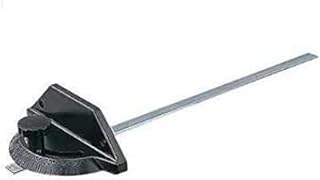









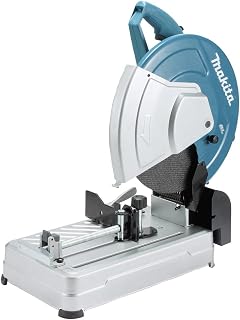


Choosing a precision Makita mitre saw is less about finding the most powerful motor and more about matching cutting accuracy, capacity, portability, dust control, and long-term usability to the work you actually perform. A compact saw can be the better choice for trim carpentry and renovation work, while a larger sliding model may be more appropriate for flooring, framing components, wide boards, cabinetry, or demanding workshop applications.
For Canadian buyers, the decision also deserves attention to electrical compatibility, winter storage conditions, replacement blades, dust extraction, available accessories, warranty terms, and the practical availability of compatible parts. Makita has produced several mitre saw configurations over the years, including compact, sliding compound, dual-bevel and cordless platforms, so model names alone should not determine the purchase.
This guide focuses on the factors that matter when comparing precision-oriented Makita mitre saws in the Canadian market. Specifications should always be checked against the exact model number and current Canadian product documentation before purchasing.
Precision is not simply a specification printed on a product box. A mitre saw can have a powerful motor and large cutting capacity yet still be frustrating for fine work if the fence, bevel mechanism, detents, blade, work support, or adjustment system are poorly matched to the application.
For precision work, consider the entire cutting system. Important characteristics include:
A compound mitre saw combines horizontal mitre adjustment with vertical bevel adjustment. This makes it suitable for applications such as trim, moulding, framing components, picture frames and other work where angled cuts intersect.
For buyers primarily working with narrower boards, a non-sliding compound saw can offer a simpler and potentially more compact setup. The trade-off is cutting capacity. If you regularly work with wider stock, a sliding design is usually more versatile.
A sliding compound mitre saw allows the blade assembly to travel through a wider workpiece. This is particularly useful when cutting wider boards without repeatedly repositioning the material.
Sliding mechanisms introduce additional mechanical components, however, so buyers interested in precision should pay close attention to the rigidity and smoothness of the slide. A large cutting capacity is valuable only if the mechanism remains controlled throughout the cut.
Dual-bevel capability allows the saw to tilt in both directions. This can significantly reduce the need to flip or reposition a workpiece when producing matching compound angles.
For repetitive crown moulding, architectural trim, cabinetry components and other detailed work, dual-bevel functionality can save time while reducing opportunities for setup errors.
Makita's cordless ecosystem is an important consideration for buyers who already own compatible batteries and chargers. Cordless operation can simplify jobsite setup and eliminate the need to position an extension cord around the saw.
The practical decision is not simply corded versus cordless. Consider how frequently the saw will be moved, how much material will be cut in one session, whether compatible batteries are already owned, and whether maximum sustained cutting performance is more important than portability.
The mitre scale determines how easily you can establish common angles and make repeatable adjustments. Detent positions are useful for frequently used angles, but the quality of the locking mechanism is equally important.
When comparing models, look for an adjustment system that feels positive rather than vague. A mechanism that is difficult to read or lock accurately can undermine the benefit of an otherwise capable saw.
Bevel adjustment becomes especially important when cutting crown moulding, baseboards, trim assemblies and compound joints. A good bevel mechanism should be straightforward to set, easy to read and capable of holding its position securely.
Check whether the exact model provides the bevel range and direction you need. A saw that supports the required angle on paper may still be inconvenient if your workflow frequently requires repositioning the material.
The fence is one of the most important components for repeatable cuts. It provides the reference surface against which the workpiece rests, so its rigidity and alignment directly influence results.
A tall fence can be particularly useful for supporting taller trim and moulding. Sliding or adjustable fence sections can provide additional clearance when making bevel cuts, but they also need to be positioned correctly for the particular operation.
Even an accurately aligned mitre saw cannot compensate for an unsuitable or damaged blade. Blade diameter, arbor configuration, tooth count, tooth geometry and intended material should all be considered together.
For clean finish cuts in trim and moulding, a higher-tooth-count blade may be preferable to an aggressive general-purpose blade. For construction lumber, the priorities can be different. Always choose a blade specifically rated for the material and saw configuration.
A clear indication of the blade's cutting path can make setup faster and more consistent. Makita has used different cutting-line technologies and lighting arrangements across product generations, so this feature should be evaluated on the exact model rather than assumed from the brand.
Good visibility is particularly valuable when making repeated cuts where small positioning differences can accumulate into noticeable discrepancies.
On a sliding model, the rail or slide assembly deserves close attention. The mechanism should move smoothly without excessive lateral movement. Smooth travel is important not only for convenience but also for maintaining controlled blade movement through the workpiece.
Keep the slide mechanism clean and follow the manufacturer's maintenance instructions. Dust and debris can affect moving components and eventually make a precision-oriented saw feel less controlled.
Blade diameter is only one part of the cutting-capacity equation. The actual capacity depends on the saw's geometry, fence arrangement, blade position, mitre and bevel settings, and whether the machine is sliding.
Before choosing a model, list the largest materials you expect to cut. Consider:
A larger saw is not automatically more precise. If most of your work involves small trim, a massive machine may consume valuable workshop space without providing a meaningful advantage.
Prioritize a design that can be adjusted accurately and returned to the same settings consistently. For professional trim work, repeatability can be more important than headline motor power.
Choose capacity based on your largest regular workpieces rather than occasional projects. Oversizing the machine can add weight and cost, while undersizing it can force inconvenient cutting techniques.
Compare the actual adjustment ranges and detent positions of each candidate. If you frequently produce compound cuts, verify that the configuration fits your workflow before buying.
Look for a stable support surface appropriate to the material you cut. Taller trim and moulding can benefit from additional vertical support.
A corded model can make sense for a stationary workshop where continuous power is convenient. A cordless model can be attractive for mobile work, particularly for users already invested in the corresponding Makita battery platform.
Mitre saws generate substantial airborne and airborne-settling dust. A useful dust-collection design should work with an appropriate extractor or dust-management setup and should not interfere with visibility or material positioning.
Weight matters when the saw frequently travels between rooms, vehicles and jobsites. For a permanent workshop, stability and table integration may matter more than minimum weight.
Check that suitable replacement blades are readily obtainable in the size, arbor configuration and tooth design required by the exact model.
Precision tools eventually need inspection and adjustment. A model with sensible adjustment procedures and accessible components can be easier to keep accurate over its service life.
Do not compare only the saw's purchase price. Consider blades, batteries if required, chargers, stands, clamps, dust extraction, replacement components and accessories that your particular application requires.
Makita has offered multiple mitre saw configurations, and model availability can vary by country, retailer and production generation. Canadian shoppers should therefore verify the exact model number rather than assuming that a similarly named machine has identical specifications.
Examples of Makita model families that may appear in research include the LS1019-series and LS1219-series sliding compound mitre saws, along with cordless models from Makita's battery-powered ranges. These references are useful starting points for comparison, not a statement that every model is currently available in Canada or that each is appropriate for every application.
When evaluating an individual model, verify its current Canadian specification sheet, included accessories, electrical configuration, blade requirements and manufacturer support information.
Power-tool model numbers can vary between markets and generations. A product that looks nearly identical in photographs may have different electrical specifications, included accessories, packaging or regional documentation.
Canadian buyers should confirm:
Trim-focused buyers should prioritize accuracy, bevel flexibility, fence support, cut-line visibility and a blade configuration capable of producing clean finished cuts. Maximum framing capacity may be less important than controlled adjustment.
Renovators often need a balance between portability and versatility. A sliding compound configuration can be useful when the material list changes from one room to another, while a lighter saw can be preferable when equipment must be moved frequently.
Workshop users can place greater emphasis on stability, dust extraction, stand compatibility, repeatable settings and integration with an existing workbench. A heavier saw may be perfectly acceptable if it remains in one location.
Professional users should evaluate the complete workflow rather than the saw in isolation. Portability, setup time, battery compatibility, durability, cutting capacity and the ability to maintain accuracy under repeated use can all influence productivity.
DIY buyers should avoid paying for capabilities they are unlikely to use. If most projects involve basic crosscuts and occasional trim, a simpler configuration may provide better value than a large professional-oriented sliding saw.
The choice between corded and cordless is primarily a workflow decision.
Do not compare cordless and corded machines solely by their advertised power figures. Their motor systems, operating conditions and intended use can differ substantially.
The blade should be considered part of the precision system. A quality saw fitted with an inappropriate blade can produce rough edges, excessive tear-out, slow cuts or poor results on delicate material.
Higher tooth counts can generally favour smoother cuts in appropriate materials, while lower tooth counts can provide faster cutting in applications where surface finish is less important. The correct choice depends on the material, thickness, feed technique and blade design.
Tooth geometry affects cutting behaviour. Blades designed for fine crosscutting are not necessarily ideal for construction lumber, composite materials or every type of manufactured board.
Use only blades compatible with the exact saw. Do not assume that a blade is suitable simply because its diameter appears correct. Arbor size, maximum rated speed, kerf and manufacturer requirements also matter.
If your primary goal is clean trim work, consider keeping an appropriate fine-finish blade for that purpose rather than expecting one general-purpose blade to perform equally well across every material.
Mitre saw suitability depends on both the machine and blade. Common applications can include dimensional lumber, hardwood, softwood, moulding, baseboard, casing and other compatible wood products.
Engineered wood products require additional attention to blade selection and manufacturer guidance. Some materials can contain adhesives, coatings or other components that affect cutting behaviour and dust production.
Never use a blade or cutting accessory for a material unless the manufacturer identifies it as suitable. Metal-cutting and abrasive applications in particular should not be improvised on a woodworking mitre saw.
Dust management is often underestimated when comparing mitre saws. The blade is exposed during cutting, and the rotating blade can project fine particles well beyond the immediate cutting area.
For indoor work, consider the complete dust-management setup rather than relying solely on the saw's dust bag. A compatible extractor, suitable hose arrangement and adequate ventilation can make a substantial difference to the work environment.
Dust collection should also be maintained. Inspect collection ports, bags, hoses and extraction connections regularly, and follow the manufacturer's instructions for cleaning.
A precise saw still depends on stable material support. Long boards can shift, sag or rotate if they are unsupported, which can compromise cut accuracy and create an unsafe working condition.
When selecting a stand or work-support arrangement, consider:
For a permanent workshop, dedicated extension supports can be more convenient than repeatedly setting up a portable stand.
Large capacity sounds attractive, but additional size and weight are not automatically useful. Choose capacity according to your normal workload.
Precision work often benefits from task-specific blades. Include replacement and specialty-blade requirements when calculating the long-term cost.
A cordless saw can be convenient, but buyers starting a new battery platform should consider the cost and charging requirements of the complete system.
Transportation, repeated use and accidental impacts can affect alignment. Learn how to inspect the saw and follow the manufacturer's adjustment procedures.
A saw cannot produce consistently accurate cuts if long or unstable material is allowed to move during cutting.
Motor performance matters, but precision also depends on the fence, table, blade, slide, bevel mechanism and overall rigidity.
A blade designed for a different material or cutting objective can undermine both finish quality and cutting performance.
Always verify the exact Canadian version, especially when a listing originates from an international marketplace or uses generic product photography.
Customer reviews can be useful, but they should be interpreted carefully. A review describing a saw as “powerful” does not necessarily tell you whether it maintains accurate mitre settings. Likewise, a complaint about weight may be irrelevant if the saw will remain in a workshop.
When reading verified customer feedback, look for comments that address specific attributes:
Give more weight to detailed observations than to short comments based solely on first impressions.
Makita is not the only manufacturer worth considering. Depending on your requirements, it can be useful to compare its mitre saws with products from DeWalt, Bosch, Milwaukee, Metabo HPT and other established power-tool manufacturers.
The strongest comparison is feature-for-feature rather than brand-versus-brand. Examine cutting capacity, adjustment systems, fence design, dust extraction, blade availability, battery compatibility, portability and service support.
For users already invested in a battery ecosystem, platform compatibility can be a major deciding factor. Someone who already owns several compatible Makita batteries may evaluate a cordless Makita saw differently from a first-time buyer building a power-tool collection from scratch.
After purchasing a mitre saw, spend time setting up the machine before judging its precision. Place it on a stable surface, inspect the blade, verify the fence and check the major angle settings according to the manufacturer's instructions.
Use a suitable test workpiece and check whether the resulting cut matches the intended angle. If something is out of alignment, consult the manufacturer's adjustment procedure instead of forcing the mechanism or modifying components without guidance.
For professional work, it can be useful to establish a repeatable setup routine so that the saw is checked whenever it is transported or before an important batch of cuts.
Precision is something you maintain rather than something you purchase once. Regular cleaning and inspection can help identify problems before they become major workflow issues.
Canadian conditions can make storage and transportation particularly important. A power tool moved between a cold vehicle and a heated workshop can experience condensation, so allowing equipment to acclimatize appropriately before use can be sensible. Follow the manufacturer's storage and operating instructions for the specific machine.
Workshop organization also matters. Leave sufficient clearance around the saw for the sliding mechanism, material movement and safe operation. A saw placed against a wall may appear space-efficient until the operator discovers that the rear movement of a sliding mechanism requires additional clearance.
A useful top-10 shortlist should not simply place ten saws in descending order of price or motor power. The better approach is to classify them according to the jobs they are best suited to handle.
For example, a shortlist can distinguish between compact precision saws, high-capacity sliding saws, dual-bevel models, cordless jobsite options and workshop-oriented machines. This helps readers identify the strongest candidates for their own requirements rather than assuming that one universal winner exists.
When comparing the current selection, give priority to models whose verified specifications match the intended application. Then consider customer feedback, current Canadian availability, accessories, total ownership cost and the manufacturer's support information.
Value is determined by how effectively a saw satisfies the buyer's requirements. A less expensive saw can become poor value if it lacks the cutting capacity, adjustment range or battery compatibility needed for the work.
Conversely, paying more for features that will rarely be used may not improve the ownership experience. A homeowner performing occasional baseboard work may have little reason to purchase the largest professional sliding model, while a professional trim carpenter may benefit substantially from advanced adjustment and support features.
Professional users generally place greater emphasis on repeatability, durability, setup efficiency and workflow integration. The saw may be transported frequently, used for many cuts per day and paired with specialized blades and stands.
DIY users often benefit more from simplicity, reasonable capacity, manageable size and straightforward adjustments. The right choice depends on the actual projects rather than whether the buyer identifies as a professional or hobbyist.
Mitre saws are powerful cutting machines and should be operated according to the manufacturer's safety instructions. Keep hands away from the blade path, secure the workpiece appropriately and use the recommended protective equipment.
Do not defeat guards, remove safety components or use damaged blades. Make sure the workpiece is supported properly and that the blade has stopped before reaching into the cutting area or removing offcuts.
For detailed safety requirements, always rely on the instructions supplied with the exact Makita model because operating procedures and features can vary between machines.
There is no single best model for every Canadian buyer. Precision work requires the right combination of capacity, fence stability, angle adjustment, blade selection, work support and application-specific features. A model that is ideal for trim may be unnecessarily large for occasional DIY projects, while a compact saw may not provide enough capacity for wide stock.
Makita produces mitre saw configurations intended for demanding woodworking and construction applications. Suitability depends on the exact model and workload. Professional buyers should compare capacity, durability, adjustment systems, portability, accessories and manufacturer support rather than relying on the brand name alone.
Not universally. A sliding model generally provides greater capacity, while a non-sliding model can be simpler and more compact. Choose based on the width of material you regularly cut and the space available for the saw.
Dual bevel can be worthwhile when compound-angle work is frequent because it can reduce the need to reposition or flip the workpiece. For basic crosscutting and occasional mitre cuts, it may be unnecessary.
A cordless model can be attractive for mobile work and users already invested in the appropriate Makita battery platform. If the saw will remain in a workshop with convenient electrical power, a corded model may offer a simpler operating arrangement.
Use a blade specifically designed for the material and finish you require. Fine-tooth crosscut blades are commonly considered for finish-oriented woodworking, but the exact blade must be compatible with the saw and material.
There is no universal interval suitable for every user. Check alignment whenever accuracy becomes questionable and after significant transportation or impact. High-use professional equipment may benefit from a more structured inspection routine.
No. A mitre saw and table saw perform different functions. A mitre saw excels at crosscuts, mitre cuts and compound cuts, while a table saw is designed for different cutting operations, particularly controlled ripping of suitable stock.
Not necessarily, but proper material support is important. A stand can improve portability and support long workpieces, while a dedicated workshop may use a permanent bench or extension-support arrangement.
Compare equivalent configurations rather than brands in general. Examine cutting capacity, adjustment systems, fence design, dust collection, blade compatibility, portability, battery ecosystem and total ownership cost.
The best precision Makita mitre saw is the one whose capabilities match your material, cutting angles, workspace and frequency of use. Start by determining the cuts you actually make, then eliminate models that lack the necessary capacity or adjustment range.
After that, compare precision-related features such as fence rigidity, bevel adjustment, slide behaviour, blade compatibility and workpiece support. For cordless models, add battery-platform considerations to the evaluation. For workshop users, dust extraction and stand compatibility may be more important than portability.
Before purchasing, verify the exact Canadian model number and current specifications, read detailed verified customer reviews, compare the included accessories and check current retailer pricing. Product availability and specifications can change, so the information shown on a retailer or manufacturer listing should be treated as the final reference for a specific purchase.
A careful comparison is more useful than choosing a saw solely because it appears high on a generic “top 10” list. Match the machine to the work first, then use price, customer feedback and additional features to separate the strongest candidates.
For Canadian buyers in 2026, the most useful way to evaluate precision Makita mitre saws is to treat the saw, blade, work support, dust-management system and battery or electrical setup as one complete cutting system. Brand reputation can narrow the field, but the final choice should come from measurable requirements.
Before committing to any model, compare the latest Canadian specifications, current customer feedback, compatible accessories and current pricing. That approach helps prevent common purchasing mistakes and makes it easier to select a Makita mitre saw that delivers the capacity and precision required for the projects you actually undertake.