

♥ Wishlist
Compare 56 Ryobi Multi Tools in Canada products in Canada. Reviews, ratings, pros, cons and buying advice updated for October 2026.







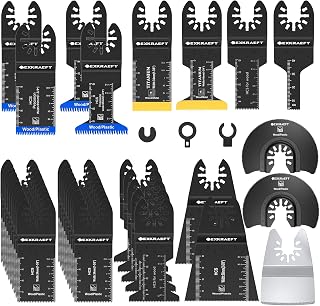
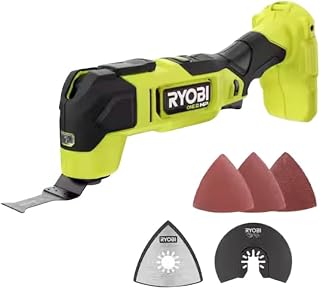


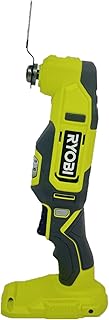


Choosing a precision Ryobi multi tool is less about finding the most powerful specification and more about matching the tool to the type of cutting, sanding, scraping, trimming and detail work you actually perform. A quality oscillating multi tool can handle jobs that are awkward for a drill, circular saw or reciprocating saw, particularly when working in confined spaces or when a controlled cut is more important than maximum cutting speed.
For Canadian buyers, the decision also involves battery-platform compatibility, accessory availability, cold-weather considerations, ergonomics, variable-speed control and the type of materials you expect to work with. Ryobi's cordless ONE+ ecosystem can be particularly relevant when you already own compatible batteries and chargers, because the cost and convenience of adding a bare tool can differ substantially from starting a new battery platform.
This buying guide focuses on the characteristics that matter when comparing precision-oriented Ryobi multi tools for home improvement, renovation, woodworking, flooring, trim work, repairs and general DIY applications. Product specifications, included accessories, current prices and retailer availability should always be checked before purchasing because configurations can change.
Precision work requires more than raw motor output. The best tool for detailed work should allow you to control the blade or accessory accurately, position the tool comfortably and make gradual cuts without excessive movement. A multi tool is particularly useful when the working area is restricted or when you need to approach a material from an unusual angle.
Speed control is one of the most important considerations for precision applications. A high setting may be useful when removing material quickly, while a lower setting can provide better control for delicate work or materials that respond poorly to excessive heat and aggressive abrasion.
Do not assume that the highest available speed is automatically the best setting. The correct speed depends on the accessory, material, cutting depth and desired finish. A user cutting thin trim has different requirements from someone removing old adhesive from a floor.
Accessory changes are an important part of multi-tool usability. Renovation tasks frequently require switching between cutting, scraping and sanding attachments. A practical accessory-change mechanism can reduce interruptions and make the tool more useful for jobs involving several different operations.
When comparing Ryobi models, examine exactly how the accessory is secured and what accessories are included. The lowest advertised tool price may not represent the lowest overall cost if the required blades and sanding accessories must be purchased separately.
Precision cutting depends heavily on the operator, but tool design still matters. Look for a configuration that allows you to maintain a stable grip and keep the accessory aligned with your intended cut. Visibility around the accessory is especially useful when making plunge cuts, trimming installed materials or working close to finished surfaces.
An integrated LED can be useful when working inside cabinets, beneath counters, around plumbing penetrations or in other poorly illuminated areas. It should be treated as a visibility aid rather than a replacement for proper task lighting.
Oscillating multi tools naturally generate vibration. During short cuts this may not be especially important, but prolonged sanding, scraping or repeated trimming can make vibration and grip comfort much more noticeable.
When comparing tools, consider overall balance, grip shape, trigger or control placement and how naturally the tool sits in your hand. A tool that is theoretically powerful but uncomfortable to control may be less effective for detailed work than a more manageable alternative.
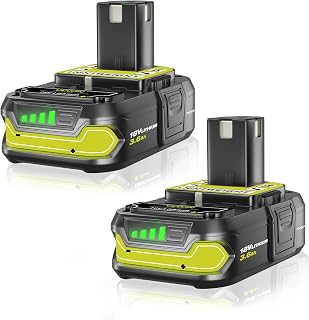
Battery compatibility can be one of the strongest reasons to choose a particular Ryobi multi tool. If you already use compatible Ryobi ONE+ batteries, purchasing a tool-only configuration may avoid duplicating chargers and batteries. If you are entering the platform for the first time, however, compare the complete kit rather than looking only at the bare-tool price.
Battery capacity influences how long a cordless tool can operate before recharging, although actual runtime varies considerably with the accessory, material, operating speed, pressure and workload. Cutting dense material continuously is different from making occasional trim cuts.
A larger battery can be useful for extended renovation sessions, while a smaller and lighter battery may be preferable when the job involves overhead work, cabinet interiors or detailed cuts where tool weight matters.
Battery size affects more than runtime. It can change the balance of the complete tool. For precision work, consider how the tool feels when held with one hand and whether the battery makes the front or rear of the tool feel unnecessarily heavy.
Canadian users may encounter substantially colder storage and working conditions than users in milder climates. Lithium-ion batteries should be handled according to the battery manufacturer's instructions, particularly when moving between very cold environments and heated indoor spaces. Avoid treating a cold battery as if it were at normal operating temperature simply because the tool itself appears functional.
For woodworking, accessory selection and speed control are often more important than simply choosing the most powerful multi tool. Fine-tooth wood blades can be appropriate for controlled cuts, while sanding accessories can help with corners and irregular surfaces that are difficult to reach with conventional sanders.
For visible woodworking, practice cuts on scrap material before working on the finished piece. Multi tools are extremely versatile, but they are not automatically the best choice for every straight or long cut. A table saw, track saw, circular saw or dedicated jigsaw may produce a cleaner result when the geometry of the job allows it.
One of the classic uses for an oscillating multi tool is trimming material in place. This can be useful when installing flooring, adjusting door jambs or modifying trim without dismantling a larger assembly.
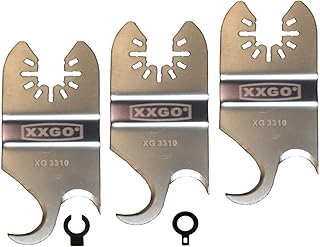
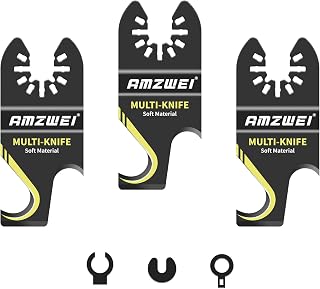
The key advantage is access. A suitable flush-cut blade can approach material from a direction that may be difficult for larger saws. Use a suitable guide or spacer where appropriate and avoid forcing the blade through the material.
A multi tool can be useful for detailed flooring work around doorways, corners and other obstacles. Before cutting, identify what lies behind or below the surface. Flooring installations can involve underlayment, fasteners, wiring, plumbing and structural components, depending on the location.
For laminate, engineered wood, hardwood and other flooring products, select an accessory intended for the material and follow the flooring manufacturer's installation guidance.
Multi tools can make controlled openings and adjustments in drywall and other renovation materials. They are particularly convenient when you need to make a small opening rather than remove a large section.
Always consider the possibility of electrical cables, pipes and other concealed services before cutting into a wall. A multi tool's compact size makes it useful in tight spaces, but that same convenience does not eliminate the need to verify what is behind the material.
Scraper attachments can be useful for removing old adhesive, sealant and other stubborn residues. The correct technique depends on the surface. Excessive pressure can gouge wood, damage soft materials or mark finished surfaces.
When working on a delicate surface, start conservatively and determine how much pressure and speed are actually required. A scraper is designed to remove material mechanically; it should not be treated as a substitute for the appropriate chemical preparation method when one is required.
Some multi-tool accessories are designed for cutting metal, but accessory selection is critical. Metal thickness, alloy, fastener type and access all influence whether an oscillating tool is appropriate.
For repeated heavy metal cutting, a dedicated metal-cutting tool may be more efficient. A multi tool is generally most valuable when access and control are the primary challenges.
The accessory often determines what a multi tool can actually accomplish. Comparing only the motor or tool body can therefore produce an incomplete buying decision.
A powerful multi tool cannot compensate for a damaged, inappropriate or excessively worn accessory. Cutting performance can deteriorate as teeth wear, while a sanding sheet that is clogged with material can become ineffective even when the tool itself is operating normally.
For precision work, replace accessories when their performance has deteriorated rather than attempting to compensate with excessive pressure. Pressing harder can increase heat and vibration and may make it more difficult to maintain a controlled cut.
Ryobi and Milwaukee serve overlapping but distinct parts of the cordless power-tool market. Ryobi is widely associated with the ONE+ battery ecosystem and DIY-oriented tool selection, while Milwaukee offers extensive professional-focused cordless equipment.
The better choice depends on the broader tool collection you intend to build. If you already own compatible Ryobi batteries, staying within that platform can be economically and practically attractive. If your existing workshop is based around Milwaukee batteries, the opposite may be true.
DeWalt is another major cordless platform with a broad range of tools. When comparing a DeWalt multi tool with a Ryobi alternative, look beyond headline power claims and examine ergonomics, accessory compatibility, battery ownership, warranty terms, included equipment and the type of work you perform most frequently.
Makita has a long-established cordless tool ecosystem and a broad selection of professional-oriented equipment. A comparison with Ryobi should focus on the complete ownership proposition rather than assuming that one brand is universally better.
For occasional home renovation, the ability to share batteries across existing tools may be more important than small differences in tool specifications. For frequent professional use, duty cycle, ergonomics, accessory availability and platform depth deserve greater attention.
A ranked list is useful only when every product is evaluated against the same criteria. Do not automatically place the tool with the largest number of accessories or the highest advertised speed at the top.
A bare tool can make sense when you already own compatible batteries and a charger. It can be the simplest way to expand an existing Ryobi collection without accumulating duplicate charging equipment.
A complete kit can be more appropriate for someone entering the platform or for a user who needs a battery immediately. However, the number of included accessories should be evaluated carefully. A large accessory bundle is not necessarily better if many of the attachments will rarely be used.
Before buying, compare the complete package contents line by line. Check the battery type and capacity, charger inclusion, accessory quantity, accessory types and carrying or storage equipment if provided.
The cheapest tool may have a higher total cost if you subsequently need batteries, a charger and multiple specialized accessories. Conversely, an expensive kit may include equipment that you never use.
Compare the complete setup required for your actual project rather than comparing sticker prices alone.
If you already have a compatible battery collection, buying into another cordless platform can add unnecessary cost and charging equipment. Battery compatibility should be one of the first questions in your comparison.
Precision is influenced by controllability, accessory selection, visibility, vibration, ergonomics and technique. Maximum power is only one part of the equation.
A blade designed for one material should not automatically be used for another. Read the accessory manufacturer's intended-use information and select the appropriate tooth configuration and construction.
Oscillating tools are generally designed to do their work through rapid accessory movement. Excessive downward force can reduce controllability, increase vibration and accelerate accessory wear.
Never assume that a shallow-looking cut is risk-free. Electrical wiring, plumbing, fasteners and structural components may be hidden behind or beneath the work surface. Proper inspection is essential before cutting.
Start with a clear layout. Mark the intended cut before starting the tool and make sure the workpiece is stable. For a plunge cut, begin gently and allow the accessory to establish the cut before increasing pressure.
When making a flush cut, position the accessory carefully and keep the tool stable. Let the cutting edge do the work rather than rocking the tool aggressively. If the cut begins to wander, stop and reassess instead of trying to correct a large deviation while the accessory is moving.
For visible surfaces, protecting adjacent finished areas can prevent accidental scratches. A small amount of preparation can be more valuable than trying to repair damage after the cut has been completed.
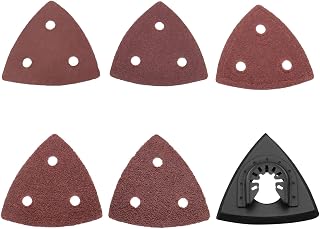
Use an abrasive grade appropriate for the material and the stage of the project. Coarser abrasives remove material more quickly but can leave deeper marks, while finer abrasives are generally more suitable for final smoothing.
Keep the sanding accessory moving rather than concentrating on one small area for too long. Excessive pressure can reduce sanding effectiveness and cause premature abrasive wear. Vacuuming or otherwise controlling dust is also important, particularly during indoor renovation projects.
Wear appropriate eye protection whenever cutting, scraping or sanding. Depending on the material and application, hearing protection and respiratory protection may also be appropriate. Keep loose clothing, hair and hands away from the moving accessory.
Secure the workpiece whenever practical. Disconnect or remove the battery before changing accessories when required by the manufacturer's instructions. Use accessories that are designed for the material and application, and follow the specific safety information supplied with the Ryobi tool and accessory.
Dust can present additional hazards depending on the material being cut or sanded. Painted surfaces, treated materials, masonry-related dust and certain manufactured products may require additional precautions. If you are uncertain about a material, identify it before beginning work rather than assuming it is safe to cut or sand normally.
Customer reviews can provide useful information, but they should be interpreted carefully. The most useful reviews are specific about the task performed, material used, battery configuration, accessory and duration of use.
A single negative or positive review rarely provides enough evidence to judge a tool. Patterns across multiple detailed reviews are generally more informative.
Prioritize versatility, ease of use and compatibility with accessories you are likely to need. A sensible kit can be more valuable than paying extra for features that will rarely be used.
Prioritize battery capacity, ergonomics, accessory availability and the ability to move quickly between cutting, scraping and sanding tasks. Renovation work often involves many short operations rather than one continuous cut.
Focus on control, accessory quality, sanding capability and the ability to make accurate cuts in difficult locations. If most of your work consists of long, straight cuts, compare the multi tool against a dedicated saw rather than expecting one tool to excel at every operation.
Access and flush-cut capability can be especially important. Consider the tool as part of a broader kit rather than as a standalone purchase, because replacement blades and other consumables can become a meaningful part of ownership cost.
Battery compatibility may make the purchasing decision substantially easier. Compare the tool-only configuration with complete kits and redirect the budget toward quality accessories that match your most frequent applications.
The real cost of a cordless multi tool includes the equipment required to make it useful. Consider the tool, battery, charger, cutting blades, sanding accessories, scraper attachments and replacement consumables as a complete system.
Durability also affects value. A tool that remains comfortable and useful across many projects can provide better value than one selected solely because it has a lower initial price. At the same time, buying a professional-level tool for very occasional light DIY work may not be the most economical decision.
A Ryobi oscillating multi tool can be used for a variety of detailed tasks, including cutting, flush trimming, sanding and scraping. Its main advantage is versatility and access in locations where larger power tools can be difficult to position.
It can be well suited to controlled cuts, particularly short cuts, flush cuts and work in confined areas. Accuracy still depends on the correct accessory, stable workpiece, suitable speed and operator technique.
Cordless operation is particularly convenient when working away from outlets or moving around a renovation site. If you already own compatible Ryobi batteries, the platform can also simplify ownership. Compare battery weight and runtime with your expected workload before choosing.
Accessory compatibility depends on the tool and accessory interface. Always verify compatibility with the specific model and accessory manufacturer information rather than assuming that every oscillating accessory will fit every tool.
The appropriate battery depends on the exact tool and your priorities. A larger-capacity battery may provide longer working time, while a smaller battery can reduce overall tool weight. Use only batteries specified as compatible by the manufacturer.
No. The tools serve different purposes. A circular saw is generally better suited to longer and faster straight cuts, while a multi tool excels at short, controlled cuts, flush trimming, detail work and access in confined areas.
Some compatible accessories are designed for metal-cutting applications. The suitability depends on the accessory, metal type, thickness and specific job. Always verify the accessory's intended application before cutting.
Yes, when equipped with an appropriate sanding attachment and abrasive. Multi-tool sanding is particularly useful for corners, edges and other difficult-to-reach areas rather than replacing a dedicated random-orbit or detail sander for every sanding project.
Yes. Its compact format can be useful for detailed cuts around door jambs, trim and other obstacles. Careful layout and selection of the correct blade remain essential for clean results.
There is no universal replacement interval. Blade life varies according to material, cutting frequency, pressure, speed and blade construction. Replace an accessory when its cutting performance has noticeably deteriorated or when it shows damage.
Choosing a model based solely on one specification or the lowest purchase price is a common mistake. A better comparison considers battery compatibility, ergonomics, accessory availability, intended applications, kit contents and total ownership cost.
The best precision Ryobi multi tool for a Canadian buyer is the model that fits the work rather than simply the model with the most impressive headline specification. Start with your existing battery platform, identify the materials and tasks you perform most often, then compare speed control, ergonomics, accessory compatibility, kit contents and total cost.
For occasional DIY work, versatility and value may be the priority. For renovation, access, battery convenience and accessory availability become more important. For frequent precision work, handling, controllability and the quality of the accessory system deserve especially close attention.
Before making a final purchase, verify the current model number, specifications, included accessories, battery configuration and retailer terms. Product configurations can change during the year, so current Canadian listings should take precedence over older product descriptions.
A careful comparison of these factors will help narrow a large selection of oscillating multi tools into a practical shortlist and make it easier to choose a Ryobi option that matches your projects, existing tools and expected workload.