

♥ Wishlist
Compare 36 Ryobi Combo Kits products in Canada. Reviews, ratings, pros, cons and buying advice updated for October 2026.




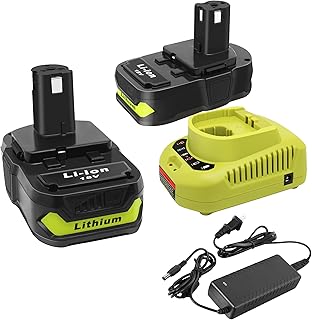
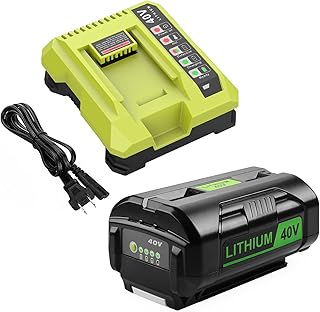


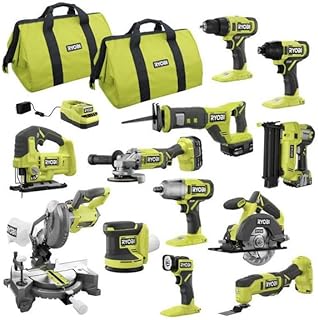


Choosing a Ryobi combo kit is less about finding the largest tool count and more about selecting a set that matches the work you actually expect to do. A compact kit with a drill, impact driver and reciprocating saw can be more useful to a homeowner than a larger package filled with tools that rarely leave the storage shelf. Likewise, someone renovating a home, building a deck or maintaining a property may benefit from a broader selection that includes a circular saw, multi-tool, grinder or lighting tool.
For Canadian buyers, the evaluation should also consider battery compatibility, voltage platform, charger configuration, cold-weather storage, replacement batteries, tool ergonomics and the type of projects being undertaken. The best Ryobi combo kit is therefore the one that provides the right combination of capability, battery ecosystem and long-term practicality rather than simply the highest number of included pieces.
Ryobi's cordless tool ecosystem is built around battery-powered equipment designed to share compatible battery platforms. This can make a combo kit particularly attractive when you expect to add more cordless tools later. Instead of purchasing a separate battery and charger with every tool, buyers can build around a common platform and purchase additional bare tools when appropriate.
Combo kits can also reduce the difficulty of creating a basic cordless workshop from scratch. A carefully selected kit may cover common drilling, fastening, cutting and maintenance tasks without requiring the buyer to research every tool individually.
Battery compatibility is one of the most important considerations when comparing Ryobi cordless combo kits. The Ryobi ONE+ ecosystem is especially relevant because it is designed around a shared battery platform across a broad range of compatible cordless tools.
However, buyers should not assume that every Ryobi battery works with every Ryobi product. Before purchasing additional batteries or bare tools, check the exact platform, battery type and manufacturer's compatibility information for the products being considered.
A useful buying strategy is to regard the batteries included with a combo kit as part of the kit's overall value. A kit with several tools but limited battery capacity may be less practical for demanding work than a smaller kit with a more useful battery and charging arrangement.
Battery capacity influences how long a cordless tool can operate between charges, although actual runtime varies substantially according to the tool, material, workload, operating conditions and battery condition. High-demand tools such as circular saws, reciprocating saws and grinders can place greater demands on a battery than intermittent drilling or fastening.
The ideal tool combination depends on the work. Do not judge a kit solely by the number printed in the product title. A four-tool kit containing four frequently used tools can be considerably more useful than a larger package containing several specialized tools you rarely need.
A drill/driver is one of the most versatile tools in a cordless workshop. It can handle common drilling and screw-driving tasks and is useful for furniture assembly, shelving, general repairs, woodworking and many home improvement projects.
When comparing drill/drivers, examine chuck design, speed settings, clutch positions, torque characteristics, size, weight, grip and overall ergonomics. A compact design can be especially useful for overhead work or confined spaces.
An impact driver is designed primarily for driving fasteners and can be particularly useful when installing long screws, structural fasteners and other applications where a conventional drill/driver may be less convenient.
Buyers should consider speed control, impact mechanism, overall length, LED lighting, bit retention and handling. More power is not automatically better for every task because excessive force can damage fasteners or materials when the tool is not properly controlled.
A cordless circular saw can substantially expand the usefulness of a combo kit for cutting sheet goods, boards and other suitable materials. Compare blade diameter, cutting capacity, bevel adjustment, visibility of the cutting line, shoe construction and ergonomics.
For repeated cutting, battery capacity becomes especially important. Buyers should also verify the saw's intended materials and operating requirements rather than assuming that a cordless saw is suitable for every type of cutting application.
A reciprocating saw is useful for demolition, rough cutting and applications where a conventional circular saw cannot easily access the work. It can be valuable for renovation and property-maintenance tasks.
Important comparison points include stroke length, variable-speed control, blade-changing mechanism, vibration characteristics and overall balance. Because reciprocating saws are often used for demanding cuts, comfortable handling can matter as much as maximum performance.
An oscillating multi-tool is a versatile addition for detailed cutting, trimming, scraping, sanding and other specialized tasks. It can be particularly useful during remodeling because its compact blade movement allows access to areas where larger tools may be impractical.
Look for convenient accessory changes, speed control, ergonomics and compatibility with appropriate accessories.
An angle grinder can add metal cutting, grinding and surface-preparation capability to a cordless tool collection. Because grinding and cutting operations can produce sparks, debris and hazardous dust, the appropriate guards, accessories and personal protective equipment are essential.
Compare disc size, speed control, guard adjustment, spindle-lock design, grip configuration and battery requirements. Buyers should always follow the manufacturer's safety instructions for the specific grinder and accessory.
A work light may appear less important than a cutting or fastening tool, but it can be highly practical in garages, basements, workshops, utility spaces and areas with poor illumination. A cordless light also avoids the need to position an extension cord around the work area.
One of the most common mistakes when shopping for a combo kit is assuming that more included tools automatically means better value. Manufacturers and retailers may package a wide variety of combinations, and the usefulness of each tool depends on the buyer's projects.
Instead of comparing kits by tool count alone, create a priority list:
This approach helps prevent paying for additional equipment simply because the package appears larger.
Motor technology deserves attention when comparing cordless combo kits. Brushless motors use electronic control rather than conventional brushes and can offer advantages in efficiency, durability and tool design. Brushed motors remain useful for many applications and can be perfectly adequate for occasional household work.
For buyers who expect frequent or demanding use, brushless tools can be worth investigating. For occasional DIY tasks, the lower overall cost or broader tool selection of a brushed kit may sometimes make more sense.
Do not assume that every tool in a particular package has identical motor technology. Check the specifications of each included tool rather than relying solely on the marketing description of the complete kit.
Voltage labels should be interpreted in the context of the entire cordless platform. Higher nominal voltage does not, by itself, guarantee that one tool will outperform another in every application. Motor design, electronic controls, mechanical gearing, battery capability, tool design and workload all contribute to real-world performance.
When comparing Ryobi combo kits, concentrate on the specifications relevant to your intended work. For example, a homeowner who primarily drills holes and assembles furniture may prioritize compact dimensions and comfortable handling, while a renovation user may place greater emphasis on cutting capability, battery capacity and durability.
A cordless tool can look impressive on paper while being uncomfortable to use for extended periods. Weight distribution, handle shape, trigger placement, grip texture and battery position all influence usability.
Consider how the tool will actually be held. Overhead fastening, drilling at shoulder height and working inside cabinets can make balance particularly important. A compact tool may also provide better access in confined spaces.
Do not overlook the charging equipment included in a combo kit. Two kits containing the same number of tools can have very different practical value depending on the number and capacity of their batteries and the charging arrangement.
Before buying, verify:
For a multi-tool workshop, having multiple batteries can be especially useful because one battery can be charging while another is being used.
Canadian weather introduces an additional consideration for cordless tool owners. Lithium-ion batteries should be stored and operated according to the manufacturer's temperature and charging guidance. Extremely cold conditions can affect battery performance, while charging a battery outside its permitted temperature range may be inappropriate.
If cordless tools are kept in an unheated garage or shed during winter, consult the manufacturer's instructions before storing or charging the batteries there. A temperature-controlled indoor storage location may be more appropriate when required by the manufacturer's recommendations.
For winter projects, allow batteries and tools to reach an appropriate operating temperature when required by the manufacturer's instructions rather than assuming that normal summer performance will be available in severe cold.
Homeowners often benefit from a balanced kit containing a drill/driver, impact driver and one or two versatile cutting or maintenance tools. The goal is broad capability without accumulating specialized equipment that receives little use.
Renovation work can justify a more comprehensive combination. A drill/driver, impact driver, circular saw, reciprocating saw and oscillating multi-tool can cover a broad range of common renovation tasks.
Woodworking buyers should pay particular attention to drilling accuracy, fastening control, cutting performance, battery management and tool ergonomics. A circular saw can be especially valuable, while an oscillating multi-tool may provide useful trimming and detail-cutting capability.
Frequent users should place greater emphasis on brushless motor options, battery capacity, tool durability, ergonomics, serviceability and the availability of compatible replacement batteries and accessories.
For infrequent household repairs, a smaller kit can be the smarter choice. Paying substantially more for specialized tools that remain unused may not provide meaningful additional value.
A large kit can be appealing, but unused tools occupy storage space and increase the purchase cost. Start with your actual projects.
Counting batteries without considering their capacity can create an incomplete picture of the kit's usefulness. Review the exact battery specifications before comparing packages.
Do not assume that a kit's motor technology applies equally to every included tool. Check individual product specifications.
If you already have a compatible Ryobi drill, saw or light, another identical tool may provide less value than a kit containing equipment you do not own.
A kit can become inconvenient if several batteries must be charged but the charging setup does not fit your workflow. Examine the complete battery and charger package.
Maximum torque, speed or other headline specifications do not tell the whole story. Ergonomics, control, battery performance and suitability for the intended task are equally important.
A tool may require suitable blades, bits, discs or other accessories before it can perform a particular task. Factor those requirements into the total cost of ownership.
When comparing several kits side by side, use the same checklist for each option. This prevents attractive packaging or a high tool count from dominating the decision.
Ryobi is not the only major cordless tool ecosystem available to Canadian consumers. Depending on the type and frequency of work, buyers may also compare options from DeWalt, Milwaukee, Makita, Bosch and other established manufacturers.
The right comparison is not simply which brand has the highest specifications. Compare the complete ecosystem, including compatible tools, batteries, chargers, ergonomics, intended user level, accessory availability and long-term expansion options.
Ryobi is often considered by homeowners and DIY users seeking a broad cordless ecosystem, while DeWalt offers an extensive range aimed at DIY, professional and construction applications. Compare the specific tool models rather than assuming that one brand is universally superior.
Milwaukee has a substantial cordless lineup with a strong presence among professional tradespeople. Ryobi can be attractive for homeowners and DIY users who want access to a broad selection of cordless tools. The best choice depends on required performance, budget, frequency of use and future tool purchases.
Makita is another established cordless-tool manufacturer with extensive equipment coverage. Buyers comparing Makita and Ryobi should evaluate the specific battery ecosystems and tools they expect to own rather than choosing solely on brand reputation.
Bosch offers cordless tools across several categories and is another brand worth considering when ergonomics, specific tool features or platform requirements make it relevant. A direct model-to-model comparison is more useful than a generic brand ranking.
Combo kits are not automatically the most economical option. If you only need two specific tools, purchasing those tools individually may make more sense. Conversely, if you need several tools and would otherwise have to buy batteries and chargers separately, a coordinated kit can be a convenient starting point.
Calculate the complete cost of the equipment you actually need. Include batteries, chargers and essential accessories rather than comparing only the advertised tool prices.
A bare tool is generally sold without the battery and charger required for cordless operation. Bare tools can be useful once you already own a compatible battery platform.
Complete kits can be more appropriate for someone starting a cordless collection because they may provide the core batteries and charging equipment alongside multiple tools. The important question is whether the batteries included with the kit are sufficient for your expected workload.
The purchase price of a cordless tool does not necessarily represent the full cost of using it. Drills require appropriate bits, impact drivers require suitable driver bits and sockets, circular saws require compatible blades, reciprocating saws require appropriate blades, and grinders require application-specific discs or accessories.
Using the correct accessory is important for performance and safety. Always verify compatibility, intended material and operating limitations before installing an accessory.
Routine care can help keep cordless tools and batteries in good working condition. Follow the manufacturer's maintenance instructions for each specific product because cleaning, lubrication and inspection requirements can vary.
Battery management becomes increasingly important as the number of cordless tools grows. Labeling or organizing batteries by capacity can make it easier to select the appropriate battery for each job. Keeping spare batteries charged and stored according to the manufacturer's recommendations can also make a multi-tool workflow more efficient.
Do not attempt to modify, disassemble or repair lithium-ion battery packs unless the manufacturer specifically provides an approved procedure. Damaged batteries should be handled according to applicable manufacturer and local disposal guidance.
Power tools should be selected and operated according to the manufacturer's instructions and the requirements of the specific task. Cordless operation removes the need for a power cord at the tool, but it does not eliminate hazards associated with rotating blades, cutting accessories, flying debris, dust, noise or kickback.
When comparing products from Canadian retailers, review the complete listing rather than relying on the product title alone. Retail listings can differ in the exact battery configuration, included accessories and packaging even when product names appear similar.
Customer reviews can be useful for identifying recurring usability concerns, but they should not replace technical specifications. Focus on patterns rather than one unusually positive or negative comment.
Reviews can be especially useful for questions that are difficult to answer from specifications alone, such as perceived balance, grip comfort, ease of changing accessories, storage convenience and practical battery management.
For performance-critical decisions, prioritize manufacturer documentation and consistent information across multiple credible sources.
For a new cordless-tool owner, the most practical approach is usually to begin with a core group of tools that covers the majority of planned projects. A drill/driver and impact driver can establish a useful fastening foundation. A circular saw or reciprocating saw can then expand cutting capability, while an oscillating multi-tool, grinder, light or other specialized tool can be added as project requirements develop.
For an existing Ryobi owner, a combo kit should be evaluated differently. Existing batteries, chargers and tools reduce the need to purchase another complete ecosystem. In that situation, a kit may be attractive primarily because of the additional tools it provides, provided the batteries and other components do not create unnecessary duplication.
A Ryobi combo kit can be a practical option for homeowners, DIY enthusiasts, property-maintenance users and others who want multiple cordless capabilities within one battery ecosystem. It can also make sense for someone establishing a cordless workshop for the first time.
However, a combo kit may not be the best choice when you need only one specialized tool, already own most of the included equipment, or require professional-grade equipment designed for particularly demanding continuous workloads. In those cases, individual tool selection can provide a more targeted solution.
Buying tools individually can be preferable when your requirements are highly specific. For example, a buyer who already owns several compatible batteries may only need a particular saw or specialty tool. Similarly, someone who rarely performs cutting work may gain little from purchasing a kit containing multiple saws.
Individual purchases also make it easier to prioritize premium versions of the tools that receive the most use while choosing simpler equipment for occasional tasks.
The best kit depends on the homeowner's projects. A balanced package containing commonly used drilling, fastening and cutting tools is generally more versatile than a kit chosen solely because it has the highest tool count.
Ryobi offers a broad cordless ecosystem that can be useful for many household and DIY applications. Buyers should select individual models based on the required workload, materials and frequency of use.
Brushless tools can provide advantages in efficiency, durability and motor design, particularly for frequent use. Whether the additional cost is worthwhile depends on how often and how intensively the tools will be used.
There is no universal ideal number. The appropriate quantity depends on the number of tools being used simultaneously, the capacity of the batteries and the availability of charging time between tasks.
Compatible batteries can be shared across tools within the applicable Ryobi battery platform. Always verify the exact compatibility requirements of the battery and tool before use.
Only if the additional tools are likely to be useful and the overall package provides sufficient value. Buying unused tools simply to increase the tool count can reduce the practical value of a kit.
Neither is universally more important. Tool count determines the range of tasks you can perform, while battery capacity affects cordless runtime. Your workload should determine the balance.
Suitability depends on the exact tool models, application and workload. Professionals should evaluate duty requirements, ergonomics, durability, battery management, service arrangements and manufacturer specifications before choosing equipment for regular commercial use.
Follow the manufacturer's storage and temperature recommendations. Avoid assuming that batteries should be charged or stored in an extremely cold location simply because the tools are being used outdoors.
Yes. A platform comparison can be useful when choosing a long-term cordless ecosystem. Compare the specific tools, batteries, chargers, ergonomics, intended applications and future expansion options rather than relying only on brand reputation.
Before purchasing a Ryobi combo kit in Canada, confirm the exact package and compare it against your actual tool requirements. The strongest choice should provide useful tools, an appropriate battery configuration and a platform that makes sense for your future purchases.
A useful comparison should go beyond headline specifications and tool count. The most meaningful factors include the suitability of the included tools, battery ecosystem, battery capacity, motor technology, ergonomics, intended workload, accessory requirements and potential for future expansion.
Because product configurations, retailer listings and prices can change during 2026, always verify the current product specifications and package contents before placing an order. A kit that appears attractive at first glance may have a different battery or accessory configuration from another listing with a similar name.
The best Ryobi combo kit for Canadian buyers is the one that matches the work, not necessarily the one with the most tools. Start by identifying your most common projects, then compare the drill, impact driver, saws and specialty tools included in each package. Give equal attention to battery capacity, charger configuration, ergonomics, motor technology and long-term platform compatibility.
For homeowners and DIY users, a thoughtfully selected Ryobi kit can provide a convenient foundation for a cordless workshop. For heavier users, the decision should place greater emphasis on brushless technology, battery capacity, durability, ergonomics and the specific demands of the job. Before buying, compare current Canadian listings, verify exact model numbers and package contents, and consider how the kit fits into the broader cordless tool collection you expect to build through 2026 and beyond.