

♥ Wishlist
Compare 14 Bosch Mitre Saws for Precise Cutting in Canada products in Canada. Reviews, ratings, pros, cons and buying advice updated for October 2026.






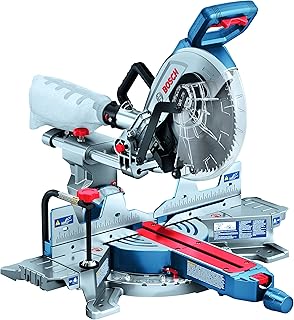
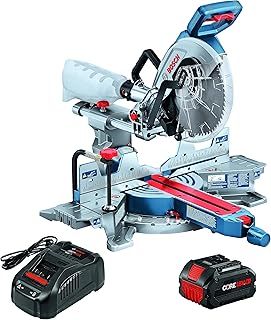
Choosing a precision Bosch mitre saw is less about selecting the saw with the longest specification sheet and more about matching the machine to the type of cutting you actually perform. A mitre saw used for finish carpentry, cabinet components, framing, renovation work and general workshop projects can have very different requirements. Blade diameter, cutting capacity, bevel range, mitre range, fence design, dust collection, portability and power source all affect whether a particular model is genuinely suitable for the job.
For Canadian buyers, it is also sensible to consider the working environment. A saw that performs well in a permanent workshop may be less convenient for contractors moving between renovation sites. Conversely, a compact cordless model can be attractive for portability but may not be the most economical choice for continuous high-volume cutting if compatible batteries and chargers are not already part of your tool collection.
This guide is designed to help shoppers compare Bosch mitre saws on meaningful criteria rather than relying solely on star ratings, marketing terminology or a single specification. Before purchasing, verify the current model number, included accessories, electrical configuration, cutting specifications and retailer information because product configurations can change.
Precision in a mitre saw comes from the interaction of several components rather than from one feature. A rigid base, accurate pivot mechanism, stable fence, dependable detents, suitable blade and consistent workpiece support all contribute to repeatable cuts.
A saw can have plenty of power and still produce frustrating results if the workpiece moves, the fence is not properly aligned, the blade is inappropriate for the material or the operator does not establish a repeatable setup. For this reason, precision should be evaluated as a complete cutting system.
For trim, moulding, framing components and other assemblies, repeatability is often more important than achieving one perfect cut. A useful mitre saw should make it straightforward to reproduce the same angle and length across multiple workpieces.
Look for a stable cutting head, positive angle positioning and a fence arrangement that supports the material securely. When comparing Bosch models, examine how the adjustment controls are positioned and whether the design makes frequent angle changes practical for your type of work.
The supplied blade should not be treated as an afterthought. Tooth configuration, kerf, tooth count and blade construction influence the finish and cutting behaviour. A blade selected for rough framing is not necessarily the best choice for fine trim or cabinet work.
When comparing a Bosch mitre saw, check the compatible blade diameter and arbor specification, then consider the blades you expect to use most often. If your work includes several materials, the ability to select appropriate blades can be more valuable than a small difference in headline motor specifications.
The fence is one of the most important parts of a precision mitre saw because it establishes the reference surface against which the workpiece rests. A rigid, properly aligned fence helps reduce movement during cutting.
For narrow stock, small trim pieces and repetitive cuts, fence geometry can have a noticeable effect on usability. For wider boards, the available support area becomes particularly important. Always consider whether your typical workpieces can be positioned securely without interfering with the blade path.
Specifications are most useful when interpreted in the context of your projects. Instead of asking which saw has the highest number in every category, determine which specifications directly affect your work.
Blade size should be selected according to cutting requirements rather than simply choosing the largest option available. A compact saw can be easier to transport and store, while a larger machine may be more appropriate when cutting wider or thicker material within its rated capacity.
Compact models can make sense for users who prioritise portability, workshop space and lighter-duty cutting. They may be especially useful for renovation projects where the saw needs to be moved regularly.
Before choosing a compact saw, compare its actual crosscut and bevel capabilities with your largest common workpiece. A smaller footprint is only an advantage if the machine still handles the material you need to cut.
A mid-size Bosch mitre saw can offer a practical balance between cutting capability and portability. This category is worth considering for general woodworking, renovation work, trim installation and mixed workshop use.
Compare the complete dimensions of the saw rather than looking only at blade size. The rear clearance, fence arrangement and required operating space can affect how much room the saw actually needs.
Larger saws are often considered when wide boards, substantial mouldings or demanding professional applications are involved. However, additional capacity can come with increased weight and a larger footprint.
If the saw will remain on a dedicated bench or workstation, those disadvantages may be less important. If you carry the tool between vehicles, floors or job sites, portability deserves considerably more weight in the purchasing decision.
Bosch offers both corded and cordless power-tool solutions, and the right choice depends on the availability of electrical power, existing batteries and the type of work being performed.
When comparing cordless models, do not evaluate the saw in isolation. Consider the total system cost, including batteries and chargers if they are not already owned. Also verify the exact battery platform required by the specific model.
A dual-bevel design allows the saw head to tilt in both directions, depending on the particular model. This can reduce the need to reposition or flip a workpiece when making compound cuts.
For users who frequently install crown moulding, complex trim or angled assemblies, this can be a meaningful convenience. For basic crosscuts and occasional single-direction bevel cuts, a dual-bevel mechanism may be less important.
When comparing dual-bevel Bosch models, pay attention to the practical adjustment procedure. A broad bevel range is useful only when the controls are easy to access and the workpiece can be positioned safely throughout the adjustment range.
A large advertised cutting capacity can be attractive, but it does not automatically make a saw the better choice. Cutting capacity needs to be considered alongside accuracy, workpiece support, portability and the actual dimensions of the material you use.
For example, a buyer who primarily cuts narrow trim may benefit more from excellent repeatability and easy angle adjustment than from maximum crosscut capacity. A renovation contractor working with larger dimensional lumber may place much more importance on capacity and job-site practicality.
Long boards and mouldings can be difficult to cut accurately if they are unsupported. Even a highly capable mitre saw can become awkward when the material extends substantially beyond the cutting table.
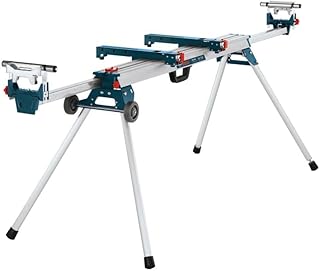
When comparing your options, consider whether you will use dedicated saw stands, extension supports, roller supports or a custom workbench. The saw should form part of a stable cutting station rather than being treated as an isolated machine.
Long, flexible trim can sag away from the cutting surface, changing the position of the material as the blade enters it. Supporting the stock at an appropriate height on both sides of the saw can improve consistency.
A repeat-stop arrangement can make multiple pieces easier to cut to the same length. If your projects involve dozens of identical components, this can save considerable setup time and reduce variation between pieces.
Mitre saws can generate a substantial amount of sawdust, particularly when cutting wood repeatedly. Dust management therefore affects both workshop cleanliness and the overall user experience.
When comparing Bosch mitre saws, examine the dust collection design, the position of the dust outlet and whether the saw can be connected effectively to your existing extraction setup. A dust bag can be convenient for occasional work, while a suitable dust extractor may be preferable for a dedicated workshop.
Dust collection should not be treated as a substitute for appropriate personal protective equipment or safe workshop practices. Follow the manufacturer's operating instructions and use suitable respiratory and eye protection where required by the work environment.
Cut-line guidance can help users position material more confidently, but it should not replace careful setup and accurate measurement. Depending on the Bosch model, the method used to indicate the blade path can differ.
When evaluating a guidance system, consider visibility under your typical lighting conditions and whether the indication remains useful when the blade is close to the workpiece. For precision work, the operator should still confirm the reference point and account for blade kerf when necessary.
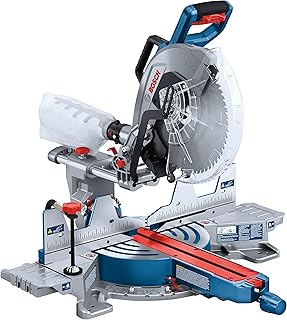
Glide mechanisms are designed to provide controlled movement of the cutting head while accommodating wider workpieces in the saw's rated capacity. Bosch's well-known axial-glide-style designs are often considered by buyers who want substantial cutting capability without the rearward movement associated with some conventional rail arrangements.
The practical advantage depends on the workspace. A forward-moving mechanism can be particularly appealing when the saw must sit closer to a wall than a conventional rear-rail design allows. However, buyers should still check the manufacturer's required clearances and installation recommendations for the exact model.
Bosch is not the only manufacturer worth considering. An independent buying guide should compare the characteristics of Bosch equipment with alternatives from established power-tool brands such as DEWALT, Makita and Milwaukee.
Compare the actual specifications, adjustment mechanisms, cutting capacity, portability and included accessories of the individual models rather than assuming one brand is universally better. DEWALT has a broad range of job-site and woodworking tools, so the closest comparison depends on the particular Bosch model under consideration.
Makita is another established choice for woodworking and construction equipment. Buyers should compare the complete machine, including blade compatibility, bevel operation, dust collection, power system and workshop integration.
Milwaukee can be particularly relevant for buyers already invested in its cordless tool ecosystem. When comparing a cordless Bosch saw with a Milwaukee alternative, include the cost and availability of the complete battery system rather than comparing bare-tool prices alone.
A larger blade does not automatically mean better performance for every application. Evaluate the entire saw, including capacity, accuracy, adjustment range, weight and workpiece support.
A cordless saw can appear convenient until the buyer realises that compatible batteries and chargers are required. Likewise, a corded saw may be inconvenient if the primary work environment has limited access to suitable electrical power.
Weight matters much more when the saw is moved frequently. A heavier saw can be perfectly sensible in a permanent workshop but less practical for a contractor carrying equipment between locations.
Extra capacity can increase the size and weight of the machine. If your typical material is substantially smaller than the saw's maximum capability, a more compact option may offer a better overall fit.
A good mitre saw on an unstable or poorly supported surface can be difficult to use accurately. Budget for an appropriate stand or workbench arrangement when comparing the total cost of ownership.
Product names can be similar across different generations, regions and configurations. Always verify the exact Bosch model number and compare the manufacturer's current specifications before ordering.
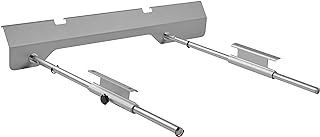
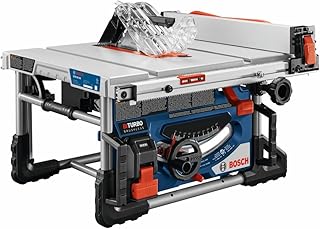
Different configurations can contain different accessories. Check exactly what is included in the package rather than assuming that a pictured stand, battery, charger, blade or other accessory is automatically part of the purchase.
If you are building a shortlist of ten Bosch mitre saw options, use the same evaluation framework for every candidate. This makes the final ranking more useful than simply sorting products by customer rating.
Customer reviews can provide useful information, but they should be interpreted carefully. A high average rating does not necessarily mean a particular saw is the best choice for your application.
Look for recurring comments about setup, alignment, portability, dust collection, adjustment controls, packaging, blade performance and long-term usability. Pay particular attention to reviews from buyers performing work similar to yours.
Also distinguish between comments about the saw itself and comments about delivery, retailer service or unrelated accessories. An independent buying decision should focus primarily on evidence that helps you understand the tool's suitability.
Even a high-quality saw benefits from a properly prepared workstation. Position the saw on a stable, level surface and provide adequate support for material extending beyond the cutting table.
Before beginning precision work, confirm that the fence and cutting setup are properly aligned according to the manufacturer's instructions. Use a suitable blade for the material and keep the workpiece firmly supported throughout the operation.
For repetitive work, establish a consistent reference point and use an appropriate stop system rather than repeatedly measuring every individual piece. This reduces opportunities for cumulative measurement errors.
Regular maintenance can help keep a mitre saw operating consistently. Follow the maintenance schedule and procedures specified for the exact Bosch model.
Blade selection should follow the material and desired finish. A blade intended for fast rough cutting can produce a different result from one designed for cleaner woodworking cuts.
For trim, moulding and finish-oriented woodworking, buyers commonly look for blade configurations designed to produce cleaner cuts. The appropriate tooth count and geometry depend on the material and the specific saw.
Construction cutting can prioritise speed and durability. The correct blade should be selected according to the material, expected workload and manufacturer's compatibility requirements.
Engineered wood, laminate-covered components and other manufactured materials can require different blade considerations. Always verify blade suitability before cutting unfamiliar materials.
Mitre saws are powerful cutting machines and should be operated according to the manufacturer's safety instructions. Keep hands outside the designated danger area, secure the workpiece appropriately and wait for the blade to reach a complete stop before moving the material.
Use appropriate eye and hearing protection and manage dust according to the material and workshop conditions. Make sure the saw is placed on a stable surface and that the cutting area is clear of unnecessary objects.
Never defeat a blade guard or other safety mechanism. If a saw develops unusual vibration, binding, unexpected noise or another potentially unsafe condition, stop using it and consult the manufacturer's instructions or an appropriately qualified service professional.
When shopping online, compare the complete product configuration rather than the headline product name. The same family of tools can sometimes appear in different packages, and accessories may differ.
Before completing a purchase, verify the exact model number, blade specification, power configuration, included accessories, manufacturer specifications and current retailer information. Compare multiple reputable Canadian retailers when appropriate, and review the current total price rather than relying on an older advertised price.
Customer reviews can supplement specification research, but they should not replace checking the manufacturer's documentation. For a professional purchase, it is especially important to verify that the machine's capacity and configuration match the intended workload.
The best value is not necessarily the cheapest Bosch mitre saw. Value comes from obtaining the capabilities that matter to your work without paying for features you will rarely use.
A buyer performing occasional home projects may prioritise straightforward controls, reasonable capacity and manageable storage requirements. A professional finish carpenter may place considerably greater value on repeatability, bevel convenience, workpiece support and a refined adjustment system.
Similarly, a cordless user who already owns compatible Bosch batteries may evaluate the economics differently from someone starting a battery platform from scratch.
Prioritise a manageable size, dependable angle adjustment, adequate crosscut capacity and straightforward operation. There is little benefit in choosing a highly specialised machine if most projects involve basic crosscuts and occasional mitres.
Place greater emphasis on repeatability, fence stability, bevel adjustment, blade compatibility and the ability to create consistent angled cuts. Fine blade selection and good workpiece support should form part of the overall setup.
Portability becomes more important when the saw travels between rooms, houses or job sites. Consider weight, carrying design, available power and how quickly the cutting station can be established.
A workshop user may benefit from prioritising stability, capacity, dust extraction and compatibility with a permanent bench or saw stand. Weight is generally less significant when the machine rarely moves.
Start with the battery platform already used in your workshop or on your job sites. A compatible ecosystem can simplify charging and battery management, but verify the precise requirements of the mitre saw you are considering.
Higher-end equipment can provide capabilities that are valuable for demanding applications, but advanced features have diminishing value if they do not solve a problem you regularly encounter.
A professional who makes complex compound cuts throughout the week may benefit substantially from advanced adjustment features. Someone who makes occasional straight crosscuts may obtain better practical value from a simpler saw and a quality blade.
The correct question is therefore not “Which Bosch mitre saw is the most advanced?” but “Which Bosch mitre saw provides the capabilities I actually need at an acceptable total cost?”
Before choosing from a shortlist of Bosch mitre saws, use this final checklist:
There is no single Bosch mitre saw that is best for every Canadian buyer. The right choice depends on cutting capacity, portability, bevel requirements, power source, material type and budget. Compare the current specifications of the specific models on your shortlist rather than selecting solely by overall rating or price.
Bosch manufactures mitre saws intended for different applications and levels of use. Professional suitability depends on the particular model and workload. Contractors should evaluate capacity, durability, adjustment systems, portability, power requirements and manufacturer specifications against their expected daily use.
A cordless model can be useful when mobility and freedom from a power cord are important. It can be especially convenient for users already invested in a compatible Bosch battery system. Buyers starting from scratch should include batteries and chargers when calculating the total purchase cost.
Not necessarily. Dual-bevel operation becomes more useful when you regularly make compound cuts or work with mouldings and angled assemblies. For basic crosscuts and occasional mitres, the additional adjustment capability may not be essential.
The correct blade depends on the material and desired finish. Check the exact saw's compatibility requirements and select a blade appropriate for the work. A blade designed for rough construction cutting should not automatically be assumed to be the best option for fine finish work.
Dust collection is important for maintaining a cleaner workspace and managing airborne sawdust. Consider the saw's collection design and whether it works effectively with the extraction equipment you intend to use.
A suitable stand can be worthwhile when cutting long stock or moving the saw between locations. A permanent workshop may instead use a properly constructed workbench. The important consideration is stable support for both the saw and the material.
Look beyond the average star rating. Read recurring comments about accuracy, adjustment, fence alignment, dust collection, portability, blade performance and ease of setup. Give more weight to reviews from people performing work similar to your own.
Check the exact model number, current specifications, included accessories, blade configuration, power requirements and current retailer information. For Canadian purchases, verify that the product configuration is appropriate for the Canadian market and your intended electrical setup.
An older model can still be worth considering if its specifications, condition, support situation and price make sense for your requirements. However, compare it against current Bosch models and verify documentation, replacement parts and accessories before making a decision.
A useful product comparison should distinguish between specifications that look impressive and specifications that materially affect the buyer's work. For this reason, precision, capacity, adjustment range, workpiece support, portability, dust management and power requirements should be considered together.
For Canadian shoppers, current product configuration and retailer information should also be verified before purchase. Product availability, package contents and pricing can change, so any shortlist should be treated as a starting point for checking current information rather than a permanent ranking.
The best precision Bosch mitre saw for your workshop or job site is the model that fits your cutting requirements, workspace, power system and working habits. Start by identifying the material sizes and angles you use most frequently. Then narrow the choices by cutting capacity, bevel and mitre adjustment, accuracy-related design, portability, dust collection and overall system compatibility.
Do not overlook the supporting equipment. A quality blade, stable work surface, suitable material supports and effective dust management can have a major effect on the real-world usefulness of a mitre saw. Likewise, a feature-rich machine is not necessarily good value if most of its advanced capabilities will remain unused.
Before making a final purchase in Canada, compare the current Bosch specifications for the exact model, check the complete package contents, read relevant customer feedback and compare current prices from reputable retailers. This approach provides a more reliable basis for choosing among the best Bosch mitre saw options in 2026 than relying on a single ranking factor.