

♥ Wishlist
Compare 32 Metabo Plunge Saws for Precise Cutting in Canada products in Canada. Reviews, ratings, pros, cons and buying advice updated for October 2026.






For Canadian buyers researching precision Metabo plunge saws in 2026, the first point to clarify is the brand transition in North America. Metabo professional power tools are being transitioned to the Metabo HPT name in North America, while the manufacturer states that existing Metabo tools remain supported and that batteries, chargers and accessories continue to be available. This makes the model name, platform, accessory compatibility and exact regional specification especially important when comparing older Metabo-branded listings with newer Metabo HPT products.
A plunge saw, also called a track saw or plunge-cut saw, is designed to start a cut within the surface of a workpiece rather than requiring the blade to enter from an exposed edge. When combined with a guide rail, this design is particularly useful for straight panel cuts, cabinet components, doors, countertops and sheet goods where repeatable alignment and a cleaner cut are more important than the versatility of a conventional circular saw.
The principal advantage of a plunge saw is controlled cutting. Instead of relying entirely on a fence or manually following a marked line, the saw travels along a guide system that helps maintain a consistent path. The plunge mechanism also allows the blade to enter the material at a controlled point, which is useful when making stopped cuts or starting a cut away from an edge.
Canadian shoppers should not automatically assume that every product carrying the Metabo name is part of the current North American product range. Metabo HPT explains that the Metabo professional power-tool brand is transitioning to Metabo HPT in North America and that the change is primarily a branding transition. The company also states that existing Metabo tools remain supported. This distinction matters when searching retailer listings, comparing older reviews, or looking for replacement accessories.
Another important distinction is that Metabo and Metabo HPT have product families with different model numbers and platforms. A listing that simply says “Metabo plunge saw” may not provide enough information to determine the exact tool, battery system, blade specification or included accessories.
For Canadian purchasing decisions, always compare the complete model number rather than relying on the product title alone. Check the manufacturer's documentation, the intended North American market, included components and compatibility with the guide rails or batteries you already own.
When evaluating competing plunge saws, headline power figures tell only part of the story. Precision work depends on the interaction between blade diameter, cutting depth, rail compatibility, bevel adjustment, motor performance, ergonomics and the quality of the supporting accessories.
Blade diameter determines the general cutting-capacity range of the saw, but maximum cutting depth should be evaluated separately. A manufacturer's stated maximum depth may differ depending on whether the saw is being used directly on the material or with a guide rail.
For example, Metabo documentation for the KT 18 LTX 66 BL identifies a 165 mm blade and a maximum cutting depth of 66 mm at 90 degrees, with the stated rail configuration reducing the available depth. This illustrates why buyers should compare cutting depth under the same operating conditions rather than comparing isolated numbers.
A plunge saw with bevel adjustment can handle angled cuts without requiring the workpiece to be repositioned. If your projects include furniture, cabinetry or installation work, check the actual adjustment range and the readability of the bevel scale. A wide numerical range is useful only when the mechanism can also be set accurately and locked securely.
No-load RPM describes blade speed without cutting resistance. It can provide useful context when comparing machines, but it should not be treated as a direct measurement of cutting performance. Blade design, motor control, material thickness, tooth geometry and feed technique all influence real cutting behaviour.
The blade should be evaluated for diameter, arbor size, tooth count, tooth geometry and intended material. A fine-tooth blade may be preferable for clean sheet-goods work, while a more aggressive blade may be better suited to faster general-purpose cutting. Always follow the saw manufacturer's approved blade specifications.
For a precision plunge saw, the guide rail is not an optional detail to overlook. Rail fit affects alignment, stability and repeatability. Metabo documentation identifies compatibility with Metabo guide systems and, for certain models, rails from other brands. Compatibility should nevertheless be verified for the exact model before purchasing a rail from another manufacturer.
The choice between corded and cordless equipment depends on the environment in which the saw will be used. Corded equipment can be attractive for a fixed workshop where continuous electrical power is readily available. Cordless equipment can be more convenient for installations, renovations and mobile work where managing a power cord would be inconvenient.
Metabo HPT's North American range also includes MultiVolt products, making platform compatibility an important consideration for buyers who already own compatible batteries. Do not assume that batteries from similarly named tools are interchangeable; verify compatibility using the exact model documentation.
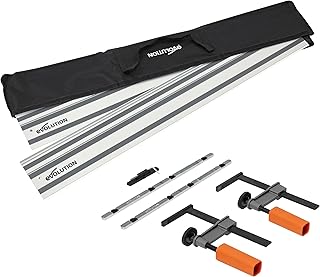
A precision plunge saw is only as useful as the cutting system supporting it. A guide rail provides the reference surface that allows the saw to travel along a predetermined line. For large plywood, MDF, melamine, laminate and other sheet materials, the rail can be more important to practical accuracy than a small difference in motor specifications.
Blade selection should follow the material rather than the other way around. The number of teeth, tooth geometry and blade construction affect cutting speed, finish and suitability for different materials.
Lower tooth counts generally favour faster material removal and can be useful for rougher or faster cuts. They may not be the first choice when the priority is an exceptionally clean finish on finished panels.
Higher tooth counts can be better suited to applications where edge finish is important. The trade-off can be slower cutting and greater sensitivity to feeding technique or material conditions.
Laminate, melamine, veneered boards and other finished sheet goods can benefit from blades designed specifically for those materials. Always confirm that the blade is approved for the saw and suitable for the material being cut.
Metabo's accessory documentation lists blades for multiple saw models, including blades specified for materials such as solid wood, coated or veneered chipboard and MDF. This reinforces the importance of matching blade selection to both the saw and the application.
Dust collection is an important consideration for anyone using a plunge saw indoors. Fine wood dust can accumulate quickly during repeated panel cuts, so buyers should consider whether the saw can connect effectively to a compatible extractor and whether the workshop has adequate ventilation and dust-control procedures.
A dust port alone does not guarantee dust-free operation. Extraction performance depends on the extractor, hose, connection, blade, material and cutting technique. For indoor woodworking, the complete dust-management system should be evaluated rather than treating the saw's dust outlet as a standalone feature.
Precision cutting often involves long passes across large sheets. A saw that feels manageable during a short demonstration can feel very different after repeated cuts. Consider grip position, trigger access, plunge resistance, balance, battery placement on cordless models and the ease of adjusting depth or bevel settings.
When comparing premium plunge saws, focus on features that directly affect repeatability rather than simply adding to the specification sheet.
Accurate depth adjustment is particularly useful for controlled plunge cuts and work where the blade must stop before passing completely through the material. The adjustment mechanism should be easy to set and lock securely.
A secure bevel mechanism helps maintain the selected angle while cutting. Buyers should pay attention to adjustment readability and the ability to return consistently to common angles.
The plunge action should feel controlled and predictable. Smooth blade entry is especially important when starting a cut in the middle of a panel.
Excessive play between the saw and rail can undermine the precision advantage of a track saw. A properly matched system should travel smoothly while remaining laterally stable.
A high no-load speed figure does not automatically mean better results. Cutting performance depends on the entire tool and blade system.
Buying the saw without budgeting for an appropriate rail can result in an incomplete setup. If your primary goal is straight panel cutting, evaluate the saw and rail as one system.
A conventional circular saw can make excellent straight cuts, but its operating method differs from a plunge saw. If you need controlled internal cuts and guide-rail operation, verify that the model is actually designed as a plunge or track saw.
Cordless tools are frequently sold in different configurations. One package may include a battery and charger while another may contain only the tool body. Compare the complete package rather than the model number alone.
The included blade may not be ideal for every project. Before purchasing additional blades, verify diameter, arbor, maximum permitted speed and material suitability.
Because of the North American Metabo-to-Metabo HPT branding transition, older listings and newer listings can appear together in search results. Confirm the exact model number and regional documentation before ordering.
A conventional circular saw is often the more economical choice for general construction cutting, framing and rough material preparation. A plunge saw is more specialised toward controlled, repeatable cuts, particularly when used with a guide rail.
These tools solve overlapping but different problems. A table saw excels at repeated rip cuts and work that benefits from a fixed cutting station. A plunge saw is easier to bring to a large sheet and can cut material without first transporting the entire panel to a table saw.
For small workshops, renovation projects and on-site installation, the portability of a plunge-saw system can be a major advantage. For high-volume repetitive ripping of smaller workpieces, a properly configured table saw can remain the more efficient solution.
In everyday tool shopping, “plunge saw” and “track saw” are often used interchangeably, but they describe slightly different aspects of the system. The plunge mechanism describes how the blade enters the material, while the track or guide rail describes how the saw is guided along a straight path.
When shopping online in Canada, search using both terms because retailers and manufacturers may use different terminology for similar equipment.
A dedicated plunge saw may be unnecessary if your work consists mostly of framing lumber, short rough cuts or occasional general-purpose sawing. In those situations, a conventional circular saw can cover more tasks with fewer accessories.
The same applies if you rarely work with sheet goods. A plunge-saw system becomes more compelling when its precision, rail compatibility and controlled cutting method will be used regularly.
Customer ratings can be useful, but they should not be treated as a substitute for technical comparison. A product may receive positive reviews because it performs well for a particular use while being less suitable for another application.
A useful ranking should not rely on one universal “best” score because different users have different requirements. Instead, compare each candidate across several practical categories.
Online listings can vary considerably in how much information they provide. Before making a purchase, verify the exact model and package rather than relying on photographs or a shortened retailer title.
Precision equipment still requires proper operating technique. A guide rail can improve control, but it does not eliminate the risks associated with a rotating cutting blade.
Precision depends on more than the motor. Dirt, resin, damaged rails, worn accessories and poorly maintained adjustment mechanisms can gradually reduce the quality of the cutting system.
Canadian users can encounter a wide range of workshop conditions, from heated indoor shops to unheated garages and mobile renovation sites. Temperature, humidity, dust and storage conditions can influence both tools and batteries.
For cordless equipment, battery storage and charging should follow the battery manufacturer's specified environmental and safety requirements. For all plunge saws, avoid allowing moisture, excessive dust or other contaminants to accumulate around the tool and accessories.
The purchase price of the saw is only one part of the overall investment. A realistic comparison should include the accessories needed to achieve the type of precision the tool is designed to provide.
This system-level approach can prevent a common buying mistake: choosing the cheapest saw initially and then discovering that the accessories required for the intended application substantially change the overall cost.
Prioritise guide-rail accuracy, clean cutting, bevel adjustment, suitable fine-finish blades and reliable depth control. The ability to make repeatable cuts in sheet goods is generally more important than maximum rough-cut speed.
Portability, dust control, cordless convenience and easy setup may be more valuable than workshop-only features. A cordless model can be particularly convenient when moving around an active renovation site.
A corded or cordless system can work well depending on your existing tool platform. Workshop users should pay particular attention to rail length, accessory availability, dust extraction and storage.
Consider whether the precision benefits justify the cost of a dedicated rail-based system. If your projects involve only occasional straight cuts, a conventional circular saw with an appropriate guide may provide sufficient capability.
Even a high-quality saw can produce poor results if the cutting process is rushed. Mark the cut carefully, establish the guide position accurately, secure the material and choose a blade appropriate for the work. For finished panels, consider the direction of the cut and the blade specification to reduce unwanted chipping.
Long cuts should be approached as a system. The rail must remain stable, the workpiece must be adequately supported, and the saw should travel at a controlled feed rate appropriate for the material. Excessive force can reduce control and may produce a worse finish than allowing the blade to perform the cutting at an appropriate pace.
Accessory compatibility should be checked by exact model number. Metabo documentation includes dedicated blade specifications for multiple saw families, illustrating that blade selection is model-specific rather than universal across every Metabo saw.
For North American buyers, the Metabo HPT transition also makes it sensible to search both the original Metabo model number and the current Metabo HPT documentation when looking for compatible accessories or service information.
“Metabo plunge saw” is a broad search phrase, not a complete product specification. Two listings can use similar descriptions while differing in blade size, power system, included accessories or regional configuration.
Always record the exact model number before comparing prices or reviews. If two listings have different model numbers, treat them as separate products until their specifications have been verified.
There is no single model that is best for every Canadian buyer. The right choice depends on cutting depth, material, guide-rail requirements, power source, battery platform, portability and budget. Compare the exact specifications of the models under consideration rather than selecting solely from a ranking position.
Metabo HPT states that Metabo professional power tools are transitioning to the Metabo HPT name in North America. Existing Metabo tools remain supported, according to the manufacturer. Because listings can reflect different stages of the transition, verify the exact model number before purchasing.
The North American branding transition means Metabo professional tools are moving under the Metabo HPT name. The manufacturer describes the transition as a branding change while stating that existing Metabo tools remain supported.
A plunge saw can provide controlled blade entry without a rail, but a compatible guide rail is central to the precision advantage of a track-saw system. If your goal is long, straight, repeatable panel cuts, the rail should be considered part of the purchase decision.
Neither is universally better. A plunge saw is particularly useful for controlled, rail-guided cuts and panel work, while a conventional circular saw is generally more versatile for general construction cutting and applications where a dedicated guide system is unnecessary.
Plunge saws are commonly used for sheet materials such as plywood, but the appropriate blade, cutting depth and technique should be selected for the specific material. Check the manufacturer's recommendations and blade specifications before cutting.
Suitable plunge-saw blades can be used for MDF when the blade and saw are rated for the application. Metabo's accessory documentation includes blade options identified for MDF and other wood-based panel materials.
Compatibility varies by model. Some Metabo saw documentation identifies compatibility with guide rails from other brands, but this should never be assumed for every model. Verify the exact saw-and-rail combination before purchasing.
Choose based on your working environment. Cordless models provide mobility and eliminate the need for an extension cord, while corded models can be practical for a workshop where continuous electrical power is readily available.
Focus on guide-rail compatibility, cutting depth, bevel adjustment, plunge control, blade availability, dust management, ergonomics and the complete accessory ecosystem. These factors have a more direct effect on practical usability than a single headline specification.
No. Ratings can provide useful insight into ownership experiences, but they should be combined with manufacturer specifications, exact model identification, accessory compatibility and reviews that relate to your intended application.
There is no universal replacement interval. Blade life depends on the material being cut, tooth design, cutting frequency, feed technique and whether the blade becomes damaged or dull. Replace or service the blade when its condition no longer supports safe and appropriate cutting performance.
The strongest way to choose a precision Metabo plunge saw in Canada is to evaluate the entire cutting system rather than treating the saw as an isolated power tool. The model number, guide rail, blade, battery platform, dust extraction and intended material all contribute to the final result.
For buyers comparing the top options for 2026, start with your actual cutting requirements. Determine the material thicknesses you normally work with, decide whether cordless operation is worthwhile, identify the guide-rail length you need and then compare cutting capacity, adjustment systems, ergonomics and accessory compatibility.
Because the Metabo professional-tool branding is transitioning to Metabo HPT in North America, double-check current model information before ordering and avoid assuming that similarly named listings have identical specifications. A careful comparison of the exact model, package contents and compatible accessories can prevent many of the most common purchasing mistakes.
Before making a final decision, compare current Canadian retailer listings, verify specifications against manufacturer documentation, read recent verified customer reviews and check the complete cost of the saw-and-rail system. The best choice is ultimately the model that fits your materials, workflow and existing tool ecosystem rather than simply the one with the highest ranking or the longest specification list.