

♥ Wishlist
Compare 44 Shop Cordless Coffee Makers for Convenient Coffee Anywhere products in Canada. Reviews, ratings, pros, cons and buying advice updated for October 2026.




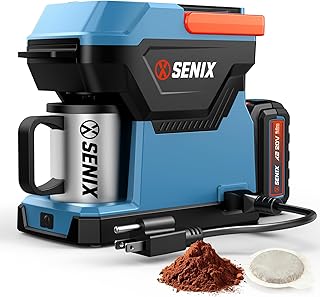


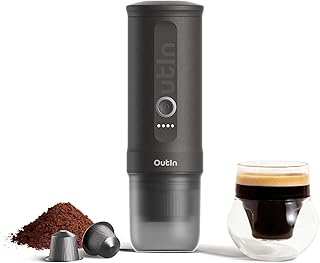


Choosing a cordless coffee maker is different from choosing a conventional countertop brewer. Instead of focusing only on brew quality, Canadian shoppers also need to consider battery platform, voltage, portability, water capacity, cup compatibility, heat-up behaviour, cleaning requirements and the practical availability of replacement parts or compatible batteries. A well-designed cordless brewer can be useful at a jobsite, workshop, campsite, RV, cottage, hunting trip or during a power outage, but the right model depends heavily on how and where it will be used.
This guide focuses on the characteristics that matter when comparing precision cordless coffee makers and portable battery-powered brewing systems in Canada. Rather than assuming one machine is automatically best for everyone, use the criteria below to match the brewer to your existing batteries, preferred coffee format, serving size and portability requirements.
A precision cordless coffee maker is a portable brewing appliance designed to operate without a continuous connection to a household electrical outlet. Depending on the design, power may come from a removable tool battery, an integrated rechargeable battery, or another portable power source.
The word “precision” is particularly relevant to brewing consistency. Coffee flavour is influenced by water temperature, contact time, water-to-coffee ratio and extraction. A portable machine that simply heats water and passes it through coffee is not necessarily equivalent to a full-size brewer. Buyers should therefore evaluate how consistently the machine handles the brewing process rather than judging it solely by battery operation.
For Canadian users, cordless operation can be especially practical when electricity is unavailable or inconvenient. However, battery-powered brewing introduces another consideration: every brew consumes stored energy. Battery capacity, ambient temperature and the amount of water being heated can all influence how many cups are practical from one charge.
Battery compatibility should usually be one of the first specifications to check. Some cordless coffee makers are designed around established power-tool battery platforms. This can make a portable brewer considerably more convenient for someone who already owns compatible batteries and a charger.
Popular tool brands such as Makita, Milwaukee, DeWalt and Ryobi have developed extensive cordless ecosystems, but compatibility varies by individual product. Always compare the brewer's stated requirements with the exact batteries already in your collection.
Battery life is more useful when considered in terms of brewing capacity rather than simply advertised runtime. Heating water requires substantially more energy than many small electronic accessories, so the number of cups possible from a battery depends on water volume, starting water temperature, battery capacity and environmental conditions.
A brewer intended for one person at a jobsite has different requirements from one intended to serve several people at a campsite. If you normally prepare only one cup, a compact system may be preferable even if its water reservoir is relatively small. For multiple servings, carrying spare batteries or choosing a larger-capacity power solution may be more practical.
Examine how the coffee maker actually prepares coffee. Common portable approaches include drip-style brewing, pod or capsule systems, ground-coffee brewing and systems that heat water for a separate brewing method.
The best format depends on whether convenience, coffee quality, portability, cleanup or ingredient flexibility is most important to you.
Temperature is one of the most important technical considerations in coffee extraction. A brewer that provides stable water temperature can offer more repeatable results than a system with little control over the heating process.
Look for clearly stated temperature information rather than relying on marketing language such as “precision brewing” alone. If temperature settings are available, determine whether they are user-selectable or automatically controlled. Also consider whether the manufacturer specifies the conditions under which the stated temperature is achieved.
Reservoir capacity affects both convenience and portability. A larger reservoir reduces the need for refilling but generally adds bulk and weight. A compact reservoir may be ideal for a single serving but inconvenient when preparing coffee for several people.
For camping and remote use, also consider how easily you can measure the required amount of water. A brewer with a simple fill indicator can be more practical than one requiring careful measuring before every brew.
Portable coffee makers vary considerably in the size and shape of containers they can accommodate. Before purchasing, check the clearance beneath the outlet and the manufacturer's stated compatibility with cups, mugs or travel containers.
This matters particularly for Canadian commuters who may want to brew directly into an insulated travel mug. A brewer that produces excellent coffee but requires a narrow or unusually shaped cup may be less convenient in daily use.
A cordless brewer should not automatically be viewed as a replacement for a full-size kitchen coffee maker. The two categories solve different problems.
If your primary goal is making several cups every morning at home, a conventional brewer may be more practical. If your priority is coffee at a workshop, construction site, campsite, cottage or remote location, cordless operation becomes much more valuable.
Construction and workshop environments place different demands on portable appliances. A coffee maker used around tools and equipment should be easy to transport, straightforward to operate and simple to clean.
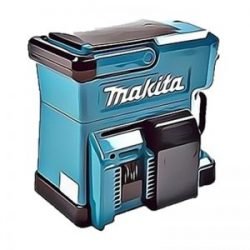
Makita is particularly relevant to shoppers already invested in its cordless tool ecosystem, while Milwaukee and DeWalt users may prefer products compatible with their respective battery systems. The important consideration is not the logo alone; it is whether the exact coffee maker matches the battery platform and operating requirements you already have.
For camping, portability becomes even more important. A machine that is convenient in a workshop may be unnecessarily bulky for backpacking or lightweight travel.
Consider the complete packed weight rather than the coffee maker alone. Include the battery, charger or charging equipment, water container and coffee supplies when assessing how portable the setup really is.
For car camping, RV use and cottage trips, a larger cordless brewer may be perfectly reasonable. For backpacking, however, a lightweight manual brewer can be more practical because it avoids carrying a high-capacity power-tool battery.
Many cordless appliances appeal to consumers because they can share batteries with existing tools. This can reduce the number of separate chargers and battery systems required, provided the appliance genuinely belongs to the same platform.
Makita's cordless ecosystem includes batteries used across numerous tool categories. A Makita-compatible coffee maker may therefore be attractive to users who already own batteries from the relevant platform. Check the exact voltage family and product specifications before purchase because not every Makita battery is interchangeable across every appliance.
Milwaukee's M18 ecosystem is widely used for professional and DIY tools. For an existing M18 user, a compatible coffee maker can make sense because the battery can serve multiple purposes. The main trade-off is that larger batteries can add noticeable weight to a portable brewing setup.
DeWalt cordless systems are another consideration for users who already own compatible batteries. Before choosing a DeWalt-based coffee maker, verify the exact battery family and the manufacturer's stated compatibility rather than relying on the general 20V MAX branding.
Ryobi's ONE+ ecosystem is designed around a broad range of compatible cordless equipment. For existing users, an appliance that works with the correct ONE+ battery generation can potentially reduce the need for another dedicated power system.
There is no universal winner. Ground coffee is generally the more flexible choice for shoppers who already have preferred beans and want control over grind size and coffee selection. Pods can simplify preparation and reduce measuring, although buyers should confirm the exact pod format supported by the machine.
Portable coffee makers combine hot water, electrical components and moving or removable parts, so construction quality matters. Pay attention to the materials used for the water-contact areas, brewing basket, reservoir and exterior housing.
Food-contact components should be designed for their intended use and maintained according to the manufacturer's instructions. Stainless-steel components can be attractive for durability and cleaning, while plastics can reduce weight and manufacturing cost. Neither material alone guarantees better brewing performance.
Also inspect the design of seals, lids, hinges and removable components. These small details can have a significant effect on long-term convenience, especially when a coffee maker is transported frequently.
Compact dimensions are helpful, but true portability involves more than the physical size of the coffee maker. A useful portable setup should be easy to carry, pack, charge, fill, operate and clean.
Do not judge a cordless coffee maker solely by its battery platform. Brewing performance remains central to the purchase.
When comparing specifications, look for information about brewing temperature, brewing volume, extraction method, coffee dose, filter design and user controls. If independent reviews are available, look for repeated observations about consistency rather than relying on a single subjective opinion.
Fresh coffee also depends on factors outside the machine. Bean freshness, grind size, water quality, coffee-to-water ratio and storage conditions can significantly affect the final cup. A premium portable brewer cannot compensate completely for stale coffee or an unsuitable grind.
Tap-water characteristics differ between Canadian communities. Mineral content can affect both taste and the buildup of deposits inside heating systems. If your local water is hard, regular descaling may become particularly important.
Follow the manufacturer's cleaning and descaling instructions rather than assuming that a generic cleaning procedure is suitable for every appliance. Never use a cleaning substance unless it is appropriate for the machine and its materials.
Regular maintenance helps preserve brewing performance and reduces the chance of stale coffee residue affecting flavour.
Do not immerse an electrically powered appliance unless its instructions specifically state that the relevant component is designed for immersion. When cleaning a cordless appliance, separate the battery before performing maintenance whenever the manufacturer's instructions require it.
A compatible battery is useful, but it does not guarantee that the brewer suits your coffee preferences. Evaluate brewing method, water capacity, portability and cleaning requirements as well.
If you do not already own the required battery and charger, the complete system cost can be substantially higher than the advertised appliance price. Compare the total setup rather than the bare tool price.
A higher-capacity battery can provide more available energy, but it can also increase the weight and size of your portable coffee setup. Choose capacity according to the number of brews you actually need.
Large capacity sounds convenient, but excess water capacity can add unnecessary bulk. A one-person brewer does not necessarily benefit from a reservoir designed for several servings.
Always check whether the brewer accepts your preferred coffee. A machine designed around one brewing format may not provide the flexibility you expect.
A portable machine can become inconvenient if it has numerous small components that require frequent cleaning. Inspect the design before buying, particularly if you plan to use it outdoors.
Words such as “precision,” “professional,” “premium” and “advanced” do not tell you how a brewer actually performs. Look for measurable specifications and clearly stated compatibility information.
When building a shortlist of the top cordless coffee makers for Canada, use the same criteria for every candidate. This creates a more meaningful comparison than simply ranking products by popularity.
Prioritise a brewer that uses the battery platform already present in your workshop. This can be more practical than buying an entirely new battery ecosystem for the sake of coffee.
Look for a compact, robust design with straightforward controls, convenient cleanup and batteries that are already part of your work setup.
Weight, battery capacity and water requirements become especially important. Consider how far the machine will be carried and whether charging facilities will be available.
Portability still matters, but weight may be less important than it is for backpacking. A larger brewing capacity can therefore become more attractive.
A cordless coffee maker can be useful when mains electricity is unavailable, provided the battery is charged beforehand. For emergency planning, remember that battery power is finite, so a complete backup plan should also consider how batteries will be recharged.
Battery-powered brewing can be convenient during a power interruption, but buyers should understand its limitations. The machine can only operate while sufficient stored energy remains. If an outage lasts for an extended period, preserving battery capacity for essential equipment may be more important than brewing several cups of coffee.
Keep compatible batteries charged according to their manufacturer's storage recommendations. Store them in appropriate conditions and avoid exposing batteries or electronic appliances to extreme heat, excessive cold, water or other unsuitable environments.
Outdoor users should remember that battery-powered equipment can behave differently in cold weather. Low temperatures can affect available battery performance and charging requirements. A coffee maker that works conveniently at room temperature should not automatically be assumed to provide identical results in freezing outdoor conditions.
For winter camping, ice fishing, construction work and other cold-weather applications, consult the battery manufacturer's temperature guidance and operating instructions. Protecting batteries from unnecessary temperature extremes can be just as important as choosing the coffee maker itself.
A cordless coffee maker still involves hot water, heated components and electrical energy. Portability does not eliminate the normal risks associated with brewing equipment.
Instead of selecting a cordless coffee maker strictly by price, calculate the total ownership cost. The appliance may be only one part of the system. Depending on the model, you may also need a compatible battery, charger, additional battery, replacement filter or other accessories.
For shoppers who already own compatible batteries, the overall value proposition can be very different from that of someone starting from scratch. Compare the complete setup required for your intended use before making a decision.
Customer reviews can be useful when interpreted carefully. Look for recurring observations rather than isolated comments. Reviews are particularly valuable for identifying practical issues that may not be obvious from a specification sheet.
Separate product-specific observations from subjective preferences. One person may consider a small reservoir a disadvantage while another may regard it as an advantage because it keeps the brewer compact.
Specification sheets are most useful when you know what each number means. Battery voltage tells you about the electrical platform, but it does not by itself tell you how many cups a brewer can make. Water capacity indicates the maximum amount of water the reservoir can accommodate, but it does not necessarily equal the finished beverage volume.
Likewise, physical dimensions may exclude the battery or other accessories. Always look for complete product measurements and determine whether the stated weight includes the battery.
The best option depends on your battery ecosystem, brewing preferences, portability requirements and budget. Someone who already owns compatible Makita, Milwaukee, DeWalt or Ryobi batteries may reasonably choose a different model from someone who needs a completely independent portable coffee solution.
They can be worthwhile when portability and independence from wall power are important. They are less compelling if you only brew coffee at a kitchen counter and have no need for battery operation.
No. Battery systems are not universally interchangeable. Use only the battery type and voltage platform specified for the particular coffee maker.
They can produce satisfying coffee, but results depend on the brewing system, temperature management, coffee dose, grind size, water quality and other variables. Portable operation alone does not determine coffee quality.
Yes, provided the model is designed for the intended portable use and you have an appropriate battery and water supply. For lightweight trips, compare the complete packed weight rather than the appliance's empty weight.
They can be particularly convenient for jobsites where compatible tool batteries are already available. Choose a model with practical portability, simple controls and manageable cleaning requirements.
Not necessarily. A larger battery may provide greater energy capacity, but it also adds weight and bulk. The best capacity depends on how many brews you need and how portable the setup must be.
Choose pods when speed and portion consistency are your priorities. Choose ground coffee when flexibility, coffee selection and control over the brewing recipe matter more.
Clean removable coffee-contact components after use or according to the manufacturer's instructions, and perform deeper cleaning or descaling at the recommended intervals. The correct maintenance schedule varies by design and water conditions.
Follow the specific storage instructions for your model. In general, avoid leaving water standing unnecessarily for extended periods, particularly when the machine will not be used soon.
Focus on verified specifications, battery compatibility, brewing method, water capacity, portability, temperature management, cleaning requirements and the complete cost of ownership. Product designs and availability can change, so confirm current specifications before ordering.
The strongest cordless coffee maker choice is not necessarily the machine with the most features. It is the one that fits your actual routine. Start with your intended location, determine whether you already own a compatible battery system, decide how much coffee you normally brew, and then compare brewing performance, portability, maintenance and total ownership cost.
For Canadian shoppers, also verify the exact product specification, battery compatibility and current retailer information before purchasing. Availability, included accessories and product configurations can change during 2026, so the information shown on a current product listing should take precedence over older descriptions.
If you already own a professional cordless tool ecosystem, a compatible coffee maker can turn an existing battery into a useful secondary power source for portable brewing. If you are buying specifically for camping or travel, however, compare the complete weight and charging requirements against compact manual alternatives. Taking this broader approach makes it easier to identify a genuinely useful cordless coffee maker rather than simply choosing the product with the most impressive-looking specification sheet.