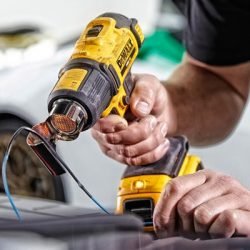


♥ Wishlist
Compare 32 Cordless Heat Guns for Convenient Heat Application products in Canada. Reviews, ratings, pros, cons and buying advice updated for October 2026.


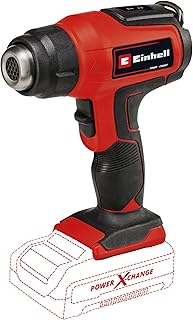


A precision cordless heat gun is designed for controlled hot-air work where portability, temperature management, and access to tight spaces matter more than the raw airflow of a full-size corded heat gun. For Canadian buyers, the right choice depends on the type of material being heated, the required temperature range, battery platform, nozzle design, runtime, and the amount of control needed for delicate work.
Unlike a conventional heat gun that remains connected to an electrical outlet, a cordless model can be useful for field repairs, automotive work, electronics-related tasks, workshop projects, heat-shrink tubing, adhesive removal, vinyl work, plastic forming, and other applications where a power cord becomes inconvenient. However, cordless convenience does not automatically mean that every model is suitable for precision applications.
This guide focuses on the buying criteria that matter when comparing precision cordless heat guns in Canada. Product specifications can vary by configuration, battery pack, charger, and market, so always verify the current manufacturer specifications and included accessories before purchasing.
The term precision generally refers to control rather than simply maximum heat. A precision-oriented heat gun should make it easier to direct heat exactly where it is needed and reduce unnecessary heating of surrounding components or surfaces.
Important characteristics can include a compact body, narrow or concentrator nozzles, multiple temperature settings, adjustable airflow, quick heat-up, stable operating temperatures, an accessible control interface, and a design that can be positioned accurately during detailed work.
For example, shrinking electrical tubing around a wire requires a different approach from stripping paint from a large wooden surface. The former benefits from concentrated, controllable heat, while the latter generally benefits from broader airflow and sustained output. A buyer should therefore assess precision according to the intended application rather than assuming that the highest temperature or wattage is automatically the best specification.
Temperature control is one of the most important specifications for precision heating. A model with only one high-heat setting may work for demanding applications but can be unnecessarily aggressive for plastics, labels, adhesives, cable insulation, and other heat-sensitive materials.
Multiple temperature levels provide more flexibility because the operator can start at a lower setting and increase heat gradually. Models offering finer adjustment can be particularly useful when the material has a narrow safe-working temperature range.
Temperature and airflow should be evaluated together. High temperature with excessive airflow can move heat beyond the intended work area, while low airflow can make a heat gun slower for larger surfaces.
For precision work, controlled airflow can be just as important as temperature adjustment. Look for specifications that clearly explain whether airflow is fixed or adjustable and whether different operating modes alter both heat and airflow.
A good precision setup should deliver heat predictably through the selected nozzle. Uneven or poorly controlled heat can create hot spots and make it more difficult to work consistently around plastics, adhesives, coatings, or electrical components.
Nozzle geometry plays a major role. A narrow nozzle concentrates the airflow, while a wider nozzle distributes heat across a larger area. Buyers should consider whether the tool supports interchangeable accessories suited to their particular jobs.
Comparing cordless heat guns by appearance alone can be misleading. A more useful approach is to create a specification checklist and compare each candidate against the same criteria.
For Canadian power-tool buyers who already have cordless equipment, battery compatibility can be one of the strongest reasons to choose one heat gun over another. A bare tool can be particularly attractive when the buyer already owns compatible batteries and a charger.
Major professional and consumer tool ecosystems include platforms from brands such as DeWalt, Milwaukee, Makita, Bosch, and Ryobi. Canadian buyers may also encounter cordless heat-related tools associated with brands such as Mastercraft and other retailers' house brands.
Battery-platform compatibility should always be checked at the exact model level. Batteries from the same brand are not necessarily interchangeable across every product family, voltage class, or generation.
A bare-tool package generally makes more sense for someone who already owns compatible batteries and charging equipment. It can reduce unnecessary duplication, but the actual value depends on the current price difference between tool-only and complete-kit configurations.
A kit containing a battery and charger may be more practical for a first-time buyer entering a particular cordless ecosystem. Compare the battery capacity, charger type, included accessories, and package contents rather than comparing only the headline price.
Heat guns can draw substantial electrical power while actively heating. As a result, battery capacity can have a meaningful effect on how long the tool remains useful between charges.
Battery capacity is commonly expressed in ampere-hours (Ah). A higher-capacity battery generally stores more energy within the same platform, although it can also add weight and alter the balance of the tool.
Do not assume that a larger Ah battery automatically makes a particular heat gun more powerful. Performance depends on the complete electrical and thermal design of the tool, while runtime depends on the operating mode and workload.
If the heat gun will mainly be used for occasional heat-shrink tubing, adhesive softening, small repairs, or short workshop tasks, maximum runtime may not be the primary buying criterion.
For repeated professional use, installation work, automotive applications, or extended heating sessions, battery capacity, charging time, and the availability of spare batteries become much more important.
Nozzles determine how the hot air reaches the workpiece. They are therefore one of the most important accessories to evaluate when comparing precision cordless heat guns.
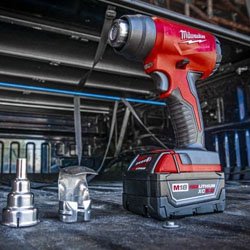
A concentrator nozzle narrows the hot-air stream so that heat can be directed toward a smaller area. This can be useful for localized heating, adhesive work, heat-shrink tubing, and controlled plastic forming.
A reflector-style nozzle can direct heated air around an object such as tubing. This can make it easier to distribute heat more evenly around cylindrical components rather than heating only one side.
A wider nozzle spreads heat across a larger area. It can be preferable when the objective is to soften a broad section of adhesive or coating rather than concentrate heat on a small point.
Before buying a tool based on an accessory shown in product imagery, confirm whether that accessory is actually included in the Canadian package. Manufacturers and retailers can sell different configurations, and package contents can vary between tool-only and kit versions.
The versatility of a heat gun makes it useful across several categories of work, but each application has different requirements.
Portability is valuable, but cordless operation should not be treated as a universal replacement for corded equipment.
If a project involves prolonged high-temperature operation over a large surface, a corded heat gun may offer a more practical workflow because it does not require battery changes or recharging during use.
Likewise, industrial applications may require specialized heating equipment with temperature monitoring, higher sustained output, specialized nozzles, or process controls that are not available on a compact consumer-oriented cordless model.
Compact precision models prioritize maneuverability, while larger heat guns can prioritize output and sustained operation. The right choice depends on the surface area and material involved.
For small components, narrow areas, wiring, crafts, and localized adhesive work, a compact tool can be easier to position accurately. For stripping large amounts of paint or heating broad surfaces, a full-size heat gun may provide a more efficient workflow.
Home users should prioritize versatility, straightforward controls, reasonable ergonomics, and compatibility with a battery system they already own. If the heat gun will only be used occasionally, paying substantially more for advanced controls may not provide meaningful value.
Automotive users may benefit from cordless operation because vehicles can be located away from convenient outlets. Compact dimensions and precise airflow can also help when working around trim, wiring, adhesives, and other components.
Extra caution is required around fuel, combustible vapours, batteries, plastics, painted surfaces, and other heat-sensitive components. Follow the manufacturer's safety instructions and the vehicle manufacturer's guidance where applicable.
For professional installation work, heat-shrink applications can make nozzle control, temperature adjustment, battery availability, and ergonomics particularly important. Compatibility with an existing professional battery platform can also simplify job-site logistics.
Makers should look closely at temperature adjustability, low-temperature capability, accessory selection, and physical control. Delicate materials can be damaged by excessive heat, so controllability is often more useful than maximum output.
Contractors should consider durability, battery logistics, runtime, serviceability, ergonomics, and the frequency of repeated use. A heat gun that integrates with batteries already used by the crew can reduce the number of chargers and battery types required on site.
Choosing a heat gun is only half the equation. The material being heated determines how aggressively the tool should be operated.
Different plastics soften and deform at different temperatures. Adhesives also respond differently depending on their formulation, age, substrate, and environmental conditions. Paints, coatings, films, tubing, and synthetic materials can behave differently even when they appear similar.
When the material manufacturer provides a temperature range or heating recommendation, use that information rather than relying on a generic heat-gun setting.
Delicate materials can scorch, deform, melt, discolor, shrink unexpectedly, or release unwanted fumes when overheated. A precision heat gun should therefore be operated progressively rather than immediately at maximum temperature.
A cordless heat gun should be treated as a high-temperature power tool, even though it may be smaller than other workshop equipment. The absence of a power cord does not make the hot-air stream or heated nozzle harmless.
Cordless heat guns depend on rechargeable battery technology, so battery condition and storage practices matter. Lithium-ion battery packs should be used, charged, transported, and stored according to the battery manufacturer's instructions.
Temperature extremes can affect battery performance. Canadian users should pay particular attention to storage conditions during very cold winters and avoid using or charging batteries outside the conditions specified by the manufacturer.
A battery that is damaged, swollen, excessively hot, leaking, or otherwise behaving abnormally should not be treated as a normal battery. Follow the battery manufacturer's safety guidance for inspection, isolation, and disposal.
Precision heating frequently involves holding the tool close to a small workpiece for a controlled period. Poor balance can therefore become tiring even when the heat gun itself is relatively compact.
Consider where the battery is positioned, how far the nozzle extends from the hand, the shape of the grip, the location of the trigger or controls, and whether the tool can be comfortably operated in the positions required for your work.
A larger battery can change the balance substantially. Buyers who already own multiple battery sizes should consider how the heat gun feels with the batteries they actually intend to use.
A higher maximum temperature does not automatically make a heat gun better for precision work. If most applications require moderate heat, control and usability may matter more than the maximum specification.
Buying a heat gun from a platform that requires a completely different battery and charger can increase the overall cost and storage requirements. Existing battery ownership should be part of the purchasing calculation.
Many cordless power tools are offered in multiple configurations. Always check the exact package contents before comparing prices between listings.
A heat gun's usefulness can change significantly depending on the available nozzles. A seemingly inexpensive model may become less attractive if the accessories required for your application must be purchased separately.
More powerful airflow can be useful for large surfaces but may be harder to control on small components. Precision requires the right combination of temperature, airflow, nozzle geometry, and operator control.
Professional-grade equipment can make sense for frequent demanding use, but occasional homeowners may not benefit from every premium feature. Match the tool to actual workload rather than buying specifications that will rarely be used.
A small precision heat gun may be excellent for localized heating but inefficient for broad paint-removal or surface-heating jobs. Consider surface area before prioritizing compact size.
When reviewing a shortlist, use the same criteria for every candidate. This prevents attractive marketing claims from overshadowing specifications that matter to your application.
Professional-oriented tools generally place greater emphasis on durability, battery-platform integration, ergonomics, job-site convenience, and sustained use. Consumer-oriented tools may focus more heavily on affordability and occasional household applications.
Brands such as Milwaukee, DeWalt, Makita, Bosch, and Ryobi have established cordless tool ecosystems that can be relevant when comparing battery-powered equipment. However, brand reputation should not replace model-level comparison. The exact temperature controls, airflow, accessories, battery requirements, and intended applications still need to be evaluated.
The apparent price of a cordless heat gun does not tell the whole story. A bare tool can represent good value when the buyer already has compatible batteries and chargers. For someone starting from zero, a complete kit may provide a more realistic picture of the initial investment.
When comparing options, calculate the cost of the complete setup required for your intended use. Include the tool, appropriate battery capacity, charger, essential nozzles, and any other accessories needed for the job.
Premium features are most valuable when they solve a real problem in your workflow.
Not every user needs every advanced feature. Someone who uses a heat gun a few times a year may have little practical need for highly granular temperature adjustment, extensive accessory systems, or multiple spare batteries.
Likewise, an experienced professional may place greater value on battery compatibility and durability than on an inexpensive introductory kit. The best purchase is therefore determined by workload rather than by the longest feature list.
Routine care can help maintain reliable operation and reduce avoidable problems. Always follow the maintenance instructions supplied with the specific model.
Precision heating is partly about technique. Even a high-quality heat gun can produce poor results if the operator applies too much heat too quickly.
Start with a conservative temperature and increase it only when necessary. Maintain an appropriate distance from the workpiece, move the tool when the material requires distributed heating, and use the correct nozzle for the intended area.
For unfamiliar materials, practice on scrap material first. This can reveal how quickly the surface responds to heat and whether the selected temperature and airflow are appropriate.
Canadian buyers should pay attention to more than the advertised tool price. The actual purchasing decision can depend on battery availability, package configuration, retailer stock, shipping conditions, taxes, and compatibility with an existing cordless-tool collection.
Check the Canadian version of the product listing and manufacturer documentation where possible. Product names can be similar across markets while package contents, model numbers, voltage specifications, or accessories differ.
When comparing current offers, verify the exact model number rather than relying only on product photographs or a generic product title. This is especially important when multiple generations of a tool exist.
Customer feedback can provide useful information, but individual reviews should be interpreted in context. Look for recurring comments concerning battery life, temperature control, ergonomics, accessory compatibility, heat-up behaviour, and durability rather than relying on one unusually positive or negative review.
Also check whether reviewers are discussing the same model and configuration. A review for a kit containing a larger battery may not accurately describe the runtime experienced with a smaller battery, while a review from a professional user may reflect a workload very different from occasional household use.
Verified-purchase indicators can provide additional context, but they do not replace technical specifications or manufacturer documentation.
There is no single best model for every Canadian buyer. The appropriate choice depends on the required temperature range, airflow control, battery platform, nozzle selection, runtime, ergonomics, and intended application. Buyers should compare the exact specifications and package contents of shortlisted models before purchasing.
Some cordless heat guns are designed for demanding professional applications, while others are aimed primarily at DIY and light-duty use. The important distinction is the specification and intended use of the individual model rather than whether it is cordless.
Neither format is universally better. Cordless models offer freedom from an electrical cord, while corded models can be advantageous for extended work near an outlet. Choose based on where and how long you expect to use the tool.
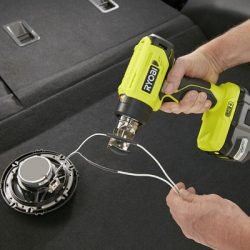
Yes, a suitable heat gun can be used for heat-shrink tubing when operated according to the tubing manufacturer's requirements. A concentrated nozzle and controllable heat can make it easier to apply heat accurately without unnecessarily heating nearby materials.
No. Maximum temperature is only one specification. Precision applications may benefit more from controllable temperature, suitable airflow, appropriate nozzles, good balance, and predictable heat distribution.
If a compatible heat gun exists within your existing battery ecosystem, it can be a practical option because batteries and chargers may already be available. Always verify compatibility with the exact battery series and tool model.
No. Battery compatibility depends on the specific platform, voltage class, physical interface, and manufacturer's compatibility specifications. Never assume that two products from the same brand use interchangeable batteries.
Choose a battery capacity based on expected runtime and acceptable tool weight. Larger-capacity batteries can provide more stored energy but may increase the overall weight of the tool.
Yes. Excessive heat can soften, deform, melt, discolor, or otherwise damage plastic. Material composition varies considerably, so use the lowest practical heat and follow the material manufacturer's recommendations.
A heat gun can be used for certain paint-removal applications, but a compact precision model may be less efficient on large surfaces than a tool designed for broader heating. Follow the heat gun manufacturer's safety instructions and consider the coating and substrate involved.
Indoor use depends on the application, material, ventilation, and manufacturer's instructions. Heating some coatings, plastics, adhesives, or other materials can produce fumes. Ensure appropriate ventilation and follow all relevant safety guidance.
Possible causes can include a depleted battery, thermal protection, blocked ventilation, an operating condition outside the tool's intended limits, or another fault. Stop using the tool if it behaves abnormally and consult the manufacturer's troubleshooting and safety documentation.
The best precision cordless heat gun is not necessarily the hottest, most expensive, or most heavily featured model. A better purchasing decision comes from matching the tool to the work: choose the temperature control you actually need, the airflow characteristics appropriate to your materials, the nozzle system suited to your applications, and a battery platform that makes sense for your existing tools or future plans.
For Canadian shoppers, verify the exact model, battery configuration, included accessories, manufacturer specifications, and current retailer information before placing an order. If two models appear similar, compare their controls, battery requirements, ergonomics, accessory ecosystem, and intended workload rather than relying solely on brand recognition or headline specifications.
Brands including DeWalt, Milwaukee, Makita, Bosch, and Ryobi can be useful starting points for battery-platform comparisons, but the exact model remains the deciding factor. A thoughtful comparison of specifications and real-world requirements is the most reliable way to narrow a broad selection down to the cordless heat gun that fits your particular Canadian workshop, job site, vehicle, or DIY project.