
♥ Wishlist
Compare 20 Cordless Die Grinders for Fast, Flexible Grinding and Finishing products in Canada. Reviews, ratings, pros, cons and buying advice updated for October 2026.
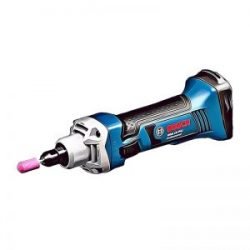
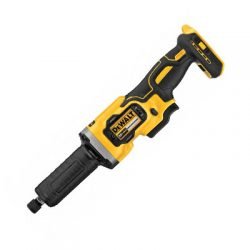
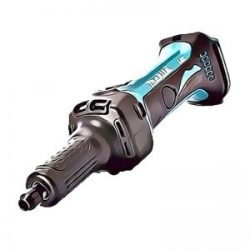
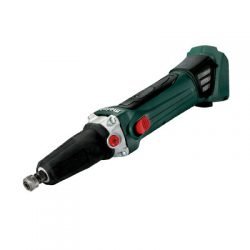


A precision cordless die grinder is a specialist power tool for controlled material removal, deburring, polishing, porting, grinding, cleaning, and detail work where a conventional angle grinder is too large or aggressive. For Canadian buyers, the best choice depends on more than advertised speed. Battery platform, collet size, speed control, motor behaviour, ergonomics, heat management, accessory compatibility, and serviceability can all affect how useful the tool is in a real workshop.
The term “precision” is particularly important. A compact die grinder should allow the operator to make small, deliberate adjustments without excessive vibration, awkward balance, or an uncontrollable increase in cutting speed. When comparing cordless models, consider the type of work you actually perform rather than selecting the tool with the highest no-load RPM alone.
Precision work generally requires a combination of controllable speed, compact dimensions, stable handling, and compatibility with appropriately sized accessories. A grinder intended primarily for rapid stock removal may not be the most comfortable choice for delicate finishing or intricate metalwork.
RPM is one of the most visible specifications when comparing die grinders, but it should not be treated as a standalone measure of performance. A high maximum RPM can be useful for certain small-diameter accessories and finishing operations, while a lower controllable speed may be preferable for larger accessories, polishing, cleaning, or applications where excessive heat is undesirable.
Always compare the manufacturer's permitted accessory speed with the grinder's maximum rated speed. The accessory should never be operated beyond its own rated limit. This is particularly important with abrasive wheels, mounted points, cutting accessories, wire products, and other rotating attachments.
Variable speed provides greater flexibility because different materials and accessories behave differently at different rotational speeds. A small abrasive point may require a different operating approach from a polishing attachment or wire brush. Lower settings can also make it easier to start a cut or approach an edge without immediately removing excessive material.
A tool's maximum no-load speed indicates what the motor can reach without significant resistance. It does not necessarily describe how the grinder behaves while working. For buying decisions, consider speed adjustment, electronic control, motor response, and the manufacturer's operating guidance alongside the headline RPM figure.
For cordless die grinders, battery compatibility can be just as important as the grinder itself. Buyers who already own cordless tools may benefit from choosing a model that uses batteries from the same established platform. This can reduce the need to maintain another charger and another battery ecosystem.
Popular professional tool ecosystems from brands such as Milwaukee, DEWALT, Makita, Bosch, and Metabo HPT can be relevant when comparing cordless rotary tools, but batteries are generally platform-specific. Do not assume that batteries with similar voltage ratings are interchangeable between brands or product families.
Battery capacity is commonly expressed in amp-hours (Ah). A higher Ah rating generally means greater stored energy, although actual runtime varies according to motor load, speed, accessory type, material, operating technique, and battery generation.
A compact battery can improve manoeuvrability and reduce overall weight, while a higher-capacity pack may be more appropriate for extended material-removal work. There is no universally best battery size for precision grinding.
Brushless motors are widely used in modern cordless professional tools because they can offer efficient operation and eliminate the replaceable carbon brushes found in traditional brushed motor designs. A brushed motor is not automatically unsuitable, but buyers comparing premium cordless die grinders should examine the complete tool design rather than treating motor type as the only deciding factor.
The collet is one of the most important mechanical interfaces on a die grinder. It secures the accessory's shank in the spindle and directly affects which accessories can be used.
Before purchasing, verify the supplied collet size and determine whether additional collets are available for the accessories you already own. A grinder that accepts the shank sizes you regularly use can be substantially more useful than a theoretically more powerful model with limited accessory compatibility.
Precision cordless die grinders can serve several different roles, but the appropriate configuration varies by application.
Deburring removes sharp edges and unwanted material left after drilling, cutting, machining, or fabrication. Controlled speed and a comfortable grip are valuable because excessive pressure can remove more material than intended or damage an adjacent surface.
Fabricators may use die grinders to refine weld areas, remove small amounts of excess material, or prepare surfaces for subsequent finishing. For heavier weld removal, a larger grinder may be more appropriate. A compact die grinder is particularly useful when access is restricted or the work requires a smaller contact area.
Small rotary burrs and abrasive accessories can be useful for detailed work on suitable metals. This type of application rewards precise control, predictable speed response, and an ergonomic grip.
Polishing requires careful accessory selection and speed control. Running an unsuitable polishing accessory too quickly can create excessive heat or damage the workpiece. Always follow the accessory manufacturer's instructions.
Appropriate wire brushes and surface-conditioning accessories can help clean corrosion, scale, paint residue, or other unwanted material. Eye protection and appropriate guarding or protective equipment remain important because wire fragments and debris can be ejected during operation.
A cordless die grinder may look excellent on a specification sheet yet feel uncomfortable after extended use. Because precision grinding often involves small movements, awkward angles, and close visual attention, ergonomics can directly influence control.
When comparing cordless models, do not evaluate the bare tool in isolation. The practical weight is the complete working configuration: grinder, battery, collet, and accessory. A larger battery may extend working time but can also shift the centre of gravity and increase fatigue during precision operations.
If most of your work involves short finishing tasks, a lighter battery may be preferable. For extended fabrication work away from a power outlet, additional battery capacity may have greater value. Buyers should compare the tool with the battery configuration they realistically expect to use.
Grinding generates heat through both the motor and the workpiece. Cordless tools also have to manage heat within the motor and battery system. Repeated operation under heavy load can increase temperature, particularly when ventilation is restricted or the tool is pushed continuously.
A good operating technique is generally to let the tool perform the work rather than applying excessive force. Excessive pressure can reduce rotational speed, increase heat, accelerate accessory wear, and make the grinder harder to control.
Modern cordless grinders may incorporate several electronic protections. The exact feature set differs by model, so buyers should consult the manufacturer's specifications rather than assuming every tool includes every function.
The performance of a die grinder depends heavily on the accessory installed. A premium cordless grinder cannot compensate for a poorly matched, damaged, incorrectly installed, or inappropriate accessory.
For a versatile setup, buyers may consider the types of accessories required for their work, including suitable mounted points, rotary burrs, abrasive accessories, polishing products, sanding accessories, and wire brushes. The accessory must always be compatible with the tool and rated for the intended application and rotational speed.
Mounted abrasive points are useful for controlled grinding and finishing where their dimensions and abrasive characteristics suit the material. Use only accessories appropriate for the material and tool, and inspect them for damage before use.
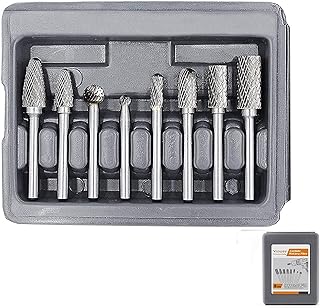
Carbide burrs can be used for controlled material removal on suitable metals. Their cutting geometry and shape influence how aggressively they remove material and how easily they can reach recessed areas.
Wire brushes are useful for cleaning and surface preparation, but they can shed wires during operation. Eye and face protection are important, and users should follow the accessory manufacturer's safety instructions.
Polishing wheels, points, and compounds vary considerably. A grinder intended for high-speed grinding should not automatically be assumed suitable for every polishing accessory. Check the accessory's speed rating and recommended operating conditions.
The highest advertised speed is not automatically the best choice. Precision work often benefits from a broad and controllable operating range rather than a single impressive maximum number.
A bare cordless tool can appear attractive until the cost of batteries and a charger is included. If you are starting a new platform, compare the complete ownership cost rather than the tool-only price.
Accessory compatibility should be confirmed before purchase. A grinder that does not accept your preferred accessories may require additional equipment or replacement accessories.
A tool used for occasional heavy grinding can tolerate a different weight profile from one used for detailed work. Think about how long you normally hold the tool and how frequently you change working positions.
Additional power can be useful for demanding applications, but precision work also requires control. The ideal grinder provides enough performance for the job without becoming unnecessarily difficult to manage.
Bare-tool pricing can be misleading if you do not already own compatible batteries. Add the cost of the battery and charger when comparing different cordless platforms.
Established brands can offer broad cordless ecosystems and different approaches to motor technology, battery design, ergonomics, and electronic controls. Brands frequently considered by Canadian power-tool buyers include Milwaukee, DEWALT, Makita, Bosch, Metabo, and Metabo HPT.
The correct choice should be based on the individual model rather than brand reputation alone. Product generations change, specifications vary within the same brand, and a tool designed for heavy fabrication may have different priorities from one designed for light maintenance or precision finishing.
Milwaukee is well known for its cordless professional tool ecosystem. When considering a Milwaukee die grinder, compare the exact model's battery platform, speed range, collet configuration, dimensions, electronic controls, and included equipment.
DEWALT offers a broad cordless range that can be attractive to buyers already invested in its battery ecosystem. Compare individual die-grinder specifications carefully, particularly speed control, accessory compatibility, and complete tool weight.
Makita has extensive cordless tool platforms and a wide range of professional-oriented equipment. Buyers should evaluate the exact grinder's motor configuration, speed characteristics, battery compatibility, ergonomics, and intended workload.
Bosch offers professional power tools across several cordless platforms. When comparing a Bosch option with competing grinders, focus on the specific model's operating specifications and compatibility rather than relying on brand-level assumptions.
Metabo and Metabo HPT are established names in professional power tools, but they represent distinct product lines and platforms. Verify the exact model, battery system, collet arrangement, speed specifications, and included accessories before making a comparison.
A cordless die grinder provides freedom from a power cord and can be particularly convenient for mobile maintenance, automotive work, fabrication, construction sites, and locations where electrical access is inconvenient. The trade-offs can include battery weight, charging requirements, runtime limitations, and the ongoing cost of batteries.
A corded die grinder can make sense when the tool is used for long periods in a fixed workshop location and continuous electrical power is readily available. Cordless models are generally more convenient for mobility, while corded models can be attractive for uninterrupted stationary work.
Pneumatic die grinders have long been used in automotive and industrial environments where a suitable compressed-air system is already available. Cordless models eliminate the need for an air hose and compressor, which can make them substantially more convenient for mobile tasks.
However, buyers with an existing high-capacity compressed-air system may find pneumatic equipment attractive for certain continuous-use applications. The right choice depends on the working environment, required runtime, available infrastructure, and preferred workflow.
A die grinder is a high-speed rotating tool and should be treated accordingly. Always read and follow the manufacturer's instructions and the instructions supplied with every accessory. Use the appropriate personal protective equipment for the operation, including suitable eye and face protection where required.
Precision is partly a tool characteristic and partly an operating technique. Begin with a suitable accessory and an appropriate speed setting. Hold the tool securely without gripping it so tightly that hand fatigue develops quickly.
Use controlled movements and avoid forcing the accessory into the material. For detail work, several light passes are often easier to control than one aggressive pass. Maintain awareness of the accessory's contact area and avoid allowing the tool to twist unexpectedly when the accessory catches an edge.
Regular maintenance can help preserve the performance and reliability of a cordless die grinder. Follow the manufacturer's maintenance schedule because service requirements differ between models.
The purchase price of the grinder is only one part of the overall cost. A cordless setup may require a battery, charger, additional collets, and accessories. If the tool belongs to a battery ecosystem you already own, the incremental cost can be considerably different from starting from scratch.
When comparing prices in Canada, also consider whether the listing contains the bare tool or a complete kit. Check the exact contents, battery capacity, charger type, accessory package, and model number before comparing apparently similar offers.
A compact cordless die grinder can be particularly useful when the job requires controlled rotary material removal in areas that are difficult to reach with a larger grinder. Typical applications can include metal fabrication, automotive maintenance, weld finishing, deburring, surface preparation, tool maintenance, restoration work, and detailed workshop projects.
It is less appropriate to assume that a die grinder can replace every other grinder or rotary tool. Large-scale stock removal may be faster with a larger grinder, while extremely delicate finishing may call for a different specialized rotary tool. Matching the tool to the task is one of the most important purchasing decisions.
Customer reviews can provide useful information about ergonomics, battery life, handling, noise, accessory compatibility, and long-term ownership, but individual reviews should not replace manufacturer specifications. Look for recurring observations rather than treating one unusually positive or negative experience as representative.
Pay particular attention to reviews that identify the exact model number and explain the application. A complaint about runtime during continuous heavy grinding may be less relevant to a buyer performing short deburring operations, while comments about balance or switch placement may be valuable for almost any precision user.
There is no single best model for every Canadian buyer. The right choice depends on the required speed range, collet size, battery platform, workload, ergonomics, accessories, and budget. A buyer already invested in a compatible cordless ecosystem may reasonably prioritise platform compatibility, while a new buyer may benefit from comparing complete kits and long-term platform options.
Many modern cordless die grinders are designed for demanding workshop and professional applications, but suitability depends on the individual model and workload. Heavy continuous material removal places different demands on a tool than occasional deburring or finishing. Always compare the manufacturer's specifications with your intended application.
A brushless design can provide advantages in efficiency, motor design, and maintenance compared with traditional brushed designs, but motor type should not be the only purchasing criterion. Speed control, ergonomics, battery system, thermal management, accessory compatibility, and overall tool design remain important.
The appropriate RPM depends on the accessory and application. Rather than choosing a grinder solely by maximum speed, look for a controllable range that accommodates the accessories and materials you intend to use. Never exceed the accessory's rated operating speed.
Choose a collet configuration compatible with the accessories you expect to use. If you already own rotary burrs, mounted points, or other accessories, check their shank diameter before buying the grinder.
Some die grinders can be used with appropriate polishing accessories, provided the tool and accessory are compatible and operated within the manufacturer's specified limits. Speed control becomes especially important because polishing compounds and accessories can behave differently from grinding attachments.
Usually not completely. A die grinder is better suited to detailed, confined, and controlled rotary work, while an angle grinder is generally designed around larger accessories and broader material-removal tasks. The two tools complement each other rather than serving exactly the same purpose.
They can be useful for suitable automotive tasks such as deburring, weld cleanup, surface preparation, and detailed grinding where access is restricted. The correct accessory, speed, and safety procedure depend on the specific job and material.
If you already own compatible batteries and a charger, a bare tool may make more sense. If you are entering a new battery platform, compare complete kits and calculate the total cost of acquiring the required battery and charger.
Battery capacity affects potential runtime but also influences weight and balance. The ideal capacity depends on whether you prioritise extended operation or a lighter setup for precision and manoeuvrability.
Maintenance requirements vary by manufacturer and model. Regular inspection, cleaning, accessory checks, battery inspection, and attention to ventilation are sensible practices, while specific servicing should follow the manufacturer's instructions.
The strongest precision cordless die grinder choice is not necessarily the fastest, most expensive, or most powerful model. It is the model whose speed control, collet system, motor characteristics, battery platform, weight, balance, and accessory compatibility match the work you actually perform.
For Canadian buyers, compare the complete ownership proposition rather than the headline tool specification. Check the exact model number, battery requirements, kit contents, manufacturer specifications, accessory limitations, warranty information, and current retailer terms before purchasing. Established brands such as Milwaukee, DEWALT, Makita, Bosch, Metabo, and Metabo HPT provide useful comparison points, but the individual model should always determine the final decision.
A thoughtful comparison of speed control, ergonomics, battery ecosystem, collet compatibility, workload, and total cost will make it easier to narrow a large selection into a practical shortlist. The goal is a cordless die grinder that gives you enough performance for the job while remaining predictable, comfortable, and controllable during detailed work.