

♥ Wishlist
Compare 20 Cordless Caulking Gun for Fast, Precise Sealing products in Canada. Reviews, ratings, pros, cons and buying advice updated for October 2026.
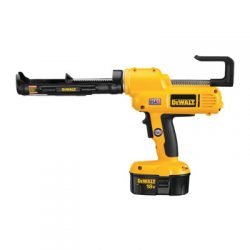
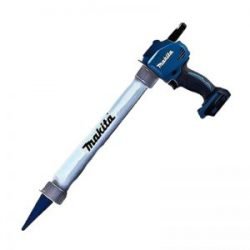
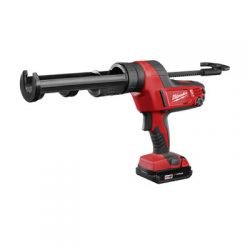

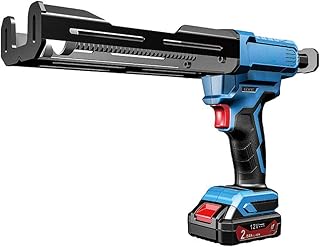


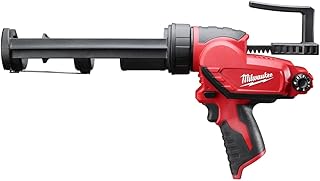


A precision cordless caulking gun is designed for controlled dispensing of sealants, adhesives and other cartridge-based materials without the repeated hand pressure required by a traditional manual caulking gun. For renovation, construction, finishing, glazing, cabinetry, flooring, plumbing and maintenance work, the right cordless model can make a noticeable difference in consistency, fatigue and control.
When comparing cordless caulking guns in Canada, it is important to look beyond the headline voltage or maximum dispensing force. A useful buying decision depends on the type of sealant being applied, cartridge compatibility, feed mechanism, speed control, trigger response, battery platform, weight, balance and the ability to stop material flow cleanly when the trigger is released.
Professional users may prioritize high thrust and durability for demanding construction adhesives and cold-weather materials, while homeowners and occasional DIY users may benefit more from a compact tool with smooth speed adjustment and a manageable weight. The best choice is therefore not necessarily the most powerful model; it is the one that provides appropriate force and precise control for the materials and applications you actually handle.
The term precision generally refers to the tool's ability to regulate how quickly material leaves the nozzle and how consistently the plunger advances. This matters because a smooth bead is determined by more than simply squeezing the trigger. The operator must coordinate travel speed, material flow, nozzle size and pressure.
A precision-oriented cordless caulking gun typically combines variable-speed control with a responsive trigger and a mechanical feed system that moves the cartridge or sausage pack at a controlled rate. Some designs also incorporate an automatic pressure-release or anti-drip function to reduce unwanted material continuing to emerge after the trigger is released.
For detailed finishing work, these characteristics can be more valuable than an exceptionally high maximum thrust rating. Excessive force can make a low-viscosity sealant difficult to control, whereas insufficient force can cause hesitation or inconsistent dispensing when working with thick construction adhesive or cold material.
Flow control determines how easily the user can maintain a consistent bead. A tool that advances material too aggressively may require constant trigger adjustments. A tool with a broad and predictable speed range gives the operator more opportunity to match dispensing speed to the movement of the gun.
Precision becomes especially important around visible joints, trim, countertops, windows, doors, backsplashes and finished surfaces where an uneven bead can require additional tooling or cleanup.
A variable-speed trigger should respond progressively rather than behaving like a simple on-off switch. A sensitive trigger can help users start with a small amount of material and increase flow gradually. This is particularly useful when approaching a corner or beginning a new bead.
Trigger placement also affects comfort. A well-positioned trigger allows the user's hand to maintain a natural grip while applying controlled pressure for an extended period. Buyers should consider whether the tool can be operated comfortably with gloves, particularly for Canadian construction and renovation environments.
Specifications are useful only when interpreted in relation to the intended application. A larger thrust rating, higher battery voltage or longer run time does not automatically make one caulking gun better than another.
Thrust is one of the most frequently highlighted specifications on cordless caulking guns. It describes the force the drive mechanism can apply to the cartridge plunger. Higher thrust is useful when dispensing high-viscosity products, construction adhesives and materials that become more resistant in colder conditions.
However, maximum thrust should not be treated as a direct measurement of precision. A high-thrust motor can still be unsuitable for delicate work if the trigger or speed control is difficult to modulate.
Silicone and other relatively easy-flowing sealants generally do not require extreme dispensing force. For these materials, smooth low-speed operation and responsive control can be more important than maximum thrust.
General-purpose acrylic, latex and hybrid sealants can benefit from a cordless tool offering a broad speed range. A moderate thrust capability combined with good trigger control is often appropriate for trim, baseboards, windows and general renovation work.
Construction adhesives and certain specialty materials may require substantially more force. In these situations, buyers should pay closer attention to the manufacturer's stated thrust capability and compatibility with the material being used.
Always check the sealant or adhesive manufacturer's dispensing requirements. A cartridge may technically fit the tool while still being inappropriate for the tool's intended operating range.
One of the easiest mistakes is purchasing a cordless caulking gun based solely on the battery system without confirming cartridge compatibility. Different products can use different cartridge lengths, diameters and packaging formats.
Some cordless guns are designed around standard rigid cartridges, while others may accommodate sausage packs or interchangeable holders. Certain professional tools are available in configurations intended for particular packaging systems, so buyers should verify the exact configuration rather than assuming that every version of a model has identical compatibility.
Rigid cartridges are common for many household and professional sealants. A compatible tool should grip and advance the cartridge securely while keeping the nozzle aligned with the user's intended bead path.
Sausage-pack systems can reduce packaging waste and may be useful for users who regularly work with professional sealants or adhesives supplied in flexible packs. If this format is important to you, confirm that the selected gun includes the appropriate holder and plunger arrangement.
A multi-format caulking gun can be attractive to contractors who regularly switch between different materials. The trade-off may be additional size, weight or configuration complexity. Buyers should compare the actual included components and not assume that a model advertised as versatile includes every holder or accessory.
For cordless tools, battery compatibility can be one of the most practical purchasing factors. Users who already own tools from a platform such as DeWalt, Milwaukee, Makita, Bosch or Ryobi may prefer a caulking gun that uses batteries they already have.
A shared battery ecosystem can reduce the need to purchase another charger and separate battery family. It can also make jobsite organization easier because batteries can be rotated among compatible tools.
On the other hand, someone starting from scratch should compare the total ecosystem rather than selecting a platform solely because one individual caulking gun appears attractive. Battery cost, availability, charger options, compatible tools and the user's future tool purchases can all influence the long-term value.
A compact battery can reduce the total weight of the caulking gun and may be preferable for detailed or overhead work. A higher-capacity battery can increase operating time but may make the tool feel heavier.
The ideal balance depends on the job. For short finishing tasks, minimizing weight may be more valuable than maximizing runtime. For repetitive commercial applications, reduced battery changes may be more important.
Several established power-tool manufacturers offer cordless systems that can be relevant when researching battery-powered caulking and adhesive dispensing tools. DeWalt, Milwaukee, Makita, Bosch and Ryobi are examples of brands worth comparing when their relevant models meet your cartridge, thrust and battery requirements.
Brand familiarity should not replace specification checking. Even within one manufacturer's product range, different generations and configurations can have different battery requirements, accessories, dimensions and dispensing capabilities.
DeWalt is widely associated with cordless jobsite tools and offers multiple battery-platform products across professional applications. When considering a DeWalt caulking gun, pay particular attention to the exact battery platform, thrust capability, dispensing speed, cartridge configuration and included accessories.
Milwaukee's cordless tool ecosystem includes products aimed at professional trades. Buyers considering a Milwaukee caulking gun should compare the specific M12 or M18 configuration where applicable, rather than treating all Milwaukee cordless tools as interchangeable.
Makita has a broad cordless platform covering construction and maintenance tools. For users already invested in a compatible Makita battery ecosystem, platform compatibility can be an important advantage, provided the selected dispensing tool matches the intended sealant formats.
Bosch is another established power-tool manufacturer worth considering when comparing cordless dispensing equipment. As with other brands, verify the exact model specifications and battery requirements before purchasing.
Ryobi can be relevant for homeowners and DIY users who value access to a broad cordless tool ecosystem. Buyers should evaluate the balance of price, weight, dispensing control, battery compatibility and intended frequency of use rather than choosing based on brand alone.
Material continuing to flow after releasing the trigger can create mess and make precise work more difficult. An anti-drip or pressure-release mechanism is therefore a valuable feature for many users.
When the drive mechanism retracts or releases pressure after the trigger is released, the cartridge can stop pushing material through the nozzle. This does not eliminate the need to wipe or cap a nozzle, but it can reduce uncontrolled dispensing between sections of a project.
For finishing applications, this feature can be particularly useful because excess sealant can spread onto adjacent surfaces and require additional cleanup.
Some cordless caulking guns provide multiple selectable speed settings, while others rely heavily on a variable-speed trigger. These approaches are not identical.
Selectable speed settings can provide repeatable operating ranges and may be useful for users who prefer a predictable setup. Variable-speed triggers can provide finer real-time control while moving along a joint.
The most versatile design may combine both approaches, allowing the user to establish a suitable maximum range and then fine-tune flow with the trigger. Buyers should examine the manufacturer's controls and operating instructions to understand exactly how the speed system works.
A cordless caulking gun can become tiring when used continuously, particularly when working overhead or at awkward angles. Total weight includes the bare tool, cartridge and battery, so published tool weight should be interpreted carefully.
Balance can be just as important as absolute weight. A tool with a heavy battery positioned far behind the grip may feel different from a model with a more centralized center of gravity.
Ceilings, overhead joints and high wall sections can place additional strain on the wrist and forearm. A compact configuration and appropriately sized battery can make these tasks easier to control.
When applying long continuous beads, grip comfort and trigger ergonomics become increasingly important. Look for a handle shape that allows the hand to maintain consistent pressure without forcing the wrist into an uncomfortable position.
Construction users often work while wearing gloves. A trigger that is easy to reach and a grip with sufficient clearance can make a difference in practical usability. Buyers should consider whether the controls can be operated naturally without removing protective equipment.
The feed mechanism is the mechanical system responsible for advancing the cartridge plunger. Its operation directly influences how consistently material is delivered.
A smooth feed mechanism helps maintain a steady bead. Excessive vibration, sudden starts or inconsistent advancement can make precision work more difficult, particularly with narrow nozzles and slow application speeds.
The mechanism also needs to withstand repeated loading. Professional users should consider construction quality and the manufacturer's intended application range rather than selecting solely on maximum force.
The cordless gun controls the cartridge, but nozzle preparation determines how the material exits. A precision caulking gun cannot compensate for an incorrectly cut nozzle or unsuitable nozzle opening.
A smaller opening generally allows more controlled dispensing, while a larger opening can support faster material application. The appropriate opening depends on the joint size, material viscosity and desired bead profile.
Cutting the nozzle at a consistent angle can also help maintain a predictable bead. For visible finishing work, practice on scrap material before applying sealant to the finished surface.
If your primary use is silicone sealant, prioritize controlled low-speed operation, comfortable handling and reliable pressure release. Silicone can be relatively easy to dispense compared with heavy construction adhesives, so maximum thrust may not be the main deciding factor.
For bathrooms, kitchens, windows and trim, consistent flow can help produce cleaner results. The user's technique remains essential: move at a steady pace, maintain a consistent nozzle angle and avoid stopping unnecessarily in the middle of a visible joint.
Construction adhesive can be substantially more demanding than lightweight sealants. If adhesive is the main application, thrust capability becomes more important.
Users should also consider the cartridge size and the expected frequency of use. A tool that handles heavy materials but is unnecessarily large or heavy may be less comfortable for occasional household projects.
For contractors, a higher-capacity battery and durable drive mechanism may become more relevant when dispensing material throughout a full working day.
DIY users do not necessarily need the highest-powered professional model. For occasional projects such as sealing windows, repairing trim, installing backsplashes or applying construction adhesive, ease of control and compatibility with commonly available materials may matter more.
A compact tool can be easier to store and handle. If you already own cordless tools, choosing a compatible battery platform can also simplify ownership.
Before buying, consider how frequently you will use the tool. Paying for extreme professional-grade capability may not provide meaningful benefits if the tool will only be used for a few small projects each year.
Contractors should evaluate the tool as production equipment rather than simply as a convenience upgrade over a manual gun. Important considerations include repetitive-use ergonomics, battery management, cartridge compatibility, feed reliability, maximum thrust, speed control and serviceability.
For professional work, the ability to maintain consistent results across many cartridges can be more important than the initial specification that attracts attention in a product listing.
Users should also consider whether the same battery platform powers drills, impact drivers, saws and other tools already used on the jobsite. A common platform can simplify charging and battery rotation.
Canada's climate makes material temperature an especially relevant consideration. Sealants and adhesives can behave differently when cold, often becoming more resistant to dispensing. A material that flows easily at room temperature may require considerably more force when its temperature is lower.
This is one reason maximum thrust can matter more for certain Canadian applications than it might in consistently warm environments. However, the correct approach is not simply to choose the highest thrust available. Check the product manufacturer's temperature requirements and follow the sealant manufacturer's storage and application instructions.
Do not assume that warming a sealant cartridge is always safe or appropriate. Some materials have specific storage, handling and application temperature limits that should be followed.
More force can be helpful for thick materials, but excessive power does not automatically improve bead quality. If your applications mostly involve easy-flowing sealants, precise low-speed control may be more valuable.
A cordless gun is only useful if it accepts the materials you intend to dispense. Always verify cartridge dimensions and packaging compatibility before buying.
A bare tool may look attractive until the cost of a compatible battery and charger is considered. If you are not already invested in the platform, compare the complete setup required for practical use.
A powerful tool with a large battery can become tiring during extended work. Consider the combined weight of the tool, battery and cartridge.
Manufacturers frequently sell different generations, voltage classes and configurations. Always compare the exact model number and included components.
Not every adhesive or sealant behaves the same way. Extremely thick products can place different demands on the feed mechanism than ordinary caulk.
When two models appear similar, use a structured comparison instead of relying on star ratings or headline specifications.
Customer reviews can provide useful information when interpreted carefully. Rather than focusing exclusively on the average rating, look for repeated comments about specific characteristics.
Do not treat individual comments as proof of universal performance. A review may reflect a particular cartridge, material, temperature, battery condition or user technique. Repeated patterns across multiple verified customer reviews are generally more useful for commercial investigation.
Proper maintenance can help keep a dispensing tool operating consistently. Always follow the manufacturer's instructions for cleaning and maintenance, particularly around the motor, battery contacts and drive mechanism.
Allowing cured sealant or adhesive to accumulate around the holder, plunger or nozzle area can interfere with operation. Remove residue according to the material manufacturer's recommendations and avoid damaging seals or moving components.
Before loading a new cartridge, check the plunger and feed area for hardened material or debris. A clean contact surface helps the mechanism advance the cartridge properly.
Cordless tools contain electrical components that should be protected from unnecessary exposure to moisture, solvents and uncured chemicals. Follow the tool manufacturer's storage and cleaning instructions rather than applying cleaning products indiscriminately.
Caulking-gun performance depends partly on the condition of the material being dispensed. Store sealants and adhesives according to their individual manufacturer instructions and respect expiration or shelf-life information where provided.
A cordless caulking gun is easier to operate than many manual alternatives, but the powered feed mechanism can generate substantial force. Keep fingers away from moving components and never place a hand in front of a loaded plunger or nozzle while the tool is operating.
Even the best precision cordless caulking gun requires good technique. Begin by preparing the joint and removing loose material, dust, grease and contaminants as appropriate for the substrate and sealant.
Cut the nozzle to an opening suitable for the joint. Start with a smaller opening when precision is more important than speed; it is generally easier to increase the opening than to make an oversized cut smaller.
Hold the nozzle at a consistent angle and move the tool steadily. Try to maintain a uniform distance from the surface. Avoid repeatedly stopping and restarting because changes in pressure and movement can produce an uneven bead.
Tooling should be performed according to the sealant manufacturer's instructions. Different formulations have different working times and finishing requirements.
A manual caulking gun remains a practical option for occasional small jobs because it is inexpensive, simple and does not require charging. A cordless model becomes more compelling as application volume increases or when consistent dispensing and reduced hand fatigue are important.
For one short household repair, a manual gun may be sufficient. For repeated construction, renovation or finishing applications, cordless dispensing can offer a more productive workflow.
Pneumatic dispensing guns can be useful in workshops and production environments where compressed air is already available. Cordless models provide greater portability because they do not require an air compressor and hose.
The better option depends on the work environment. A fixed workshop may benefit from compressed-air infrastructure, while mobile contractors and renovation crews may value the freedom of a cordless platform.
Match power to the materials rather than choosing based on the largest number available.
For lightweight sealants, prioritize low-speed control and ergonomics. For general-purpose caulking, look for a balanced combination of thrust and variable-speed operation. For thick construction adhesives and demanding professional materials, prioritize adequate thrust while still checking trigger response and handling.
If you regularly use several types of material, a model with a broad operating range can be more versatile than one optimized for only one category.
Look for a compact, easy-to-control model that works with materials commonly used around the home. Battery compatibility is particularly attractive if you already own other cordless tools.
Prioritize variable-speed control, comfortable handling, cartridge versatility and reliable pressure release. Renovation work often involves switching between different sealants and adhesives.
Consider durability, battery-platform integration, sustained usability, cartridge compatibility and the ability to control thick materials. Weight and balance become increasingly important during repetitive use.
Trigger sensitivity and low-speed control should be high on the priority list. Maximum thrust is secondary unless the materials used also require substantial dispensing force.
Choose a tool with sufficient thrust for the products you use while checking that the cartridge system and plunger configuration are appropriate for those materials.
A top-10 list should be treated as a starting point for commercial investigation rather than a universal ranking for every buyer. Different applications require different characteristics, and a tool that is excellent for heavy adhesive work may be unnecessarily powerful for light bathroom or trim applications.
When comparing the products featured in a buying guide, consider the category in which each model is strongest. A useful shortlist can include a lightweight option, a high-thrust professional option, a battery-platform choice, a versatile cartridge model and a precision-focused option.
Always confirm current specifications, included accessories, battery configuration and retailer information before making a purchase. Product configurations can change, and availability in Canada may vary by retailer and region.
Battery-platform compatibility is especially valuable when building a larger cordless tool collection. A buyer who already owns several compatible batteries can often avoid maintaining another charging system.
However, compatibility should always be verified at the model level. Battery families can have different physical interfaces, capacities and electrical requirements, and a brand name alone does not guarantee that every battery works with every tool.
When checking a listing, confirm the exact battery series specified by the manufacturer. Also determine whether the caulking gun is sold as a bare tool or as a kit that includes a battery and charger.
The lowest advertised price is not necessarily the lowest total cost of ownership. A useful comparison considers everything required to use the tool effectively.
A slightly more expensive model can represent better value if it eliminates the need for a separate battery ecosystem or provides features that materially improve your workflow. Conversely, paying for professional-level thrust may be unnecessary for occasional household use.
For Canadian buyers researching cordless caulking guns in August 2026, the most sensible approach is to compare current model specifications rather than relying on older recommendations. Pay particular attention to the exact configuration being offered, because batteries, chargers, holders and accessories may differ between packages.
Check current retailer listings for today's price and availability, but use those details as purchase information rather than as evidence of product quality. Manufacturer specifications, independent comparisons and verified customer feedback should be considered together.
Because this is an independent buying guide, product availability, pricing, shipping, warranty terms and retailer policies should always be confirmed directly with the relevant manufacturer or retailer before purchase.
There is no single best model for every Canadian buyer. The right choice depends on the material being dispensed, required thrust, cartridge format, speed control, battery platform, weight and frequency of use. Compare the exact specifications of the shortlisted models against your applications before buying.
They can be worthwhile for users who apply significant amounts of sealant or adhesive and want to reduce repetitive hand pressure. For occasional small repairs, a manual caulking gun may remain adequate.
The appropriate thrust depends on material viscosity and application conditions. Lightweight sealants generally need less force than heavy construction adhesives. Choose enough thrust for your most demanding regular material while preserving good low-speed control.
No. Higher thrust can help with thick materials, but precision also depends on trigger response, speed adjustment and feed consistency. Excessive power without fine control can make delicate applications harder.
Potentially, but compatibility must be confirmed. Check cartridge dimensions, packaging format and the manufacturer's stated material compatibility before using a particular sealant or adhesive.
Yes, provided the particular tool is compatible with the cartridge and material. For silicone and other relatively easy-flowing sealants, smooth variable-speed control can be more important than extremely high thrust.
Many are designed for adhesive dispensing, but suitability depends on the specific product and cartridge. Thick construction adhesives may require considerably more thrust than ordinary caulk, so check the manufacturer's requirements.
The best battery platform is often the one that matches tools you already own, provided the available caulking gun meets your performance requirements. DeWalt, Milwaukee, Makita, Bosch and Ryobi are among the established cordless ecosystems worth comparing.
If you already own compatible batteries and a charger, a bare tool can be practical. If you are entering a new battery ecosystem, compare the complete kit cost and included components before deciding.
Anti-drip technology is designed to reduce continued material flow after the trigger is released, commonly by relieving or reversing pressure on the cartridge. The exact mechanism varies by tool.
Battery capacity can influence operating time and total weight. The battery specified by the manufacturer should be used, and users should consider whether longer runtime or lower overall weight is more important for their work.
For many users, it can replace a manual gun for regular dispensing tasks, but keeping a manual tool available can still be useful for quick jobs or situations where a powered tool is unnecessary.
Use an appropriate nozzle opening, maintain a consistent angle and travel speed, and adjust the dispensing rate to match your movement. Proper surface preparation and sealant technique are just as important as the tool itself.
They can be particularly useful for professionals who dispense large quantities of sealant or adhesive. Battery compatibility, ergonomics, thrust, feed consistency and durability become important when the tool is used repeatedly.
Confirm the exact model number, cartridge compatibility, battery requirements, included accessories, current retailer availability and applicable manufacturer information. Also verify that the product is appropriate for the sealants or adhesives you intend to use.
Before choosing from the leading precision cordless caulking guns, use this checklist to narrow the options to models that genuinely fit your needs.
The strongest cordless caulking gun choice is ultimately the one that matches the material, application, working environment and battery ecosystem rather than simply the model with the highest specification. By comparing thrust, dispensing control, cartridge compatibility, ergonomics, battery requirements and pressure-release features together, Canadian buyers can build a more useful shortlist and avoid paying for capabilities they do not need.