

♥ Wishlist
Compare 14 Cordless Line Laser Level in Canada products in Canada. Reviews, ratings, pros, cons and buying advice updated for October 2026.

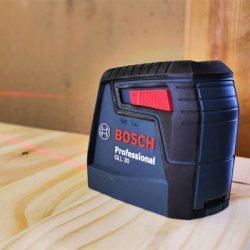
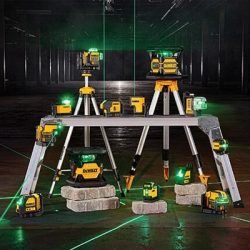
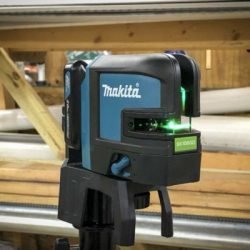
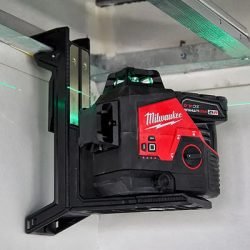


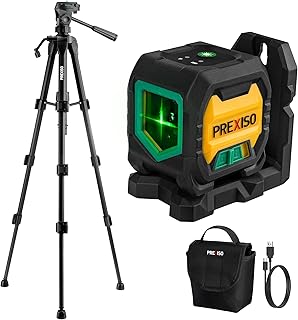
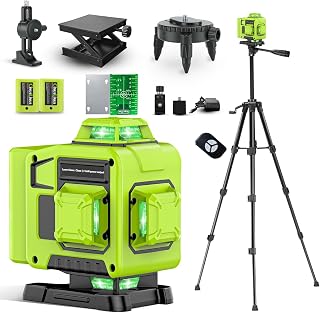


A precision cordless line laser level can make layout work faster and easier when accurate horizontal, vertical, or cross-line references are needed. For Canadian buyers, the right choice depends on more than laser visibility alone. Battery platform, accuracy specifications, working range, self-leveling capability, mounting options, environmental conditions, and the type of construction work all deserve attention before buying.
The phrase “cordless” can also mean different things in this category. Some compact laser levels use a dedicated rechargeable battery, while others operate with removable batteries that may be shared with a manufacturer's wider power-tool ecosystem. Understanding that distinction can have a meaningful effect on long-term convenience and ownership cost.
Accuracy should be one of the first specifications you compare. Laser levels are commonly described with an accuracy tolerance over a stated distance, so avoid comparing figures without checking the measurement basis. A smaller allowable deviation generally indicates a more precise instrument, but the advertised specification should always be considered alongside the manufacturer's stated testing conditions.
For framing, cabinetry, trim, partition walls, flooring, suspended ceilings, electrical layout, and general renovation work, the appropriate accuracy depends on the consequences of a small deviation. Professional layout applications may justify paying more for tighter specifications, whereas occasional household projects may not require the highest precision available.
Self-leveling is a major convenience feature because the tool automatically establishes a level reference within its specified compensation range. Look for the manufacturer's stated self-leveling range rather than assuming that every laser level compensates for the same amount of movement.
A visible out-of-level warning is also useful. If the instrument is outside its compensation range, the laser should not be treated as a reliable level reference. Before beginning a critical layout, allow the unit to settle and confirm that it is operating within its normal self-leveling range.
Consider exactly which reference lines your projects require. A horizontal line may be sufficient for cabinets, shelves, pictures, and basic leveling. A vertical line becomes more valuable for wall layout, framing, doors, windows, and alignment. Cross-line models combine horizontal and vertical references, while more advanced configurations can project multiple planes for larger layout tasks.
Laser colour can influence practical visibility. Green laser lines are generally easier for the human eye to see in many indoor conditions, while red lasers can remain an economical and practical option for routine interior work. Neither colour automatically makes a laser level more accurate.
For bright interiors, larger rooms, or situations where the laser must remain easy to distinguish against a particular surface, visibility should be evaluated carefully. A laser detector or receiver may be more important than laser colour when working over greater distances or in conditions where the projected line is difficult to see.
A green line can be attractive for users who frequently work in brighter environments or need improved visual contrast. However, the complete specification matters: optical design, beam quality, visibility conditions, operating range, and compatibility with a detector can all influence practical performance.
For many indoor renovation and DIY applications, a red laser can provide all the functionality required. If most projects involve modest distances and controlled indoor lighting, spending more solely for a different laser colour may not provide the greatest benefit.
Battery compatibility is an important purchasing decision. A cordless laser level may use a proprietary rechargeable battery, an integrated rechargeable cell, disposable batteries, or a removable battery belonging to a broader tool platform.
If you already own cordless tools, a compatible platform can reduce the number of chargers and battery systems you need to manage. Brands such as Bosch, DEWALT, Milwaukee, and Makita have broad cordless ecosystems, although compatibility should always be verified for the specific laser model rather than assumed from the brand name.
Canadian users may encounter conditions that are considerably different from a controlled indoor workshop. Temperature can affect batteries, electronics, and normal tool operation, so the manufacturer's specified operating temperature range should be checked before using a cordless laser in an unheated garage, exterior renovation project, or winter construction environment.
Do not assume that a tool designed for general construction automatically has unrestricted outdoor winter capability. If a laser level is moved from a cold environment into a warm building, condensation can also become a concern. Allow equipment to acclimate appropriately and follow the manufacturer's storage, operating, and care instructions.
Working range is another specification that can be misunderstood. The visible range of a laser depends on ambient lighting, surface characteristics, laser colour, line quality, and viewing conditions. A stated maximum range should therefore not be interpreted as a guaranteed distance for every real-world situation.
For outdoor work, a compatible laser receiver or detector can be particularly useful because sunlight can make a projected laser line difficult to see. If exterior layout is part of your regular workload, verify whether the laser supports a receiver and whether the appropriate accessory is supplied or purchased separately.
Construction environments expose precision instruments to dust, debris, moisture, vibration, and accidental knocks. Where an IP rating is provided, understand what the stated rating actually covers rather than treating it as a general guarantee of ruggedness.
A durable housing is valuable, but physical protection does not eliminate the need for careful handling. A precision laser level contains optical and electronic components that can lose calibration after significant impacts even if the exterior shows little obvious damage.
A highly accurate laser is less useful if it is difficult to position securely. Look for mounting provisions that match your normal workflow. A tripod interface is useful for room-scale layout, while magnetic mounts can be convenient around compatible metal framing or structural surfaces.
Some applications benefit from clamps, brackets, wall mounts, or fine-adjustment mechanisms. When comparing models, think about where the laser will physically sit during a typical project rather than focusing exclusively on its headline accuracy or range.
A tripod can transform a compact line laser from a handheld convenience tool into a more controlled layout instrument. Height adjustment becomes particularly useful for cabinet installation, wall finishing, ceiling work, tile layout, and longer horizontal references.
Before purchasing, check the mounting interface and verify compatibility with the tripod or mounting accessories you intend to use. A stable setup is essential because even a small movement can make an otherwise accurate reference line appear inconsistent.
Battery runtime matters most when the laser is used continuously throughout a working day. Runtime can vary depending on the number of active laser lines, operating conditions, battery condition, and the specific configuration of the tool.
Selectable laser lines can be useful because you do not always need every available beam. Turning off unnecessary lines can reduce visual clutter and may help conserve energy. For frequent professional use, having a spare compatible battery can also reduce downtime if the system supports removable batteries.
Compactness is valuable when working inside cabinets, utility rooms, narrow corridors, or finished interiors. A larger professional model may provide additional functionality and mounting flexibility but can be less convenient for quick positioning.
Consider the entire working setup rather than the bare tool. Battery, mounting bracket, protective case, tripod, detector, and accessories can significantly change how portable the system feels.
Cabinet work typically benefits from a dependable horizontal reference and easy fine positioning. A visible cross-line can also simplify alignment between horizontal cabinet runs and vertical edges. A model with convenient mounting options can be especially useful when both hands are needed for installation.
Vertical and horizontal references can speed up partition layout, stud alignment, drywall positioning, and opening layout. For larger rooms, consider whether the working range and mounting system are adequate for the distances involved.
Tile work can benefit from clearly defined horizontal and vertical reference lines. A laser can help establish consistent starting references, but the surface, tile dimensions, grout spacing, and installation method still need to be measured carefully.
Laser references can help establish consistent heights and alignment for fixtures, outlets, pipe runs, and equipment. They should be treated as a layout aid rather than a replacement for project drawings, applicable building requirements, or trade-specific measurement procedures.
A horizontal reference becomes particularly valuable when establishing consistent elevations around a room. For these applications, stable mounting and sufficient operating range can be more important than having the maximum number of projected lines.
Product pages can contain many specifications, but not all numbers have equal importance. A practical comparison should focus on the specifications that affect your actual projects.
A green laser can improve visibility in many situations, but colour alone does not determine precision, durability, battery life, or suitability for a particular project. Compare the complete specification.
A large advertised range may be unnecessary for a homeowner working in a few rooms. Conversely, a professional working on large spaces may need detector compatibility and a robust mounting solution rather than simply a higher headline range.
A laser that requires an additional battery and charger can have a very different total ownership cost from a model that includes everything needed for operation. Always check the package contents.
Mounting accessories affect how quickly and accurately you can position the tool. A model that looks excellent on a specification sheet may be inconvenient if it does not work well with your existing tripod, brackets, or work surfaces.
Laser levels are precision instruments. Drops, severe impacts, transportation, temperature changes, and long-term use can make verification important. Follow the manufacturer's calibration and accuracy-checking instructions rather than assuming the original factory condition will remain unchanged indefinitely.
Additional lines can be valuable, but they can also add cost, complexity, and potentially greater battery consumption. Choose the configuration that matches your actual work.
A homeowner completing occasional shelves, picture hanging, flooring, or renovation projects may prioritize affordability, simplicity, compact size, and easy setup. A contractor or tradesperson using a laser daily is more likely to benefit from higher precision, durable construction, battery-system compatibility, multiple mounting options, receiver support, and convenient controls.
The best model is therefore not necessarily the most expensive one. It is the model whose capabilities align with the frequency, scale, environment, and precision requirements of the work.
Canadian buyers will encounter established tool manufacturers including Bosch, DEWALT, Milwaukee, Makita, and Stanley when researching laser levels and related layout equipment. Brand familiarity can be useful, particularly when you already own batteries or accessories from the same ecosystem, but the individual model's specifications should remain the deciding factor.
Do not assume that every laser level from a recognized manufacturer is appropriate for every application. Compare accuracy, line configuration, operating range, mounting options, battery arrangement, environmental specifications, included accessories, and manufacturer support documentation for the exact model.
Customer ratings can help identify recurring usability issues, but a star average rarely tells you whether a product fits your specific requirements. Read reviews for details about setup, visibility, mounting stability, battery convenience, transport, and real-world workflow.
Pay particular attention to repeated comments rather than isolated complaints. Also distinguish between dissatisfaction caused by a product defect and dissatisfaction caused by an unrealistic expectation about working range, laser visibility, included accessories, or battery compatibility.
For important work, accuracy should be verified according to the manufacturer's recommended procedure. A basic comparison can involve establishing a reference line, rotating or repositioning the instrument as instructed, and checking whether the projected line remains consistent. The exact procedure varies by model and should not be substituted for the manufacturer's official calibration method.
Never attempt to correct internal calibration simply because a quick informal test appears inconsistent. Precision adjustments should be performed according to the manufacturer's instructions or by an appropriately qualified service facility where required.
Proper care can help preserve the performance of a precision laser level. Keep optical windows clean and free from fingerprints, dust, and construction residue. Use an appropriate soft cleaning method recommended by the manufacturer rather than abrasive materials that could damage optical surfaces.
The purchase price is only one part of the cost of owning a cordless laser level. Consider batteries, chargers, mounting hardware, tripods, detectors, replacement accessories, protective cases, and potential calibration or service requirements.
A less expensive laser may be the better choice if it already includes the accessories required for your projects. On the other hand, a higher-priced model can make more sense when its battery compatibility or professional features eliminate the need to purchase additional equipment.
Prioritize straightforward controls, reliable self-leveling, useful line visibility, compact dimensions, and easy mounting. There is usually little reason to pay for advanced features that will never be used.
A cross-line model can provide a useful balance between versatility and simplicity. Consider a rechargeable system or a battery platform you already use, particularly if the tool will be used across multiple renovation projects.
Accuracy, mounting flexibility, visibility, and repeatable positioning become increasingly important. A compact model with dependable horizontal and vertical references can be especially useful for detailed interior layout.
Look beyond basic functionality and consider jobsite durability, battery logistics, detector compatibility, accessory availability, and the ability to cover larger spaces efficiently.
Prioritize detector compatibility, appropriate environmental specifications, stable mounting, and operating-temperature guidance. Direct sunlight can make visual laser lines difficult to identify, so an outdoor workflow should be planned around the equipment's stated capabilities.
The right accessories can significantly expand the usefulness of a cordless line laser. Depending on the application, a tripod, magnetic bracket, wall mount, clamp, laser detector, target plate, protective case, or spare battery may be worth considering.
Do not automatically buy every available accessory. Match each accessory to a specific task. For example, a detector may be valuable for outdoor layout, while a fine-adjustment mount can be more useful for precise indoor positioning.
Laser levels are designed to project visible reference beams, but they should still be used responsibly. Never deliberately direct a laser toward a person's eyes or use it in a manner that could distract or endanger vehicle operators, equipment operators, or other workers.
Read the safety information supplied with the specific model before use. Keep the instrument secured when working around moving equipment, and follow applicable workplace procedures and manufacturer guidance.
A strong all-around choice should provide an appropriate accuracy specification, dependable self-leveling, useful line coverage, practical visibility, sensible battery operation, and mounting options suited to the intended work. Durability and environmental specifications become increasingly important for frequent jobsite use.
There is no single specification that determines whether a laser level is “best.” The ideal choice is the one that combines the precision, visibility, battery system, operating range, durability, and accessories required by your actual projects.
A compact self-leveling cross-line model is often a practical starting point for general indoor projects because it provides both horizontal and vertical references. The appropriate choice still depends on the required accuracy, visibility, range, mounting method, and budget.
Not automatically. Green lasers can be easier to see in many conditions, but laser colour does not by itself determine accuracy or durability. Compare the complete specifications and consider whether your work environment actually benefits from increased visibility.
Yes, cordless models require a power source, but the design varies. Some use rechargeable integrated batteries, some use removable rechargeable batteries, and others use conventional replaceable batteries. Check the exact model's package contents before purchasing.
Some can, but suitability depends on the model's range, visibility, environmental specifications, operating temperature, and compatibility with a laser detector. Outdoor use in bright sunlight should not be judged solely by the tool's indoor visible range.
A compatible detector can make a projected laser reference easier to locate when the beam is difficult to see visually, particularly in bright outdoor conditions. Confirm that the detector is compatible with the specific laser level.
The required accuracy depends on the application. Detailed finish work and professional layout can justify tighter tolerances, while occasional household tasks may not require the same specification. Compare the manufacturer's accuracy tolerance at its stated measurement distance.
Only within the operating conditions specified by the manufacturer. Cold temperatures can affect battery performance and tool operation. Check the exact temperature specifications and follow the manufacturer's storage and operating guidance.
If the laser genuinely supports your existing battery platform, compatibility can be convenient because it may reduce the number of batteries and chargers you need. Verify exact model compatibility rather than assuming that products from the same brand use interchangeable batteries.
Follow the manufacturer's recommended inspection and calibration guidance. Accuracy should also be checked after a significant impact or whenever the instrument's results appear questionable, especially before critical layout work.
No. Additional lines can increase versatility, but they can also add cost and complexity. Select the configuration that corresponds to the work you perform most frequently.
When comparing the best precision cordless line laser levels for Canada in 2026, focus on practical performance rather than a single headline feature. Accuracy, self-leveling, laser configuration, visibility, battery compatibility, working range, mounting flexibility, durability, temperature limits, and accessory support all contribute to the tool's usefulness.
Before making a purchase, compare the exact specifications of the models you are considering, confirm what is included in each package, read verified customer feedback for relevant use cases, and check current retailer information for the latest configuration and pricing. A carefully matched laser level can be a valuable layout tool for homeowners, renovators, tradespeople, and construction professionals alike.