

♥ Wishlist
Compare 51 Milwaukee Line Laser Levels products in Canada. Reviews, ratings, pros, cons and buying advice updated for October 2026.


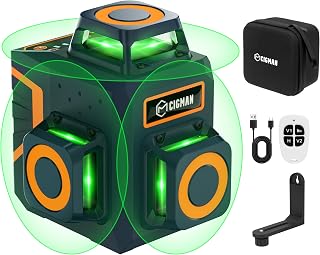


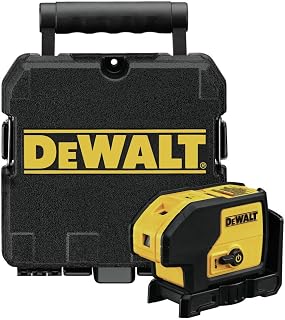


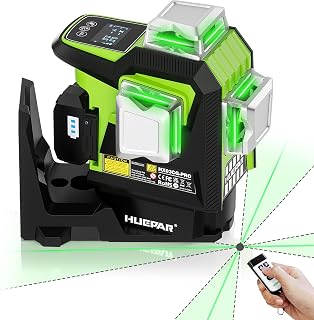


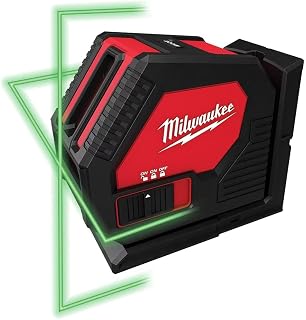


A precision line laser can make layout work considerably faster when the job requires repeatable horizontal, vertical, plumb, squaring, or elevation references. For Canadian tradespeople and serious DIY users, the important question is not simply which Milwaukee laser is the most advanced. The better question is which laser configuration matches the work you actually perform.
Milwaukee's current laser lineup includes compact cross-line models, point-and-line lasers, 360-degree single-plane lasers, and multi-plane systems. The right choice depends on the type of reference lines required, working distance, visibility, battery platform, mounting requirements, accuracy, environmental conditions, and whether a detector is needed for longer-range layout.
When comparing models for the Canadian market, always check the exact model number and kit contents. A tool-only version and a complete kit can have substantially different included accessories, batteries, chargers, targets, receivers, or carrying cases. Specifications can also vary between generations, so the manufacturer's current documentation should be treated as the final reference.
A cross-line laser projects a horizontal line, a vertical line, or both simultaneously. This configuration is especially useful for installing cabinets, aligning electrical boxes, setting wall layouts, positioning tile, hanging fixtures, and transferring reference points across a room.
Cross-line systems are generally easier to justify than a 360-degree laser when the majority of your work involves one wall or a relatively small working area. They can also be more compact and straightforward to position.
A line laser with plumb points adds point references to the horizontal and vertical lines. Plumb points are useful when a measurement or position needs to be transferred between the floor and ceiling rather than simply projected along a wall.
For framing, partition layout, electrical work, ceiling installations, and fixture positioning, this additional functionality can eliminate repeated measurements with a conventional spirit level and tape measure.
A 360-degree horizontal laser projects a continuous reference plane around the room. This is particularly useful for setting elevations across multiple walls, establishing ceiling heights, installing drop ceilings, aligning soffits, and transferring a consistent level around a larger interior space.
The advantage is not necessarily greater point accuracy for every application. The major benefit is coverage. Instead of repositioning a conventional line laser repeatedly, a 360-degree model can establish a continuous reference around the working area.
A three-plane laser combines a horizontal 360-degree plane with two vertical planes. This creates a much more comprehensive layout reference for squaring, leveling, plumbing, alignment, and transferring positions through larger spaces.
This type of laser is particularly attractive to professionals who regularly perform full-room layouts rather than occasional single-wall alignment. The trade-off is that the additional functionality can increase both the purchase cost and the amount of equipment you need to manage.
Green laser technology is widely used in professional construction lasers because green lines can be easier to see in many working environments than traditional red laser lines. However, visibility is affected by ambient light, surface colour, distance, viewing angle, and the reflectivity of the surface receiving the laser.
A brighter laser does not automatically mean that every application will have better accuracy. Visibility and accuracy are separate specifications. When comparing Milwaukee laser levels, examine both rather than choosing a model solely because its line appears brighter.
For indoor renovation, framing, cabinetry, electrical layout, and general construction, a visible green line can be particularly convenient. In bright conditions or at greater distances, a compatible detector may become more important than simply selecting a brighter visible line.
Accuracy is one of the most important specifications to examine before buying a precision laser level. It is commonly expressed as a tolerance at a specified distance, such as an allowable deviation at 33 feet. The distance matters because an apparently small angular deviation can translate into a larger positional difference as the working distance increases.
Do not compare two accuracy figures without checking that they were measured at the same distance and under comparable conditions. A specification stated at one distance cannot be directly treated as identical to a specification stated at another.
Accuracy tells you how closely the projected reference corresponds to the intended geometric plane or line. Visibility tells you how easily you can see that reference.
A highly visible line can still require verification if the application is precision-critical. Conversely, an extremely accurate laser is of limited practical value if the line is difficult to see in the environment where it will be used.
Longer working distances make small angular errors more consequential. If you frequently lay out large rooms, long walls, ceilings, or extended framing runs, look at the manufacturer's stated accuracy and working range together.
For demanding layout work, avoid assuming that the nominal maximum range is the same as the practical range for a clearly visible line. Ambient lighting and surface conditions can substantially affect what you can actually use.
Self-leveling allows the laser's internal mechanism to compensate for a limited amount of tilt and establish the projected reference automatically. This is one of the features that separates professional laser levels from simple fixed-line projectors.
Milwaukee models in this category use a defined self-leveling tolerance. For example, several M12 green laser systems specify self-leveling within a limited tilt range. If the tool is placed outside that range, it should not be treated as though it has automatically established a valid level reference.
A pendulum lock helps protect the internal leveling mechanism during transportation and can also be useful when the laser is intentionally used in a fixed or non-level orientation.
When transporting a laser between jobsites, locking the mechanism when the manufacturer's instructions call for it is a sensible part of equipment care. Avoid treating the laser like an ordinary hand tool that can be thrown loose into a truck or tool bag.
Working range is another specification that is easy to misunderstand. A manufacturer's stated visible range and detector-assisted range serve different purposes.
For Canadian contractors who move between indoor renovations and brighter exterior environments, detector compatibility can therefore be more important than the headline visible range.
A detector becomes especially useful when the projected line is difficult to see because of distance or ambient light. It can also make long-distance layout more practical where relying on the naked eye would be inconvenient.
If you rarely work beyond normal indoor distances, paying extra for a detector-equipped system may not provide much practical benefit. If you routinely work across larger buildings, exterior areas, or bright environments, detector compatibility deserves much more weight in the buying decision.
Milwaukee's laser ecosystem includes dedicated receiver and alignment accessories, so check compatibility with the specific laser model before purchasing an accessory separately.
A 360-degree laser is not automatically better than a cross-line model. Its main advantage is the ability to establish a continuous reference over a much larger portion of the workspace.
Consider a room where several walls need to share the same elevation. With a conventional line laser, the tool may need to be repositioned or additional measurements may be required. A 360-degree horizontal plane can simplify this type of work by providing a continuous reference around the room.
Three-plane models go further by providing horizontal and vertical references simultaneously. This can be valuable when squaring a room, establishing wall positions, transferring vertical locations, and checking multiple alignment relationships from one setup.
Line projection is ideal for establishing continuous references, while plumb points are designed for point-to-point transfers. This distinction matters when selecting a laser for ceiling, framing, electrical, or mechanical layout.
A laser with plumb points can help transfer a position from floor to ceiling without relying exclusively on a traditional plumb bob. It can also help establish corresponding positions where a precise vertical relationship is important.
If your work rarely involves floor-to-ceiling transfers, however, paying for point functionality may not be worthwhile. Match the feature set to the jobs you perform repeatedly.
Mounting hardware is an important part of a laser level because the quality of the projected reference depends on the stability of the tool. Milwaukee M12 laser systems commonly incorporate magnetic mounting solutions designed for ferrous surfaces such as steel framing.
A strong magnetic connection can make setup faster on metal studs and other compatible surfaces. It is still important to confirm that the mounting surface is suitable and that the laser cannot be knocked out of position during work.
Micro-adjustment mechanisms can be particularly useful when a laser needs to be aligned precisely after it has already been mounted. Instead of repeatedly removing and repositioning the tool, a fine adjustment can make small alignment changes easier.
This is a feature worth prioritising for repetitive professional layout work. Occasional DIY users may place more value on compact size and simple setup.
A tripod mount gives you another way to position a laser when a magnetic mounting surface is unavailable or unsuitable. Standardized mounting threads can also make it easier to adapt the laser to different stands and positioning equipment.
Before buying a tripod or mounting accessory, verify the thread specification of the exact laser model. Also consider the working height you need. A low-cost tripod may be adequate for occasional indoor work, while frequent professional use can justify a more stable and durable setup.
Battery compatibility should be considered alongside runtime. Milwaukee's M12 laser range is particularly relevant to users who already own M12 batteries because compatible batteries can reduce the need to maintain a separate power system.
For example, Milwaukee lists the M12 Green Cross Line and Plumb Points Laser with extended runtime figures when paired with an appropriate M12 battery. The M12 Green 360-degree single-plane laser is also specified with a long runtime when paired with an M12 REDLITHIUM XC 4.0 battery. Exact runtime depends on the model, battery, operating mode, and usage conditions.
For buyers starting from scratch, remember that a tool-only laser can appear less expensive than a kit while requiring the additional purchase of a battery and charger. Compare the complete system cost rather than only the tool price.
The correct choice depends primarily on the batteries and accessories you already own.
For an existing Milwaukee M12 user, a tool-only laser may be particularly convenient because the battery platform can already be part of the jobsite inventory.
Laser levels are precision instruments, even when designed for demanding construction environments. Dust, moisture, impacts, vibration, temperature changes, and transportation can all affect equipment longevity.
Several Milwaukee M12 green laser models specify IP54 protection and a 1-metre impact-resistance rating. These ratings are useful indicators of the manufacturer's intended durability level, but they should not be interpreted as permission to deliberately expose a precision laser to excessive water, mud, drops, or abuse.
Canadian users should also consider seasonal temperature changes. Moving equipment between heated vehicles, cold outdoor environments, and warm indoor spaces can create condensation. Allow equipment to acclimatise when appropriate and follow the manufacturer's operating and storage guidance.
Cold weather introduces practical considerations that are easy to overlook. Battery performance can be affected by temperature, and condensation can form when cold equipment is moved rapidly into a warm environment.
These habits are especially relevant for Canadian tradespeople who use the same equipment throughout seasonal temperature changes.
Accuracy should never be assumed indefinitely simply because a laser was accurate when new. A laser level can be knocked out of alignment through drops, harsh transportation, vibration, or other physical events.
Routine verification is therefore sensible for professional users, especially before precision-critical layout work. Follow the manufacturer's recommended calibration or accuracy-check procedure rather than attempting an improvised adjustment.
Dirty optics can make a laser line appear less defined or less visible. Cleaning should be performed carefully because scratching an optical surface can permanently affect performance.
Use the cleaning method recommended in the manufacturer's documentation. Avoid aggressive solvents, abrasive cloths, or improvised tools unless specifically approved for the product. A clean protective case is also important because dust inside the case can eventually find its way onto equipment surfaces.
Rather than ranking every model by a single overall score, compare them against the requirements of your typical work.
The following models illustrate how different configurations serve different buying needs. They should be compared by specifications and application rather than treated as interchangeable products.
The Milwaukee 3622 series is designed around horizontal and vertical lines combined with two plumb points. Milwaukee specifies a 125-foot working range, a 165-foot range with a detector, self-leveling within a defined tilt range, and compatibility with M12 batteries. This configuration is particularly relevant for users who need both line alignment and floor-to-ceiling point transfer without moving to a full three-plane system.
The Milwaukee 3624 series expands the point functionality to four points while retaining horizontal and vertical laser lines. This makes it more versatile for applications involving squaring as well as conventional leveling and alignment. Milwaukee lists a 125-foot working range and 165-foot detector range for this configuration.
The Milwaukee 3631 series focuses on a continuous horizontal 360-degree plane. It is a logical configuration for users who frequently establish elevations around a room, including drop-ceiling, soffit, and general leveling work. Milwaukee specifies a 125-foot working range and 165-foot range with a detector, along with compatibility across the M12 battery system.
The Milwaukee 3632 series adds two vertical 360-degree planes to the horizontal plane. This makes it a substantially more comprehensive layout solution for professionals who regularly need leveling, alignment, squaring, plumbing, and transfers from a single setup.
The Milwaukee 3642 series adds automatic alignment and receiver-based functionality to the three-plane configuration. Milwaukee specifies automatic alignment up to 125 feet and describes brightness adjustment and boosted-mode functionality as part of the system. This type of feature set is most relevant to professional users who can recover meaningful time from faster setup and alignment.
A three-plane laser can be impressive, but additional planes are not automatically useful for every project. If your typical work involves aligning a cabinet or installing a few fixtures, a simpler cross-line model may be more practical.
Maximum range figures can be misleading when viewed without the operating conditions. Ask whether you need a visible line at that distance or whether you will use a detector.
If you already own Milwaukee M12 batteries, compatibility can be a major convenience. If you do not, factor the battery and charger into your overall purchase calculation.
Two listings for apparently similar laser levels may represent different packages. Always check the exact model number and included components before comparing prices.
A brighter line is easier to see, but brightness alone does not establish measurement accuracy. Compare the actual accuracy specification as well.
A laser that cannot be positioned securely is difficult to use accurately. Consider magnetic mounting, tripod compatibility, fine adjustment, and the surfaces where you normally work.
Precision equipment can be affected by impact and transportation. Professional users should have an appropriate accuracy-check routine rather than assuming the tool remains perfectly calibrated indefinitely.
When comparing listings from Canadian retailers, pay attention to more than the product photograph and headline price.
Customer reviews can provide useful information about usability, mounting, visibility, packaging, battery behaviour, and everyday handling. They should not, however, replace manufacturer specifications for technical measurements.
Look for reviews that describe a specific application and operating environment. A comment from someone using a laser for indoor cabinetry is not necessarily representative of a contractor using it outdoors at long distances.
Also watch for reviews that appear to describe a different model number or kit. Marketplace listings sometimes group variants together, which can make review information difficult to interpret.
The least expensive Milwaukee laser is not necessarily the best value, and the most feature-rich model is not automatically the best purchase. Value depends on how frequently the additional functionality saves time.
For occasional home projects, paying significantly more for advanced alignment or multiple laser planes may provide little practical return. For a professional who performs full-room layout repeatedly, the same features can reduce setup time and make a single tool replace several simpler layout steps.
When checking current Canadian prices, compare complete kits, battery requirements, accessories, and the features you actually need. Prices and retailer availability can change, so verify current information before purchasing.
Milwaukee is not the only manufacturer worth considering. Depending on the application, buyers may also compare professional laser systems from Bosch, DEWALT, Makita, Leica, and other established tool brands.
The most useful comparison is feature-for-feature rather than brand-for-brand. Compare line configuration, accuracy, visibility, detector compatibility, mounting system, battery platform, runtime, durability, accessories, warranty terms, and local availability.
For someone already invested in the Milwaukee M12 ecosystem, battery compatibility can be a meaningful practical advantage. For a buyer starting a completely new laser platform, competing systems deserve a direct specification comparison before making a decision.
For the Canadian market in 2026, a practical selection process is to begin with the layout pattern rather than the model name. If you mainly need a horizontal and vertical reference, start with a cross-line configuration. If you frequently transfer positions from floor to ceiling, consider a model with plumb points. If you need a continuous elevation around a room, a 360-degree horizontal laser is more appropriate. If you routinely need complete three-dimensional layout references, a three-plane model is the more capable choice.
Once the configuration is established, compare accuracy, visibility, working range, detector compatibility, self-leveling capability, battery platform, runtime, mounting options, durability ratings, and included accessories. This approach makes it much easier to distinguish genuinely useful features from specifications that may have little effect on your particular work.
There is no single best configuration for every Canadian buyer. The best choice depends on whether you need cross lines, plumb points, a 360-degree horizontal plane, three planes, detector compatibility, or advanced alignment functionality. Match the laser configuration to the work before comparing individual model prices.
Milwaukee publishes accuracy specifications for its individual laser models. Accuracy should always be evaluated using the exact model's stated tolerance and measurement distance. If the tool has experienced a significant impact, follow the manufacturer's recommended verification procedure before relying on it for precision-critical layout.
Green lasers can be easier to see in many conditions, but visibility depends on the environment. Green does not automatically mean more accurate. Buyers should compare visibility, accuracy, range, battery consumption, and application requirements together.
Many Milwaukee M12 laser models are designed for the M12 battery platform. Exact battery requirements and kit contents vary by model, so check the specific model number before purchasing.
You probably benefit most from a 360-degree laser when you regularly need a continuous reference around a room or across multiple walls. For single-wall alignment and smaller projects, a cross-line laser can be sufficient.
A three-plane laser can be worthwhile for professionals who regularly perform full-room leveling, squaring, plumbing, and alignment. For occasional DIY work, the additional planes may not justify the extra cost.
A detector is most useful when the laser must be identified at greater distances or in conditions where the projected line is difficult to see. Indoor users working at shorter distances may rarely need one.
Some Milwaukee laser systems are designed with features intended to support demanding jobsite conditions, and compatible detectors can extend practical working distance. Always follow the exact model's operating specifications and remember that bright outdoor conditions can reduce naked-eye line visibility.
Check the exact model number, line configuration, accuracy, working range, detector compatibility, battery requirements, kit contents, mounting options, warranty information, and current Canadian retailer pricing. Do not rely solely on product photographs or a generic listing title.
Store it in its protective case where practical, protect the optical surfaces, follow the manufacturer's battery and temperature guidance, and use the leveling lock when required for transportation. Avoid unnecessary impacts and exposure to moisture.
The best precision Milwaukee line laser level is the one whose projection pattern, accuracy, range, mounting system, battery platform, and accessories align with the work you perform most often. A compact cross-line laser can be the smarter purchase for straightforward alignment, while a 360-degree or three-plane system becomes more compelling as projects become larger and more layout-intensive.
For Canadian buyers, compare the exact model and complete kit contents, verify current specifications, consider the conditions in which the laser will be used, and check current retailer pricing before making a purchase. If you already use Milwaukee M12 tools, battery compatibility can simplify ownership. If you are starting from a new platform, compare Milwaukee with other established professional laser brands using the same technical criteria.
Most importantly, do not choose solely by headline range, brightness, or the number of features. A laser level is a precision layout instrument, so accuracy, appropriate coverage, reliable mounting, visibility in your working environment, and correct setup ultimately matter more than having features you rarely use.