

♥ Wishlist
Compare 51 Karcher Cordless Vacuum Cleaner products in Canada. Reviews, ratings, pros, cons and buying advice updated for October 2026.

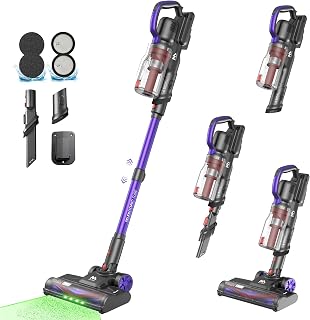


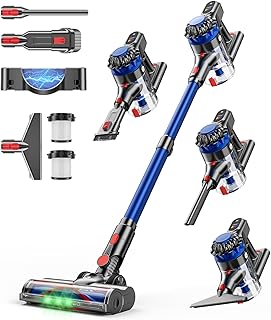




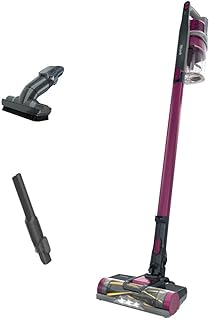






Choosing a cordless vacuum is less about finding the machine with the longest feature list and more about matching the vacuum's cleaning system, battery setup, filtration, floor head and accessories to the way you actually clean. For Canadian households, that can mean very different priorities depending on whether the vacuum is intended for hardwood floors, area rugs, wall-to-wall carpet, stairs, vehicles, pet hair or quick daily cleaning.
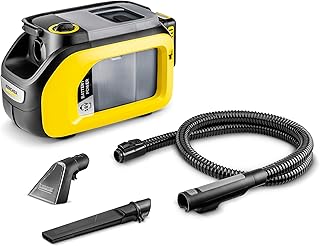
Kärcher offers several cordless and battery-powered cleaning formats, so it is important not to treat every battery vacuum as the same type of product. A lightweight cordless stick vacuum is designed primarily for household floor cleaning, while a battery-powered wet-and-dry model can be more appropriate for garages, vehicles, workshops and situations involving both dry debris and liquids. Kärcher's Canadian range also includes corded wet-and-dry machines, which may be a better fit when maximum capacity and extended workshop use matter more than cordless convenience.
Before choosing from a 2026 shortlist, compare the actual specifications of each model available to Canadian buyers. Pay particular attention to battery configuration, claimed runtime, charging time, dust capacity, filtration, floor-head design, weight, included tools and replacement-part requirements.
A strong cordless vacuum should balance cleaning performance with usability. A vacuum can have substantial motor power but still be inconvenient if its floor head is difficult to manoeuvre, its dust container is too small, its battery takes a long time to recharge or its filter requires frequent attention.
For everyday household cleaning, the most useful combination is usually an efficient motor, a powered floor head, sensible battery management, effective filtration and a design that is comfortable to carry and steer. Features such as LED lighting, a battery-status display, power controls and one-touch dust-bin emptying can also make a meaningful difference during frequent cleaning.
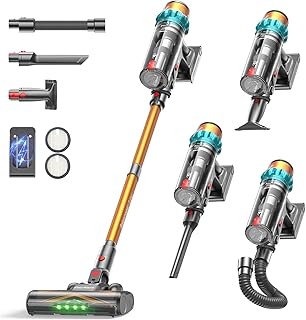
Kärcher's VC 6 Cordless ourFamily, for example, uses a 25.2 V lithium-ion battery, a 250 W BLDC motor, a motorised floor nozzle and a three-stage bagless filtration system. Kärcher lists a normal-mode runtime of approximately 50 minutes and a boost-mode runtime of approximately 11 minutes for that model, illustrating why runtime figures should always be evaluated alongside the cleaning mode being used. :contentReference[oaicite:0]{index=0}
Battery voltage is useful for understanding the electrical platform, but voltage alone does not tell you how long a vacuum will operate or how effectively it will clean. Battery capacity, motor demand, floor-head design and selected power mode all affect practical runtime.
Look for the manufacturer's stated runtime in the specific operating modes you are likely to use. A vacuum that claims a long maximum runtime may achieve that figure only under a lower-power setting. Boost mode generally consumes energy much faster and is best reserved for embedded dirt, heavier debris or particularly demanding surfaces.
For a larger Canadian home, also consider whether the battery is removable and whether an additional compatible battery is available. A removable battery can be especially useful when you want to clean multiple areas without waiting for the vacuum to recharge.
Runtime should be treated as a planning figure rather than a guarantee that the vacuum will operate continuously for the advertised duration under every condition. Powered brush rolls, higher suction settings and boost modes can change battery consumption considerably.
When comparing models, ask:
This approach is more useful than comparing a single runtime number between different cordless vacuum designs.
Motor wattage should not be used as the sole measure of cleaning ability. Airflow, vacuum pressure, nozzle design, brush-roll action, filtration and the interaction between the floor head and the surface all contribute to how effectively a cordless vacuum collects dirt.
For hard floors, a well-designed powered floor head can help collect dust, crumbs and larger particles without requiring excessive passes. On carpet, brush agitation becomes more important because debris can become embedded between fibres.
If your home contains a mixture of hardwood, laminate, tile, rugs and carpet, prioritize a vacuum with a floor head designed for multiple surfaces and adjustable power control rather than choosing based only on the headline motor specification.
A motorised floor nozzle can be one of the most important components of a cordless stick vacuum. Instead of relying exclusively on suction airflow, the rotating brush helps disturb and lift particles from the surface.
LED lighting on the floor head can also be useful. It illuminates the floor immediately ahead of the nozzle, making fine dust and debris easier to see in darker areas beneath furniture or along edges.
Kärcher's VC 6 Cordless ourFamily uses an active floor nozzle with a motorised roller and LED lighting. :contentReference[oaicite:1]{index=1}
Filtration matters for both cleaning efficiency and the quality of the exhaust air. A vacuum needs to capture collected particles without allowing excessive fine dust to pass back through the machine.
Look for information about the number and type of filters rather than assuming that every bagless cordless vacuum offers the same filtration performance. Some systems combine cyclonic separation with additional air-inlet and hygiene filters.
The VC 6 Cordless ourFamily, for example, uses a three-stage filtration arrangement consisting of cyclonic separation, an air-inlet filter and a HEPA hygiene filter. Kärcher specifies the HEPA filter as EN 1822:1998 compliant for that model. :contentReference[oaicite:2]{index=2}
Filtration is particularly worth examining if your household has significant fine dust, frequently cleans fabrics or simply wants to minimise dust escaping from the vacuum during emptying and operation.
A cordless stick vacuum normally sacrifices container capacity in favour of a compact and lightweight design. A smaller dust container can be perfectly acceptable for quick daily cleaning, but it may require more frequent emptying in larger homes.
Consider your cleaning routine rather than choosing the largest available capacity. If you vacuum small areas every day, a compact container may be convenient. If you routinely clean an entire house in one session, a larger container can reduce interruptions.
For reference, Kärcher lists an 800 ml container for the VC 6 Cordless ourFamily. :contentReference[oaicite:3]{index=3}
The published weight of a cordless vacuum does not tell the entire story. Balance is equally important because a top-heavy design can feel considerably heavier when cleaning ceilings, stairs or high shelves.
When comparing models, consider:
For frequent cleaning, ergonomic design can be more valuable than a modest increase in peak suction.
One of the most important buying decisions is determining which type of Kärcher cordless vacuum you actually need.
A cordless stick vacuum is generally intended for household floor cleaning. A battery wet-and-dry vacuum is a different category designed for situations where dry debris and liquids may both need to be collected.
Kärcher's Canadian WD range demonstrates this distinction. Its wet-and-dry machines are designed for applications including garages, workshops, vehicles, gardens, renovation work and indoor cleaning. :contentReference[oaicite:4]{index=4}
| Feature | Cordless Stick Vacuum | Battery Wet-and-Dry Vacuum |
|---|---|---|
| Primary purpose | Everyday household floor cleaning | Garage, workshop, vehicle and wet/dry cleaning |
| Portability | Usually highly portable | Portable but generally bulkier |
| Floor cleaning | Strong focus on household floors | Versatile across many cleaning tasks |
| Liquid pickup | Normally not the intended use | Designed for wet and dry debris where specified |
| Container style | Compact dust container | Larger collection container |
| Workshop use | Limited depending on model | Much more appropriate |
| Convenience for quick household cleaning | Excellent | Less convenient |
Do not purchase a household cordless stick vacuum simply because it is battery powered if your primary requirement is cleaning up water, workshop debris or larger quantities of coarse material. Conversely, a large wet-and-dry vacuum can be unnecessary if your main goal is quickly cleaning crumbs and dust from household floors.
The Kärcher WD 2-18 is an 18 V battery wet-and-dry vacuum designed for flexible cleaning without a mains power connection. Kärcher lists a 12-litre plastic container, a 1.8-metre suction hose and a blower function. It is intended for dry, wet, fine and coarse dirt and uses the Kärcher Battery Power 18 V platform. :contentReference[oaicite:5]{index=5}
This type of machine makes more sense for a garage, vehicle, workshop or outdoor cleaning tasks than a conventional cordless stick vacuum. The shared battery platform can also be a consideration for buyers who already own compatible Kärcher 18 V equipment.
The WD 1 Compact Battery is a smaller battery wet-and-dry design intended particularly for mobile cleaning and vehicle interiors. Kärcher lists a seven-litre container, 18 V Battery Power compatibility and a compact format. Depending on the battery used, the manufacturer states approximate runtimes of 10 minutes with a 2.5 Ah battery and 20 minutes with a 5.0 Ah battery. The battery and charger are not included with the specified configuration. :contentReference[oaicite:6]{index=6}
This illustrates an important buying lesson: always check whether the battery and charger are included in the exact package you are considering. The apparent product price can be misleading if the required battery system has to be purchased separately.
If you already use battery-powered tools from Kärcher or are building a broader cordless cleaning setup, platform compatibility can influence the total cost and convenience of ownership.
Kärcher states that the WD 2-18 uses its 18 V Battery Power platform and that compatible batteries can be used across devices within that platform. :contentReference[oaicite:7]{index=7}
Before buying, verify the exact battery platform rather than assuming that all Kärcher cordless products use interchangeable batteries. Voltage, battery generation, charger compatibility and included accessories can differ between product families.
For sealed hard floors, prioritise manoeuvrability, fine-particle pickup, a suitable powered floor head and filtration. A soft or appropriately designed roller can also be useful where you want to reduce the risk of aggressive brush action on delicate flooring.
LED floor-head lighting can be particularly useful on hard floors because fine dust becomes easier to identify under cabinets, beds and sofas.
Carpet requires more than basic suction. Look for a motorised brush roll, appropriate agitation and a power mode capable of handling embedded debris.
Do not assume that the strongest available setting should always be used. High-power operation consumes more battery energy, so a sensible approach is to use normal power for routine cleaning and reserve boost operation for areas that genuinely require additional pickup.
Homes with dogs and cats should pay close attention to brush design and included attachments. Pet hair can wrap around rollers and accumulate around bearings or other moving parts, so easy access for cleaning the brush roll is an important ownership consideration.
A motorised mini brush can also be valuable for upholstery, stairs and pet resting areas. Kärcher's VC 6 Cordless ourFamily Pet configuration is specifically designed around pet-hair cleaning and includes a motorised mini turbo brush for upholstered furniture and mattresses. :contentReference[oaicite:8]{index=8}
Stairs are one of the situations where cordless design provides a practical advantage. There is no power cord to reposition between steps, and a handheld configuration can make it easier to clean risers, edges and corners.
Weight and balance become especially important here. A vacuum that feels comfortable on a flat floor may feel considerably less convenient when held away from the body while cleaning stairs.
For vehicle cleaning, compare the hose or extension configuration, crevice tool, upholstery tool, battery runtime and overall portability. A compact battery wet-and-dry machine may be more suitable than a household stick vacuum if you also want to handle larger debris or occasional liquid spills.
Kärcher's WD 1 Compact Battery is specifically described for vehicle interiors and includes crevice and upholstery nozzles. :contentReference[oaicite:9]{index=9}
Garage and workshop cleaning places different demands on a vacuum. Coarse dirt, sawdust, wood chips, metal particles and occasional liquids can require a much more robust collection system than everyday household dust.
Kärcher's wet-and-dry range is designed for workshop and renovation applications, and the Canadian range includes machines with substantially larger containers than typical cordless stick vacuums. :contentReference[oaicite:10]{index=10}
If you routinely connect a vacuum to power tools, check whether the exact model provides a compatible power-tool outlet and automatic switching functionality. These features are found on some Kärcher wet-and-dry models but should never be assumed to be present across the entire range.
Motor wattage describes electrical input or motor characteristics depending on the specification provided, but it is not a universal measurement of cleaning performance. Two vacuums with different wattage figures can perform differently because of airflow efficiency, nozzle construction, filtration and brush-roll design.
Use wattage as one specification among several rather than as a ranking system.
Airflow describes the movement of air through the vacuum system. Effective airflow is important for transporting collected dirt through the nozzle, hose and filtration system.
However, airflow and suction pressure represent different characteristics. A well-designed vacuum needs an effective balance between them.
Vacuum pressure is another specification that can help describe suction capability. Again, it should not be interpreted in isolation because the actual cleaning result depends on how the nozzle interacts with the floor.
Container capacity matters most when it affects how frequently you have to stop cleaning. Larger capacity is generally advantageous for workshops and large cleaning jobs, while smaller capacity can be perfectly sensible for a compact daily-use stick vacuum.
Bagless systems eliminate the need to purchase and replace disposable vacuum bags, but they still require regular filter and dust-container maintenance. Bagged systems can make disposal cleaner and can provide a sealed collection method, but replacement consumables become part of the ownership equation.
When evaluating a bagless Kärcher cordless vacuum, investigate how the dust container is emptied and how the filters are removed, cleaned and replaced. A one-click emptying mechanism can reduce contact with collected debris, while accessible filters make routine maintenance easier.
HEPA terminology should be evaluated carefully. Do not simply assume that a vacuum labelled with a generic hygiene or high-efficiency filter provides identical filtration to every other model.
Check the manufacturer's stated filter type, standard or classification, and whether the filter is washable, replaceable or intended for periodic cleaning. Also check whether replacement filters remain available for the model you are considering.
For example, Kärcher identifies a HEPA 12 filter within the three-stage filtration system of the VC 6 Cordless ourFamily and references EN 1822:1998 for that filter. :contentReference[oaicite:11]{index=11}
Noise can become an important consideration when a vacuum is used frequently, particularly in apartments, during early mornings or around children and pets.
Compare the manufacturer's stated sound level where available, but remember that measurements can vary according to the test method and operating mode. A maximum-power setting can also produce a different acoustic experience from normal operation.
Kärcher describes the VC 6 Cordless ourFamily as having a relatively quiet operating design and lists a sound power level below 78 dB(A) in its published technical data. :contentReference[oaicite:12]{index=12}
Accessory count can make a product look more versatile, but more attachments do not automatically mean better value. Focus on tools that correspond to the surfaces you actually clean.
Kärcher's accessory ecosystem for wet-and-dry vacuums includes different nozzles, hoses and filter systems designed for different applications. :contentReference[oaicite:13]{index=13}
A high wattage number does not automatically produce the best cleaning results. Compare the complete cleaning system instead.
Maximum runtime may correspond to a lower-power operating mode. Always compare the runtime for the mode you expect to use most frequently.
Some battery-powered configurations are sold without the battery or charger. The WD 1 Compact Battery, for example, is specified by Kärcher Canada without a battery and charger in its listed scope of supply. :contentReference[oaicite:14]{index=14}
Household cordless stick vacuums are not automatically suitable for large quantities of coarse debris, liquids or workshop dust. For these jobs, investigate a purpose-built wet-and-dry model.
Filters are consumable maintenance components. Before purchasing, establish what cleaning and replacement procedures the manufacturer specifies and whether the required filter configuration is appropriate for your use.
Extra attachments can increase cost and storage requirements without improving your everyday cleaning routine. Prioritise useful tools over an impressive-looking accessory count.
A cordless vacuum is most useful when it is easy to access. Consider whether the machine can stand independently, whether it requires a wall mount and where the charger will be kept.
If you are comparing ten Kärcher cordless vacuum configurations or closely related options, use the same criteria for every model. This avoids giving one product an advantage simply because its specifications are presented differently.
| Comparison Factor | What to Look For | Why It Matters |
|---|---|---|
| Battery | Voltage, capacity, removability and platform | Determines operating flexibility and replacement options |
| Runtime | Normal and boost figures | Shows whether the vacuum suits your cleaning area |
| Charging | Published charging time and charger configuration | Important for frequent or multi-session cleaning |
| Floor head | Motorised roller, surface compatibility and lighting | Directly affects everyday pickup and manoeuvrability |
| Filtration | Filter stages and stated filter classification | Important for fine dust management |
| Dust capacity | Container size and emptying method | Affects how often cleaning must be interrupted |
| Weight | Weight with battery and accessories | Important for stairs and extended use |
| Accessories | Tools relevant to your home | Determines practical versatility |
| Maintenance | Filter, roller and container cleaning requirements | Affects long-term convenience |
| Battery ecosystem | Compatibility with existing Kärcher equipment | Can simplify battery ownership |
Prioritise compact dimensions, low weight, easy storage and enough battery capacity for the floor area. A huge collection container or industrial-style suction system may provide little practical benefit if storage space is limited.
Look for longer normal-mode runtime, comfortable ergonomics, a practical dust capacity and efficient floor-head design. A removable battery or compatible spare battery can be valuable when one charging cycle is insufficient for the entire home.
Prioritise a motorised floor head, easy roller maintenance, a mini motorised tool where available and an effective filtration system. Pet hair can quickly expose weaknesses in brush design and airflow.
Choose a model that can transition effectively between hard floors and carpets. Adjustable power and a properly designed active floor head can be more important than simply choosing the most powerful operating mode.
Consider a battery wet-and-dry vacuum if your requirements extend beyond ordinary dry household dust. Larger containers, robust construction, flexible hoses and vehicle-specific accessories can make a major difference.
Consider Kärcher's wet-and-dry range rather than a conventional cordless stick vacuum. Some Kärcher workshop-oriented models include larger collection containers, power-tool integration and filter-cleaning features that are more appropriate for demanding debris collection. :contentReference[oaicite:15]{index=15}
Cordless operation is primarily about freedom of movement. It eliminates the need to locate an electrical outlet and avoids dragging a cable behind the vacuum.
Corded wet-and-dry machines, however, can make more sense for extended workshop sessions where uninterrupted operation and larger collection capacity are more important than portability.
For example, the Kärcher WD 5 P V-25/8/35 uses a 25-litre container, an eight-metre cable and a 3.5-metre suction hose. Kärcher also lists an integrated power outlet and filter-cleaning functionality for that model. :contentReference[oaicite:16]{index=16}
The lesson is simple: cordless is not automatically better. Choose cordless when mobility and convenience are central to the job; choose corded equipment when continuous operation, capacity or workshop functionality is the greater priority.
Do not allow the dust container to remain unnecessarily full. Emptying it regularly helps maintain usable capacity and reduces the amount of debris stored inside the machine.
Hair, threads and fibres can wrap around motorised rollers. Check the floor head regularly and remove accumulated material according to the manufacturer's instructions.
Follow the manufacturer's instructions for cleaning or replacing each filter. Never assume that every filter can be washed. Some filters require dry cleaning methods or replacement rather than water washing.
A blocked nozzle, hose or filter can reduce effective cleaning performance. If suction appears weaker than normal, inspect the obvious airflow paths before assuming that the motor has developed a fault.
Use the correct charger and battery configuration specified for the model. Store and charge the battery according to the manufacturer's instructions, particularly when the vacuum will not be used for an extended period.
Battery efficiency is not simply a property of the battery itself. A clean airflow path and properly maintained floor head can help the vacuum operate as intended.
Canadian buyers should verify the exact product configuration before placing an order because model names can have regional variants and package contents can differ.
Customer reviews can provide useful information that technical specifications cannot, but they should be read systematically rather than by average star rating alone.
Look for recurring comments about battery life, floor-head manoeuvrability, dust-container capacity, filter maintenance, charging, noise and the durability of attachments. A single complaint may represent an isolated experience, whereas repeated comments about the same issue deserve closer attention.
Also distinguish between complaints caused by unsuitable product selection and genuine product shortcomings. A customer expecting a compact household stick vacuum to behave like a large workshop wet-and-dry machine may be reviewing the wrong category rather than identifying a design flaw.
Start with the job rather than the brand name. Decide whether you need a household cordless stick vacuum, a compact battery wet-and-dry vacuum or a larger workshop-oriented machine.
Next, identify your dominant surfaces and cleaning problems. Hardwood and carpet require different floor-head considerations. Pet hair changes the importance of brush design. Vehicle cleaning increases the value of compact attachments. Garage and workshop use can shift the decision toward wet-and-dry capability and larger containers.
Finally, compare the shortlisted models on battery, runtime, charging, filtration, capacity, ergonomics, accessories and maintenance. Only after those factors are understood should current pricing be used as a deciding factor.
The best option depends on the size of the home, floor types, cleaning frequency, pets and whether you need to collect wet debris. For everyday household floor cleaning, compare Kärcher's cordless stick vacuum configurations. For garages, vehicles and wet/dry jobs, compare the appropriate battery wet-and-dry models instead.
A suitable Kärcher cordless stick vacuum can be used on carpets when the specific model and floor head are designed for carpet cleaning. Look for a motorised floor nozzle and suitable power control rather than judging carpet performance from battery voltage alone.
Do not assume that a cordless stick vacuum is suitable for liquids. Wet pickup is a feature of specific wet-and-dry vacuum models. Kärcher's WD battery range is designed for wet and dry dirt, whereas conventional household cordless vacuum cleaners should be used only according to their specific instructions. :contentReference[oaicite:17]{index=17}
The product categories serve different purposes. Kärcher's VC cordless vacuum cleaners are oriented toward household vacuuming, while WD machines are wet-and-dry vacuums intended for broader applications such as garages, workshops, vehicles, gardens and liquid pickup where specified. :contentReference[oaicite:18]{index=18}
A removable battery can be useful if you have a large cleaning area, want a spare battery or already own compatible equipment in the same battery ecosystem. It is less important if a single charge comfortably covers your normal cleaning routine.
Not necessarily. Runtime should be considered alongside floor-head performance, cleaning mode, battery capacity, charging time and your actual cleaning area. A shorter-runtime vacuum with better ergonomics and more effective cleaning may be more useful than a longer-runtime model that is uncomfortable to use.
Filtration is an important part of vacuum design, particularly when fine dust management matters. Compare the manufacturer's stated filter type and classification and check how the filters are maintained and replaced. Do not treat the word "HEPA" as a substitute for examining the complete filtration system.
Some battery wet-and-dry vacuums are well suited to garages, while conventional cordless household stick vacuums may not be. For garage cleaning, consider debris type, container capacity, hose length, wet pickup capability and accessory compatibility.
The correct interval depends on the model, filter design and amount of dirt collected. Follow the manufacturer's maintenance instructions rather than applying one universal cleaning schedule to every vacuum.
Kärcher has a broad cleaning-equipment portfolio covering household vacuum cleaners, cordless products and wet-and-dry machines. The important question is not simply whether the brand is reputable but whether the particular model matches your cleaning requirements, budget and preferred battery ecosystem.
The best Kärcher cordless vacuum for 2026 is the one that fits the cleaning work you actually need to perform. A lightweight household cordless vacuum can be an excellent choice for routine floors, stairs and quick daily cleanup, while a battery wet-and-dry model can be considerably more appropriate for vehicles, garages, workshops and mixed wet-and-dry debris.
Do not make the decision from a single specification or headline rating. Compare battery performance, realistic runtime, charging, floor-head technology, filtration, dust capacity, weight, accessories and maintenance requirements together. For Canadian buyers, also verify the exact configuration, included battery and charger, current retailer availability and the latest specifications before ordering.
For a 2026 purchase, the most reliable approach is to shortlist the models that fit your cleaning environment first, then compare their current specifications and verified customer feedback before choosing the best overall value for your needs.