

♥ Wishlist
Compare 30 Milwaukee Combo Kits products in Canada. Reviews, ratings, pros, cons and buying advice updated for October 2026.


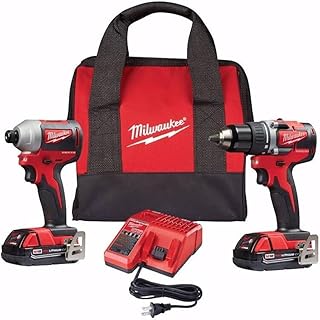


Choosing a Milwaukee combo kit is less about selecting the kit with the largest number of tools and more about matching the platform, tool mix, battery capacity, performance requirements and long-term expansion potential to the work you actually do. A kit can look impressive on paper while containing tools that rarely leave the case, whereas a smaller package with the right drill, impact driver, saw and batteries can be substantially more useful.
For Canadian buyers, the decision also deserves a little extra attention because tool availability, battery configurations, charger compatibility, seasonal promotions and retailer inventory can vary. Before buying, compare the exact model numbers and included accessories rather than relying only on the number of pieces advertised in a package.
A combo kit is a package containing multiple cordless power tools that share a battery platform, usually accompanied by batteries, a charger and some form of storage. Milwaukee offers tools across several cordless systems, so identifying the platform is one of the first steps in evaluating a kit.
Typical combinations can include a drill/driver, hammer drill, impact driver, reciprocating saw, circular saw, oscillating multi-tool, angle grinder, flashlight, work light or other jobsite equipment. The exact contents differ substantially between kits.
The term “combo kit” therefore does not automatically mean that every package is suitable for general construction, professional contracting, renovation or DIY work. The individual tools and their intended applications matter more than the headline tool count.
Milwaukee's M12 and M18 systems serve different purposes. M12 tools are generally designed around a compact form factor where reduced size and weight can be valuable. M18 tools provide a broader selection for applications requiring more substantial cordless equipment.
For a homeowner, installer or tradesperson, the appropriate platform depends on the type of work involved. Compact tools can be especially convenient for cabinetry, electrical installation, service work and confined spaces, while larger tools may be preferable for demanding drilling, fastening, cutting and construction tasks.
Do not assume that an M12 kit is simply a smaller version of an M18 kit. The two platforms should be evaluated as separate ecosystems, with their own compatible batteries and chargers.
The battery platform is one of the most important long-term considerations when comparing cordless combo kits. Once you own several compatible tools, batteries and chargers, staying within the same ecosystem can make future purchases more convenient.
A well-selected starter kit can therefore become the foundation of a larger tool collection. Someone who initially needs only a drill and impact driver may later want a circular saw, reciprocating saw, grinder, light or specialty tool. Platform compatibility can reduce the need to purchase another set of batteries and charging equipment.
Battery capacity affects how long a cordless tool can operate between charges, but runtime varies with the tool, workload, material, technique and battery design. A high-capacity battery may provide useful additional runtime while also adding weight and bulk.
For overhead work or prolonged use in awkward positions, a compact battery can be more comfortable. For repetitive cutting, drilling or high-load applications, additional capacity can be more valuable.
When comparing kits, look at the battery configuration rather than simply asking whether batteries are included. Two kits containing the same number of tools can provide very different levels of practical usefulness if their battery quantities or capacities differ.
Always verify that the battery supplied with a kit is compatible with the specific Milwaukee tools you intend to purchase later. Compatibility within a platform does not mean that every Milwaukee cordless tool uses the same battery system.
This is particularly important when expanding from a compact M12 collection into M18 tools or when comparing older and newer product generations. Check the manufacturer's current compatibility information and the exact model documentation before making assumptions.
The ideal tool combination depends on the user's work. There is no universally best configuration, but certain tools provide more everyday utility than others.
A drill/driver is one of the most versatile tools in a cordless collection. It can handle drilling and screw-driving tasks across woodworking, home maintenance, renovation and general construction applications.
When comparing drill/driver options, consider the chuck, speed settings, clutch adjustment, ergonomics, trigger control, maximum recommended applications and overall size. A compact drill can be preferable for cabinet installation and confined areas, while a more powerful model may be better suited to demanding construction tasks.
A hammer drill adds an impact action designed for drilling into masonry and similar materials. If the kit is intended for renovation, construction or installation work involving concrete, brick or block, a hammer drill can be substantially more useful than a conventional drill/driver.
However, buyers should not confuse a hammer drill with a rotary hammer. A rotary hammer is designed for more specialized masonry and concrete applications and belongs to a different category of tool.
An impact driver is particularly useful for driving screws, structural fasteners and other applications where higher fastening capability and reduced reaction at the handle can be beneficial.
Its compact head can also make it easier to work in restricted spaces. Buyers should still select fasteners and accessories appropriate for the application rather than assuming that greater tool power is always preferable.
A cordless circular saw can turn a basic drill-and-driver kit into a more capable renovation or construction setup. It is useful for cutting sheet goods, lumber and other compatible materials when equipped with the appropriate blade.
Important comparison factors include blade diameter, cutting capacity, visibility of the cutting line, guard operation, bevel adjustment, shoe construction, balance and battery requirements.
A reciprocating saw is designed for rough cutting, demolition and applications where access is more important than producing a highly finished edge. It can be useful for renovation projects involving lumber, pipes and other compatible materials.
Because reciprocating saws are often used in demanding conditions, buyers should consider vibration control, trigger operation, blade-change design and overall handling in addition to raw cutting capability.
An oscillating multi-tool is valuable when a project requires controlled cuts, trimming, scraping, sanding or work in confined locations. It is often more of a precision and versatility tool than a high-output cutting tool.
Check accessory compatibility carefully. The usefulness of an oscillating tool depends heavily on having suitable blades and attachments for the materials and applications involved.
An angle grinder can add metal cutting, grinding, surface preparation and other capabilities to a cordless collection. Because grinders can place substantial demands on batteries, the battery configuration included with the kit deserves particular attention.
Safety equipment and appropriate accessories are essential when using a grinder. The correct wheel or disc must always be selected for the material and intended operation.
Instead of ranking kits solely by tool count, use a consistent comparison framework. This makes it easier to distinguish a genuinely useful package from a kit that simply contains more individual items.
Professional users should generally prioritize tool capability, durability, ergonomics, serviceability and platform depth over the number of pieces in the box. A contractor may use the same core tools every day, making performance and handling more important than receiving several less frequently used accessories.
DIY users may have different priorities. A homeowner who completes occasional repairs may benefit from a balanced kit containing a drill, impact driver and basic cutting tool rather than purchasing a specialized kit designed around intensive jobsite use.
There is also an important middle ground: serious DIY users and renovation enthusiasts may need professional-grade capabilities but use the tools less frequently. In that situation, evaluating the complete ownership proposition can be more useful than choosing solely according to professional or consumer labels.
Home renovation projects can involve drilling, fastening, cutting, demolition and installation. A versatile kit should therefore be assessed according to the projects you expect to undertake rather than a generic idea of “home use.”
For furniture assembly and light repairs, a drill/driver and compact impact driver may cover most requirements. Larger renovation projects can benefit from adding a circular saw, reciprocating saw or oscillating multi-tool. Masonry work may justify a hammer drill or a dedicated rotary hammer depending on the application.
If your projects are seasonal, consider how the kit will be stored and whether the batteries will be shared among tools throughout the year. Proper battery storage and charging practices can be just as important to long-term ownership as the original tool selection.
Construction professionals should evaluate a kit based on the tasks performed repeatedly during a normal workday. An electrician may value compact drilling and fastening tools, while a carpenter may place greater emphasis on saws and fastening equipment. A plumber, HVAC installer or general contractor can have an entirely different ideal combination.
Ergonomics deserve special attention for professional use. A tool that feels manageable for a few minutes can become tiring after several hours. Weight distribution, grip shape, trigger control, balance and access to controls all contribute to practical usability.
For demanding applications, also consider whether the battery and tool combination is appropriate for the workload. High-load tools can consume battery capacity much more quickly than light fastening or drilling tasks.
Torque figures can help compare fastening capability, but they should not be treated as a complete measurement of real-world performance. Different manufacturers and product families may describe torque differently, and application conditions have a major effect on results.
Look at the complete specification set, including speed, operating modes, clutch settings and intended application, instead of selecting a tool from a single torque figure.
Variable-speed control can be valuable because different materials and fasteners require different operating techniques. A tool with useful speed control can provide greater versatility than a tool optimized for only one high-speed application.
For drills, examine the chuck type and size as well as the range of accessories you expect to use. Impact drivers generally use a different accessory interface, so confirm that your existing bits and sockets are appropriate for the intended tool.
Brushless motor technology is common in modern cordless power tools and can offer advantages in efficiency, tool design and maintenance compared with traditional brushed designs. However, “brushless” alone does not tell you whether a particular tool is the right choice. Compare the entire tool specification and intended use.
Integrated LED lights can improve visibility around the work area, especially when drilling or fastening in cabinets, framing cavities and other poorly illuminated locations. The placement and timing of the light can be more useful than simply having an LED listed in the specification.
A common buying mistake is assuming that the largest battery is always the best battery. Larger packs can provide additional runtime, but they can also add weight and change the balance of a compact tool.
For repetitive work, having multiple appropriately sized batteries can sometimes be more practical than relying on one very large pack. A user can keep one battery in use while another charges, depending on the charger and battery configuration.
When comparing Canadian listings, read the battery model and capacity carefully. Retail listings can present kit contents differently, so the exact package description should take precedence over promotional photographs or abbreviated product titles.
More tools do not automatically mean better value. If several included tools duplicate equipment you already own or are unlikely to use, the additional pieces may have little practical benefit.
A kit can contain several tools but still require additional battery purchases if the supplied batteries are insufficient for the intended workload. Always evaluate the batteries as part of the kit rather than treating them as an afterthought.
M12 and M18 products serve different purposes. Confirm the platform before buying, particularly if you already have batteries from one system.
Product names can look very similar across generations and package variations. Exact model numbers help distinguish the actual tool, included batteries and kit configuration.
A tool may be ready to use only after purchasing appropriate blades, bits, sockets, sanding sheets or other accessories. Include these consumables when estimating the practical cost of building a complete setup.
A technically capable tool can still be inconvenient if it is too large, heavy or poorly balanced for your normal work. Pay attention to dimensions and weight, especially if the tool will be used overhead or continuously.
Milwaukee is not the only major cordless power-tool ecosystem available to Canadian buyers. Depending on the existing tools in your collection and the applications you perform, alternatives such as DeWalt, Makita, Bosch, RIDGID, Ryobi and Metabo HPT may also deserve comparison.
The most meaningful comparison is not simply which brand has the strongest individual tool. Compare the complete ecosystem: battery selection, specialty tools, chargers, ergonomics, accessory availability, tool categories and the models that are relevant to your own work.
Both brands have broad cordless tool ecosystems and extensive product ranges. Buyers should compare equivalent tool categories, battery configurations and included equipment rather than making a decision from brand reputation alone.
Makita is another established cordless power-tool brand with a substantial battery ecosystem. For buyers considering either platform, tool ergonomics, existing batteries, preferred equipment and future expansion plans can be more useful decision factors than a simple brand-versus-brand ranking.
Bosch offers cordless equipment across several categories and can be worth considering where specific tool designs, ergonomics or system compatibility match the user's requirements. Compare exact models rather than assuming that all products within a brand are targeted at the same type of user.
RIDGID may be relevant to buyers who are building a cordless collection around its compatible platform. Existing batteries and the availability of the specialty tools you expect to need should be considered before choosing between ecosystems.
Ryobi is widely associated with a broad range of homeowner-oriented cordless equipment. A homeowner should compare the total platform capabilities and actual project requirements rather than assuming that a professional-oriented ecosystem is automatically the best financial choice.
Price is important, but the lowest advertised price is not necessarily the lowest total cost of ownership. Consider what you would have to purchase separately if the kit did not contain the tools, batteries, charger or accessories you need.
A useful calculation is to separate the kit into three categories: tools you definitely need, tools you might use later and tools you probably would not buy individually. This helps prevent an attractive tool-count promotion from influencing the decision more than the actual usefulness of the package.
For Canadian shoppers, compare the complete current listing from a trusted retailer, including taxes, shipping where applicable, included accessories and the precise model number. Promotions can change, so avoid assuming that a particular price or package will remain available.
Customer reviews can provide useful information, but they should be interpreted carefully. Look for recurring comments about ergonomics, battery life, chuck behavior, trigger feel, durability, balance, charger performance and suitability for particular applications.
Do not base a buying decision on a single unusually positive or negative review. Also distinguish between reviews of the actual tool and reviews of a kit containing multiple products. A customer may be satisfied with the drill while criticizing the included saw, for example.
Verified-purchase indicators can provide useful context where available, but they do not replace specification checking. Reviews are most valuable when they complement manufacturer documentation and independent product comparisons.
Regular maintenance can help keep cordless tools in usable condition. Follow the manufacturer's instructions for cleaning, inspection, lubrication and servicing because maintenance requirements can vary by tool category.
Remove dust, chips and debris after demanding jobs. Particular attention should be given to ventilation areas because accumulated debris can interfere with cooling and airflow.
Damaged drill bits, saw blades, grinding discs and other accessories can affect performance and create unnecessary safety risks. Replace accessories when they are worn, damaged or otherwise unsuitable for the application.
Use the correct charger and follow the manufacturer's battery storage and charging recommendations. Avoid exposing battery packs to conditions outside their specified operating or storage range.
Before operating a cordless tool, inspect the housing, battery connection, controls, guards and accessories. If something appears damaged or operates abnormally, stop using the tool and follow the manufacturer's service guidance.
Combo kits can contain tools capable of drilling, cutting, grinding and demolition, so safe operating practices are essential. Read the instructions supplied with each tool and use the recommended personal protective equipment for the task.
Prioritize a compact, versatile combination that covers drilling and fastening. A smaller platform can make sense when portability and storage are more important than maximum output.
Look for a broader combination that adds at least one useful cutting capability. A circular saw, reciprocating saw or oscillating multi-tool can substantially expand the range of renovation work you can perform.
Prioritize the tools you use repeatedly, battery availability, ergonomics and platform expansion. Avoid paying for tools that will spend most of their time unused simply because they increase the advertised piece count.
Build around your trade rather than selecting a generic package. Specialty tools can be more valuable than general-purpose tools when they eliminate repetitive manual work or make difficult installations easier.
If you already own compatible Milwaukee batteries and chargers, a tool-only purchase can sometimes make more sense than another complete kit. Compare the standalone tool against the full kit and determine whether the additional batteries and accessories justify the difference.
Buying tools individually can be better when you have highly specialized requirements. If you need only one advanced tool, purchasing a large kit can create unnecessary expense and unused equipment.
Likewise, if you already own a substantial cordless collection, another kit may duplicate batteries, chargers or common tools. In such cases, compare the individual tool price and the value of any included accessories before deciding.
There is no single best kit for every Canadian buyer. The right choice depends on your work, preferred cordless platform, required tools, battery needs and budget. Compare the exact contents and specifications before choosing.
They can be, particularly when the included tools match the projects you expect to complete. DIY buyers should avoid paying extra for professional-oriented capabilities they are unlikely to use.
Neither platform is universally better. M12 emphasizes compact cordless tools and applications where size and weight matter, while M18 provides a broader range of larger cordless equipment. Select the platform according to your workload and future tool requirements.
M12 and M18 are separate battery platforms. Do not assume that batteries from one system can be used with tools from the other. Check the manufacturer's compatibility information for the exact products.
Brushless technology can provide useful efficiency and design advantages, but the decision should consider the complete specification, application and price. Do not select a kit solely because “brushless” appears in the product description.
The ideal number is the number of tools that provide genuine value for your projects. A four-tool package containing frequently used equipment can be more useful than a much larger package containing several rarely used tools.
No. Milwaukee has multiple cordless platforms, including M12 and M18. Always verify platform compatibility before purchasing batteries, tools or chargers.
Extra batteries can be useful when you work continuously or use several tools during the same project. The ideal quantity depends on workload, charging access, tool power requirements and the battery capacities you choose.
Check the exact model number, included tools, battery quantity and capacity, charger, storage solution, accessories, current warranty information and retailer-specific listing details. Product photographs should not be treated as a substitute for the written specification.
No. Larger batteries can provide additional runtime but may increase tool weight and affect balance. Compact batteries can be preferable for overhead, precision or confined-space work.
Before committing to a purchase, compare the package as a complete system rather than focusing on one headline specification. The best choice should fit the jobs you actually perform, work with the battery ecosystem you intend to maintain and provide tools that will remain useful as your projects evolve.
A useful independent buying guide should evaluate more than popularity or advertised tool count. When comparing Milwaukee combo kits for Canadian buyers, consider tool selection, battery platform, included battery configuration, practical versatility, ergonomics, intended application, accessory requirements, expansion potential and the completeness of the package.
Because product configurations and retailer listings can change, verify the current specification for the exact kit before purchasing. Product names, included batteries, accessories and promotional bundles should always be checked against the current listing and manufacturer's documentation.
The strongest purchase is ultimately the kit that gives you the right tools for your work without forcing you to pay for equipment you do not need. Whether you are assembling a first cordless collection, upgrading an existing workshop or expanding a professional jobsite setup, a careful comparison of platform compatibility and real-world requirements will usually lead to a more practical decision than simply choosing the package with the largest number printed on the box.