
♥ Wishlist
Compare 8 Milwaukee Reciprocating Saws products in Canada. Reviews, ratings, pros, cons and buying advice updated for October 2026.




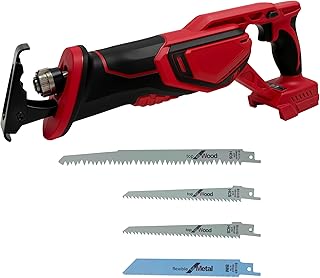
Choosing the right Milwaukee reciprocating saw is less about finding the most powerful model and more about matching the saw's design to the work you actually perform. A demolition contractor cutting through framing lumber has different requirements from a plumber working in confined spaces, an electrician making occasional openings, or a homeowner handling renovation projects. Milwaukee's reciprocating saw family includes full-size Sawzall-style tools as well as more compact designs, so comparing form factor, battery platform, control, blade compatibility, ergonomics and intended application is essential.
This guide is designed for Canadian shoppers researching Milwaukee reciprocating saws in 2026. It focuses on the factors that can distinguish one model from another and explains what to check before purchasing through a retailer. Product specifications, included accessories, battery packages, retailer pricing and availability can change, so always compare the current product listing and manufacturer's specifications before placing an order.
Milwaukee is particularly well known for its cordless M12 and M18 ecosystems, including its M18 FUEL range. For buyers already invested in one of these battery platforms, platform compatibility can be just as important as the saw itself. A bare tool may make considerably more sense for an existing battery owner, while a kit containing batteries and a charger may be more practical for someone entering the platform for the first time.
The phrase "precision reciprocating saw" can be misleading because a reciprocating saw is fundamentally designed for fast, aggressive cutting rather than the fine control associated with a jigsaw or circular saw. Precision in this category is better understood as controlled cutting: maintaining a predictable stroke, positioning the shoe correctly, choosing the appropriate blade, controlling vibration and making a cut without unnecessary movement.
A well-designed reciprocating saw should provide enough power for its intended material while remaining controllable. Excess power is not automatically an advantage. In thin sheet metal, plastic, smaller branches or delicate renovation work, excessive aggression can make a cut harder to manage. Conversely, structural demolition, thick lumber, cast iron, metal pipe and demanding construction applications can benefit from a higher-performance tool and an appropriate heavy-duty blade.
When comparing Milwaukee models, consider the complete cutting system rather than judging the saw by a single specification. The tool, battery, blade, operator technique and material all influence the final result.
Before comparing individual products, it helps to understand the broad categories within Milwaukee's reciprocating saw range. Names such as Sawzall, Hackzall, M12 and M18 can describe substantially different tool formats and intended uses. Buyers should not assume that a smaller tool is simply a weaker version of a larger one or that the highest-output model is automatically the best choice.
Full-size Sawzall-style reciprocating saws are generally associated with demanding construction, demolition, renovation and cutting applications. Their larger format can provide useful leverage and a substantial grip for difficult cuts. They are especially worth considering when the job involves extended cutting through thick materials or when a more substantial tool is preferable.
The trade-off is size and handling. A full-size reciprocating saw can become tiring when used overhead, at arm's length or in confined spaces. Buyers should therefore consider the working position rather than focusing only on maximum performance.
Hackzall-style tools use a more compact form factor that can be advantageous when access matters more than maximum cutting capacity. The design can be useful for plumbing, electrical work, renovation, pruning and other situations where a traditional full-size reciprocating saw feels cumbersome.
A compact design does not eliminate the need to select the correct blade. Blade length, tooth configuration and material compatibility remain important, particularly when working in restricted spaces where blade movement needs to be controlled carefully.
M12 models are particularly relevant to buyers who prioritize compactness and already own Milwaukee's M12 batteries. The smaller battery platform can make sense for lighter-duty cutting and applications where minimizing tool size is valuable.
The important question is not whether an M12 saw can perform a particular cut in theory, but whether its capabilities match the frequency, material thickness and workload involved. A professional who performs heavy demolition every day may have different requirements from a homeowner who needs a compact saw for occasional renovation work.
M18 reciprocating saws are aimed at users who need a larger cordless platform and are already invested in Milwaukee's M18 ecosystem or want access to its broader range of compatible tools. Within the M18 family, buyers should compare the exact model rather than treating all M18 reciprocating saws as equivalent.
M18 FUEL models are particularly important in premium comparisons because FUEL branding identifies a higher-performance Milwaukee tool family. However, buyers should still compare the individual model's published specifications, included equipment, dimensions and current package rather than assuming every FUEL tool has identical characteristics.
For cordless power tools, battery compatibility can have a major impact on total ownership cost. If you already own compatible Milwaukee batteries and a charger, a bare tool may be an efficient way to expand your collection. If you have no compatible batteries, compare the total cost of a kit against the cost of purchasing the battery and charger separately.
Do not select a tool solely because the bare-tool price appears attractive. A low initial price can become less attractive if you then need to purchase several batteries, a charger and additional accessories.
For Canadian buyers, also consider how many tools you expect to operate from the same battery ecosystem. The value of a cordless platform increases when one battery family can serve multiple tools across construction, maintenance, automotive, landscaping and renovation tasks.
Weight matters most when the saw is used for extended periods or in difficult positions. A heavier reciprocating saw can feel stable during aggressive cutting, but that same weight can become a disadvantage during overhead work or repetitive trimming.
When comparing specifications, look for the manufacturer's stated tool weight and determine whether the figure refers to the bare tool or includes a battery. These measurements are not always directly comparable between product listings.
Stroke length describes how far the blade travels during each reciprocating cycle. It is an important specification, but it should not be considered independently of stroke rate, motor output, blade design and the material being cut.
A longer stroke can contribute to fast material removal in suitable applications, while a shorter stroke can be useful where control and compact movement are more important. The ideal combination depends on the job.
Variable-speed control gives the operator greater influence over the cutting process. Starting at a lower speed can make it easier to position the blade and establish the cut before increasing speed as appropriate for the material.
Speed control is especially useful when moving between materials. Wood, metal, plastic and composite materials can respond very differently to blade speed and tooth configuration. A controlled trigger can therefore be more useful than simply having a high maximum speed.
The shoe is the part of the saw that contacts the workpiece and helps stabilize the tool during cutting. A well-positioned shoe can improve control and reduce unwanted movement.
Depending on the model, the shoe may have adjustable or other positioning features. When comparing products, check the exact manufacturer's description rather than assuming all Milwaukee reciprocating saws have identical shoe mechanisms.
Reciprocating saw users frequently change blades because different materials and cutting tasks require different tooth configurations. A convenient blade-change system can save time and reduce frustration on a busy jobsite.
Before buying, check whether the exact model supports the blade-change method you prefer and whether the mechanism can be operated easily while wearing work gloves. Never change a blade while the tool is connected to a live power source or while the battery remains installed if the manufacturer's safety instructions call for battery removal.
Reciprocating saws naturally generate substantial movement because the blade travels rapidly back and forth. Vibration control can therefore have a meaningful effect on comfort and tool handling.
For frequent users, ergonomic design should be treated as a performance characteristic rather than an optional luxury. A saw that is easier to control can help an operator maintain a consistent cutting position and reduce unnecessary fatigue.
Motor type is another major comparison point. Brushless motor technology has become common in premium cordless tools because it can support efficient electronic control and reduced mechanical wear associated with traditional motor brushes.
Milwaukee's brushless and FUEL offerings are particularly relevant to buyers seeking higher-end cordless equipment. However, brushless does not automatically mean that a particular tool is the right purchase. Application, price, battery ownership, ergonomics and expected workload still matter.
An occasional DIY user may not benefit enough from a premium configuration to justify paying substantially more. If the saw is used only a few times each year for small renovation jobs, a less expensive model that meets the required specifications may be the more rational choice.
The best purchase is therefore determined by workload, not by marketing tier alone.
A high-quality reciprocating saw cannot compensate for an unsuitable blade. Blade selection should be based on the material, thickness, desired cutting speed, finish requirements and access to the workpiece.
Wood blades are designed around tooth patterns that remove wood efficiently. Coarser teeth are often associated with faster cutting in appropriate lumber and demolition applications, while finer configurations can be preferable when greater control or a cleaner cut is desired.
For demolition work, specialized blades may be designed to tolerate nails, screws and other embedded materials. Always confirm the blade's stated application before cutting through treated, engineered or mixed construction materials.
Metal-cutting blades generally use finer teeth than many wood-cutting blades. The correct blade depends on the type and thickness of metal. Thin sheet metal, structural steel, pipe and other materials should not automatically be treated as equivalent cutting tasks.
Using the wrong tooth configuration can result in poor cutting performance, premature blade wear or excessive heat. Let the blade manufacturer's material guidance determine the appropriate choice.
Bi-metal construction is widely used for blades intended to balance flexibility, durability and cutting performance. These blades can be useful when a job involves mixed materials or when users want a versatile blade for general maintenance and construction work.
Specialized reciprocating saw blades exist for applications such as pruning, plastic, masonry-related cutting and other materials. Before selecting a specialty blade, verify that both the blade and saw are intended for the proposed application.
Framing work often involves repeated cuts through lumber, dimensional wood and construction assemblies. A full-size Milwaukee reciprocating saw can be appropriate when productivity and sustained cutting performance are priorities.
Blade selection remains critical. If cuts routinely contain nails or other fasteners, use blades specifically intended for that environment instead of treating a standard wood blade as a universal solution.
Demolition is one of the classic applications for a reciprocating saw. The ability to cut through wood, fasteners, pipe and other construction materials makes this tool particularly versatile.
For demolition, prioritize durability, grip, vibration management, blade availability and the ability to change blades quickly. The most powerful saw is not necessarily the best option if its weight or size makes it difficult to position safely.
Plumbers often work in confined areas where compactness and positioning can be more valuable than maximum cutting capacity. A smaller Hackzall-style design can be worth considering when access is the dominant constraint.
Pipe-cutting applications require the correct blade and careful positioning. The tool should never be used beyond the material or application limits stated by the manufacturer.
Electricians may use reciprocating saws for renovation openings, cutting certain construction materials and removing existing assemblies. Compact models can be particularly useful where workspace is restricted.
Electrical safety should take priority over cutting speed. Always establish what is behind the material before cutting, and follow applicable electrical safety procedures and local requirements.
A reciprocating saw equipped with an appropriate pruning blade can be useful for certain branch-cutting tasks. The blade should be specifically intended for wood or pruning, and the tool should be used only within its safe operating conditions.
For extensive landscaping, a dedicated pruning saw or other purpose-built outdoor tool may be more suitable. A reciprocating saw should not automatically be considered a replacement for every type of garden cutting equipment.
The choice between a full-size reciprocating saw and a compact model is fundamentally a trade-off between cutting capability, access and handling.
There is no universal winner between M12 and M18. The better platform depends on the tools you already own, how aggressively you use the reciprocating saw and whether you prioritize portability or higher-output equipment.
M12 is attractive when compact size and reduced overall equipment bulk are important. Users building a small maintenance-oriented toolkit may appreciate having a lighter battery platform that can support several compact tools.
M18 is relevant to users who need a broad professional cordless ecosystem and regularly operate larger tools. If your workshop or jobsite already uses M18 batteries, choosing an M18 reciprocating saw can simplify battery management.
M12 and M18 batteries are not interchangeable simply because both are Milwaukee products. Always verify the exact battery platform specified for the saw you are considering.
Milwaukee FUEL is a premium cordless tool designation associated with the company's higher-performance brushless tool systems. For buyers comparing reciprocating saws, FUEL models may deserve attention when the tool is expected to perform demanding work regularly.
Nevertheless, the FUEL label should be one part of the evaluation rather than the entire decision. A buyer should compare the exact model's performance specifications, dimensions, weight, controls, battery requirements and current package contents.
If two models appear similar, look closely at the manufacturer's specification tables. Small differences in dimensions, stroke characteristics, control systems, included accessories and intended applications can influence which tool is the better fit.
Battery runtime depends on the material being cut, blade condition, cutting technique, tool model, battery capacity and environmental conditions. It is therefore difficult to translate a battery specification into a universal number of cuts.
Heavy demolition can consume substantially more energy than occasional trimming or light material cutting. A user performing repetitive cuts should consider owning more than one compatible battery so that the work can continue while another battery charges.
A larger battery can provide more stored energy, but it can also change the balance and total weight of a cordless saw. For overhead work and tight spaces, a smaller compatible battery may provide a more comfortable setup, provided its capacity and output are appropriate for the task.
Bare-tool packages are generally most interesting to buyers who already own compatible batteries and chargers. Kit packages can be more convenient for someone entering the platform.
When comparing a kit, identify exactly what is included. Check the battery quantity, battery type, charger, carrying case or bag and any included blades or accessories. Package contents can vary between retailers and model configurations.
Reciprocating saws are often used in positions where ergonomics directly affect control. Look for a grip that feels secure, controls that can be reached without awkward hand movement and a tool shape that fits the spaces in which you normally work.
The trigger should be easy to operate while maintaining control of the tool. Variable-speed operation can be especially useful when beginning a cut, positioning the blade or transitioning between materials.
Balance is influenced by the motor, gearbox, battery and overall housing design. Two saws with similar published weights can feel different in actual use because the weight may be distributed differently.
A compact reciprocating saw may be easier to maneuver in some situations, but "one-handed capable" should never be interpreted as permission to ignore safe operating practices. Whenever possible, maintain a stable stance and secure the workpiece before cutting.
Modern cordless power tools may include electronic systems intended to manage aspects of motor operation, battery communication, temperature, overload or other operating conditions. The exact systems differ by model.
Do not assume that an electronic protection feature eliminates the need for safe operating procedures. A reciprocating saw remains a high-speed cutting tool capable of causing serious injury.
A premium saw can be excellent, but premium performance is useful only when your workload requires it. An occasional DIY user may be better served by a more affordable model that meets the actual requirements.
The price of a bare tool does not represent the complete cordless-tool investment for a buyer who does not already own compatible batteries and a charger. Compare complete system costs.
Cutting performance involves the motor, electronics, blade, stroke characteristics, battery and operator technique. A power figure alone cannot tell you how comfortable or useful the tool will be.
There is no reason to expect a single general-purpose blade to provide optimum results in every material. Maintain a selection of appropriate blades for wood, metal, demolition and other common applications.
A powerful saw that cannot fit into the work area is not useful. Measure restricted areas and consider the complete tool profile, including the battery.
The same basic tool may appear in different retail packages. Check whether each listing is a bare tool, kit or bundle and verify the exact model number before comparing prices.
Included batteries, chargers, cases and accessories can vary. Read the current retailer listing carefully rather than relying on photographs or an older description.
When narrowing a list of Milwaukee reciprocating saws, create a comparison based on your actual priorities. Instead of ranking products by one headline specification, consider several dimensions together.
Examine the manufacturer's specifications for the exact model. Consider stroke characteristics, motor architecture, speed control and the intended workload.
Compare the bare-tool dimensions and weight, then consider how the selected battery changes the overall setup.
Ask whether the saw is optimized for the tasks you perform most often. A compact plumbing-oriented tool and a heavy demolition saw should not be judged by exactly the same criteria.
If you already own Milwaukee batteries, platform compatibility can substantially increase the practical value of a new bare tool. If you are starting from scratch, calculate the complete cost of entry.
Consider blade availability, replacement accessories, battery compatibility, tool storage and how frequently the saw will be used. A tool that is slightly more expensive initially may be easier to justify if it closely matches a demanding professional workload.
Product pages can contain a large number of specifications, but not all have equal importance. Start with the specifications that directly affect your application.
Voltage identifies the cordless platform rather than providing a complete measurement of cutting performance. Milwaukee M12 and M18 tools belong to different battery ecosystems, so voltage is especially important for compatibility.
Stroke length describes the travel distance of the blade. Compare it between models only alongside other performance specifications.
This figure indicates the rate at which the blade reciprocates under the specified operating conditions. A high number does not automatically mean faster real-world cutting because blade design and material resistance also matter.
Weight influences maneuverability and fatigue. Confirm whether the published figure includes the battery.
Overall length becomes especially important when cutting inside wall cavities, between framing members, under cabinets or around installed plumbing.
Brushless motor construction is common in higher-end cordless tools and can be an important consideration for frequent users, but it should be evaluated together with the rest of the tool's design.
Professional users should prioritize reliability, ergonomics, battery logistics, cutting performance, blade-change convenience and compatibility with tools already present on the jobsite.
If the saw is used every week or every day, small ergonomic advantages can become significant over the course of a year. A contractor should also consider whether multiple batteries are already available and whether the selected model fits the company's existing cordless platform.
For frequent home renovation projects, a mid-to-high-tier cordless reciprocating saw can provide useful versatility. Focus on the types of materials you expect to cut rather than purchasing a tool based purely on professional branding.
Occasional users should start by deciding whether cordless convenience justifies the investment in a battery ecosystem. If compatible Milwaukee batteries are already available, the decision can be straightforward. If not, compare the total cost of the tool, batteries and charger with alternative solutions.
One of the strongest reasons to choose a Milwaukee reciprocating saw is ecosystem compatibility. A homeowner, tradesperson or contractor who already has several compatible batteries may be able to purchase a bare tool without duplicating chargers and battery packs.
This can also simplify jobsite organization. Instead of maintaining separate chargers and battery systems for different cordless tools, users can standardize around an ecosystem that meets their requirements.
However, ecosystem loyalty should not override tool suitability. If a different tool format is substantially better suited to your work, compare the alternatives objectively before purchasing.
Regular maintenance can help keep a reciprocating saw operating reliably. Maintenance requirements vary by model, so the manufacturer's instructions should always take priority.
Remove accumulated dust, chips and debris from accessible areas using an appropriate cleaning method. Pay particular attention to ventilation openings and areas around the blade holder.
Check the blade-change mechanism for accumulated debris or visible damage. If the blade does not seat securely, stop using the tool until the issue has been addressed according to the manufacturer's guidance.
Check batteries for visible damage, unusual swelling, contamination or other conditions that may indicate a problem. Damaged batteries should not be used.
A dull blade can make cutting slower and can encourage excessive pressure from the operator. Replace blades when they are worn rather than trying to force a poor-performing blade through the material.
Keep replacement blades organized by material and application. Separating wood, metal, demolition and specialty blades makes it easier to select the correct blade before starting a job.
Even an excellent reciprocating saw can produce poor results if the technique is wrong. Good cutting begins with securing the material and selecting the correct blade.
Excessive force is rarely the best solution. Apply controlled pressure appropriate to the material and allow the blade to perform its intended cutting action.
Keeping the shoe appropriately engaged with the workpiece can improve stability. Avoid forcing the tool into an unstable position where the blade can bind or wander.
When a precise starting point is important, begin with controlled trigger pressure before increasing speed as appropriate. This can make it easier to establish the cut accurately.
Switching from a wood blade to an appropriate metal blade is often more effective than attempting to compensate for a mismatched blade by changing cutting pressure.
Metal cutting deserves particular attention because blade selection, speed, heat and workpiece stability can substantially affect results.
Use a blade specifically rated for the metal and thickness involved. Secure the workpiece whenever possible and avoid applying excessive pressure. If the blade begins to bind, stop and reassess the cutting position rather than forcing the tool.
For repeated metal fabrication, compare whether a reciprocating saw is genuinely the most efficient tool. Depending on the task, an angle grinder, band saw, portable band saw or another purpose-built cutting tool may provide better results.
Demolition is where reciprocating saws demonstrate their versatility. A single tool can be used with different blades for numerous removal tasks, but demolition also creates challenging operating conditions.
Before cutting into a wall, floor, ceiling or other assembly, identify hidden utilities and structural elements. Do not assume that an area is safe to cut merely because the visible surface contains only drywall or wood.
For demolition involving nails, screws or mixed construction materials, choose blades specifically designed for such work. Expect blades to wear faster in abrasive or contaminated materials and keep replacements available.
Canadian buyers should compare the complete purchase rather than focusing only on the headline price. Retail listings can differ in package contents, battery configuration and availability.
Milwaukee product names can appear similar across generations and configurations. Confirm the exact model number before comparing specifications or prices.
Determine whether the listing includes a battery, charger, carrying bag or case, blades and other accessories. Two products with similar names can represent very different packages.
Availability can change by retailer and region. Canadian shoppers should verify the current listing before purchasing, especially when a guide references products that may be offered in multiple configurations.
Confirm the current price, delivery information, package contents, applicable taxes and retailer policies directly on the retailer's current product page. Independent buying guides can help narrow the choices, but the retailer listing is the appropriate place to verify the transaction-specific details.
Customer reviews can be useful, but they should be interpreted carefully. A five-star rating alone does not tell you whether a reciprocating saw is appropriate for your specific workload.
Reviews are more useful when the reviewer explains what they cut and how frequently they use the tool. Comments about demolition, plumbing, pruning or occasional DIY use can help you determine whether the product matches your situation.
A reviewer complaining about slow cutting may actually be using an inappropriate or worn blade. Look for comments that identify the blade type and material being cut.
Recurring comments about balance, grip comfort, trigger operation or fatigue can be particularly relevant for buyers who expect to use the saw for extended periods.
When possible, ensure that reviews correspond to the same model and package you intend to purchase. Similar product names can lead to misleading comparisons.
There is no single correct budget for a reciprocating saw. The appropriate spending level depends on frequency of use, workload, battery ownership and expected service life.
For occasional DIY work, paying for professional-level performance that will rarely be used may provide limited practical value. For a contractor who depends on the tool every week, spending more on ergonomics, performance and a suitable cordless ecosystem can be easier to justify.
Always compare the total ownership cost rather than just the saw's advertised price. Include compatible batteries, charger requirements, replacement blades and other accessories needed for the intended application.
Cordless tools offer mobility and convenience, but a corded reciprocating saw can still be appropriate for users who work near reliable mains power and do not want to manage battery charging.
For stationary workshop tasks or long cutting sessions in a controlled environment, a corded tool may be worth considering. For construction sites, outdoor work, remote locations and quick service jobs, cordless convenience can be a substantial advantage.
The choice should reflect the environment rather than a blanket assumption that cordless is always superior.
A reciprocating saw is versatile, but versatility should not be confused with universal suitability.
For buyers seeking one versatile demolition and renovation tool, however, a reciprocating saw remains one of the most flexible options available.
Milwaukee is not the only established cordless power-tool manufacturer. Buyers may also encounter DeWalt, Makita, Bosch and other brands when researching reciprocating saws in Canada.
The most meaningful comparison is usually the entire cordless ecosystem rather than one isolated tool. If you already own several batteries from another brand, switching platforms solely for one reciprocating saw may increase your total cost.
Both Milwaukee and DeWalt offer extensive cordless ecosystems and professional-oriented reciprocating saws. Compare the exact models for tool dimensions, battery platform, ergonomics, performance specifications and package contents rather than relying on brand reputation alone.
Makita is another major cordless platform with a broad selection of professional tools. Buyers should compare the battery ecosystem they already own, along with the exact reciprocating saw's size, handling, performance and accessories.
Bosch also competes in the professional power-tool market. The same platform-first principle applies: compare the exact tool, battery requirements and application suitability rather than assuming that one brand is universally better.
If you are comparing ten Milwaukee reciprocating saw options, a simple weighted evaluation can make the decision more objective. Assign each model a score for the categories that matter to you, then give greater weight to the categories that directly affect your work.
This method helps prevent a single specification from dominating the decision. A compact saw might score highest for access and handling while a full-size model scores higher for demanding demolition. Both can be excellent choices for different buyers.
The saw itself is only the foundation. A practical setup should include blades suited to the materials you expect to encounter and enough battery capacity for the workload.
Professional users may benefit from keeping multiple charged batteries available. Occasional users may need only one compatible battery, particularly if the saw is used infrequently.
Consider how the battery affects balance as well as runtime. The largest battery is not always the best choice for every cutting position.
Proper storage protects the saw and makes it easier to keep blades and batteries organized. A case or suitable tool bag can be useful when the saw is transported between job sites.
Keep blades protected so that teeth do not become damaged by loose tools. Store batteries according to the manufacturer's instructions and avoid exposing them to conditions outside their specified operating and storage ranges.
Canada's climate makes battery management particularly relevant. Lithium-ion batteries and cordless tools should be used and stored according to the manufacturer's temperature guidance. Extreme cold can affect battery performance and runtime.
If a tool or battery has been stored in very cold conditions, allow it to reach an appropriate temperature before charging or operating it when required by the manufacturer's instructions. Avoid using damaged or compromised batteries.
Outdoor contractors should also account for snow, moisture, mud and temperature changes when transporting cordless tools between vehicles, job sites and heated interiors.
A "best" reciprocating saw ranking should be treated as a shortlist rather than an absolute statement that one model is superior for every person. The ideal choice depends on the user's application.
For example, the best compact option may not be the best demolition option. Likewise, the best choice for an existing M12 owner may be different from the best choice for an M18 contractor.
When reviewing a ranked list, pay particular attention to why each product is suitable for its category. A useful buying guide should explain the trade-offs instead of simply assigning a numerical ranking.
Because cordless power-tool configurations can change, verify current information immediately before purchasing.
These checks are especially important when comparing search results because retailers may display different package configurations under similar product names.
Your priority is demanding construction, renovation or demolition work and you have enough workspace to handle a larger tool comfortably.
Your work frequently involves tight spaces, awkward access, plumbing, electrical service or other applications where a smaller profile is valuable.
You prioritize compact cordless tools and already use or intend to build around Milwaukee's M12 battery ecosystem.
You need a larger professional cordless ecosystem, perform more demanding work or already own compatible M18 batteries.
You regularly rely on cordless equipment for demanding applications and want to evaluate Milwaukee's premium brushless tool platform. Compare the exact model's specifications rather than buying solely because of the FUEL name.
The best Milwaukee reciprocating saw is the one that fits your workload, workspace, battery ecosystem and cutting requirements. Start with the job rather than the product name. Determine what materials you cut, how frequently you cut them, how much access you have and whether you already own compatible Milwaukee batteries.
From there, compare full-size and compact designs, M12 and M18 platforms, motor technology, tool dimensions, weight, control features and blade compatibility. For professional users, ergonomics and battery logistics can be just as important as headline performance. For occasional DIY users, total purchase cost and platform value may matter more.
Before purchasing, compare the exact model number and current Canadian package contents. Read verified customer feedback alongside the manufacturer's specifications, and check today's retailer pricing and availability directly. This approach gives you a more reliable basis for choosing between Milwaukee reciprocating saws without assuming that the most expensive or most powerful model is automatically the right option.
The best option depends on the application, battery platform and desired tool size. A full-size M18 model may suit demanding construction and demolition, while a compact or M12 model may be more appropriate for tight spaces and lighter applications. Compare the exact model specifications before deciding.
Milwaukee is a well-established professional power-tool brand with multiple cordless reciprocating saw formats. The more important question is which specific Milwaukee model fits your work, because the range includes different sizes, battery platforms and performance levels.
M12 and M18 are different Milwaukee cordless battery platforms. M12 tools generally emphasize compactness, while M18 provides a larger cordless platform with a broad professional tool ecosystem. Always verify compatibility with the exact saw and battery.
It can be worthwhile for users who frequently perform demanding work and want a premium brushless cordless platform. For occasional DIY use, the additional cost may not provide enough practical benefit. Compare the exact specifications and your expected workload before paying more.
Reciprocating saws are widely suited to demolition because they can be paired with different blades for wood, fasteners, metal and other construction materials. Select blades specifically intended for the materials being removed and identify hidden utilities before cutting.
Yes, reciprocating saws can be used for suitable metal-cutting applications when paired with an appropriate metal-cutting blade. The correct blade depends on the metal type and thickness. Follow the blade and tool manufacturer's application guidance.
Yes. Wood-cutting blades are available for reciprocating saws, with different tooth configurations intended for different wood-cutting requirements. Demolition blades can be useful when wood contains nails or other fasteners.
Yes. Compact reciprocating saw formats can be useful for certain plumbing applications, particularly where access is restricted. Use a blade designed for the pipe or material being cut and follow appropriate safety procedures.
No. Battery compatibility depends on the tool's platform. Milwaukee M12 and M18 batteries belong to different systems, so verify the platform specified for the exact reciprocating saw before purchasing or attempting to use a battery.
A bare tool can be attractive when you already own compatible batteries and a charger. A kit may make more sense when you are entering the battery platform. Compare the complete cost and confirm exactly what each package includes.
Weight becomes increasingly important during overhead work, extended cutting and awkward positioning. Compare both the manufacturer's tool weight and the weight of the complete saw with the battery you plan to use.
Not necessarily. Stroke length is only one performance characteristic. Cutting speed and feel also depend on stroke rate, motor characteristics, blade design, material and operating technique.
There is no universal replacement interval because blade life depends heavily on the material, cutting frequency, blade quality and technique. Replace a blade when it becomes worn, damaged or unsuitable for efficient cutting rather than continuing to force it through the material.
Possible factors include a dull blade, incorrect blade selection, unsuitable speed, excessive pressure, insufficient battery charge, material resistance or a tool issue. Start by checking the blade type and condition before assuming the saw itself is underpowered.
Reciprocating movement naturally produces vibration, but excessive vibration can result from an unsuitable or damaged blade, poor workpiece support, incorrect technique or a tool problem. Stop using the tool if you suspect mechanical damage and follow the manufacturer's troubleshooting guidance.
Use a demolition blade designed for the materials involved. If the work includes wood with embedded nails or other fasteners, choose a blade specifically rated for that type of application rather than a standard wood-only blade.
Yes, cordless reciprocating saws are widely used in professional environments. Suitability depends on the exact model, battery capacity, workload, blade selection and availability of charged batteries for the duration of the job.
Compare the complete ecosystem rather than judging brands in isolation. If you already own Milwaukee batteries, compatibility can be a significant advantage. If you are starting from scratch, compare equivalent models from Milwaukee, DeWalt, Makita, Bosch and other established manufacturers based on specifications, ergonomics, application fit and total ownership cost.
Compare the exact model number and package contents first. A bare tool and a kit should not be treated as equivalent products. Then compare the current price, included batteries and charger, accessories, applicable taxes and retailer policies.
Package contents depend on the exact model and configuration. Do not assume blades are included simply because they appear in a product photograph. Check the current retailer listing and manufacturer's package description.
This buying guide is structured for Canadian shoppers researching Milwaukee reciprocating saws in 2026. Because product configurations, prices, retailer availability and included accessories can change, verify current details against the manufacturer's specifications and the retailer's listing before purchasing.
When shopping for a Milwaukee reciprocating saw in Canada, prioritize application fit over marketing claims. Identify whether you need a full-size demolition-oriented tool or a compact saw for restricted spaces, then select the appropriate M12 or M18 platform. From there, compare the exact model's motor technology, stroke characteristics, speed control, weight, dimensions, ergonomics, battery requirements and blade-change system.
The right blade is equally important. Wood, metal, demolition and specialty applications require different blade designs, and replacing a worn blade is often a more effective solution than applying additional pressure to the tool.
Finally, compare the complete purchase package. Check the exact model number, battery and charger requirements, accessories, current Canadian pricing and retailer availability. With those factors evaluated together, you can narrow the field to a Milwaukee reciprocating saw that genuinely matches your work rather than simply choosing the model with the most impressive headline specification.