

♥ Wishlist
Compare 46 Compact Pipe Cutters for Precise Cutting in Tight Spaces products in Canada. Reviews, ratings, pros, cons and buying advice updated for October 2026.


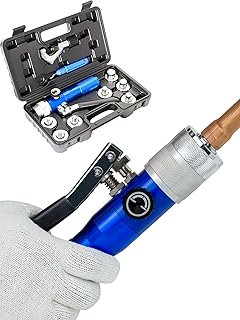


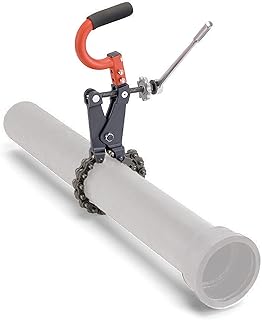


A compact pipe cutter is a deceptively simple tool, but the differences between models can have a noticeable effect on cutting accuracy, working speed, durability and ease of use. When comparing precision compact pipe cutters for the Canadian market, look beyond the lowest advertised price and examine the cutter's compatible pipe materials, diameter range, cutting mechanism, wheel quality, body construction and adjustment system.
The right choice depends heavily on the type of pipe you work with. A cutter intended for copper tubing is not automatically the best option for stainless steel, aluminium, brass or other harder materials. Likewise, a very small cutter can be extremely useful in restricted spaces but may not provide the capacity or leverage required for larger-diameter tubing.
Before choosing a model, identify the pipe materials and outside diameters you normally encounter. Then compare the manufacturer's specifications with your actual requirements. This approach is more reliable than choosing a cutter solely because it has a high rating or appears frequently in product listings.
The primary advantage of a compact pipe cutter is access. A small body can be positioned around tubing where a conventional cutter or larger plumbing tool would be difficult to operate. This is particularly useful when pipes are installed close to walls, cabinets, appliances, structural components or other obstructions.
However, compact does not always mean better. An extremely small cutter may have a narrower capacity range or require more adjustment during a cut. Consider the balance between physical size and usable cutting capacity rather than selecting the smallest tool available.
Check the stated pipe-size range before purchasing. Pipe cutter specifications normally refer to the outside diameter of the tubing rather than its nominal trade size. These measurements are not interchangeable, so checking the actual outside diameter of the pipe you intend to cut can prevent an otherwise avoidable mismatch.
A cutter with a useful range that covers your most common applications is generally more practical than a model selected for one unusual size. If you regularly work with several diameters, compare the adjustment range carefully and determine whether the cutter is designed to handle all of them.
The cutting wheel is one of the most important components because it makes direct contact with the pipe. Wheel material and geometry influence how effectively the tool starts and maintains a cut.
Different pipe materials place different demands on the cutting wheel. Copper and other relatively soft tubing can generally be handled differently from harder metals. For tougher materials, look specifically for manufacturer-confirmed compatibility rather than assuming that a generic replacement wheel or compact cutter is suitable.
Replacement-wheel availability is another practical consideration. A durable cutter becomes less useful if replacement cutting wheels are difficult to identify or are unavailable for the specific model.
A precision pipe cutter needs controlled pressure. The adjustment mechanism allows the cutting wheel to contact the pipe and progressively deepen the cut as the tool is rotated.
A good adjustment system should make it possible to increase cutting pressure gradually rather than forcing the wheel aggressively into the material. Excessive pressure can increase the chance of deforming thin tubing, damaging the cutting wheel or producing an unnecessarily rough cut.
Compact pipe cutters are frequently used in environments where the tool may encounter moisture, dust, metal debris and repeated mechanical stress. A sturdy body can therefore be more important than cosmetic appearance.
When comparing construction, consider the material of the cutter body, the quality of the adjustment components and the way the cutting wheel is mounted. Established tool manufacturers such as RIDGID, Milwaukee, Klein Tools, DEWALT and Crescent offer products across different tool categories, but compatibility and specifications should always be checked for the individual model rather than inferred from the brand name alone.
Copper is one of the most common applications associated with compact tubing cutters. A suitable cutter can produce a clean circumferential cut while occupying considerably less space than a hacksaw.
For copper tubing, pay attention to the diameter range and the quality of the cutting wheel. Thin-wall tubing also requires controlled pressure because excessive force can distort the tube instead of producing a clean cut.
Aluminium and brass can require different cutting characteristics from copper. Do not assume that a cutter marketed for copper is automatically appropriate for every non-ferrous metal. Confirm the manufacturer's stated material compatibility before using the tool for a particular application.
Harder metals can place substantially greater demands on a cutting wheel and the cutter mechanism. If stainless steel or another hard material is part of your regular workload, choose a model specifically rated for that application.
Using a cutter outside its intended material range can accelerate wheel wear and may result in poor cutting performance. A compact design should never be treated as evidence that the tool is suitable for every type of tubing.
Plastic pipe generally requires a different cutting approach from metal tubing. Depending on the pipe type and diameter, a dedicated plastic pipe cutter may be more appropriate than a metal tubing cutter. Always verify compatibility with the specific plastic material before selecting a tool.
For plumbing, refrigeration, automotive and workshop applications, a clean and accurately controlled cut is often more valuable than simply completing the cut as quickly as possible.
A precision-oriented cutter should allow the operator to control wheel pressure progressively. The objective is to score the tubing consistently around its circumference and deepen the groove through successive rotations. Forcing the tool through the material in one operation can compromise the quality of the cut.
If you frequently make many cuts, ergonomics become increasingly important. A cutter that is easy to grip and adjust can reduce frustration during repetitive work, while a compact body can make repeated cuts easier in restricted installations.
The quality of the cut affects what happens next. After cutting metal tubing, the edge may require deburring before a fitting, flare, compression connection or other joining operation is completed.
A properly controlled cut helps provide a predictable starting point for the next stage of the job. A badly distorted tube can create additional work and may interfere with subsequent fitting or connection procedures.
For this reason, buying decisions should consider the entire workflow rather than treating the pipe cutter as an isolated tool. Cutting accuracy, edge condition, deburring requirements and access to the work area all matter.
A full-size cutter generally offers more room for handling, while a compact model prioritises access to restricted areas. Neither format is universally superior.
A hacksaw can cut tubing when access permits, but a dedicated pipe cutter offers a different workflow. The cutter is designed to travel around the circumference of the pipe, while a hacksaw removes material through a conventional sawing action.
In confined spaces, a compact cutter can be considerably easier to manoeuvre because it does not require the same back-and-forth clearance as a saw. It can also produce a more controlled circular cut when used correctly.
A hacksaw remains useful when cutting a wide variety of materials or when a pipe cutter does not have sufficient capacity. The best tool therefore depends on the application rather than on a universal preference for one cutting method.
Professionals who use a pipe cutter frequently should pay particular attention to durability and maintainability. A tool that performs well on the first few cuts but develops adjustment problems or requires frequent wheel replacement may be less economical over time.
Brands such as RIDGID have a long presence in professional plumbing tools, while Milwaukee, DEWALT and Klein Tools provide broad ranges of tools for professional and serious workshop users. Brand reputation can be useful as a starting point, but the individual cutter's specifications remain the deciding factor.
Check whether replacement wheels are specified for the cutter and whether the manufacturer identifies compatible replacement parts. This matters particularly for users who expect to keep the tool for years.
Compact tools are often operated with limited hand clearance. A design that is technically small but difficult to grip may not provide a practical advantage. Look at the shape of the adjustment area and consider whether you can comfortably rotate and tighten the cutter in the environments where it will be used.
Overall dimensions do not tell the whole story. The space required to rotate the cutter around a pipe is also important. When working on installed tubing, consider the clearance on all sides of the pipe and the amount of room needed for your hand.
Some users focus heavily on the initial purchase but overlook long-term maintenance. A cutter designed with serviceable components can be more practical for regular use. Check the manufacturer's maintenance instructions and replacement-part information before making a final decision.
Customer ratings can provide useful signals, but a high rating does not prove that a particular cutter is appropriate for your application. A product can receive positive feedback from users cutting soft copper tubing while being unsuitable for someone working with harder materials.
One of the easiest mistakes is matching a cutter to a nominal pipe description without checking its actual supported diameter. Always compare the product's specified cutting range with the outside diameter of the tubing you intend to cut.
A metal-cutting tool is not necessarily a universal metal cutter. Material hardness, wall thickness and wheel design all influence suitability. Confirm compatibility for the specific application.
Small dimensions are valuable when access is restricted, but an undersized cutter can become inconvenient if it lacks sufficient capacity or is difficult to adjust. Choose the smallest practical model that still covers your actual workload.
Cutting is only one part of the preparation process. If the application requires a smooth internal or external edge, make sure your tool kit also includes an appropriate deburring solution.
When two models look nearly identical, use a structured comparison rather than relying on appearance.
Canadian buyers should verify the exact product configuration offered by the retailer before purchasing. Product names can sometimes be similar across different versions, generations or package configurations, so the model number and manufacturer specifications are more useful than a generic listing title.
When comparing products in Canada, consider the total value of the tool rather than the advertised price alone. A less expensive cutter may be appropriate for occasional household repairs, whereas someone using the tool frequently may place greater value on construction quality, replacement parts and compatibility with professional applications.
Canadian users should also check the retailer's current listing for availability, delivery terms, taxes and applicable purchase conditions because these details can change independently of the product's technical specifications.
Homeowners who only need a pipe cutter occasionally should prioritise ease of use, appropriate diameter capacity and compatibility with the specific tubing involved. There is little benefit in paying for specialised capabilities that will never be used.
Plumbing applications can involve copper, brass, plastic and other materials. Choose according to the pipe types actually encountered rather than selecting a cutter because it is marketed broadly as a plumbing tool.
Compact access can be especially important around installed tubing and equipment. Material compatibility and cutting precision deserve particular attention because the cutting operation may form part of a larger connection or preparation process.
Automotive work can involve tubing in awkward locations where tool access is limited. Before buying, identify the tubing material and diameter involved in your specific application. A compact cutter should be selected for its documented compatibility rather than its appearance or general-purpose marketing.
Always follow the instructions supplied with the specific cutter. As a general principle, position the cutter squarely around the tubing and ensure that the cutting wheel contacts the intended cutting line. Apply controlled pressure, rotate the tool around the pipe and progressively adjust the cutting wheel as the groove develops.
Avoid applying excessive pressure at the beginning of the cut. The goal is controlled progression around the circumference rather than forcing the wheel deeply into one point. After the cut is complete, inspect the tube and remove burrs where required by the application.
Keep hands clear of sharp edges and follow appropriate workshop safety practices. If the pipe is part of an installed system, ensure the system is properly isolated and safe to work on before cutting.
Cutting wheels are consumable components. Their useful life depends on factors including pipe material, wall thickness, cutting frequency, applied pressure and the condition of the tool.
A wheel that becomes dull may require greater force and can make cutting less controlled. Rather than compensating indefinitely by increasing pressure, inspect the wheel and replace it when the manufacturer's guidance indicates that replacement is appropriate.
For frequent users, the long-term availability and cost of replacement wheels can therefore be an important part of the buying decision.
Customer reviews are most useful when they are treated as supplementary evidence rather than as a substitute for technical specifications. Look for recurring observations about adjustment, wheel durability, ease of use, actual cutting capacity and performance on the materials relevant to your work.
Pay attention to reviews that identify the pipe material and size being cut. A comment about excellent performance on small copper tubing may have limited relevance if you need to cut larger or harder tubing.
Also distinguish between product-related problems and incorrect application. A complaint that a cutter cannot handle a particular material may simply indicate that the tool was used outside its documented specifications.
Price should reflect useful capability rather than simply the number of features listed on a product page. For a compact pipe cutter, the most valuable characteristics are generally reliable cutting performance, suitable capacity, appropriate material compatibility, durable construction and practical maintenance.
Additional features are worthwhile only when they solve a real problem for the intended user. For occasional household use, simplicity can be an advantage. For professionals, durability and serviceability may justify choosing a more robust model.
Use this checklist when comparing products before purchase:
A compact precision cutter is particularly attractive when access is the main challenge. It can be easier to position around installed tubing and can eliminate the clearance required for a conventional saw in many situations.
It is also a practical choice when repeatability and controlled cutting matter. Instead of manually guiding a blade through the tubing, the cutter follows the circumference of the pipe while the operator progressively controls the cutting pressure.
For larger pipes, unusual materials or applications outside ordinary tubing work, however, a different cutting tool may be more appropriate. The best purchase is always the tool that matches the material, diameter and working conditions.
The best precision compact pipe cutter is not necessarily the most expensive, smallest or highest-rated model. The strongest choice is the one whose documented specifications align with your pipe material, outside diameter, workspace and expected frequency of use.
For Canadian buyers comparing options in 2026, start with compatibility and capacity, then evaluate cutting-wheel quality, adjustment control, construction, replacement parts and ergonomics. After those fundamentals are satisfied, compare current retailer pricing and customer feedback to determine which option offers the most appropriate overall value.
Taking a few minutes to compare technical specifications can prevent the most common purchasing mistake: buying a compact cutter that is excellent for someone else's application but unsuitable for your own. A carefully matched tool should make cutting easier while reducing unnecessary force, access problems and preparation work.
There is no single best model for every Canadian buyer. The right choice depends on the pipe material, outside diameter, available working space, cutting frequency and budget. Compare manufacturer specifications and current Canadian retailer listings before making a decision.
Yes, a compact cutter can be appropriate for professional work when its specifications match the application. Professionals should pay particular attention to durability, cutting-wheel compatibility, replacement parts, adjustment quality and the tool's rated material and diameter range.
No. Pipe cutters have specific material and diameter limitations. Always confirm the manufacturer's stated compatibility before cutting a particular type of tubing or pipe.
A compact cutter is better when access and limited clearance are important. A larger cutter may be preferable when greater capacity, easier handling or a different range of applications is required.
Choose according to the actual outside diameter of the tubing you need to cut. Compare that measurement with the cutter's published minimum and maximum capacity rather than relying only on nominal pipe-size terminology.
Yes. Cutting wheels are wear components and may eventually need replacement depending on use. Inspect the wheel regularly and follow the manufacturer's guidance for replacement.
Possible causes include an unsuitable cutter for the material, a worn cutting wheel, incorrect adjustment, excessive tubing hardness or an application outside the tool's rated capacity. Check the manufacturer's instructions before increasing cutting pressure.
A modest amount of additional capacity can be useful if you expect to work with other pipe diameters in the future. However, do not sacrifice compactness or ease of use merely for unused capacity. Choose a tool that fits your realistic workload.
No. Price alone does not establish suitability or quality for a particular application. Compare construction, wheel design, capacity, material compatibility, adjustment mechanism and replacement-part support before evaluating price.
Brand reputation can provide useful context regarding product range and support, but the exact model remains more important. Established names such as RIDGID, Milwaukee, DEWALT, Klein Tools and Crescent should still be evaluated according to the specifications of the individual cutter.